If you are shopping for Matter-compatible devices in Q3 2026, the short version is finally useful: lights, plugs, switches, basic sensors, locks, and thermostats are safe buys when your controller setup is right. Robot vacuums are plausible but still need model-by-model checking. Cameras, doorbells, and appliances belong in the “verify before you buy” pile, even though the spec has moved far enough to include them.
The change from earlier Matter buying advice is not just optimism. By March 2026, synthesis estimates put the ecosystem at more than 350 certified products from more than 70 manufacturers, with roughly 4,200 expected by the end of 2026; those are not official Connectivity Standards Alliance counts, so I treat them as a direction-of-travel signal rather than a shopping guarantee.[1] Matter 1.4 arrived in September 2024, Matter 1.5 in November 2025 added categories such as cameras, doorbells, and appliances, and Matter 1.6 in June 2026 brought Joint Fabric, enhanced multi-admin work, and improved energy reporting.[2][3]
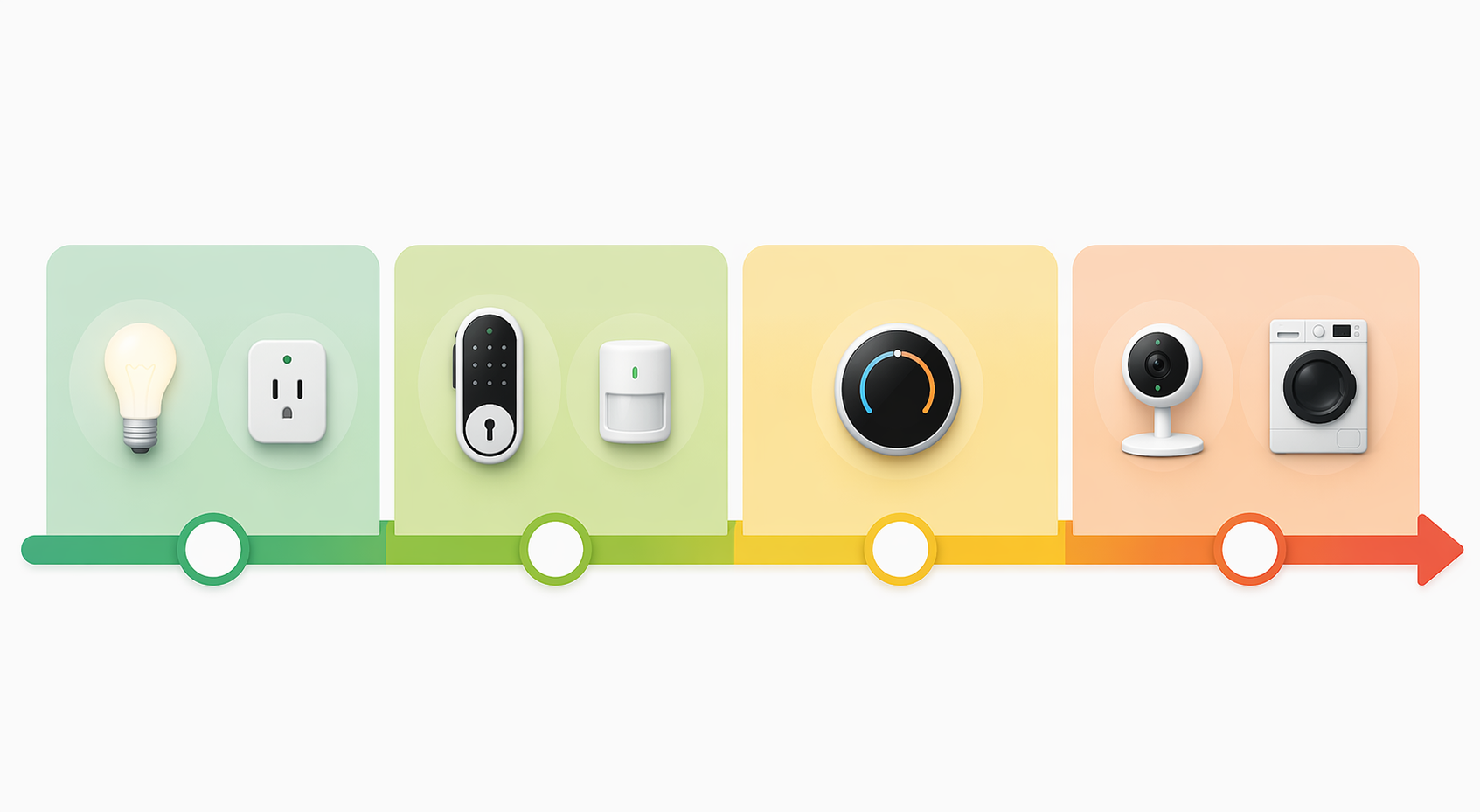
That maturity still does not make “Matter-compatible” a complete answer. A Thread sensor without a Thread border router is not a bargain. A Wi-Fi plug may be the right cheap choice. A Zigbee bulb behind a bridge may be smarter to keep than replace. For a broader category reliability view, the current status is covered in What Actually Works with Matter in 2026, but the buying decision starts with the product category.
The Q3 2026 Buying Matrix
| Category | Worth buying now | Typical picks | Approximate price notes | Transport | Platform and bridge notes | Buy status |
|---|---|---|---|---|---|---|
| Bulbs and light strips | Yes | Nanoleaf Essentials Matter bulb; Philips Hue via Hue Bridge v2; TP-Link Tapo Wi-Fi bulbs; IKEA TRÅDFRI via Dirigera | Nanoleaf Essentials around $9.37 per bulb in June 2026 retail data[4] | Thread for Nanoleaf; Zigbee-to-Matter bridge for Hue and IKEA; Wi-Fi for Tapo | Hue Bridge v2 and IKEA Dirigera can bring existing Zigbee lighting into Matter without replacing bulbs[4][5] | Buy now |
| Smart plugs | Yes | Eve Energy; Meross MSS315; TP-Link Tapo P110M | Eve Energy around $33; Meross MSS315 around $10; Tapo P110M varies by retailer[4][5] | Thread for Eve; Wi-Fi for Meross and Tapo | Check whether energy monitoring appears in the app you actually use, not just in the manufacturer app | Buy now |
| Switches | Yes, with wiring checks | Matter switches from major accessory lines where neutral-wire and load requirements match the home | Price varies by brand and switch type | Usually Wi-Fi or Thread depending on model | Confirm wiring, gang box depth, and platform support before ordering multiples | Buy now carefully |
| Basic sensors | Yes | Aqara P2; Eve Motion; IKEA PARASOLL | Aqara P2 around $20; IKEA PARASOLL around $9.99 in cited retail data[4][5] | Mostly Thread for new Matter sensors | Aqara M3 and IKEA Dirigera can preserve older Zigbee sensors through a bridge path[4][5] | Buy now if Thread is supported |
| Locks | Yes, but installation matters | Schlage Encode Plus; Yale Assure Lock 2; Level Lock+; Aqara U200 | Pricing varies widely by trim and kit | Thread for several newer models; retrofit and bridge details vary | Check Home Key, keypad, retrofit fit, and the platform you expect family members to use[5] | Buy now carefully |
| Thermostats | Yes, for the right heating system | Ecobee Smart Thermostat Premium; Google Nest 4th Gen Learning Thermostat; Eve Thermo | Ecobee Smart Thermostat Premium around $249; Eve Thermo is for radiator valves, not central HVAC[4][5] | Wi-Fi for central thermostats; Thread for Eve Thermo | Do not compare central HVAC thermostats and radiator valves as if they solve the same problem | Buy now with system fit confirmed |
| Robot vacuums | Maybe | Roborock models with Matter support; iRobot Roomba through bridge-style support | Model-specific | Usually Wi-Fi plus vendor ecosystem | Matter support has arrived, but feature exposure can vary by model and platform[3][4] | Verify exact model |
| Cameras and doorbells | Mostly wait | Matter 1.5-enabled category, limited dependable retail support | Model-specific | Usually Wi-Fi | Spec support is not the same as cross-platform camera behavior you can rely on[3] | Wait unless tested |
| Appliances | Mostly wait | Select Bosch models and other early appliance implementations | Model-specific | Usually Wi-Fi | Matter 1.5 opened the door, but appliance support is still uneven in retail[3][4] | Wait unless the exact behavior is verified |
Before Any Product Pick: Check the Controller and Radio
The most common expensive mistake is buying a Thread device for a home that has a Matter controller but no Thread border router. Matter is the application layer; Thread and Wi-Fi are transports. A Wi-Fi plug talks through your router. A Thread sensor or bulb needs a Thread mesh, and that mesh needs a border router to connect it to the rest of the home.
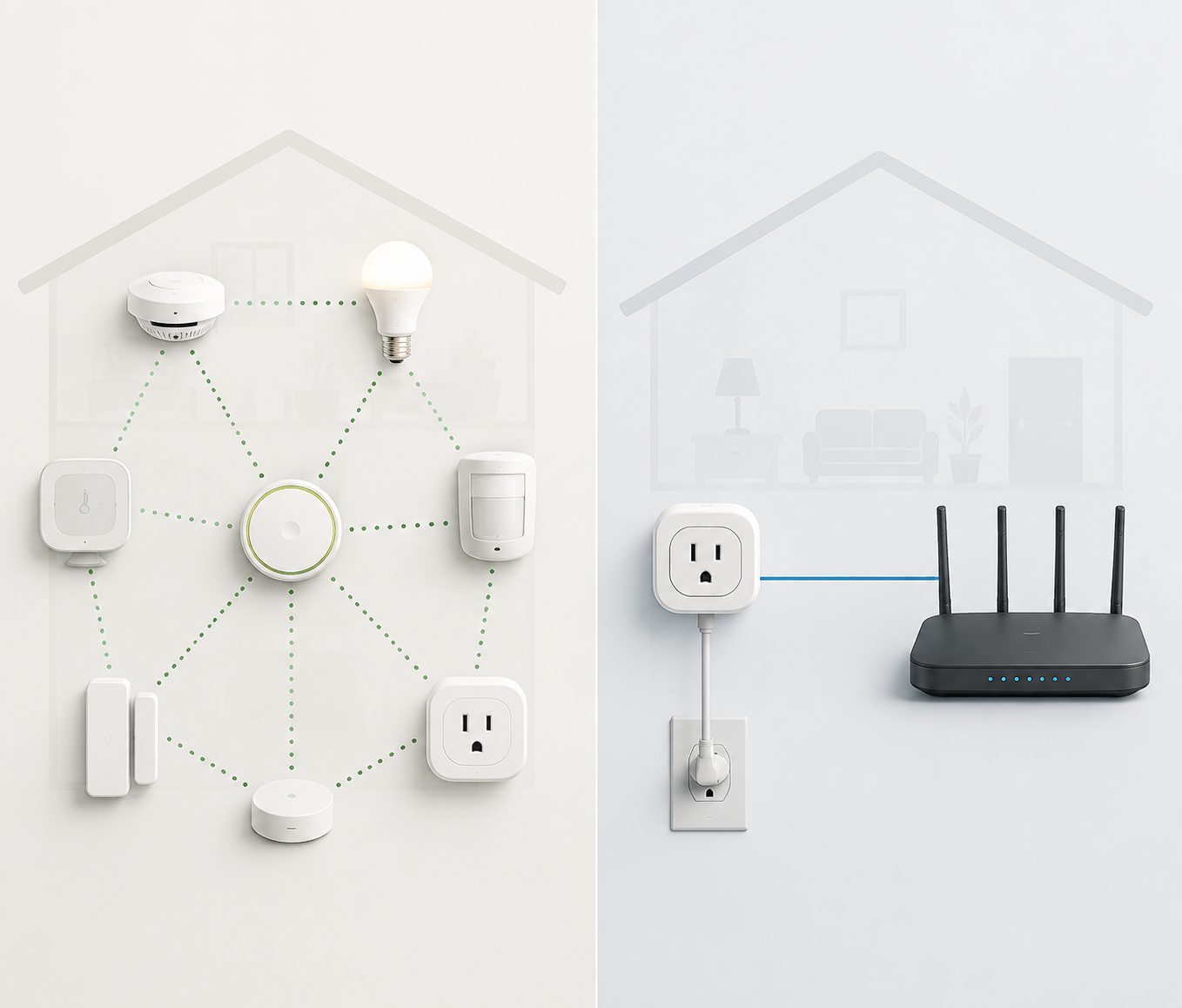
This is where old hub assumptions cause trouble. Many Echo Dot 2nd and 3rd Gen speakers, Nest Mini speakers, the original Nest Hub, and Apple TV 4K Wi-Fi-only models lack Thread radios. Echo 4th Gen, Nest Hub 2nd Gen, HomePod mini, and Apple TV 4K Wi-Fi + Ethernet models are examples of devices that do include Thread border router capability.[2][3][4] If you are not sure what you own, pause and check before adding a cart full of Thread accessories; What Is a Matter Border Router and Do You Already Have One? is the useful preflight check.
Thread 1.4 helped by allowing credential sharing across brands, reducing the old problem where an Echo and a HomePod could create separate Thread meshes in the same house.[3] That is progress, not permission to ignore hardware. If the home has no Thread border router today, a Wi-Fi plug or bulb may be the cleaner first purchase.
Lights Are the Best Matter On-Ramp
Lighting is where Matter finally feels ordinary in 2026. The category is broad, prices are no longer all early-adopter prices, and the transport choice is visible enough to teach you how the rest of the house should work.
Nanoleaf Essentials Matter bulbs are the clean Thread pick when the home already has a proper Thread border router. June 2026 retail tracking placed them around $9.37 per bulb, and RTINGS measured sub-120 ms latency on the Nanoleaf bulb specifically.[4][6] That latency number should not be stretched into a claim about every Thread light, but it does show why a good Thread light can feel snappy rather than merely compatible.
Philips Hue is a different kind of recommendation. The reason to respect Hue in a Matter home is not that every old Hue bulb magically becomes native Matter; it is that the Hue Bridge v2 can expose existing Zigbee Hue lighting into Matter, which keeps a working lighting system out of the e-waste pile.[4][5] If you already have Hue bulbs, read Philips Hue Matter Upgrade: What to Know Before Enabling It before deciding whether the bridge route is better than rebuilding.
TP-Link Tapo Wi-Fi bulbs are the uncomplicated alternative for renters, small apartments, and households that do not want to audit Thread border routers before buying a few bulbs.[4] Wi-Fi lighting is not as elegant for a large low-power mesh, but powered bulbs do not have the same battery argument as contact sensors or motion sensors. For a handful of lamps, lower setup friction can matter more than protocol tidiness.
IKEA TRÅDFRI through the Dirigera bridge belongs in the same practical bucket as Hue: if the devices already work, a Matter bridge can be the upgrade, not a box of replacement bulbs.[4][5] That bridge-first instinct is especially useful in mixed homes where one room has Hue, another has IKEA, and nobody wants to spend Saturday re-pairing every lamp for the pleasure of a cleaner diagram.
Smart Plugs: Buy for the Job, Not the Logo
Smart plugs are mature enough that the best choice is usually about price, energy reporting, and transport. Eve Energy is the premium Thread option at around $33, with energy monitoring in the product line.[4][5] It makes sense when you already have a Thread border router and want a plug that can help strengthen the Thread mesh while handling a powered device.
Meross MSS315 is the budget counterweight: around $10, Wi-Fi, and no Thread border router requirement.[4][5] That is not a consolation prize. If the job is “turn the corner lamp on and off from Apple Home, Google Home, Alexa, or SmartThings,” a cheap Wi-Fi Matter plug can be the least annoying answer.
TP-Link Tapo P110M sits in the practical middle because it is Wi-Fi and includes energy monitoring in the product positioning.[4][5] The catch is platform exposure. Energy monitoring can exist in the device and still be uneven in the controller app you prefer, which is why plug shoppers should check the specific app behavior before buying a multipack. The broader energy-data issue is covered in Which Matter Smart Plugs Actually Show Energy Data?.
- Choose Thread plugs when you already have a border router and want the plug to participate in a low-power mesh.
- Choose Wi-Fi plugs when price, simplicity, and no extra hub requirement matter more.
- Do not assume energy monitoring appears everywhere just because the plug supports it.
- Avoid buying a large pack until one plug has been tested in the platform the household actually uses.
Sensors Are Ready, but They Expose Weak Thread Planning Fast
Contact and motion sensors are exactly where Thread should shine: small devices, low power needs, and locations where Wi-Fi would be wasteful. Aqara P2 is a straightforward Thread contact sensor pick at around $20, Eve Motion covers motion sensing on Thread, and IKEA PARASOLL appears around $9.99 in the cited retail data.[4][5]
The buying check is not glamorous: where will the sensor sit, how will it route, and what device in the house is the Thread border router? A door sensor on the far side of a house can make a weak Thread setup obvious. Adding a Thread smart plug or another powered Thread device may help the mesh, but only if the product actually functions as a router in that Thread network; battery sensors generally do not.
Aqara also matters because the M3 hub gives some households a bridge route for older Zigbee devices rather than forcing every sensor to be replaced.[4][5] That is the sane upgrade path for a home with working leak sensors, contact sensors, or buttons already installed. Native Matter is nice. Not re-buying a drawer full of reliable sensors is nicer.
Locks Are Mature Enough to Buy Carefully
Matter smart locks have crossed into “recommendable” territory, but they are not impulse buys. A bad bulb annoys you. A bad lock strands someone at the door, burns batteries, or starts a household argument about who changed the code.
Schlage Encode Plus is still worth attention because it combines a mainstream lock form with Thread and Apple Home Key support.[5] Yale Assure Lock 2 is another mature option, with Thread and Matter upgrade paths depending on the configuration.[5] Level Lock+ earns its place for the opposite reason: the slim profile keeps the door from looking like a gadget project.[5] Aqara U200 is the practical retrofit pick for people who want to keep part of the existing lock hardware.[5]
The pre-purchase work is more important than the brand shortlist. Check whether the lock replaces the whole deadbolt or retrofits over the existing one, whether the door alignment is already good, what happens when the battery is low, whether the household expects a keypad, and which platform controls guest access. For a deeper compatibility pass, use Matter Smart Locks Explained for Buyers before ordering.
- Buy Schlage Encode Plus when Home Key and a conventional full-lock design matter.
- Buy Yale Assure Lock 2 when you want a mainstream lock family with configuration flexibility.
- Buy Level Lock+ when exterior appearance is the constraint.
- Buy Aqara U200 when retrofit installation solves the real problem.
Thermostats Need a System Match, Not a Winner
Thermostats are buyable in Matter, but the category splits quickly. Ecobee Smart Thermostat Premium, listed around $249, is the central-HVAC pick for homes that want a full-featured thermostat with multi-platform Matter positioning.[4][5] Google Nest 4th Gen Learning Thermostat brings Matter through Google Home.[5] Eve Thermo is a Thread radiator valve, which solves a different problem entirely.[4][5]
That distinction matters because “thermostat” can mean a wall unit controlling a furnace and air conditioner, or it can mean a radiator valve managing one room. A central HVAC buyer should be checking C-wire needs, HVAC compatibility, remote sensors, and household platform preferences. A radiator-valve buyer should be checking valve fit, room-by-room scheduling, battery access, and Thread coverage near radiators.
The safe recommendation is not one universal thermostat. It is to buy the Matter thermostat that matches the heating system first, then worry about which app has the nicer screen.
Bridges Are Not a Failure
The cleanest Matter home diagram has native Matter devices everywhere. Real homes usually have older Zigbee bulbs, buttons, sensors, and plugs that still work. Philips Hue Bridge v2, Aqara M3, and IKEA Dirigera are valuable because they can expose existing Zigbee devices into a Matter home instead of turning an upgrade into a replacement campaign.[4][5]
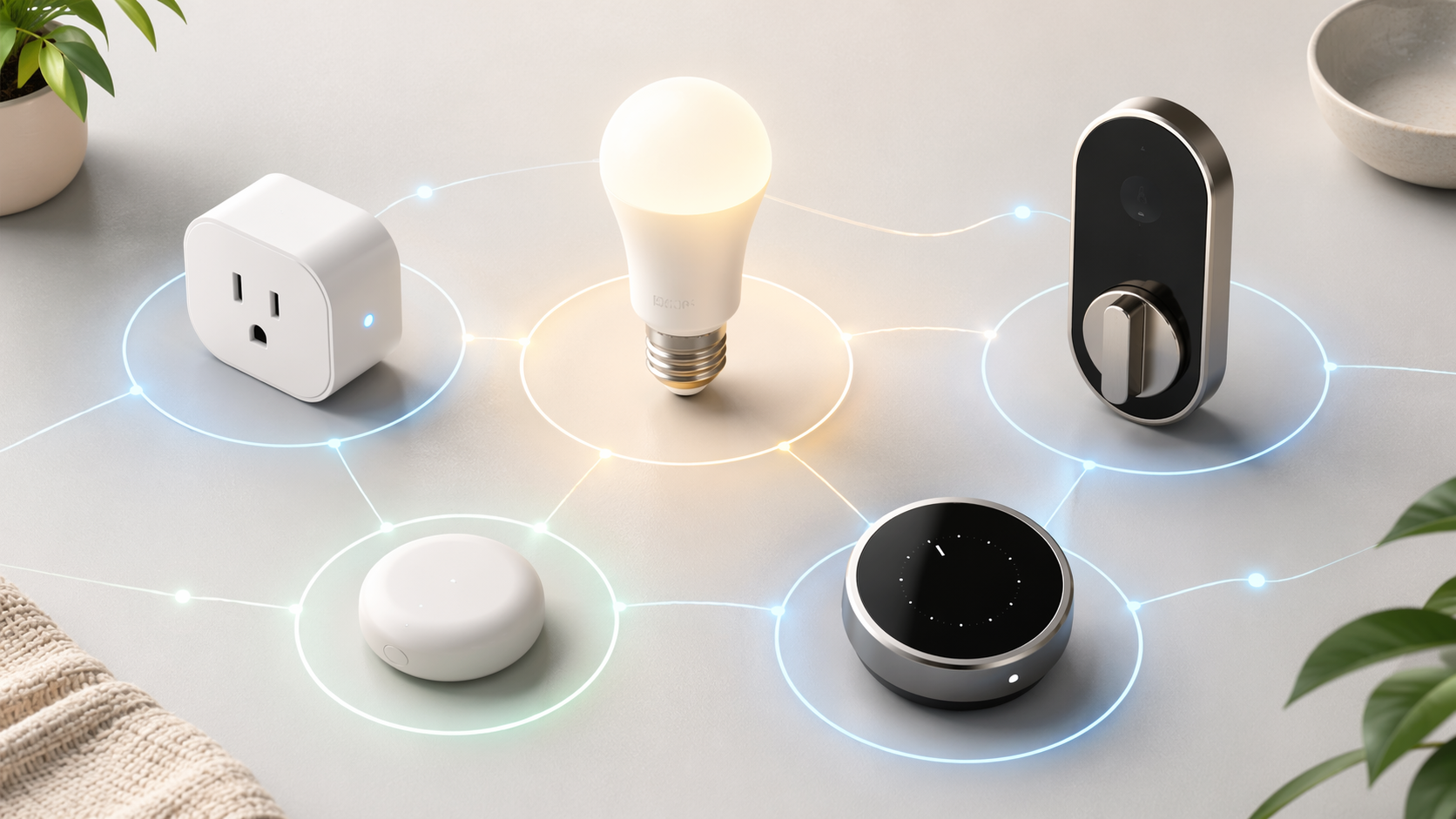
A bridge path is especially sensible for lighting. A mature Hue installation behind a Hue Bridge v2 may be a better Matter system than a pile of cheap replacement bulbs paired in a hurry. The same logic applies to IKEA and Aqara homes where the old devices are reliable and the new hub is doing the translation. If you want the protocol-layer comparison before deciding what to keep, Matter Protocol vs Zigbee vs Thread – Which to Choose in 2026? is the right detour.
Robot Vacuums Are Interesting, Not Yet Boring
Robot vacuums are the category I would research one model at a time. Roborock Matter support has arrived, and iRobot Roomba support can involve bridge-style paths, but that does not mean every useful vacuum feature appears cleanly in every Matter controller.[3][4] Start, stop, pause, dock, room selection, cleaning modes, maps, and maintenance alerts are not equally likely to be exposed.
If you are buying a robot vacuum primarily for Matter, slow down. If you are buying a good robot vacuum that also has the Matter behavior you need, that is more defensible. The exact model and firmware matter more here than the brand-level claim.
Cameras, Doorbells, and Appliances Are Still Emerging
Matter 1.5 added support for cameras, doorbells, and appliances in November 2025, and select appliance support, including Bosch models, appears in the 2026 ecosystem data.[3][4] That is a standards milestone. It is not the same thing as a retail shelf full of camera and appliance products whose cross-platform behavior is boringly dependable.
With cameras and doorbells, the hard parts are video behavior, event history, notifications, recording plans, privacy settings, and platform-specific features. A Matter badge does not automatically answer those questions. With appliances, the problem is less excitement and more uneven support: one model line may expose useful controls while another remains mostly tied to the manufacturer app.
Treat these as exact-model purchases. Do not buy a camera, doorbell, dishwasher, oven, or washer because Matter 1.5 made the category possible. Buy only after confirming what that specific model does in the platform you use.
The Transport Rule That Prevents Most Regret
Thread is usually the better fit for low-power sensors, locks, radiator valves, and mesh-friendly accessories when the home already has a real Thread border router. Wi-Fi is often the simpler fit for powered plugs, some bulbs, thermostats, robot vacuums, and appliances, especially when the buyer wants to avoid another infrastructure check. The full transport decision is covered in Should Your Matter Accessories Use Thread or Wi-Fi in 2026?, but the shopping version is short: battery devices benefit most from Thread, simple powered devices can be perfectly fine on Wi-Fi, and neither choice rescues a bad setup.
For a first Matter build, start with one or two mature categories rather than a whole-home conversion. A Thread sensor plus a known border router, or a Wi-Fi plug plus a Matter controller, teaches more than a cart full of mixed devices. If you are building from scratch, Build Your First Matter Smart Home in 2026 lays out the starter path.
What I Would Buy Now
Buy mature Matter categories now: lights, plugs, switches, basic sensors, locks, and thermostats. Choose Thread for low-power mesh devices when the home has proper border-router support. Use Wi-Fi for simple powered devices when that lowers setup friction. Keep Hue, Aqara, and IKEA bridges where they preserve good Zigbee gear. Wait on cameras, doorbells, and appliances unless the exact model’s Matter behavior has been verified in the platform the household actually uses.
References
- Matter device certification and 2026 ecosystem estimates, yourmatterhome.com.
- Matter, Wikipedia.
- Matter 1.6 and Thread 1.4 update coverage, Data Wire Solutions.
- Matter smart home device listings and 2026 retail data, matter-smarthome.de.
- Matter device buyer listings and platform notes, SmartHomeExplorer.
- Nanoleaf Essentials Matter bulb test data, RTINGS.
Updates & Corrections
Protocol specifications and platform features change rapidly — especially with Matter version evolution. Report version changes, certification count updates, or platform policy changes that have occurred since the last editorial review.
Comments
Join the discussion with an anonymous comment.