Once the tornado warning is already on your phone, the useful question changes. The house is not going to out-predict the National Weather Service, and a smart hub is not going to make roof decking stronger. The damage-reduction job is narrower: detect the conditions that usually create avoidable secondary damage, run the protective actions before anyone is standing at a window thinking about it, then preserve enough evidence to make recovery less chaotic.
| Phase | What the system watches | What the house can do |
|---|---|---|
| Before the storm hits | Wind, rain, open doors, exposed exterior features | Close garage doors, deploy shutters where installed, retract outdoor screens, close rain-sensitive windows or skylights |
| During the storm | Glass break, motion, camera views, device status | Confirm failures without sending someone into unsafe areas |
| After impact | Water at floors, attic points, ceilings, basements, utility areas | Alert the household quickly enough to stop small leaks from becoming structural problems |
| During recovery | Camera history, lock status, access logs | Support insurance documentation and controlled emergency access |
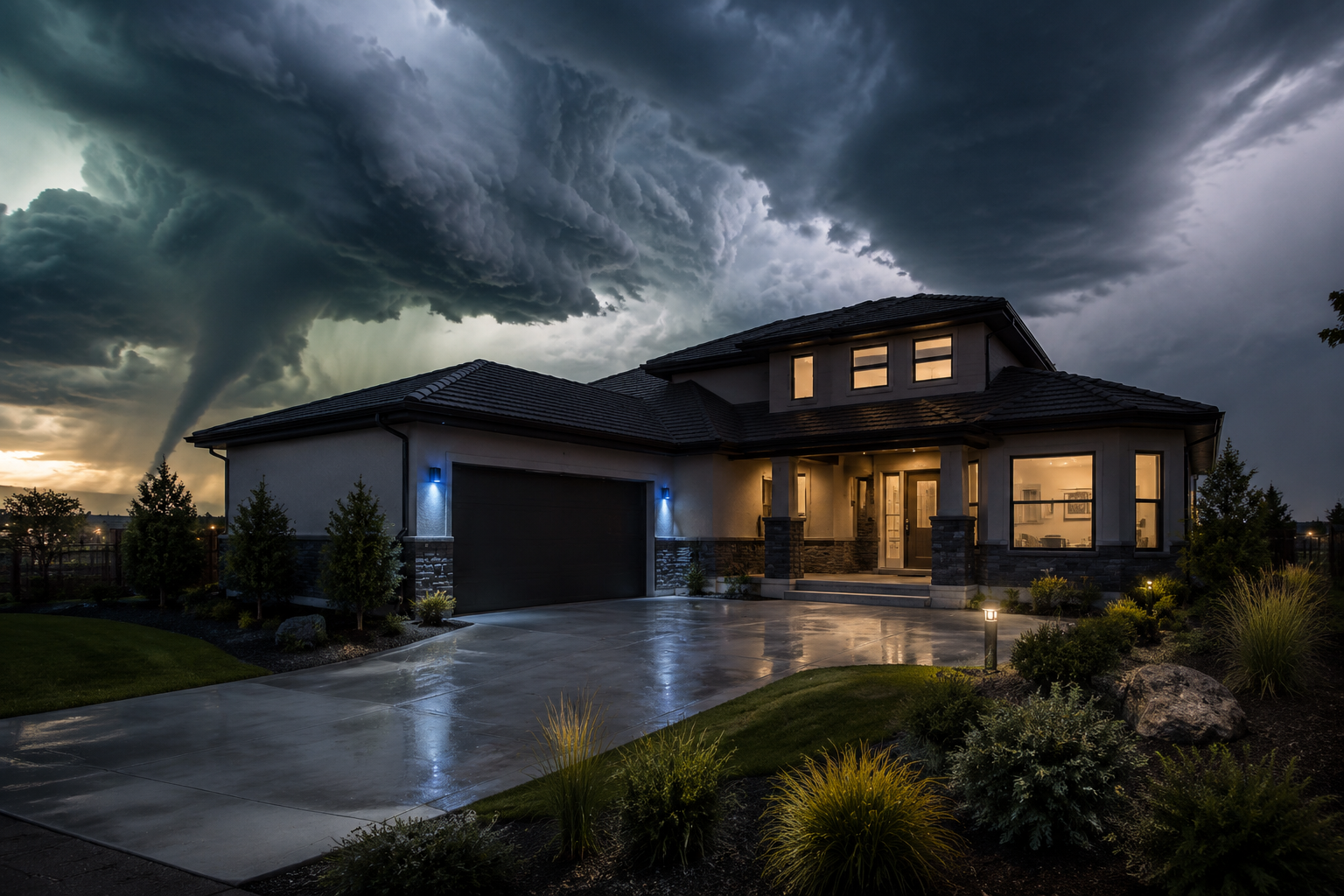
That is the practical frame for smart home storm detection systems for tornado damage. The system is not the warning layer; our tornado warning system guide belongs beside it, not inside it. This layer starts after the warning exists and asks what should happen automatically while people are moving to shelter.
The Best Automations Act Before Wind Finds the Weak Point
The most convincing storm automations are boring in exactly the right way. A contact sensor sees the garage door is open. A wind or weather trigger crosses the threshold. The opener closes the door. Nobody debates it, nobody walks outside, and the largest movable opening on many houses is no longer waiting for pressure and debris.
The same pattern shows up in a ResTechToday case study of a beach house with motorized metal shutters tied to wind and rain sensors. The installation also used motorized screens that retract automatically above 15 mph to prevent wind and debris damage, and smart windows or skylights that close when rain is first detected; the article says those rain-triggered closures can save thousands in water damage in that setting.[1]
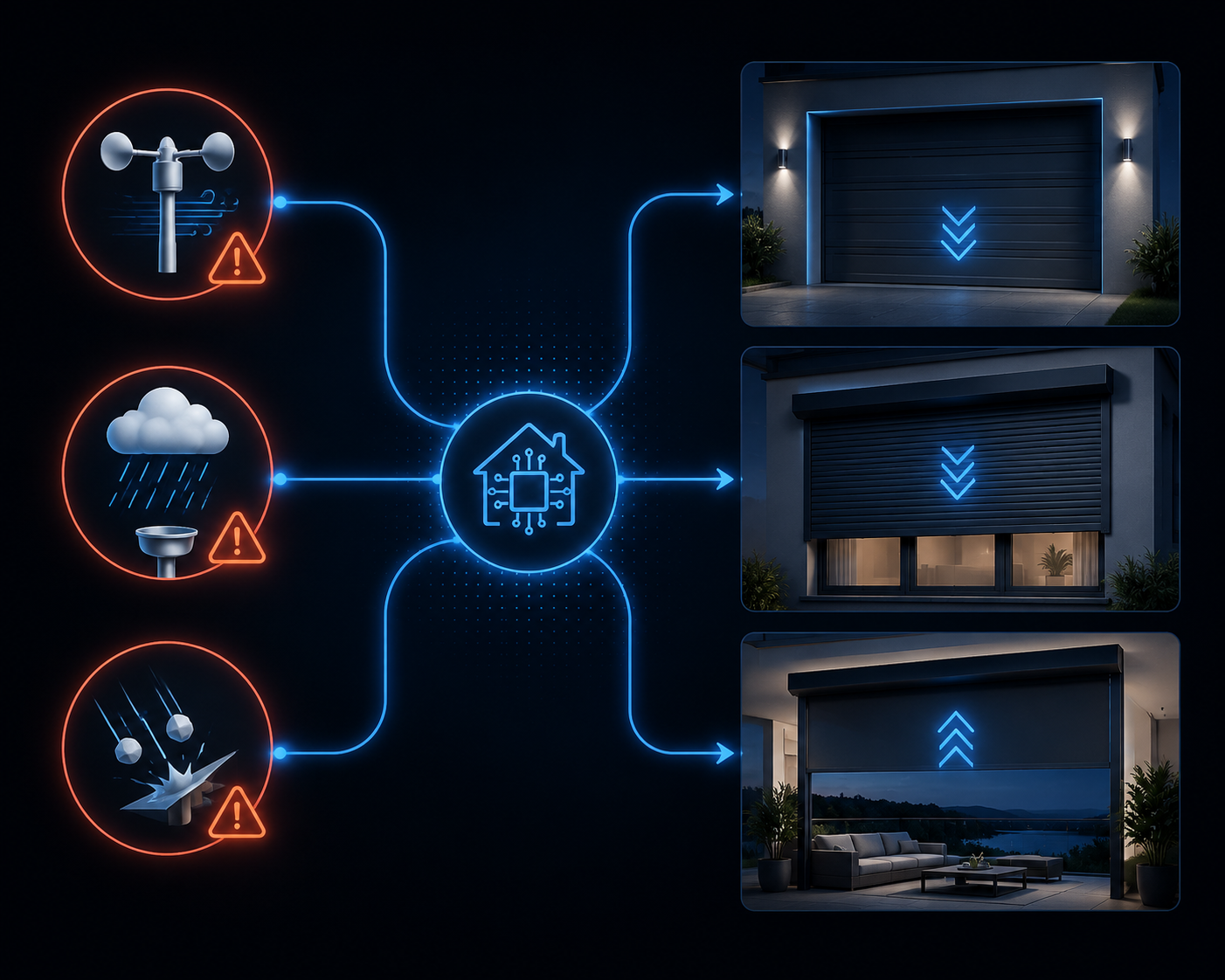
That is not a universal tornado-home template. A coastal house with motorized shutters is not the same thing as a brick ranch in Oklahoma, a slab-on-grade subdivision house in Alabama, or a century-old Midwest home with a detached garage. The transferable part is the automation chain: hazard condition, exposed component, protective movement.
| Trigger | Exposed component | Protective automation | Damage pathway reduced |
|---|---|---|---|
| High wind threshold | Open garage door | Close the garage door | Wind-driven opening failure and windblown debris entering the garage |
| High wind threshold | Outdoor screens or shades | Retract screens or shades | Fabric, track, and frame damage from wind loading or debris |
| Rain detected | Motorized skylight or window | Close the opening | Wind-driven rain entering before someone notices |
| Wind and rain detected | Motorized shutters, where installed | Deploy shutters | Impact and rain exposure at protected openings |
The garage door deserves special attention because it is common, motorized, and often forgotten until the weather is already close. A useful automation does not need a dramatic tornado-specific device. It needs a reliable door position sensor, an opener that can accept automation, a rule that runs early enough, and a backup plan if the opener loses power before the door moves.
Shutters, screens, skylights, and motorized windows are more house-specific. If they are already installed, they should not sit outside the storm plan. If they are not installed, the decision becomes a construction and budget question rather than a smart-home shopping list. The automation standard stays the same: do not alert a person to close something if the device can close itself safely before conditions deteriorate.
The trigger source matters. A local wind sensor, a weather station, a rain sensor, or a trusted weather integration can each be useful, but the rule should be written around the component being protected. A screen may retract at a lower wind threshold than a shutter deploys. A skylight does not need a tornado warning to close; it needs rain detection. A garage door should not wait for the most severe alert if ordinary thunderstorm inflow can turn an open bay into a liability.
Continuity Is Part of the Security System
Storm automations are only impressive if they still run when the house is becoming inconvenient. Tornado weather can take out power, broadband, Wi-Fi mesh nodes, outdoor cameras, and the cloud path that normally makes smart devices feel simple. A storm plan that assumes perfect connectivity is a fair-weather plan.
The devices that must act before impact deserve the most conservative setup: battery backup for the hub or bridge, opener backup where available, local automations when the ecosystem supports them, and clear failure behavior. If the wind trigger fires but the internet is down, the rule should not disappear into a cloud queue. If the garage door is blocked, the system should report that state rather than pretending the house is secured.
This is where ecosystem choice becomes less about voice assistants and more about what actually runs locally, what depends on a vendor server, and what keeps working on backup power. If you are comparing platforms, start with the automations you need to survive a storm and then check ecosystem support; our 2026 Alexa, Google Home, and Apple Home comparison is the better place to sort out those tradeoffs.
Power planning belongs in the same conversation. A hub on a UPS, a router on backup power, charged camera batteries, and cellular failover can be the difference between a timeline that continues and a system that goes blind at the exact moment it becomes useful. For a deeper setup path, see the smart home blackout backup guide.
During the Tornado, Monitoring Should Stay Quiet and Useful
During the warning, nobody should be walking around the house because a camera notification said something moved on the porch. The job of monitoring in this phase is to capture and surface failures, not create chores.
Glass-break sensors can tell you that a window or door glass failed. Indoor cameras facing public areas, garages, or utility spaces can show whether water is entering, a door has blown open, or a ceiling has started dripping. Door and window contact sensors can report whether a previously closed opening is now open. These alerts are useful because they shape the first safe inspection after the storm, not because they invite real-time troubleshooting while sheltering.
A good alert hierarchy helps. Life-safety warnings should remain separate and dominant. Property alerts can be grouped, delayed, or routed to a shared household channel so one person is not trying to decode five apps while the family is in the safe room. The point is awareness, not interruption.
Water Sensors Catch the Damage That Starts After the Wind
The second wave of tornado damage often looks less cinematic than the first. A lifted shingle, cracked flashing, broken skylight, or failed window can let rain enter while everyone is checking on people, calling relatives, or waiting for daylight. By the time a stain appears on a ceiling, water may already have traveled through insulation, framing cavities, and drywall.
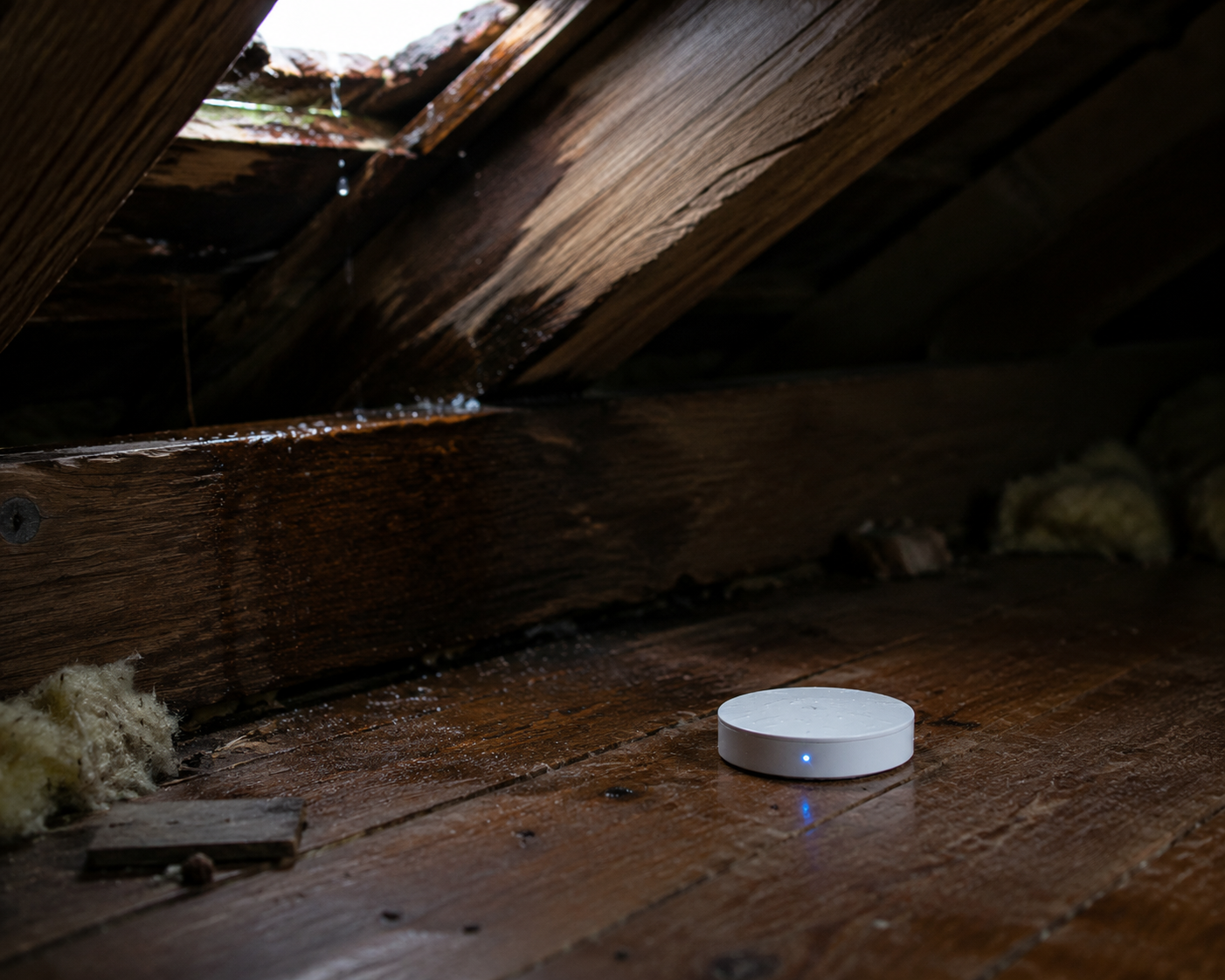
Vivint describes flood sensors as a way to detect storm-driven water intrusion within minutes, and notes that even 1 inch of water can cause significant structural damage.[2] The exact dollar outcome depends on the house and the failure, but the mechanism is straightforward: earlier notice gives someone a chance to shut off water, move belongings, place buckets, tarp when safe, call help, or document the leak before the source is disturbed.
Placement is where flood detection either becomes useful or becomes a gadget drawer. A tornado-focused setup should cover the places where water is most likely to appear after envelope damage: under skylights, near attic access points, below roof valleys where feasible, beside sump areas, around water heaters, under sinks on exterior walls, near basement floor drains, and in rooms below vulnerable roof sections.
Do not bury the alert in the same notification pile as package deliveries. A water alarm after a tornado should reach multiple adults, sound locally if the device supports it, and include the sensor location in plain language. “Attic north sensor wet” is better than “Sensor 7 triggered.” If you are still choosing hardware, start with smart flood sensors for home protection; if the sensors are already installed, use the smart home flood alarm setup guide to tighten the routing and escalation.
Camera Footage Turns a Messy Timeline Into Evidence
Insurance recovery often depends on sequence. Was the garage door open before the storm or forced open during it? Did water enter after roof damage or from a plumbing failure? Was a fence section already down? Security camera footage from before, during, and after a storm can provide clear documentation for adjusters, according to HiveStyle’s natural-disaster smart home guidance.[3]
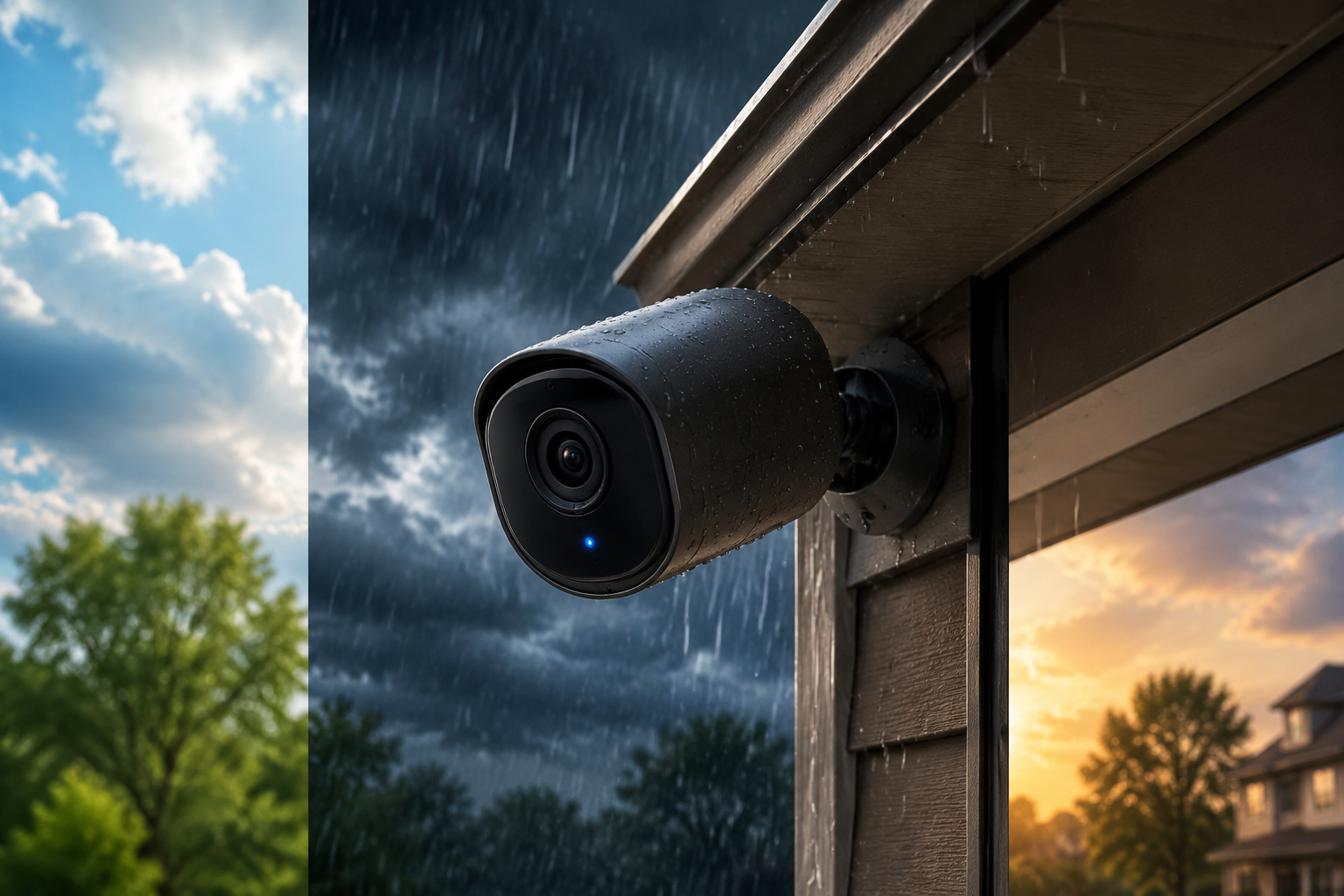
The important part is not just owning cameras. It is preserving footage across the outage-prone window when it may matter most. Cloud clips are convenient until broadband fails, a subscription setting shortens retention, or the camera misses the continuous context. Local recording, battery-backed network gear, onboard storage, or a recorder that stays powered can keep the evidence from depending entirely on the internet.
Camera placement should favor evidence over spectacle. A view of the garage door, driveway, front entry, back door, main exterior openings, and vulnerable outbuildings is more useful than a dramatic sky view. Indoor cameras in garages, mechanical rooms, or common areas can document water entry and door failure without recording private spaces unnecessarily. For camera systems that reduce cloud dependency, use the guide to security cameras without cloud storage.
Access Control Matters When Nobody Can Stand at the Door
Smart locks and garage access do not reduce wind damage by themselves, but they can reduce recovery friction. If a neighbor, contractor, relative, or emergency crew needs access after the storm and the homeowner cannot safely get back, remote unlock can matter. The same system should keep an access log, because post-storm entry should be controlled rather than improvised through hidden keys and open doors.
This feature needs restraint. Remote access should use temporary codes, named users, and expiration times. If the network is down, a keypad code known to a trusted person may be more dependable than an app unlock. After the event, codes should be deleted or rotated as part of the cleanup, just like tarps, photos, and claim numbers.
Claims About Savings Need a Careful Reading
Resideo has published material arguing that smart home technology can reduce claim costs and help prevent costly damage, but the available material does not provide enough crawlable methodology here to treat it as a hard, independently verified tornado-damage figure.[4] It is reasonable to treat that as a signal that insurers and device makers see value in early detection and prevention. It is not enough to claim a specific savings percentage for tornado-zone homeowners.
That distinction matters. Adoption is not effectiveness. A vendor example is not a frequency study. A beach-house automation case is not proof that every home should buy shutters. The stronger claim is simpler and better supported: certain sensors and automations can interrupt specific damage pathways, especially open-door exposure, wind-damaged exterior accessories, rain entering through motorized openings, post-storm water intrusion, and disputed claim timelines.
A Realistic Configuration Standard
A tornado-ready smart home does not need a discontinued tornado gadget or a dashboard full of novelty sensors. It needs a few automations with plain causality. If wind rises and the garage is open, close it. If outdoor screens are exposed, retract them before they become debris. If rain is detected and a motorized skylight is open, close it. If water appears after the storm, alert the people who can act. If a claim needs proof, preserve the footage.
- Pair each hazard trigger with a protective action, not just a notification.
- Back up the hub, router, cameras, and openers that must work during outages.
- Use flood sensors as the post-impact safety net, especially below roof and plumbing vulnerabilities.
- Keep camera footage available before, during, and after the storm, preferably with local or outage-resilient storage.
- Keep warning systems separate from damage mitigation, so alerts tell people where to go and automations tell the house what to do.
That is the useful ceiling for smart home storm detection systems for tornado damage. They do not lower the tornado threat. They reduce the avoidable damage that happens when openings stay exposed, water goes unnoticed, access gets improvised, and the evidence disappears with the power.
Policy Updates & Reader Notes
Privacy policies, monitoring plan prices, and security disclosures change frequently. Report new data retention terms, updated plan pricing, or new vulnerability disclosures below. For formal editorial corrections, use the contact page.
Comments
Join the discussion with an anonymous comment.