
Which Wellness Tech Deals Fit Your Smart Home
Before you buy discounted wellness tech, you need two answers: is the price real, and will the device actually work with your smart home setup? This compatibility-checked deal roundup gives both for every health gadget — dated prices, protocol and hub status, and where the next real sales land.
Expired Prime Day 2026 deal cards: compatibility before percentage off
Prime Day 2026 ran June 23–26, and the sale observations below are expired as of August 2, 2026. Treat them as price-history anchors, not live checkout prices. That matters because Consumer Reports has documented a familiar sale-event trick: retailers may remove an existing sale, then relist the same price with a larger claimed discount during Prime Day framing.[1]
| Device or category | Observed sale price and date | Protocol / smart-home reality | Hub or platform check, verified Aug. 2, 2026 | Subscription, FSA/HSA, or health note | NestGrid status |
|---|---|---|---|---|---|
| Oura Ring 4 | $259, described as 48% off a $499 reference price during Prime Day 2026 observations.[2] | Wearable health ring; app-centered, not a Matter/Thread/Zigbee smart-home device. | Best treated as a health-tracking purchase that may sync through phone health platforms, not as a hub-native automation sensor. | Oura device and subscription were covered in FSA/HSA wearable-deal context; subscription cost is $6/month or $70/year.[3][4] | Workaround — strong wellness use case, weak smart-home fit. |
| Whoop | 17% off noted among Prime Day fitness and wellness deals; no exact checkout price was available in the cited deal note.[2] | Wearable recovery platform; app/subscription centered. | No meaningful hub-native Matter/Thread path from the cited sale material. | Membership pricing context: $239/year or $399 for two years.[4] | Workaround — buy for recovery metrics, not automations. |
| Wyze Smart Scale / Scale X / Scale Ultra BodyScan | Wyze Smart Scale at $31; Scale X at $39.98; Scale Ultra BodyScan at $104.98 in Prime Day 2026 deal observations.[5] | Smart scale category is usually app-sync first. Confirm exact model behavior before assuming anything beyond phone-platform syncing. | Apple Health / Google Fit / Fitbit-style sync is the practical path; not a hub-native Matter/Thread scale category. | PCMag found Wi-Fi scales more reliable than Bluetooth-only models because they can sync without a nearby phone.[6] | Workaround — fine for health logs, limited for smart-home control. |
| Etekcity Smart Scale / Etekcity HR | Etekcity Smart Scale at $19.96, 17% off; Etekcity HR at $64.47 in Prime Day 2026 deal observations.[5] | App-mediated smart scale category; protocol details must be checked by exact listing. | Use if the companion app and health-platform sync are enough. Do not assume hub-native behavior from the word “smart.” | If choosing between otherwise similar scale deals, Wi-Fi sync is usually more convenient than Bluetooth-only sync.[6] | Workaround — acceptable if app sync is the goal. |
| Renpho Bluetooth scale | $17 in the smart-scale deal cluster noted by PCMag/ZDNET/Athletech News context.[6] | Bluetooth scale; phone proximity matters. | No hub-native path from the cited material. It belongs in the health-app lane. | Cheapest useful scale deals can still be annoying if the phone is not nearby when household members weigh in. | Workaround — low-price health gadget, not smart-home infrastructure. |
| Hatch Restore 3 | $136, saving $34 in Prime Day 2026 wellness-gadget observations.[5] | Sleep routine device; sale coverage does not establish Matter/Thread/Zigbee hub-native behavior. | Treat as vendor-app wellness hardware unless the exact listing proves otherwise. | Useful if the household wants a bedside routine device more than automations. | Investigating — do not buy on smart-home assumptions. |
| Soundcore Sleep A30 | $160, saving $70 in Prime Day 2026 wellness-gadget observations.[5] | Sleep earbuds / app-centered wearable-adjacent device. | No hub-native smart-home role from the cited sale material. | Judge by comfort, sleep use, and app behavior rather than hub compatibility. | Workaround — wellness accessory, not a smart-home node. |
| Canopy Bedside Humidifier | $93.50, 41% off in Prime Day 2026 wellness deal observations.[2] | Wellness appliance; sale material does not establish a local smart-home protocol path. | Check the exact model for app behavior before treating it as automation-ready. | A humidifier can be a good household buy without being a good hub device. | Investigating — price looked notable, integration unproven. |
| Blueair Pure 311i Max | $149.49, 35% off in Prime Day 2026 wellness deal observations.[2] | Air purifier; smart behavior varies by model and app ecosystem. | Do not read “works with Alexa/Google” as proof of local hub integration. | Potentially useful paired with a separate air-quality monitor, but confirm platform behavior before checkout. | Investigating — plausible appliance deal, platform check required. |
| LifePro red light panel | $137 in Prime Day 2026 wellness-gadget observations.[5] | Wellness/recovery device; no smart-home protocol value shown in the cited deal material. | No hub-native role to verify from the sale source. | Buy only if the wellness use case stands on its own. | Investigating — discount may matter, smart-home fit does not. |
| Blood pressure monitors, especially Omron models | Not a percentage-off pick here; handled as a validation-first category. | Usually app/phone health tracking rather than smart-home infrastructure. | Automation potential is secondary. Validation, cuff type, and measurement reliability come first. | CNET points shoppers to validatebp.org, notes Omron models, says Omron Complete was the first FDA-approved EKG + blood-pressure combo in the US, and reports that the American Heart Association does not recommend wrist or finger cuffs.[7] | Confirmed for health-shopping discipline, not for smart-home integration. |
| Air-quality monitors: Eve Room, Airthings View Plus, AirGradient ONE, Qingping Pro Gen 2, Temtop S1 | Price span in current research runs from Temtop S1 at $27.99 to PurpleAir Zen at $299 and Airthings View Plus around $300; Eve Room launched at $99.95.[8][9] | This is the wellness category with the widest protocol spread: standalone monitors, cloud/app monitors, Home Assistant-friendly monitors, and rare Thread/Matter-adjacent options. | Eve Room is the rare Bluetooth + Thread health monitor with Matter-readiness via Thread and no bridge requirement; Airthings View Plus supports IFTTT/Alexa/Google Assistant and has Home Assistant paths; AirGradient ONE has an ESPHome route.[9][10][8] | Qingping Pro Gen 2 is attractive on hardware price at $149.99 but HouseFresh flagged a buggy Xiaomi Home companion-app experience.[8] | Confirmed / Workaround by model — this is the category to scrutinize, not skim. |
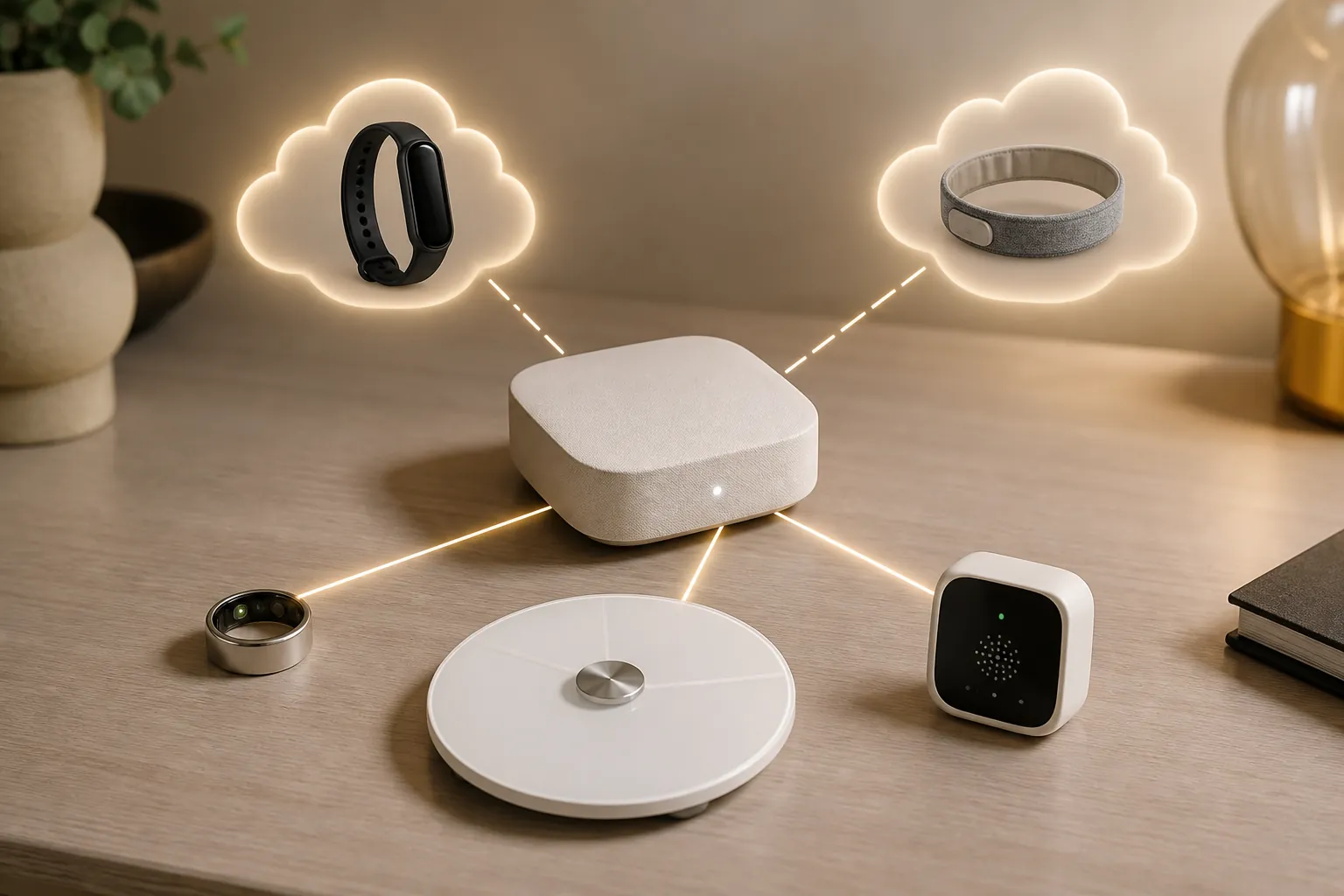
That table is the whole trick behind shopping wellness-tech deals for smart-home health gadgets without getting trapped by the sale page. A discounted ring, scale, purifier, humidifier, or sleep gadget can be genuinely useful. The part that needs checking is whether it becomes part of the home system or simply adds another vendor app to the household.
The status labels are deliberately unforgiving. Confirmed means the cited material gives a real integration path worth planning around. Workaround means the device can still be a sensible health purchase, but the smart-home value probably runs through phone sync, cloud services, or indirect automations. Investigating means the price may be tempting but the platform claim is not strong enough to treat as integration-ready.
Why wellness gadgets behave differently from ordinary smart-home gear
A smart plug is easy to judge: protocol, load rating, hub support, done. Wellness gear is messier because the product’s main job often happens inside a health app, not inside the house. Rings, sleep earbuds, scales, cuffs, and recovery gadgets may collect useful personal data while offering almost nothing that Home Assistant, Matter, Thread, Zigbee, or a local automation engine can use directly.
That does not make the category bad. It means the word “smart” is doing weaker work. In this category, “smart” often means Bluetooth pairing, cloud account sync, a companion app, or a voice-assistant skill. “Works with Alexa” or “works with Google” may only mean cloud voice control. It does not automatically mean local device state, reliable sensor exposure, or hub-native automation behavior.
Before buying, route the device through the same compatibility discipline you would use for locks, sensors, and Thread devices: start with Compatibility & Protocols, then check whether the model has a dated status in Update Watch. A sale price should not be the first filter when the product may never speak to the system you already run.
Smart scales: useful health logs, usually weak home integrations
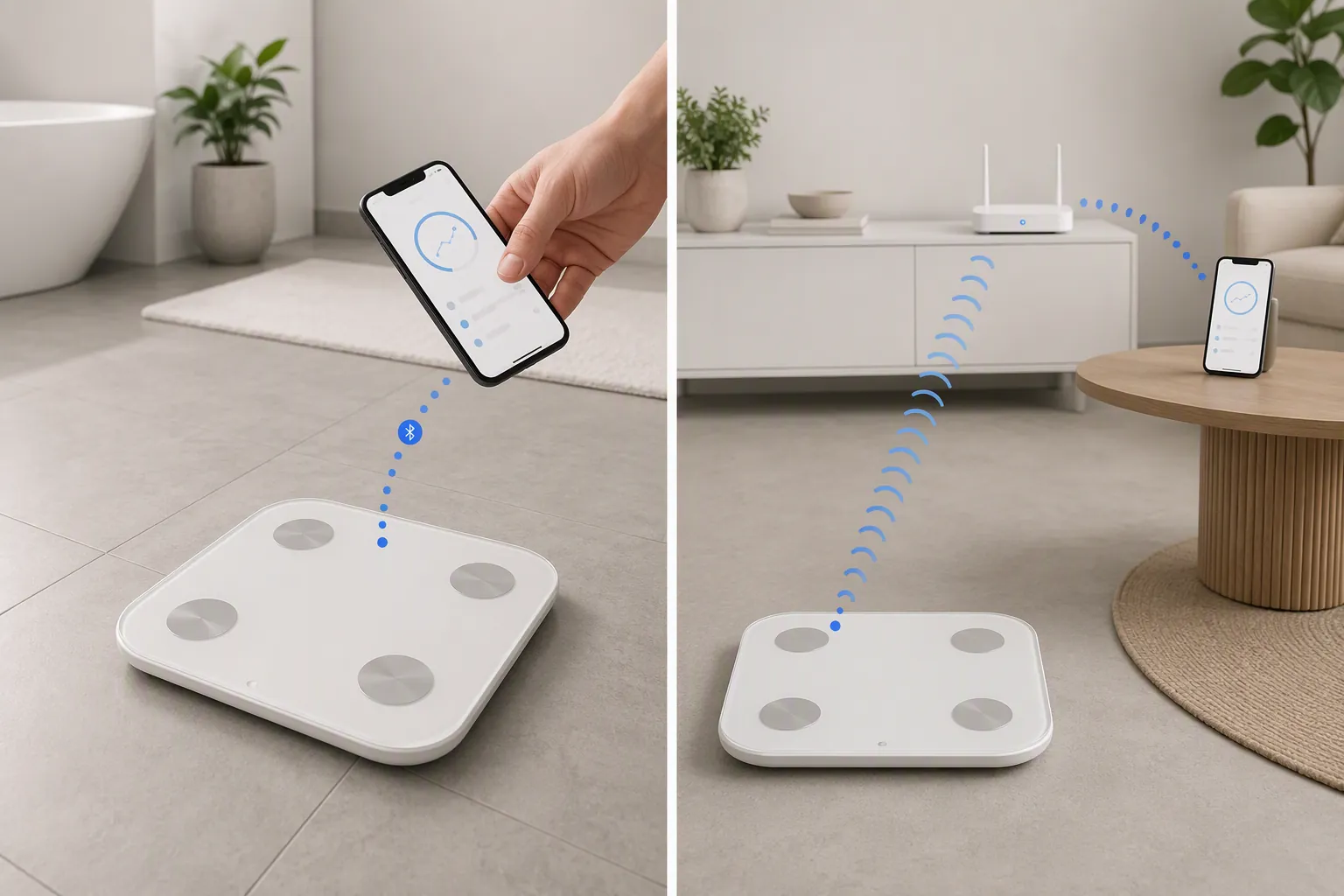
The smart-scale deals are the classic checkout trap. A $17 or $31 scale can be perfectly adequate if the goal is weight, body-composition estimates, and Apple Health, Google Fit, or Fitbit sync. It is much less exciting if the buyer expected a native sensor that appears cleanly in a hub.
PCMag’s testing gives the practical rule: Wi-Fi scales synced more reliably than Bluetooth-only models because they did not require a nearby phone at weigh-in time.[6] That matters in a real household. If one person weighs in before work while the paired phone is upstairs, the cheap Bluetooth scale may still record locally or wait for sync, but the experience is more fragile. A Wi-Fi model is usually less fussy for multi-person, routine use.
The smart-home conclusion stays narrow: buy a discounted scale for the health platform it supports, not because it sounds like a home-automation device. If the listing does not clearly expose a local API, Home Assistant integration, or a documented bridge path, assume the data lives in the vendor app and in phone health ecosystems.
Air-quality monitors are where compatibility actually gets interesting
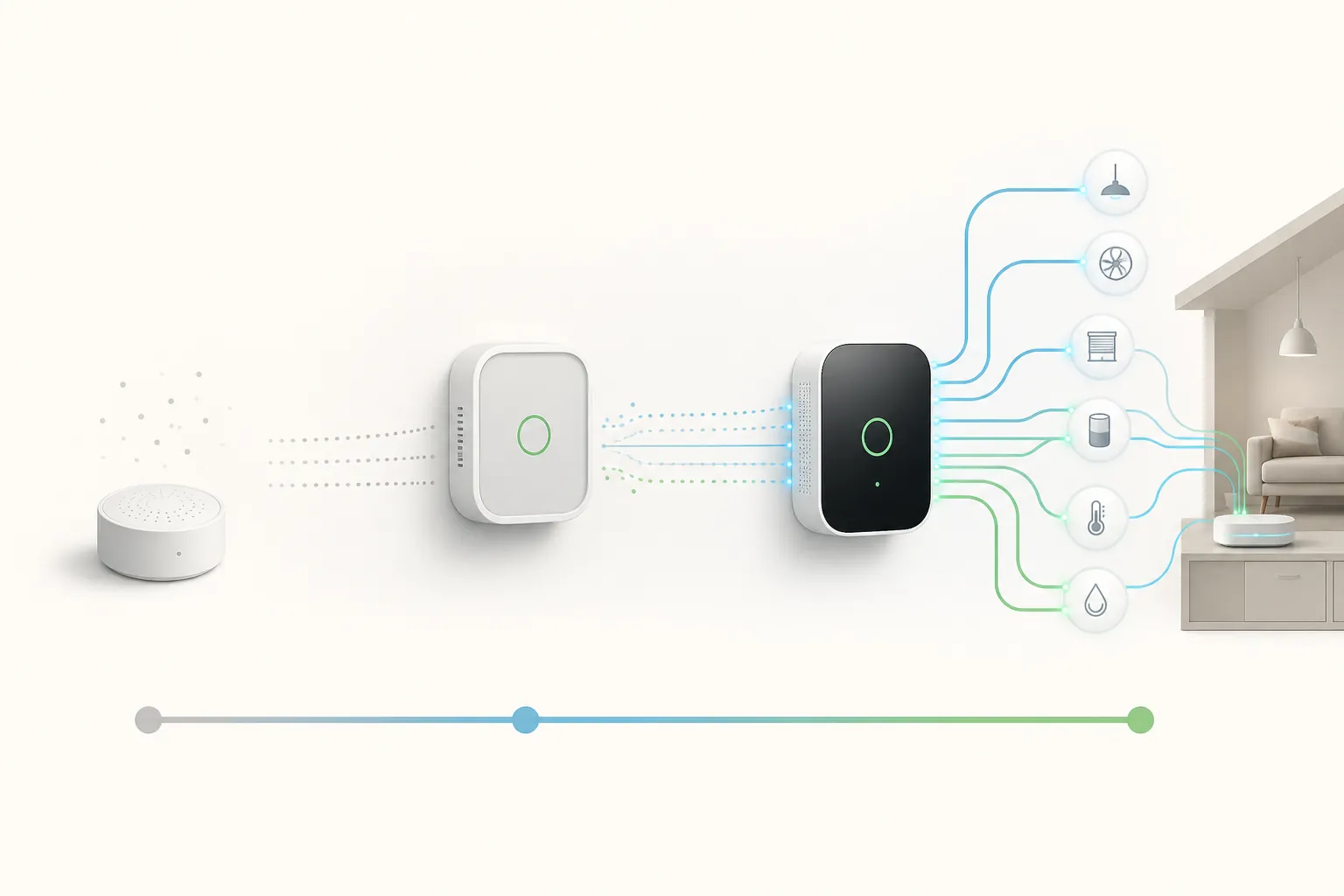
Air-quality monitors deserve more attention than most wellness deals because they can affect the home itself. A PM2.5 spike, CO2 rise, VOC change, or humidity swing can drive a purifier, HVAC fan, humidifier, dehumidifier, window alert, or notification. This is the rare wellness-adjacent category where sensor data can be genuinely useful to a smart home.
| Monitor | What the cited material supports | Best buyer fit | Status |
|---|---|---|---|
| Eve Room | Bluetooth + Thread, Matter-ready via Thread, no bridge needed, and launched at $99.95.[9] | Apple Home / Thread buyers who want one of the rare wellness-adjacent sensors with a hub-native direction. | Confirmed, with Thread reliability still worth watching. |
| Airthings View Plus | About $300 in the current air-monitor price span; supports IFTTT, Alexa, and Google Assistant, with Home Assistant cloud and local BLE paths noted in the integration research.[8][10] | Home Assistant users who accept either cloud or BLE integration tradeoffs for a more serious indoor-air monitor. | Confirmed / Workaround depending on chosen integration path. |
| AirGradient ONE | HouseFresh identifies it as an air-quality monitor with an ESPHome route.[8] | Home Assistant buyers who are comfortable with ESPHome-style local integration. | Confirmed for DIY-friendly Home Assistant setups. |
| Qingping Pro Gen 2 | $149.99 via Xiaomi Home, but HouseFresh flagged the companion app as buggy.[8] | Buyers who value the hardware and are willing to tolerate app friction or investigate alternative paths. | Investigating. |
| Temtop S1 | $27.99 at the low end of the air-monitor span.[8] | Budget checking or standalone readings, not serious smart-home automation. | Investigating / standalone. |
| PurpleAir Zen | $299 in the upper end of the cited price span.[8] | Buyers comparing serious air-monitor options, especially where outdoor/community air data matters. | Investigating for hub behavior. |
Eve Room is the exception that proves the category rule. It is not cheap in the way a Prime Day impulse gadget is cheap, but the protocol story is unusually clean for a health-adjacent device: Bluetooth plus Thread, Matter-readiness via Thread, and no bridge requirement.[9] If your house already depends on Thread, also keep an eye on Thread stability and border-router behavior; NestGrid’s Thread reliability update watch is the kind of boring maintenance reading that matters more than a flashy discount.
Airthings and AirGradient are the other serious paths to examine before the next sale. Airthings View Plus is not the same kind of local-first product as an ESPHome monitor, but its integration surface is more credible than a random app-only sensor. AirGradient ONE, by contrast, is attractive if you are already comfortable treating ESPHome as part of the house. For the broader reliability question — why monitoring devices often sit outside neat Matter/Thread/Zigbee lists — the same logic applies as in NestGrid’s smart weather monitoring protocol analysis.
If your immediate concern is smoke season or indoor particulate response, prioritize PM2.5/PM10 exposure and automation path over the prettiest screen. NestGrid’s DIY wildfire early-warning Home Assistant recipe is a better shopping companion than a generic “best air monitor deals” list because it starts from what the house can do with the reading.
Wearables and sleep tech: count the subscription before celebrating the sale
Oura, Whoop, Fitbit, Apple Watch, Pixel Watch, and Galaxy Watch can all be reasonable wellness purchases for the right buyer. Some also show up in FSA/HSA shopping context, which can make the real household math better than the sticker price alone suggests.[3] But they should not be described as smart-home devices just because they measure sleep, recovery, stress, or heart rate.
Subscription math changes the discount. Oura costs $6/month or $70/year, Whoop costs $239/year or $399 for two years, and Fitbit Premium costs $10/month or $80/year.[4] A ring discounted to $259 may still be a good buy, especially with FSA/HSA eligibility in the picture, but the checkout price is not the total cost of ownership.
The smart-home angle is usually indirect. A sleep tracker may help you understand bedtime habits. A watch may sync workouts or health metrics. A recovery band may nudge behavior. Unless the product exposes reliable states to your automation system, though, it is a personal health platform first and a home device only by workaround.
Blood pressure monitors: validation beats automation
Blood pressure monitors need a different filter. This is not the category for clever automations first. CNET points shoppers to validatebp.org, discusses Omron models, notes Omron Complete as the first FDA-approved EKG + blood-pressure combo in the US, and reports the American Heart Association position against wrist and finger cuffs.[7]
The practical buying rule is simple: choose a validated upper-arm monitor that fits the user correctly before caring whether the readings can be pushed into an app. If app sync helps you share logs or keep a routine, good. If the monitor is clinically questionable but automation-friendly, that is the wrong trade.
When to act next, now that the Prime Day prices are gone
Do not chase the expired June prices as if they are still live. Use them as comparison anchors for the next recurring windows. October Prime Big Deal Days is expected as a practical watch period, but 2026 dates are not confirmed. The precedent to remember is that TechRadar covered Amazon Prime Big Deal Days returning on October 7–8 in 2025.[11]
After that, Black Friday and Cyber Monday are the obvious electronics windows, followed by January health and fitness buying cycles. None of those windows guarantees a better price on a specific ring, scale, monitor, purifier, or cuff. They do give you a sane time to re-check the same card fields: observed price, original-price context, protocol, hub path, subscription, and validation.
This is also where sale skepticism helps. ZDNET’s wearables editor described most sales events as only “marginally helpful,” which is about right for this category.[3] The best deal may be the one that avoids a second purchase six months later because the first device never fit the home.
Compatibility checklist for the next wellness-tech sale
- Write down the protocol before the price: Matter, Thread, Zigbee, Wi-Fi, Bluetooth, BLE, ESPHome, cloud API, or app-only.
- Separate “works with Alexa/Google” from real hub behavior. Voice control is not the same as local state exposure.
- For scales, prefer Wi-Fi if multiple people will use the device and you want reliable syncing without a nearby phone.
- For air-quality monitors, look for the automation path first: Thread/Matter, Home Assistant integration, ESPHome, BLE, cloud, or none.
- For wearables and sleep trackers, add the subscription to the sale price before calling it a deal.
- For FSA/HSA shopping, verify eligibility at checkout and keep the receipt language clear enough for reimbursement.
- For blood pressure monitors, check validation and cuff type before app features.
- Compare only dated prices. A claimed 48% off is less useful than knowing the exact observation date and the price it replaced.
In wellness tech, the lasting value is rarely the claimed percentage off. It is whether the discounted device belongs in the smart home you already run.
References
- When is Amazon Prime Day 2026? — Consumer Reports
- Last Call on Prime Day: Oura, Whoop & Nike Among the Best Fitness & Wellness Deals — Athletech News
- The best last minute Prime Day smartwatch and fitness tracker deals I recommend right now — ZDNET
- The 2 Best Sleep Trackers of 2026 — Wirecutter
- These 7 wellness gadgets helped me become more mindful (and they're on sale) — ZDNET
- The Best Smart Scales We've Tested for 2026 — PCMag
- Best Blood Pressure Monitors for 2026 — CNET
- The best air quality monitors we have tested — HouseFresh
- New Eve Room expands Eve's Thread portfolio — Eve Systems
- Airthings View Plus — Airthings
- Amazon Prime Big Deal Days is back in October — TechRadar