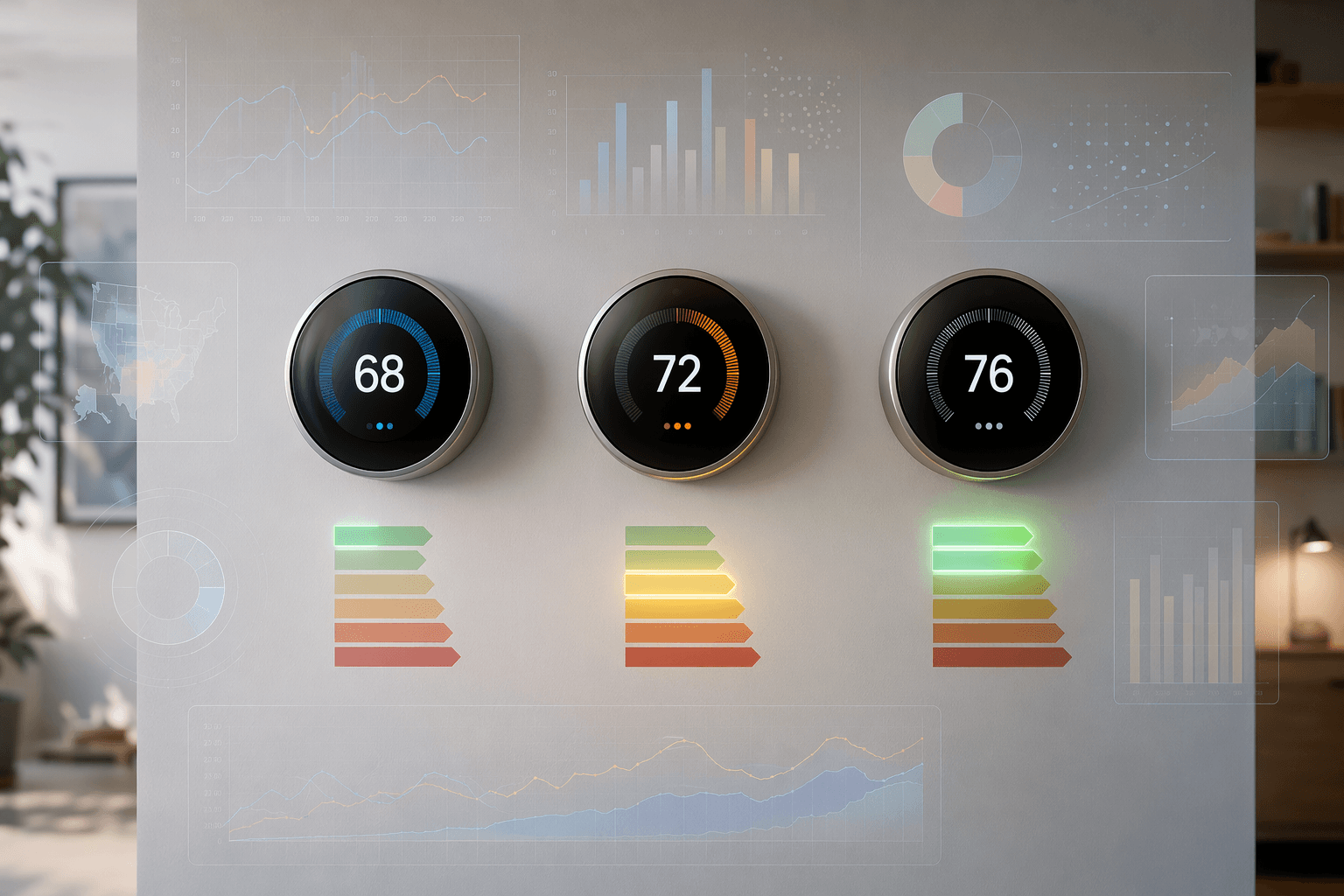
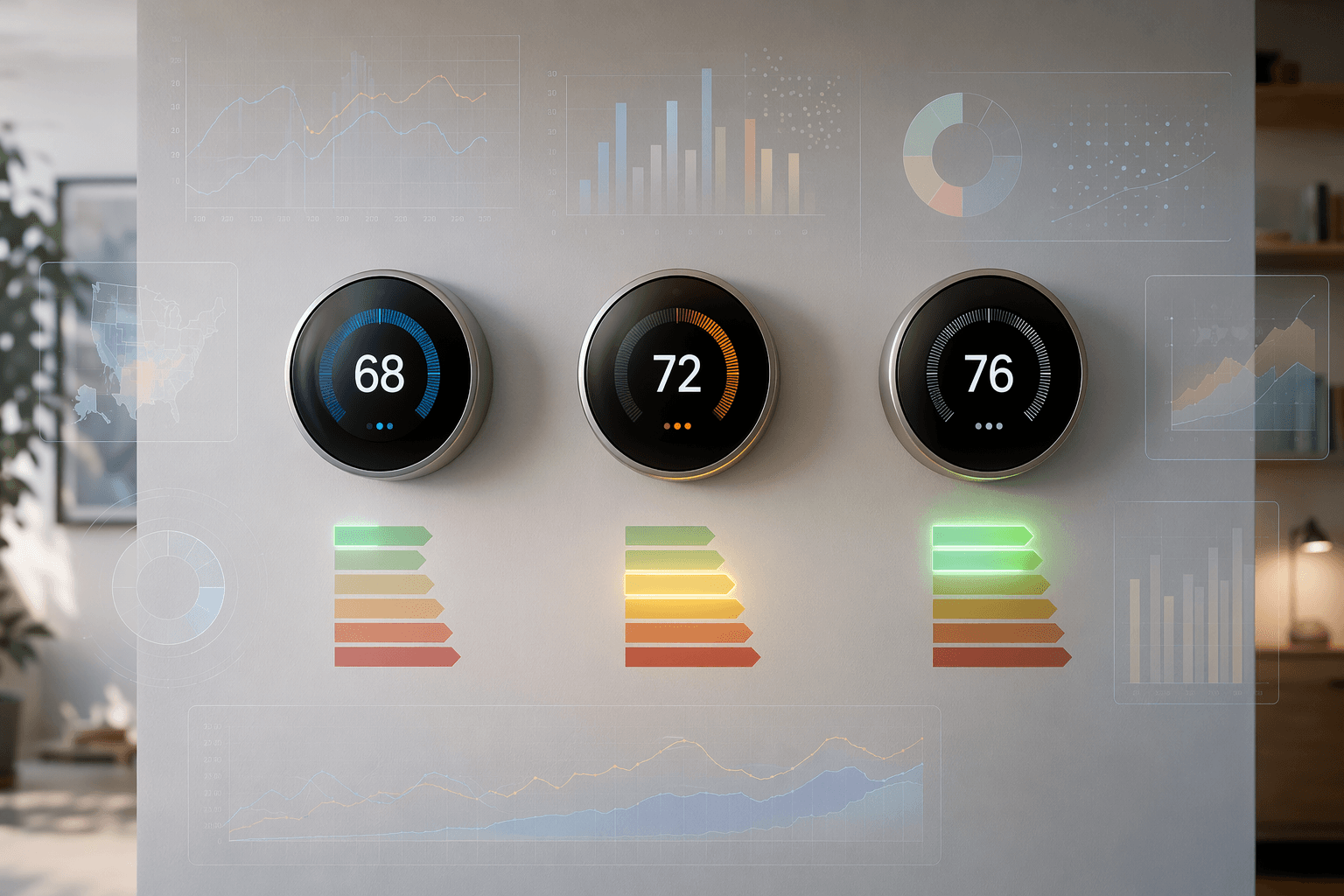
If the question is “which best smart thermostat saves me the most energy,” the honest answer starts with the HVAC system, not the logo on the wall. For most central forced-air homes, Nest has the strongest public savings evidence because its commonly cited savings figures come from independent studies: 10–12% on heating and 15% on cooling, averaging about $140 per year.[2] For electric baseboard or other line-voltage heat, Mysa belongs in the conversation because it serves a category most mainstream smart thermostats do not, though its “up to 26%” savings claim is a manufacturer claim tied to scheduling, geofencing, and Intelligent Eco Mode.[2] For a rebate-driven purchase, the winner may be whichever ENERGY STAR-certified model your utility discounts deeply enough to shorten payback.
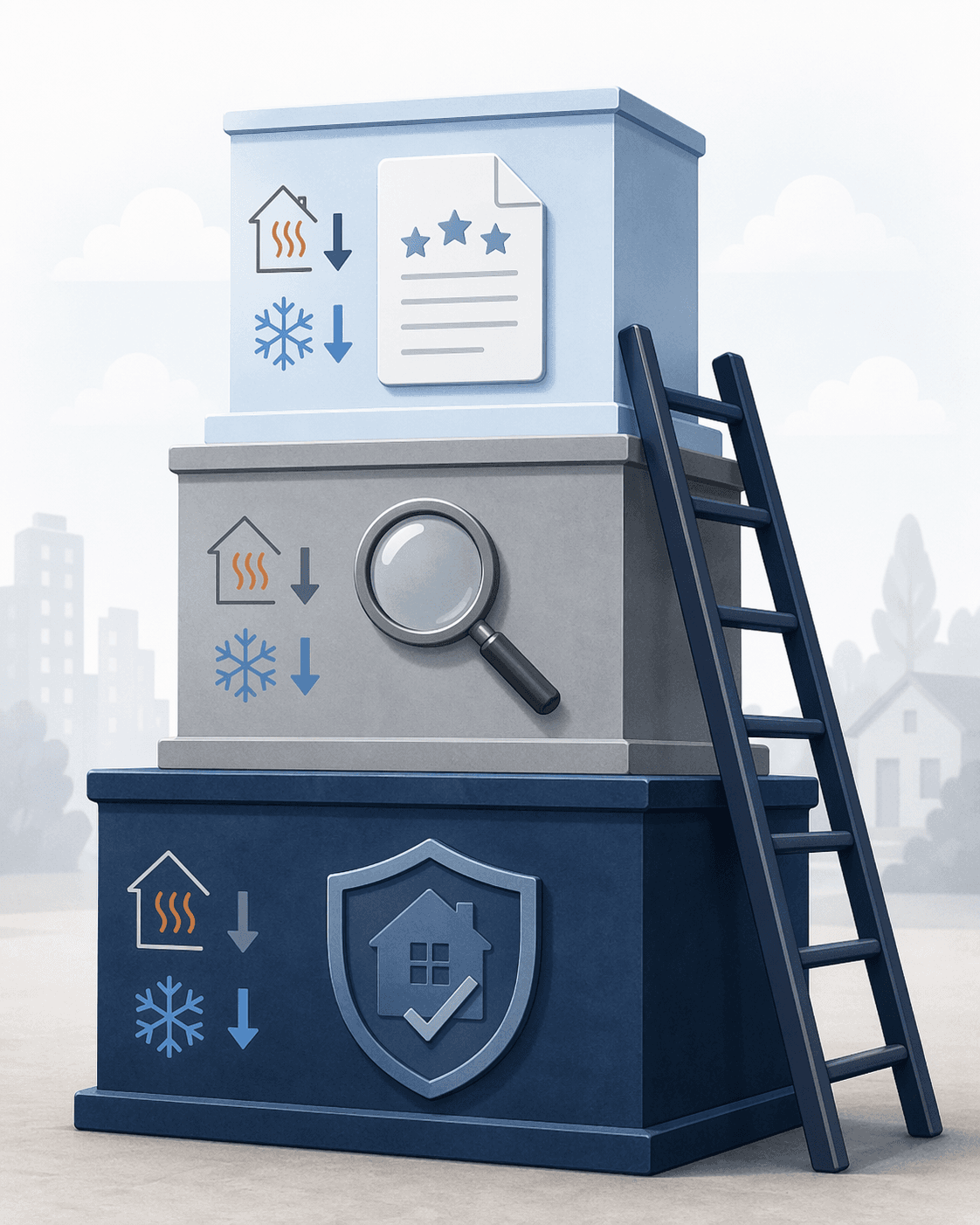
The floor matters before the ceiling. ENERGY STAR certification requires smart thermostats to show at least an 8% heating runtime reduction and a 10% cooling runtime reduction compared with the installed base of other U.S. thermostats, using EPA-provided software on real-world field data.[1] That is not the flashiest number in the category. It is, however, the most useful anchor because it tells you what a certified product had to demonstrate before the brand’s marketing copy entered the room.
Start With the Evidence, Then Pick the Thermostat
Smart thermostat savings claims do not all mean the same thing. A certified runtime reduction, an independent field study, a company analysis, and an “up to” claim are different kinds of evidence. They can all be useful, but they should not be weighed equally when you are trying to decide whether a device will earn back its price on your own utility bill.
| Evidence type | What it tells you | How to use it when buying |
|---|---|---|
| ENERGY STAR certification | Certified models meet at least 8% heating and 10% cooling runtime reduction against the installed U.S. thermostat base.[1] | Use this as the conservative verified baseline, especially when comparing discounted models. |
| Independent studies | Nest’s cited savings are 10–12% heating and 15% cooling, averaging about $140 per year.[2] | Give this more weight than brand-side claims, while still checking whether your climate and usage resemble the study context. |
| Manufacturer analysis | Ecobee cites up to 23% savings on heating and cooling costs from an internal study of 2,013 customers.[2] | Treat it as a promising company-side estimate, not a guaranteed bill reduction. |
| Specific-use manufacturer claim | Mysa cites up to 26% annual electric baseboard heating savings through scheduling, geofencing, and Intelligent Eco Mode.[2] | Consider it only if you have compatible line-voltage electric heat and will actually use the controls. |
| Utility rebates | Programs commonly change the installed cost by $50–$125 in available examples.[2] | Check your ZIP code before comparing payback between models. |
This is why a general “best overall” ranking can be less useful than it looks. A thermostat can have a polished app, a beautiful display, and broad smart-home support, and still be the wrong savings bet for a house with electric baseboard heat. Another model can look plain and win on payback because a local utility rebate cuts the upfront cost enough to matter.
The Central HVAC Verdict: Nest Has the Strongest Public Savings Case
For a typical central forced-air system, especially one with both heating and cooling loads, Nest has the cleanest savings argument in the available evidence. The cited Nest range—10–12% heating savings and 15% cooling savings—is stronger than the ENERGY STAR certification floor, and it comes from independent studies rather than a company-only analysis.[2]
That does not mean every Nest installation saves $140 a year. The average cited figure is not a promise to a mild-climate household, a family that keeps narrow temperature setbacks, or a home where someone is always overriding the schedule.[2] It does mean that, among the named models in this evidence set, Nest gives a central-HVAC buyer the best combination of recognizable model fit and stronger-than-baseline public savings support.
Ecobee’s savings claim is larger on the page: up to 23% on heating and cooling costs, or about $200 per year, from a study of 2,013 customers.[2] The size of that customer sample is worth noting. So is the word “internal.” A company analysis can still be useful, especially if you are comparing broad expectations, but it does not carry the same weight as an independently described savings figure.
That is the practical split: Nest looks better if your main filter is verified-style savings evidence for central HVAC. Ecobee remains a serious choice if its room sensors, interface, or ecosystem fit will make your household more likely to let the thermostat manage setbacks instead of fighting them. Savings do not come from the wall plate. They come from changed runtime.
Electric Baseboard Heat Is a Different Buying Decision
Line-voltage electric heat should not be lumped into the same basket as central forced air. Many familiar smart thermostats are designed for low-voltage HVAC systems, not electric baseboard circuits. For that household, the most energy-saving thermostat is not the one with the best central-HVAC study. It is the one that can safely control the system in the first place.
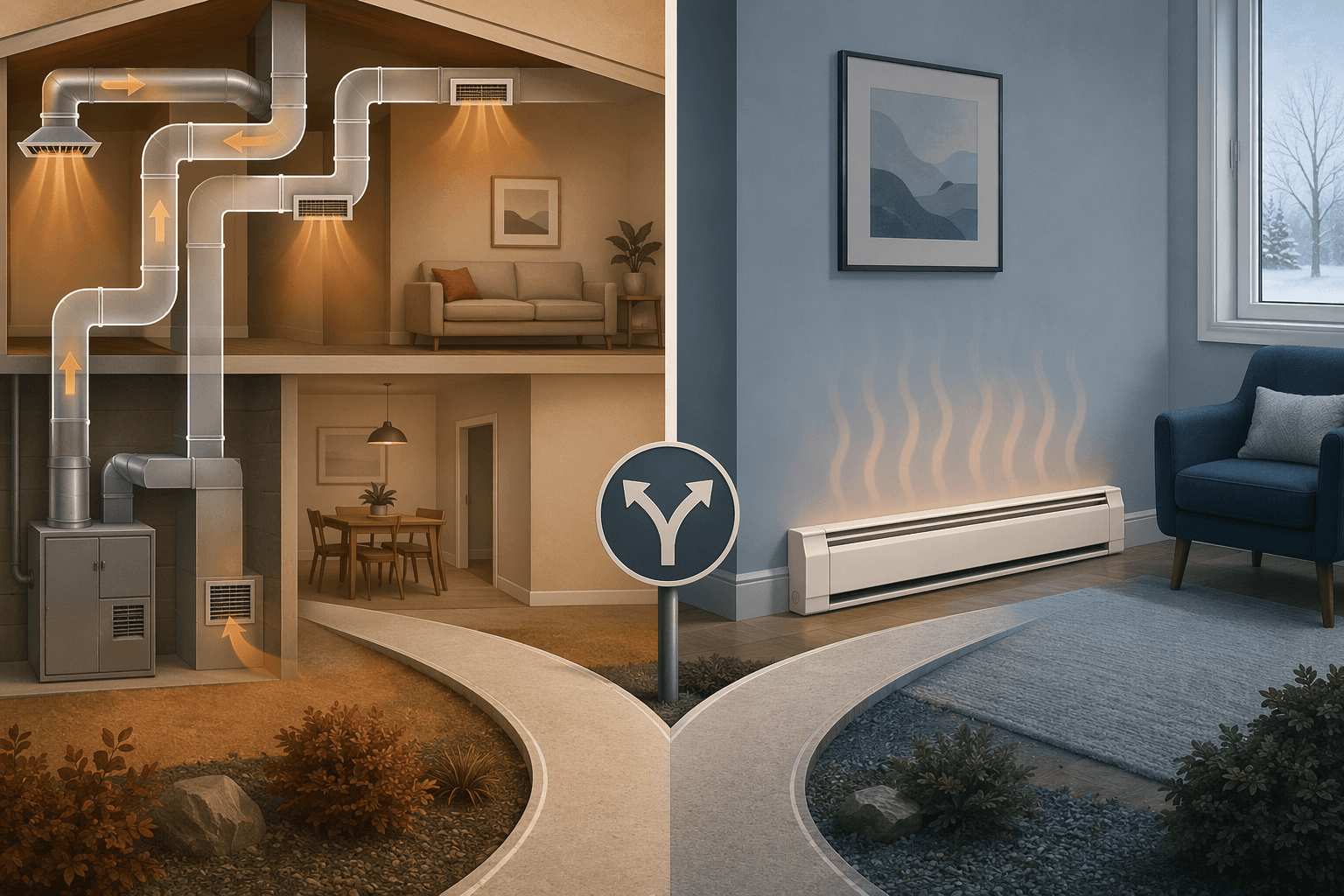
Mysa’s claim—up to 26% savings on annual electric baseboard heating bills—deserves attention because it addresses that neglected category.[2] It also needs the same restraint any “up to” figure deserves. The claim is tied to Mysa’s own stated use case: scheduling, geofencing, and Intelligent Eco Mode for electric baseboard heat.[2] If you have gas forced air, that number is not your number. If you have compatible electric baseboard heat and currently heat rooms on a loose manual schedule, the potential for avoided runtime is much more relevant.
Electric resistance heat can make small behavior changes feel expensive or rewarding faster than a homeowner expects because the thermostat is controlling direct electric heat rather than a furnace cycle. The available evidence does not support a universal dollar estimate for every Mysa household, so the safer conclusion is narrower: for line-voltage electric heat, Mysa may be the most relevant savings-focused choice, but the headline percentage should be treated as a company-side ceiling, not a guaranteed outcome.
Where Ecobee Fits When the Biggest Claim Is Also the Caveat
Ecobee is the awkward but important middle case. Its “up to 23%” savings claim is higher than Nest’s cited heating and cooling percentages, and the internal study included 2,013 customers.[2] If all savings claims were the same kind of evidence, Ecobee would simply look like the winner for central HVAC.
They are not the same kind of evidence. “Up to” language usually describes an upper-end result or favorable conditions, not the middle of what every buyer should expect. Internal analysis also gives the company more control over framing than an independent study. That does not make the number useless. It makes it a number to use after you have checked compatibility, household behavior, and rebates—not before.
Ecobee can still be the better buy in a house where room-level comfort problems lead people to override the thermostat. A model that helps keep occupied rooms comfortable may allow deeper setbacks elsewhere or reduce the impulse to crank the whole system. The research provided here does not quantify that specific behavior change, so it should stay in the realm of fit, not a separate savings claim.
The Rebate Can Beat the Percentage Difference
After December 31, 2025, the federal tax credit is no longer part of the smart thermostat payback math; utility rebates are what remain for many buyers. If you want the full tax-credit context, see this deeper guide to smart thermostat savings in 2026.
This matters because a $50–$125 rebate can change the buying decision more than a few points of claimed energy savings. Available examples include Focus on Energy at $50, Mass Save up to $100, Georgia Power at $100, and ComEd at $100 plus $50 in cited program examples.[2] Those examples are not a national promise. Program amounts, eligible models, enrollment rules, and end dates can change by utility.
The most useful move is to check your ZIP code before you fall in love with a model. ENERGY STAR’s Rebate Finder is built for that lookup.[4] For a longer walk-through of rebate math and payback, use this site’s guide to ENERGY STAR rebates and smart thermostat payback.
| Your situation | Savings-first pick | Why |
|---|---|---|
| Central forced-air heating and cooling | Nest, if compatible | Its cited 10–12% heating and 15% cooling savings have stronger public evidence than manufacturer-only claims.[2] |
| Central HVAC with room comfort problems | Ecobee may be worth pricing | The internal savings claim is higher, but its practical value may depend on whether its features reduce overrides.[2] |
| Electric baseboard or line-voltage heat | Mysa, if compatible | It is built for a system type many mainstream models do not serve, with a company claim of up to 26% for that use case.[2] |
| Tightest payback target | Any ENERGY STAR-certified model with the best local rebate | Certification gives a verified baseline, and rebates can shift ROI more than small differences between claims.[1][2] |
How Much Savings Should You Actually Budget For?
For a conservative starting point, use ENERGY STAR’s certification threshold and national-average framing rather than the largest percentage you can find. The program’s smart thermostat requirement is based on demonstrated heating and cooling runtime reductions, and its FAQ describes about $50 per year as the national average savings context for certified smart thermostats.[1]
That is not the maximum possible savings. It is the number least likely to embarrass you when the bill arrives. From there, a central-HVAC household might look at Nest’s cited average of about $140 per year as a stronger but more model-specific reference point.[2] Ecobee’s roughly $200-per-year claim and Mysa’s up-to-26% electric baseboard claim should be treated as more conditional because they come from company-side analysis or specific use cases.[2]
If you want a broader dollar baseline before comparing models, this site’s guide to how much a smart thermostat saves in actual dollars is the better place to start. This comparison is narrower: separating model claims by evidence quality and HVAC fit.
National Potential Is Real, But It Will Not Predict Your Bill
There is a legitimate reason utilities care about smart thermostats at scale. Utility Dive reported on an August 2022 S&P Global/Kagan projection that 38.3 million installed U.S. smart thermostats by 2026 could save 15.5 TWh of electricity, and that full adoption could cut 9% of national space-conditioning energy, or 45.4 TWh per year.[3]
That is useful context, not a household forecast. The projection is directional and dates from 2022. Actual 2026 installations may differ, and national space-conditioning savings do not tell you whether your upstairs bedrooms will stay comfortable with a deeper nighttime setback. Use the macro number to understand why rebates and demand-response programs exist, not to predict next month’s bill.
If you want to layer utility program earnings on top of bill savings, read the separate guide to smart thermostat demand-response earnings. Demand-response payments and thermostat energy savings are related, but they are not the same line item.
A Savings Ranking That Respects the House
For central HVAC, Nest is the safest savings-first answer from the evidence available here because its cited heating and cooling savings are independently supported and sit above the ENERGY STAR certification floor.[1][2] For line-voltage electric baseboard heat, Mysa is the more relevant answer because it is aimed at that system type, with the caveat that its higher savings figure is a manufacturer claim tied to specific control features.[2] For the lowest-risk payback, an ENERGY STAR-certified thermostat with the best current utility rebate may beat a more impressive-looking model with no local incentive.
Feature roundups still have a place. If you care about voice assistants, displays, sensors, and smart-home platforms, use a broader best smart thermostat comparison alongside this savings view. If compatibility across ecosystems is the sticking point, the smart thermostat ecosystem guide may save you from buying a thermostat your household will not enjoy using.
The final buying test is plain: match the thermostat to your HVAC type and climate, verify current rebates by ZIP code, and do not count savings you will not let the thermostat create. Scheduling, setbacks, geofencing, eco modes, and demand-response participation are where the runtime changes happen. A smart thermostat left to behave like a manual thermostat is mostly an expensive display.
References
- ENERGY STAR Smart Thermostats FAQs for EEPS — ENERGY STAR
- Is a Smart Thermostat a Worthwhile Investment for Your Home? — What is Smart Energy
- Slow adoption of smart thermostats in the US misses big potential energy savings: S&P — Utility Dive
- ENERGY STAR Rebate Finder — ENERGY STAR
Data Updates
Know about updated rebate programs, changed subscription prices, or new ENERGY STAR certifications? Submit a note below to help keep this content current. For formal data corrections, use the contact page.
Comments
Join the discussion with an anonymous comment.