Resideo's analysis of 6,000 Honeywell Home thermostat users found average HVAC energy savings of 22% on heating and 17% on cooling, which works out to an estimated $204 per year. That sounds impressive, but the first thing I want to know is: measured how, and against what baseline?
Inside the Study: What the 22% Actually Measures
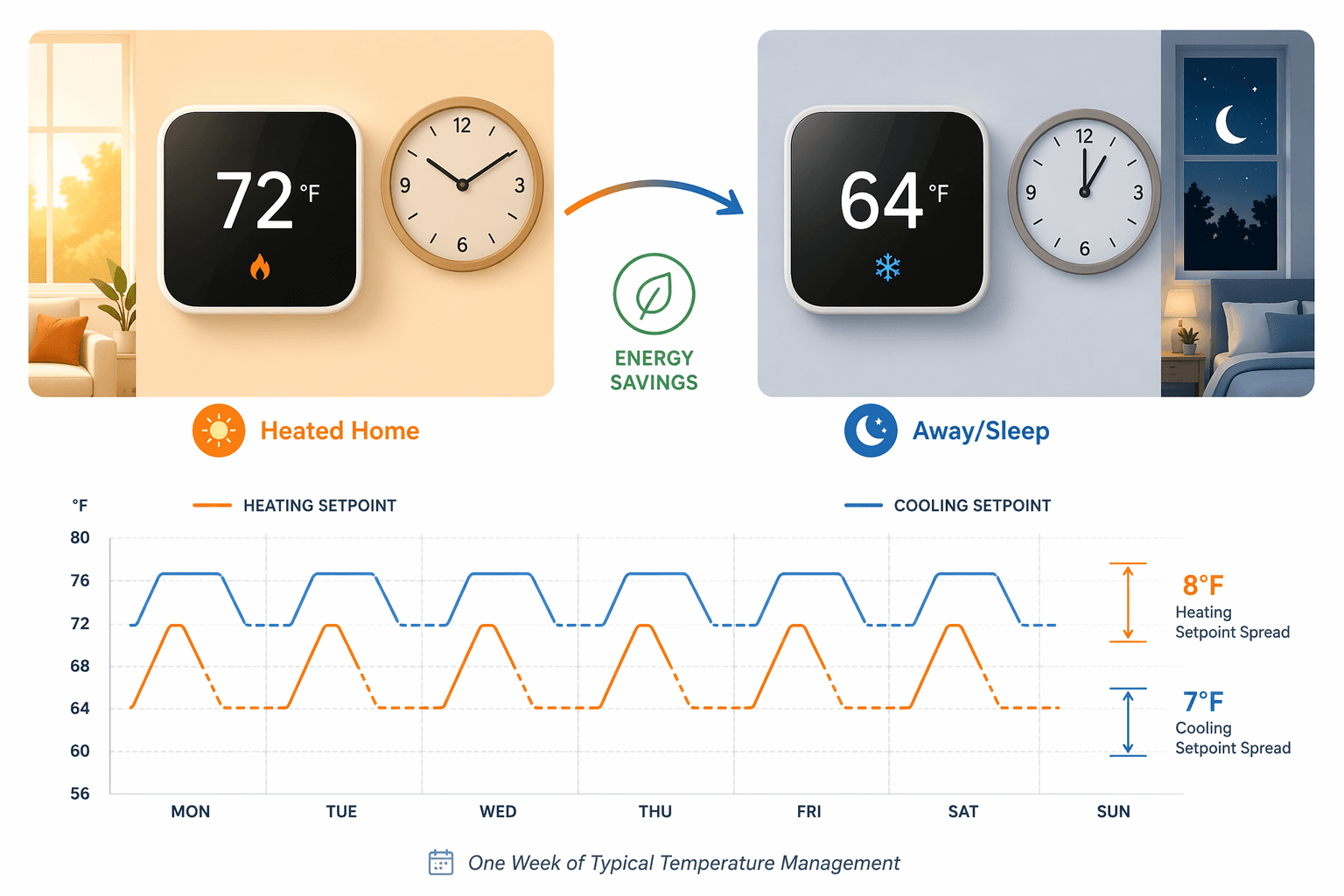
Resideo's methodology is worth a close look because it tells you both the credibility and the limits. The study pulled a random sample of more than 6,000 U.S. Honeywell Home ENERGY STAR thermostat users from 2023 data. The qualifying condition: users had to maintain a schedule routine with an 8°F heating setpoint spread and a 7°F cooling setpoint spread for at least 14 days per month. That means the savings are average HVAC energy cost savings for people who actually scheduled — not an "up to" figure. In other words:
- Sample: 6,000+ users
- Behavior: Scheduled with at least 8°F heating / 7°F cooling spread
- Duration: At least 14 days per month of consistent scheduling
- Result type: Average savings, not maximum possible savings
Heating savings are especially important because winter heating costs have risen sharply — the National Energy Assistance Directors Association estimates the average U.S. household will spend $995 to heat its home in winter 2025–2026, up 9.2% year over year. Resideo's own device data from 2,500 Honeywell Home thermostats shows that HVAC heating runtimes in January are three times higher than any other winter month. That means the scheduling difference in January — when you are away at work and the house can drop 8°F instead of staying warm all day — has an outsized effect on your annual bill.
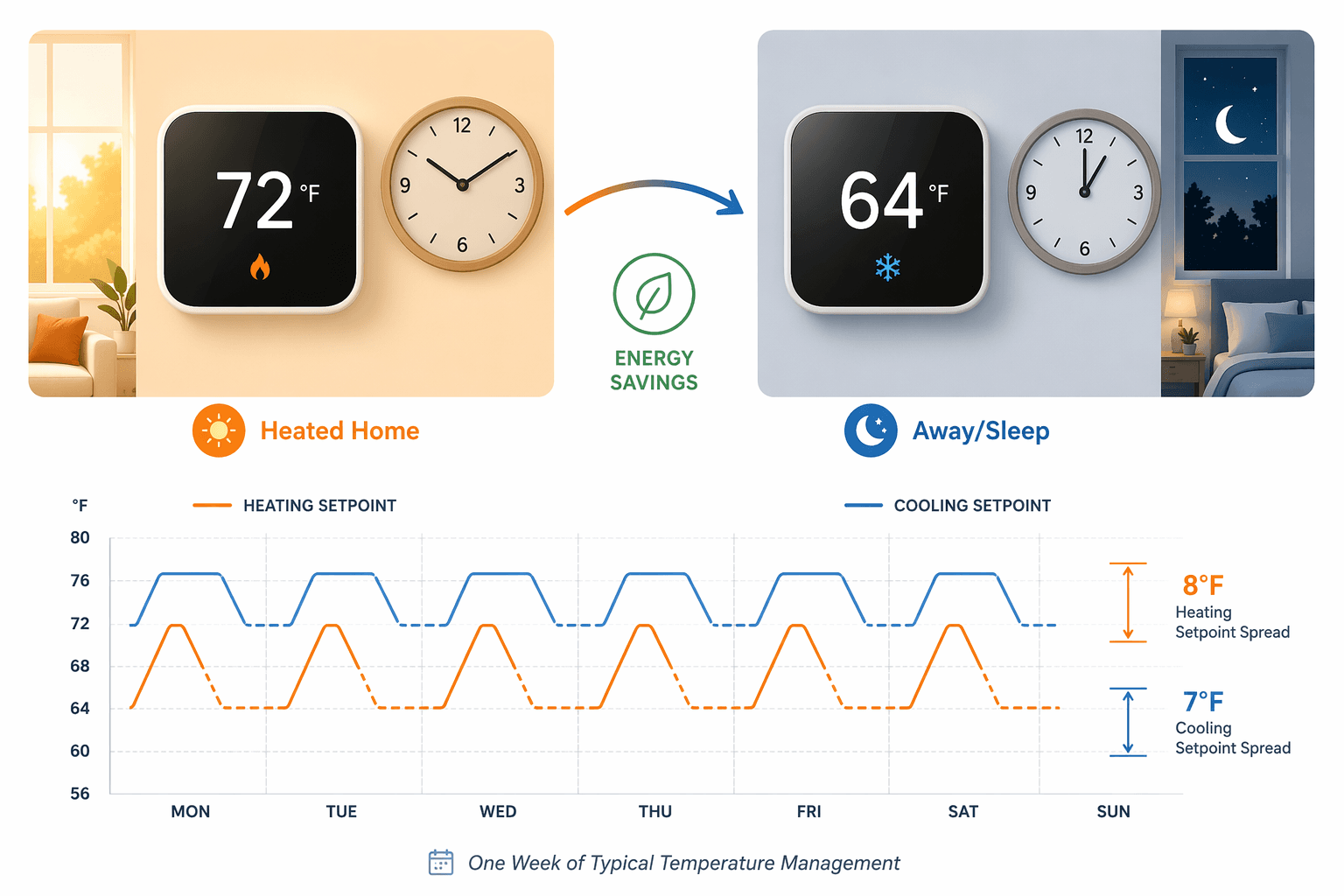
This is the study that matters. It tells us what actually happened when a large group of people used scheduling features consistently. It does not tell us what happens when someone buys a thermostat and never touches the schedule.
The $204 Figure Is Not Your Bill
The $204 estimate comes from applying the 22% and 17% savings rates to the Energy Information Administration's 2020 national averages: $625 for heating and $350 for cooling. That is a clean theoretical number, but it is not drawn from actual participant bills. If your local electricity rate is higher than the national average, or your home is larger, your real dollar savings could be larger — but they could just as easily be smaller if you live in a mild climate or have a small apartment. The study itself states: "actual savings vary by electricity rates and usage patterns." I would not treat $204 as a personal guarantee; consider it a reasonable starting estimate for a typical single-family home.
Why Honeywell's 22% Beats the 8% Industry Average
ENERGY STAR data shows that certified smart thermostats save an average of 8% on heating and cooling bills, or about $50 per year. That is the industry average across all brands and all owners — including the ones who never touch their schedule. A Consumer Reports survey found that 29% of programmable thermostat owners never use scheduling features at all. If you include those people in the average, the number drops. Honeywell's 22% is not a hardware advantage — it's a behavior advantage. If you set a schedule on any ENERGY STAR certified thermostat, you will likely see better-than-8% savings, but this study gives you a concrete target: 22% if you follow the 8°F/7°F spread for at least half the month.
How Quickly Do the Models Pay for Themselves?
Resideo calculates that the flagship Honeywell Home X8S pays for itself in as little as 13 months at its $249 retail price, assuming the full $204 annual savings. For other models, the payback is even faster because the upfront cost is lower. Here is how the math works out with and without a typical $50 rebate:
| Model | Typical Price | Annual Savings (scheduling) | Payback (no rebate) | Payback (with $50 rebate) |
|---|---|---|---|---|
| X2S | ~$50 | $204 | ~3 months | ~0 months (already cheaper) |
| T9 | ~$169 | $204 | ~10 months | ~7 months |
| T10 Pro | ~$224 | $204 | ~13 months | ~10 months |
| X8S | ~$249 | $204 | ~15 months | ~12 months |
The X2S is essentially free after the first winter, while the X8S takes a little over a year. If you want a personalized payback calculation using your own utility rates, try our smart thermostat payback calculator. To decide which model fits your home and ecosystem, see our best smart thermostat buyer guide.
What About Rebates?
Honeywell-specific utility rebate programs can reduce the upfront cost by $50 to $100 instant discounts, plus enrollment rebates up to $85 from providers like ConEd and CPS Energy, and annual credits for continued participation. The exact amounts vary by utility and region, but a typical range is $50–$300. For a deeper look at how to find rebates in your area, see our smart thermostat ENERGY STAR rebates guide.
How Does This Compare to Rival Claims?
Ecobee claims its Smart Thermostat Premium can save up to 26% on energy bills, according to CNET. That is an upper bound, not an average from a large study. Honeywell's 22% is an average from 6,000 users — not an "up to" figure — which makes it more conservative in some ways but more grounded in actual behavior. If you compare the two head‑to‑head, you are comparing a real-world average with a theoretical maximum. I would not treat them as equivalent claims.
The Bottom Line
The Resideo study is credible, the methodology is transparent, and the payback math works — under one condition: you actually set and maintain a schedule. If you buy a Honeywell smart thermostat and never program it, you will likely save closer to the 8% industry average, or nothing at all. But if you commit to an 8°F heating / 7°F cooling spread for at least two weeks per month, the data says you can expect 22% heating and 17% cooling savings. That is enough to pay off even the premium models in about a year, and the entry-level models in a season. The thermostat is the tool; the schedule is the work.
Data Updates
Know about updated rebate programs, changed subscription prices, or new ENERGY STAR certifications? Submit a note below to help keep this content current. For formal data corrections, use the contact page.
Comments
Join the discussion with an anonymous comment.