
Smart Thermostat Savings in 2026: What You Actually Save and How Fast It Pays Back
Learn how much a smart thermostat can actually reduce your HVAC costs in 2026, which utility rebates are still available, and how long each top model takes to pay for itself after the federal tax credit expired.
Last updated
If you are shopping for a top rated smart thermostat in mid-2026, update the spreadsheet before you compare screens, bezels, or voice assistants: the standalone smart thermostat federal tax credit that many older buying guides still lean on expired on December 31, 2025.[1] That matters because the purchase now has to stand mostly on three things that vary by house: documented HVAC savings, a local utility rebate, and whether your daily routine gives the thermostat enough empty-house hours to set temperatures back. This is why this belongs in energy-and-savings more than in a gadget roundup. The practical verdict is simple enough to start with: brand matters, but rebate-adjusted cost and climate load usually matter more.
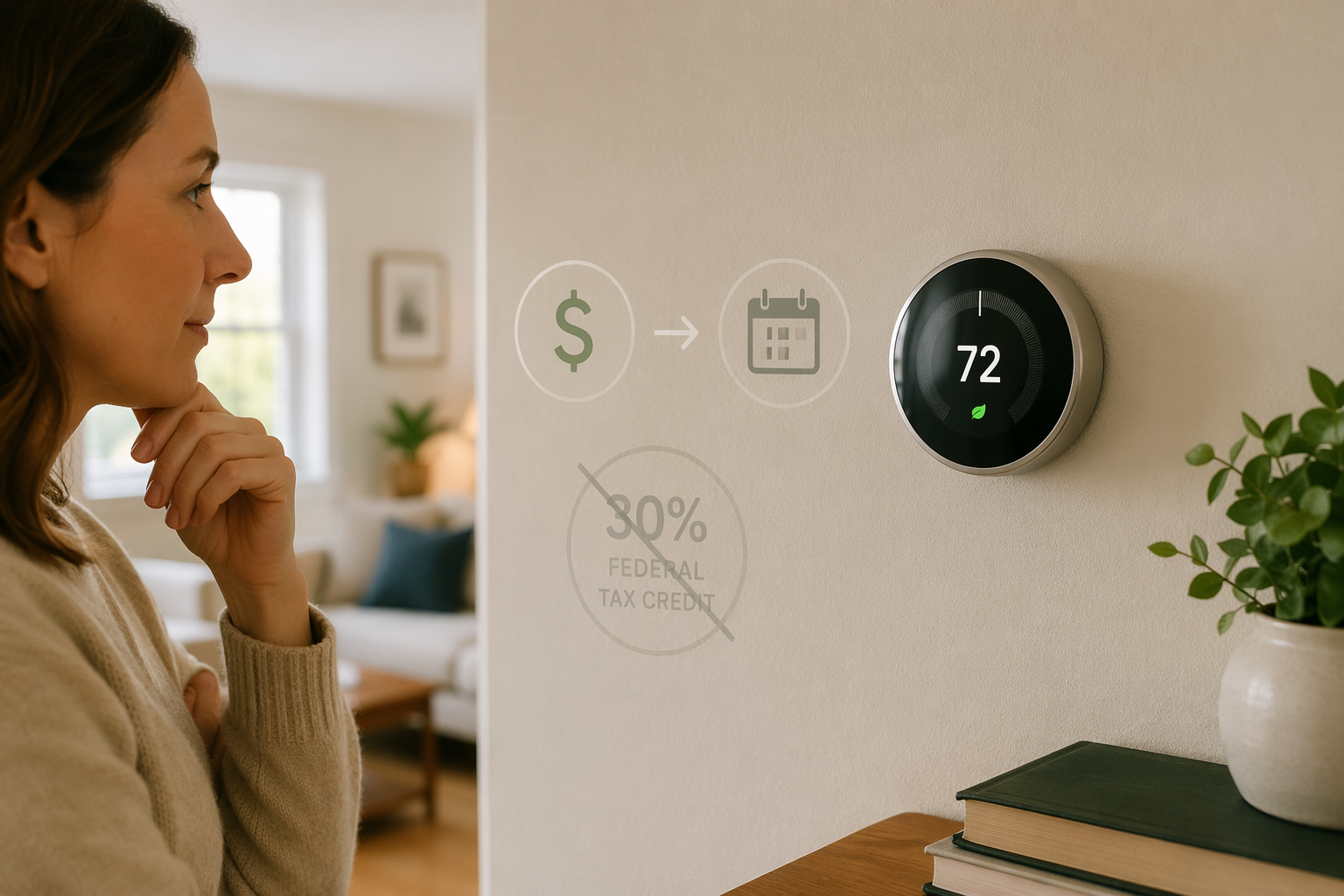
The sober baseline is not a manufacturer’s best case. ENERGY STAR says certified smart thermostats save about 8% of annual heating and cooling costs, roughly $50 per year for the average U.S. home.[2] That number is not exciting, but it is useful because it keeps the payback conversation from drifting into fantasy. If your home has high heating or cooling bills, long weekday vacancies, or an HVAC system that currently runs against a sloppy manual schedule, your savings can beat the average. If you already keep tight setbacks, live in a mild climate, or have newer efficient equipment with low runtime, the average may overstate what you will see.
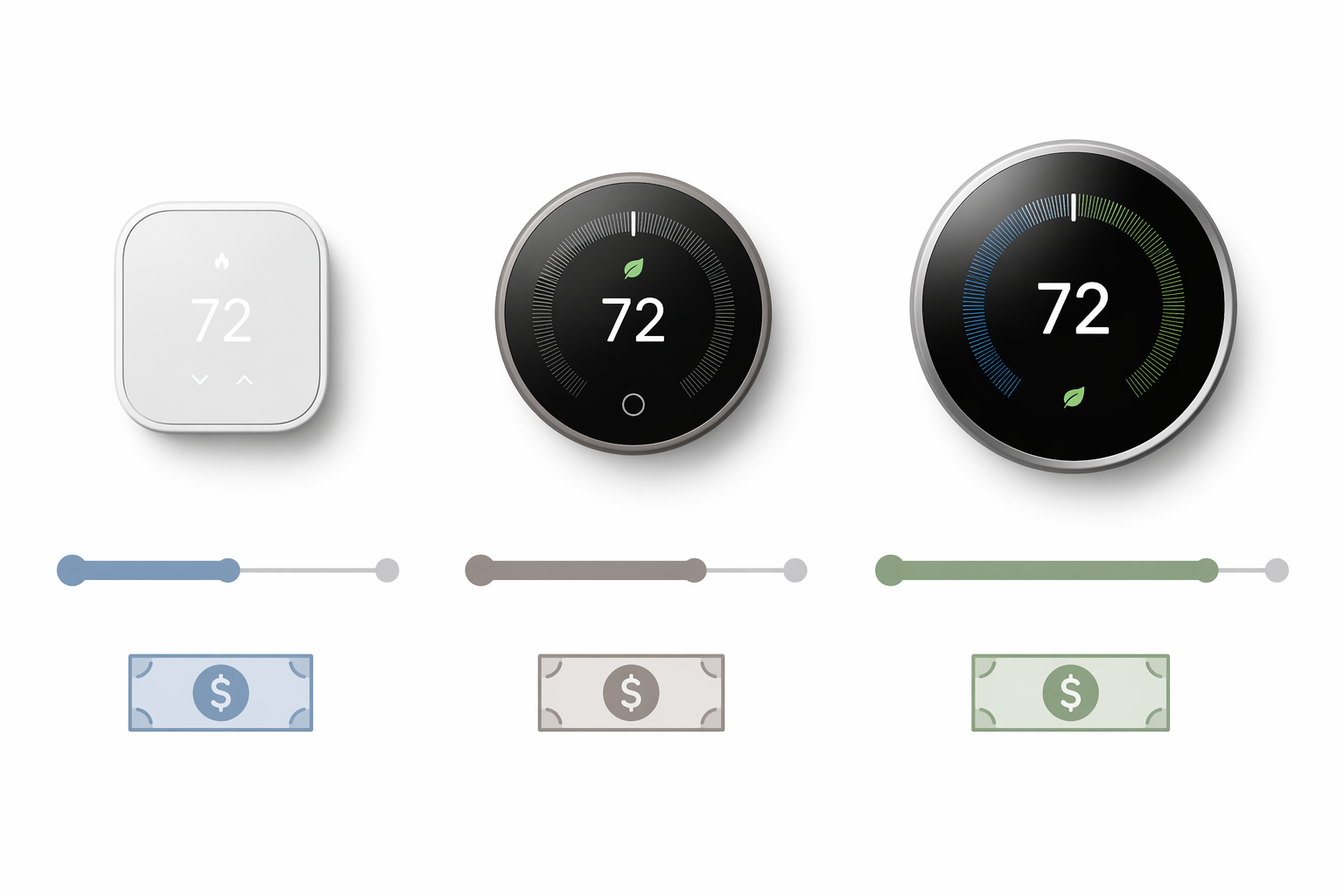
| Example thermostat | Example upfront price before rebate | 2026 payback with a utility rebate | What the number really says |
|---|---|---|---|
| Amazon Smart Thermostat | About $80 | Roughly 4-6 months | The strongest entry-level payback case when a rebate applies, because the starting price is low. |
| Ecobee Smart Thermostat Premium | $249 | Roughly 12-18 months | Can make sense when sensors, occupancy patterns, and HVAC runtime support the higher savings claim. |
| Nest Learning Thermostat 4th Gen | $279 | Roughly 15-23 months | Still financially plausible, but the higher purchase price needs a stronger rebate or higher HVAC bill. |
That table is the part many reviews bury after the pretty product cards. A $25-$100 utility rebate from one of more than 200 utilities can shorten payback more than the difference between two highly rated models.[3] On a low-cost thermostat, the rebate can do most of the work. On a premium thermostat, it can be the difference between a purchase that feels like a one-year energy upgrade and one that takes closer to two cooling-and-heating seasons to justify. The annoying catch is that rebate pages change, model eligibility changes, and some programs require purchase through a utility marketplace or enrollment in a demand-response program. Check the exact utility form before buying, not after the box arrives.
The evidence behind the savings claims deserves different levels of trust. ENERGY STAR’s 8% national average is the cleanest anchor because it is not trying to sell one model.[2] The commonly cited LBNL 8%-15% range is directionally useful, but it should be treated as a secondary claim unless you can trace it to the primary source. Manufacturer numbers can still help, as long as they are labeled correctly: Ecobee’s up-to-26% savings figure is a best-case manufacturer-validated result tied to conditions such as room sensors and participating utility contexts, not a normal household forecast. The Honeywell Home 6,000-user study cited in this site’s Honeywell savings analysis is more interesting than a star rating because it separates heating and cooling behavior, but it is still a model-specific savings claim rather than a guarantee for every home.[4]
This is also where ordinary review rankings get thin. PCMag, CNET, Wirecutter-style roundups, and affiliate pages can be useful for installation notes, app complaints, and compatibility warnings, but their “best” label does not automatically mean fastest payback. A premium Ecobee may be the better buy in a larger house where room sensors prevent over-conditioning unused rooms. A Nest Learning model may be easier to justify for someone who will actually let the learning schedule run. A Honeywell Home T9, Sensi Touch 2, or Mysa can be the right financial choice when it matches the equipment, the rebate list, and the rooms that drive the bill. The Amazon Smart Thermostat wins the cleanest budget math when compatibility checks out and a rebate is available, because there is simply less purchase price to recover.
A smart thermostat is easiest to defend at the kitchen table when three boxes are checked: your utility still offers a rebate, your home has meaningful heating or cooling load, and your schedule lets the thermostat reduce runtime when nobody needs comfort. If one of those boxes is weak, use the Smart Thermostat Payback Period Calculator before paying premium-model prices, then read the specific Ecobee, Nest, Amazon, Honeywell, Sensi, or Mysa device profile for compatibility and installation details. The rebate check comes first, because it is the part of the 2026 math most likely to change later.
References
- Smart Thermostat Energy Savings and ENERGY STAR Rebates in 2026
- Smart Thermostat FAQ — ENERGY STAR
- 2026 Smart Thermostat Rebates: Ultimate Guide + Savings Calculator — ThermoInsider
- How Much Does a Honeywell Smart Thermostat Really Save?
Known issues with this device / protocol
Spec-version history
For active regressions on this protocol, see Update Watch.
No linked Update Watch entries yet.