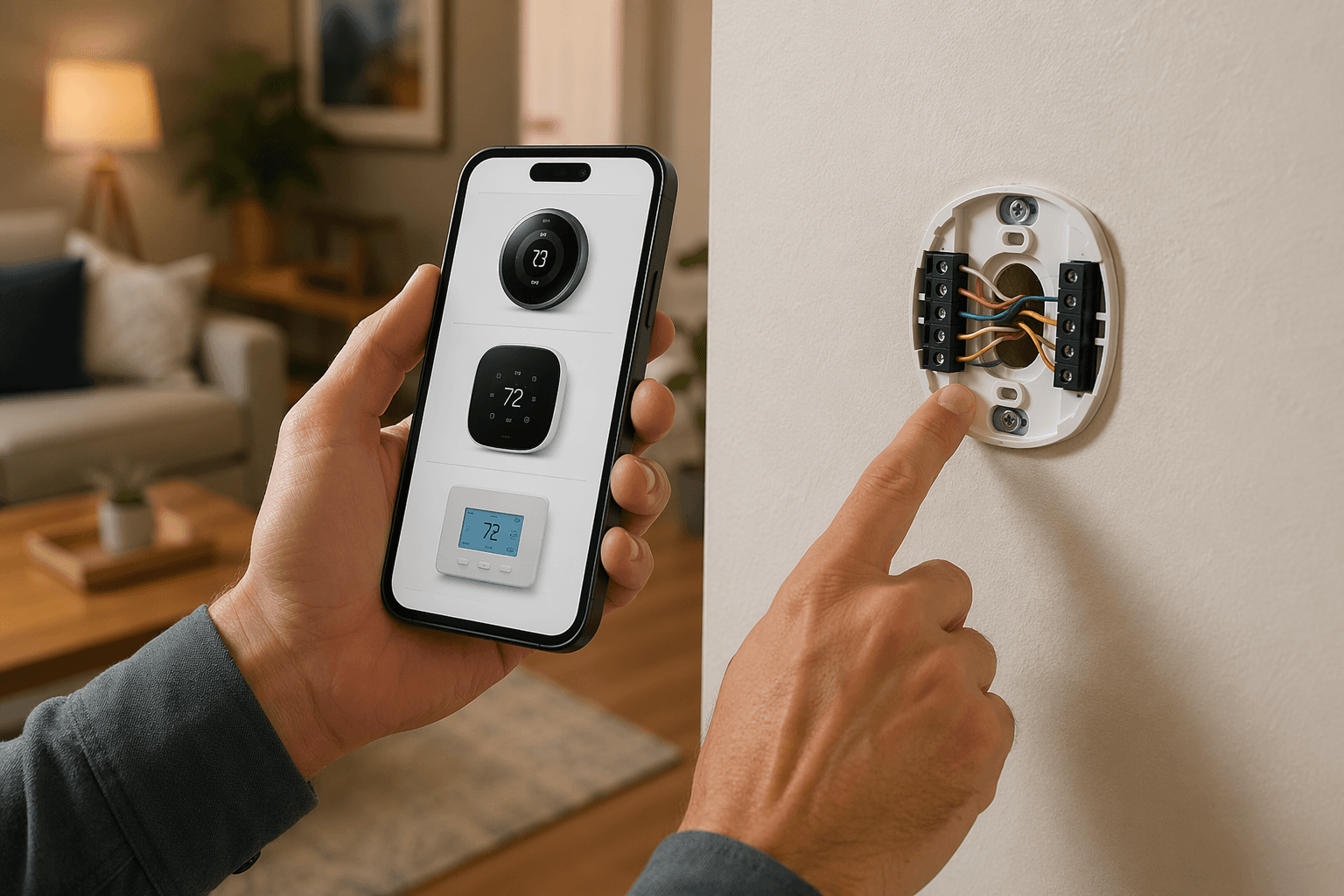
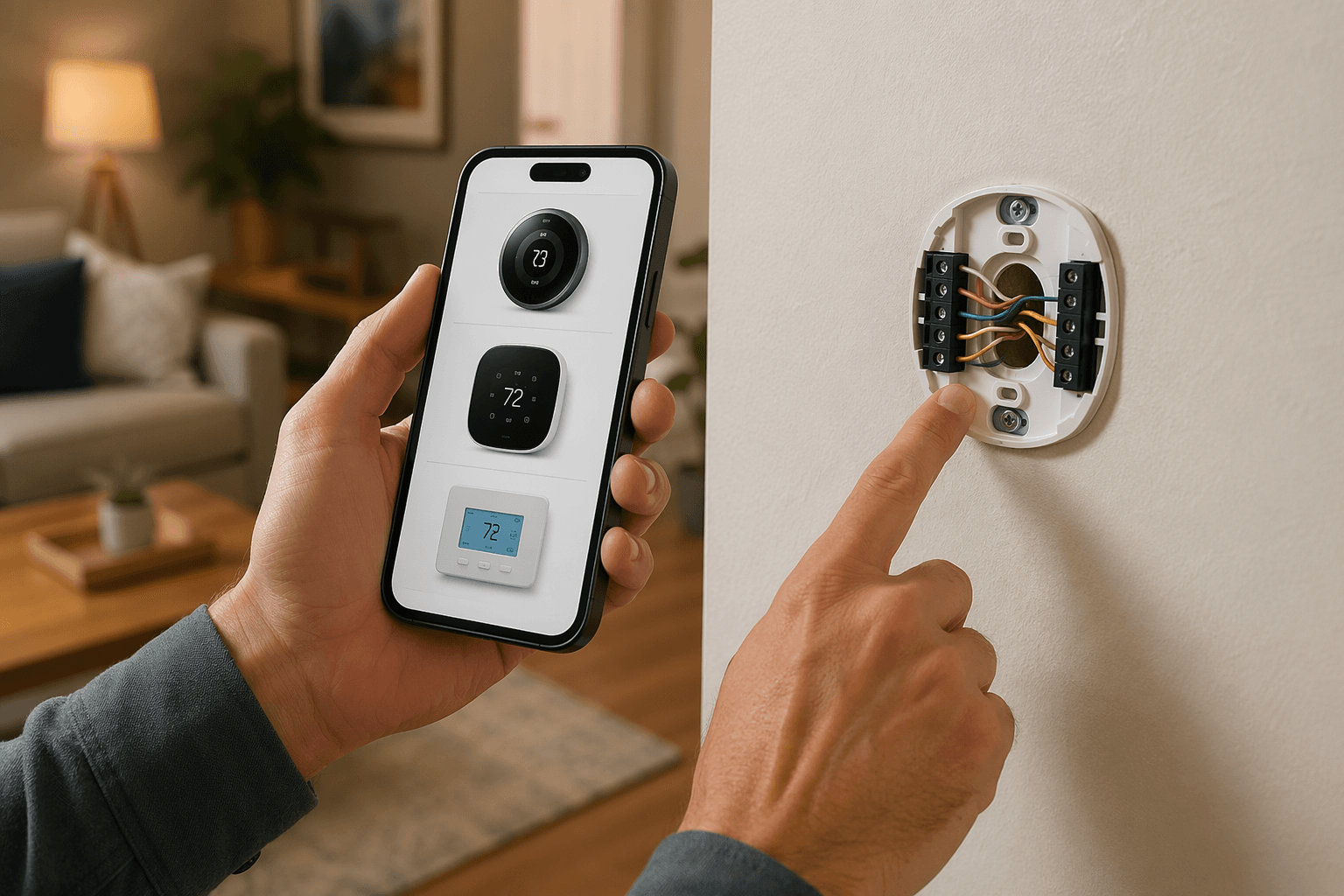
Before comparing any smart home thermostat, take the old cover off the wall and look at what is actually there. The product page can wait. In 2026, the realistic shopping range runs from the Amazon Smart Thermostat at about $58 to premium models such as the Google Nest Learning Thermostat 4th Gen around the upper-$200 range, with Ecobee and Honeywell Home filling much of the middle depending on model and sale timing.[1][2][3] That spread looks like a normal good-better-best ladder until the wall plate says otherwise: no C-wire, an older heat pump, a line-voltage baseboard system, or a household already built around HomeKit can make the “best” thermostat the wrong one.
A useful buying process starts with elimination, not ranking. First identify whether the thermostat controls a standard low-voltage HVAC system or something else. Then check whether the wiring can power the thermostat. After that, choose the platform lane — Alexa, Google Home, Apple HomeKit, or mixed household — and only then decide whether room sensors, learning schedules, built-in voice control, or a premium display are worth paying for. ENERGY STAR certification is still worth noticing, but in this category it is more of a floor than a finish line: certified smart thermostats must meet criteria tied to at least 8% heating runtime reduction and 10% cooling runtime reduction.[4]
| Check this before buying | What it decides | Why it matters |
|---|---|---|
| Thermostat voltage | Standard 24V smart thermostat vs. line-voltage thermostat | Electric baseboard and other 120V/240V systems need specialized products, not ordinary Ecobee, Nest, Amazon, or Honeywell Home models. |
| C-wire or power plan | Direct power, included adapter, or no-C-wire candidate | A thermostat that cannot stay powered reliably becomes an installation problem, not a smart-home upgrade. |
| HVAC type | Forced air, heat pump, dual fuel, boiler, or older system handling | Heat pumps and older systems can expose limits in power-stealing or accessory support. |
| Ecosystem | Alexa, Google Home, HomeKit, or mixed-platform shortlist | Voice control and automations are smoother when the thermostat’s native platform matches the home. |
| Room comfort problem | Whether sensors are necessary | Sensors matter most when bedrooms, upstairs rooms, or home offices run hotter or colder than the hallway. |
| Budget including add-ons | Real installed cost | A cheaper thermostat can stop being cheaper once adapters, sensors, or platform compromises are counted. |
The Wall Plate Decides the First Cut
Most mainstream smart thermostats are designed for 24V HVAC control: gas, oil, or electric forced air, many heat pumps, and other common low-voltage systems. That is the world where Ecobee, Nest, Amazon Smart Thermostat, and Honeywell Home models usually compete. A 120V or 240V electric baseboard setup is a different class. Standard low-voltage smart thermostats are not made for that wiring; line-voltage systems require specialized thermostats such as Mysa-style products rather than an ordinary smart thermostat swap.[1][5]
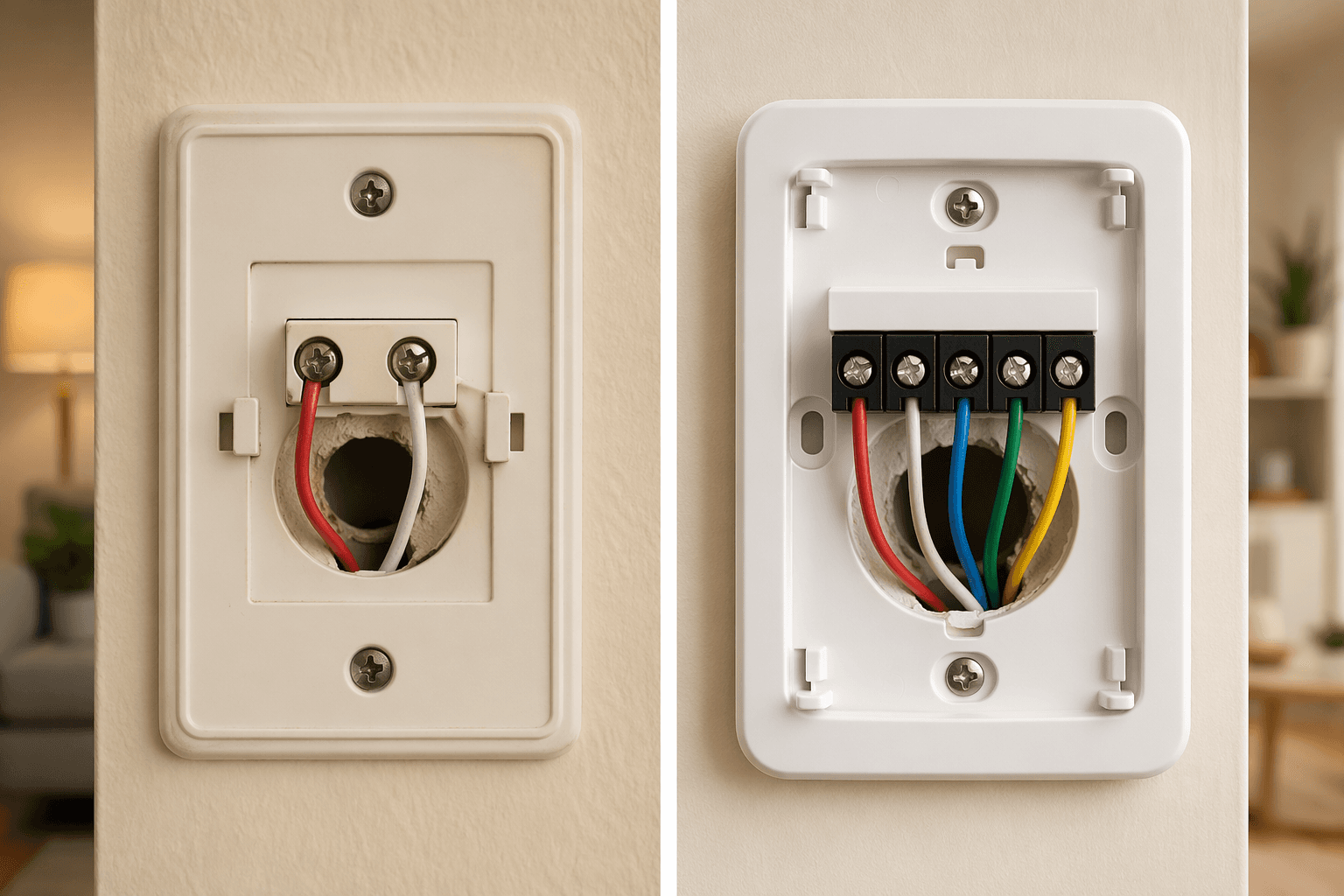
The C-wire is the next practical divide. Ecobee, Amazon, and Honeywell Home models commonly depend on C-wire power or use an included power extender kit when the wall lacks one.[1][2][5] Nest Learning Thermostat 4th Gen is the notable exception in the 2026 shortlist because it can operate without a C-wire by using power-stealing in many installations.[1][2] That does not make “no C-wire” a universal Nest recommendation. Power-stealing can be more troublesome with some heat pumps and older HVAC equipment, so a no-C-wire forced-air home and a no-C-wire older heat-pump home should not be treated as the same problem.[1][5]
For a confident DIYer with compatible low-voltage wiring, installation is often described as a 15- to 30-minute job.[1][2][5] That estimate is useful only after the compatibility check. It does not cover fishing a new C-wire, correcting mislabeled wiring, resolving an accessory terminal, or discovering that the existing thermostat controls electric baseboard heat. If the wall plate is confusing, the better next read is an HVAC-specific compatibility guide, not another product comparison. For that deeper branch, open which smart thermostat fits your HVAC system before ordering anything.
Choose the Platform Lane Before the Feature List
Smart thermostat features are less portable than they look. Ecobee is the broadest native-platform fit among the major 2026 brands because it supports Alexa, Google Assistant, and Apple HomeKit.[3][1][2] Nest is strongest in a Google Home household, while Amazon Smart Thermostat is built around Alexa.[3][1] Honeywell Home sits in the more traditional thermostat lane, with models that appeal to buyers who want familiar controls and broad HVAC credibility more than a single ecosystem identity.[3]
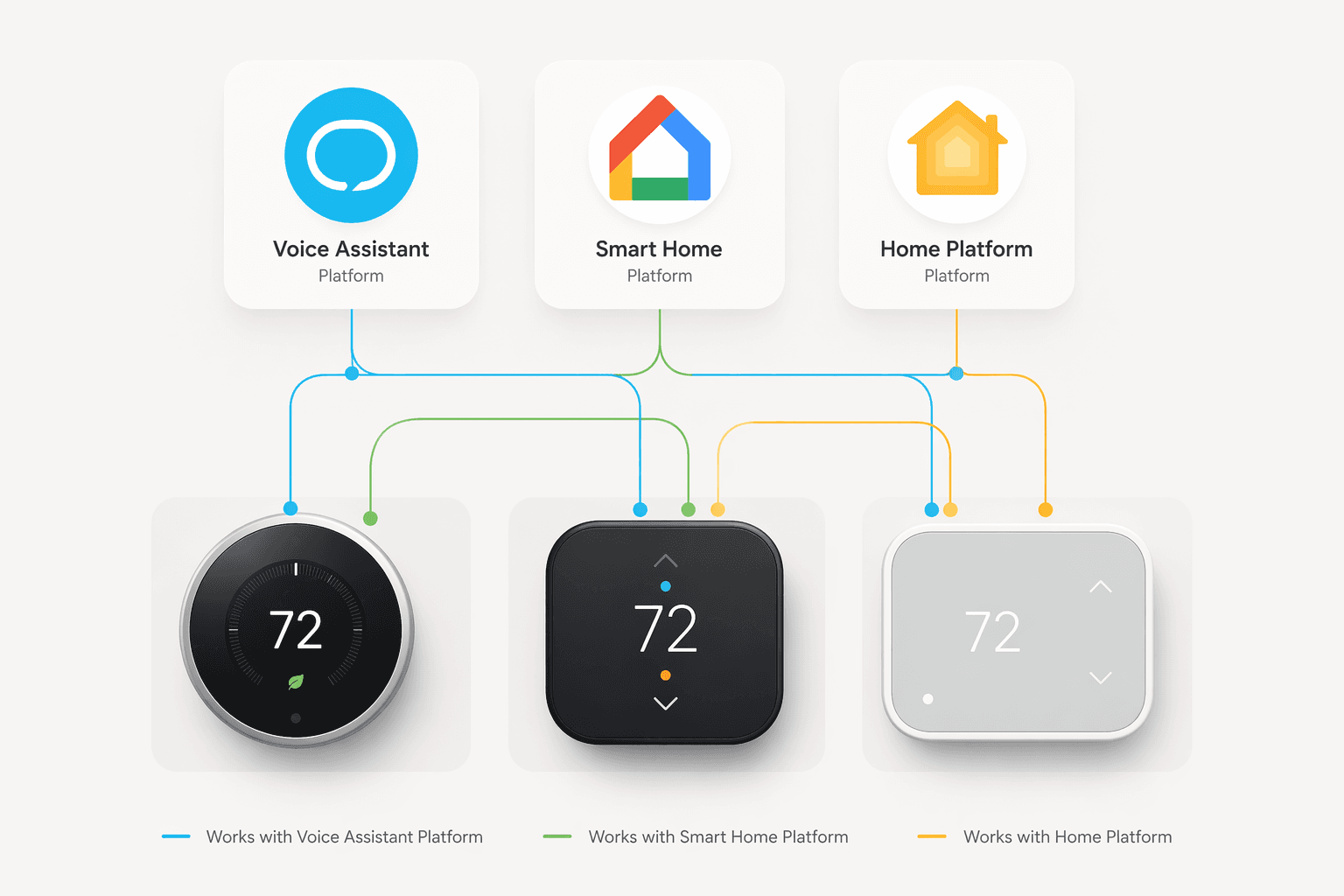
Matter helps with cross-platform visibility, but it should not be treated as a promise that every feature works the same everywhere. A Nest thermostat may become visible to an Apple-oriented home through bridging, for example, while still feeling less native than a thermostat with direct HomeKit support. The practical question is not “Does it work with my platform?” It is “Will the features I care about — automations, voice control, occupancy modes, sensor behavior, and app control — work in the platform I actually use every day?”
That platform decision can save money. An Alexa household that wants basic app control and voice adjustment may be well served by Amazon Smart Thermostat, especially when its low price is the main attraction.[1][3] A Google-centered household that wants a polished learning thermostat has a clearer reason to look at Nest Learning Thermostat 4th Gen.[1][2] A HomeKit or mixed-platform household should usually start with Ecobee, because native flexibility matters more than a spec-sheet promise when multiple people in the house expect the thermostat to respond from different apps and speakers.[3][2]
If ecosystem is already the deciding factor, use the dedicated smart thermostats for HomeKit, Alexa, and Google Home households guide. This buyer’s guide is for the stage just before that, when wiring, HVAC type, sensors, and platform still need to be weighed together.
Sensors Are Worth Paying For Only When They Solve a Real Room Problem
Remote room sensors are one of the few premium features that can change the right model. They matter when the thermostat sits in a hallway that does not represent the room people actually occupy: a cold back bedroom, a sun-baked nursery, an upstairs office, or a living room that stays comfortable while the bedrooms drift. Consumer Reports and major 2026 reviews both treat remote sensors as a meaningful comfort feature, especially for uneven homes rather than perfectly balanced ones.[6][2]
The hidden cost is that sensor packaging differs by model. Ecobee Smart Thermostat Premium includes one sensor, and Nest Learning Thermostat 4th Gen also includes one sensor in the box.[2] Ecobee Enhanced and Ecobee Essential do not include sensors, though sensors can be added separately.[2][6] That difference matters more than a small sale price gap. A buyer trying to fix an upstairs bedroom may find that the cheaper thermostat plus the needed sensor no longer beats the model that included the sensor from the start.
Learning features deserve a narrower test. If the household keeps a regular rhythm and dislikes programming schedules, Nest’s learning behavior can be genuinely useful. If the house is already managed by automations, occupancy routines, or someone who likes setting schedules directly, a less expensive thermostat with reliable app control may be enough. The point is not to avoid premium features; it is to pay for the feature that fixes the actual friction in the home.
Where the 2026 Models Fit
Amazon Smart Thermostat fits the budget Alexa household best. Its appeal is price and simplicity: about $58 in current 2026 coverage, Alexa-native control, and a straightforward feature set for homes that do not need built-in room sensors or HomeKit support.[1][3] The catch is also straightforward. It is not the model to buy for an Apple-centered home, and its C-wire or adapter requirement still needs to be checked before ordering.[1][5]
Google Nest Learning Thermostat 4th Gen fits the Google Home household, the buyer who wants a premium object on the wall, and some no-C-wire situations where power-stealing is likely to behave well.[1][2] It is the strongest candidate when the old wall lacks a C-wire and the HVAC system is a relatively ordinary forced-air setup. It is a weaker blind buy for older systems and some heat pumps, where the no-C-wire advantage should be checked more carefully before treating it as a solved problem.[1][5] For buyers comparing Nest models rather than the whole category, the Google Nest thermostat profile is the more focused next step.
Ecobee is the safer starting point for HomeKit and mixed-platform homes, and it is also a strong choice for uneven-temperature houses. Ecobee Premium makes the most sense when the included sensor, broader platform support, and premium hardware are all useful.[2][3] Ecobee Enhanced and Essential become more attractive when the home does not need a sensor immediately or when the buyer wants Ecobee’s platform flexibility at a lower cost.[2] The decision inside that brand is not obvious from the names alone, so use the Ecobee Premium vs. Enhanced vs. Essential comparison if Ecobee is already the likely lane.
Honeywell Home belongs on the shortlist for buyers who want established thermostat controls, broad HVAC familiarity, and less dependence on one smart-home identity. It is especially worth considering when the household cares more about reliable scheduling and conventional thermostat behavior than voice-assistant personality.[3] If that sounds like the right tradeoff, the Honeywell smart thermostat comparison will be more useful than a general ranking.
Sensi can also be a sensible alternative when the household wants a simpler smart thermostat experience rather than a premium ecosystem hub. It is not the center of the 2026 Ecobee-Nest-Amazon-Honeywell conversation, but it can be the right lane for buyers who value familiar thermostat behavior and broad compatibility checks over extra smart-home polish. For that route, start with the Sensi thermostat lineup.
A Practical Match for Common Homes
For a budget Alexa home with standard 24V forced air and a C-wire or usable adapter path, Amazon Smart Thermostat is the cleanest low-cost pick. For a Google Home household that wants learning behavior, premium hardware, and possibly a no-C-wire installation, Nest Learning Thermostat 4th Gen is the model to investigate first. For a HomeKit household, a mixed-platform household, or a home where several people use different assistants, Ecobee is the more natural starting point because native platform breadth reduces everyday friction.[3]
For an uneven home, start with the sensor question instead of the brand question. If the problem is a cold bedroom or hot upstairs office, compare the installed cost of a thermostat plus the sensors needed to manage that room. Ecobee Premium and Nest Learning Thermostat 4th Gen both include one sensor, while some lower-priced Ecobee models require separate sensor purchases.[2][6] If the house feels evenly conditioned already, sensors can stay optional; spend the money on platform fit or skip the premium tier entirely.
For a no-C-wire wall, do not buy the cheapest thermostat first and hope the adapter solves it. Nest Learning Thermostat 4th Gen is the standout no-C-wire candidate, but the HVAC type still matters.[1][2][5] Ecobee, Amazon, and Honeywell Home paths usually mean confirming whether the included or compatible power extender approach fits the system.[1][5] If the equipment is a heat pump, an older furnace, or anything with unfamiliar terminals, pause and use the C-wire and HVAC-focused Ecobee vs. Nest installation comparison before choosing.
For electric baseboard heat, the answer is not Ecobee versus Nest. It is a line-voltage thermostat category. Standard smart thermostats are built for low-voltage HVAC control and are not compatible with 120V/240V electric baseboard wiring.[1][5] That is the kind of mistake that turns a quick upgrade into a return label, and it is exactly why the wall plate check comes before the shopping cart.
Savings Matter, but They Should Not Pick the Model Alone
Energy savings are a reasonable reason to buy a smart thermostat, especially if the current thermostat is poorly scheduled or constantly adjusted by hand. The ENERGY STAR baseline gives a useful way to think about certified models: the category is evaluated around runtime reduction, not just attractive app screens.[4] But because the major 2026 contenders are certified, certification alone does not separate Ecobee from Nest from Amazon from Honeywell Home. It tells you the thermostat belongs in the serious pile; it does not tell you whether it belongs on your wall.
Payback also depends on local rates, HVAC runtime, household habits, and whether the thermostat requires add-ons or professional help. A low-cost thermostat can pay back faster if it fits cleanly. A premium thermostat can be worth it if sensors stop the household from overheating or overcooling the whole home to fix one room. If the savings calculation is the main decision, use the dedicated smart thermostat savings 2026 guide or the Honeywell smart thermostat real savings article rather than expecting a model roundup to do that math.
The Shortlist Should Be Yours, Not Universal
A buyer with a standard forced-air system, Alexa speakers, and a tight budget can land on a different thermostat than a buyer with a no-C-wire Google Home setup, and both can be making the right decision. A HomeKit household with uneven bedrooms may have an Ecobee answer before it ever needs to compare every Nest feature. A baseboard apartment should leave the mainstream smart thermostat shelf entirely. That is not indecision; it is the category behaving the way installed home products usually behave.
So the 2026 buying order is simple enough to tape inside the utility closet: voltage first, C-wire second, HVAC type third, ecosystem fourth, sensors fifth, price after the real installed package is visible. Once those answers are known, the “best” smart home thermostat usually stops being a mystery and becomes a short branch: Amazon for low-cost Alexa basics, Nest for Google-centered premium and many no-C-wire homes, Ecobee for HomeKit or mixed-platform flexibility and sensor-heavy comfort problems, Honeywell Home for familiar thermostat control, or a specialized line-voltage model when the wiring demands it.
References
- Best Smart Thermostats of 2026, CNET
- The Best Smart Thermostats of 2026, Wirecutter
- The Best Smart Thermostats We've Tested for 2026, PCMag
- Smart Thermostats, ENERGY STAR
- The Best Smart Thermostats of 2026, Bob Vila
- Are Smart Thermostats Worth It?, Consumer Reports
Data Updates
Know about updated rebate programs, changed subscription prices, or new ENERGY STAR certifications? Submit a note below to help keep this content current. For formal data corrections, use the contact page.
Comments
Join the discussion with an anonymous comment.