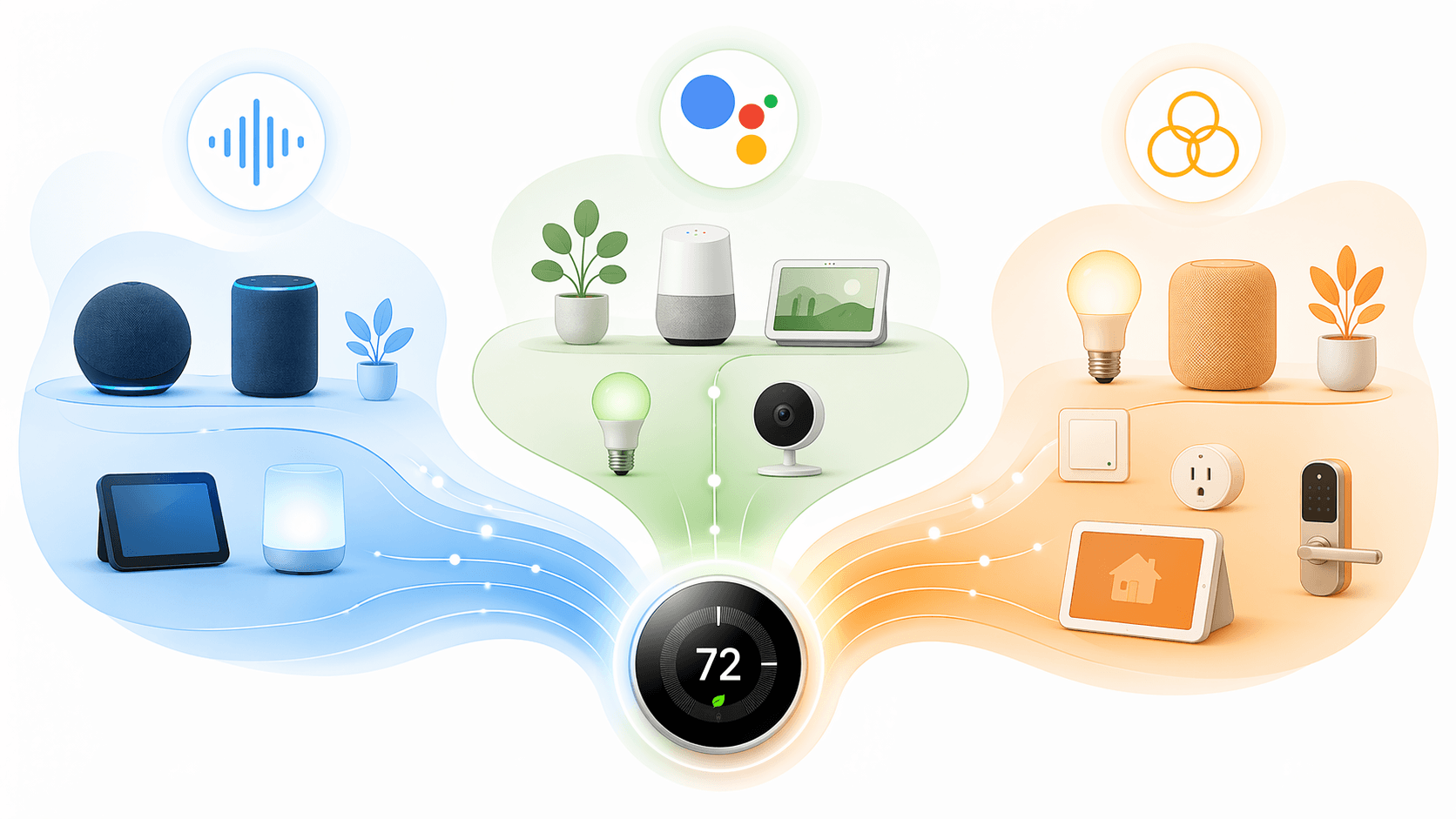
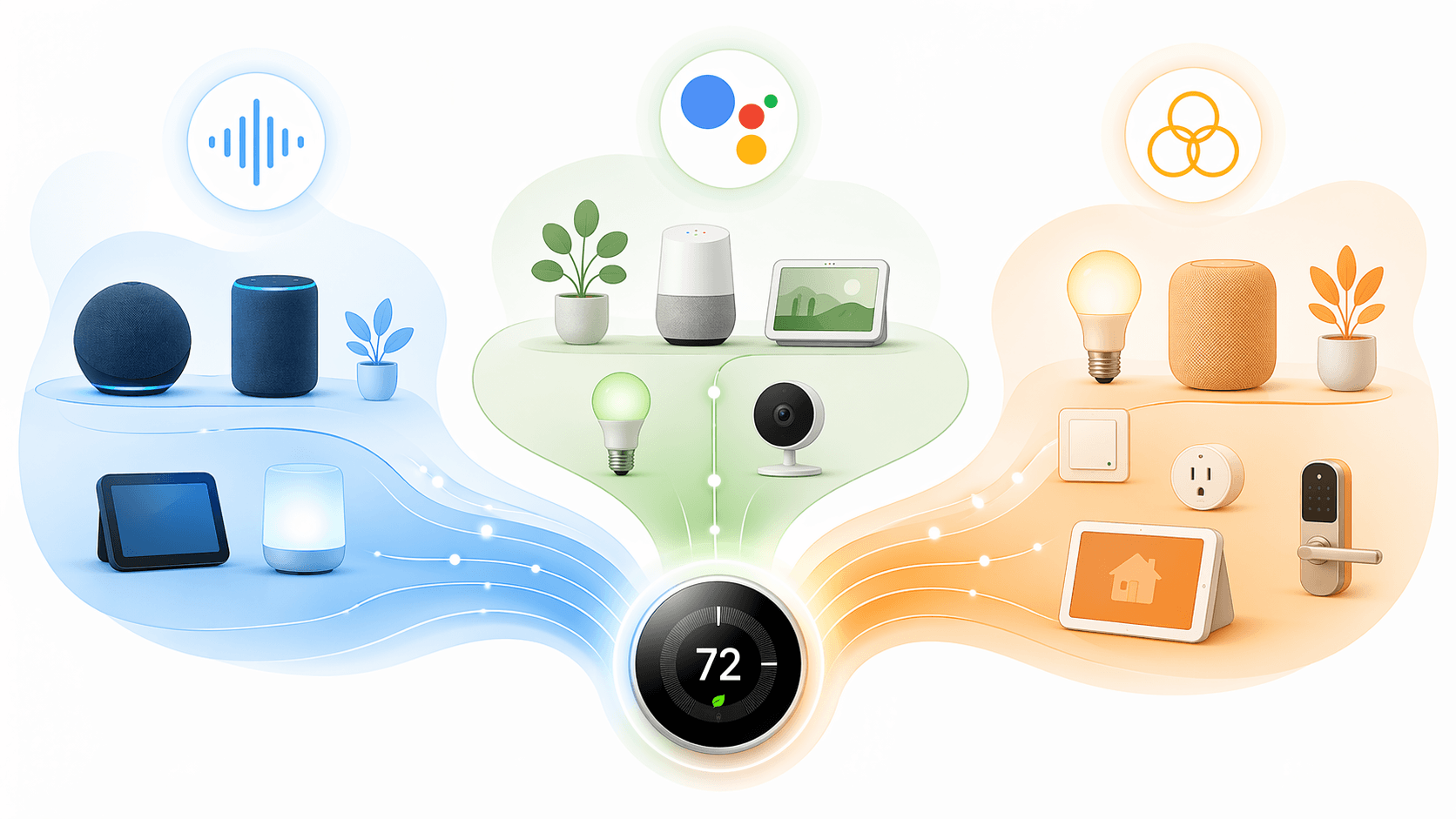
The best smart thermostat is not always the one with the longest spec sheet. If your home already has Echo speakers in four rooms, Google Home routines that run every morning, or a HomeKit setup you have carefully kept out of the Alexa-Google tug-of-war, the thermostat is not arriving as a neutral gadget. It is becoming another control point in the system you already live with.
That is where a lot of buyer regret starts. A box that says “works with Alexa” may mean basic voice temperature changes. It may not mean rich routines, remote sensors, native app control, or the same feature set you get in the manufacturer’s own app. Matter support can help with cross-platform access, but a bridged connection is not automatically as capable as native support. For a thermostat, “compatible” is the beginning of the question, not the answer.
Start with the ecosystem, not the thermostat
For most U.S. smart-home buyers in 2026, the shortlist breaks into three practical camps: Amazon Smart Thermostat for Alexa-first homes, Nest Learning Thermostat 4th Gen for Google-first homes, and Ecobee Smart Thermostat Premium for households that mix platforms or want HomeKit/Siri compatibility. That does not make every other thermostat irrelevant, but it does make these three the cleanest comparison if the main question is ecosystem fit.
| Thermostat camp | Best fit | Ecosystem support | Integration type | Mid-2026 price context | Main caution |
|---|---|---|---|---|---|
| Amazon Smart Thermostat | Alexa and Ring households that want the lowest-cost serious option | Works exclusively with Alexa and Ring; can use an Echo Dot as a satellite temperature sensor [1] | Native Alexa/Ring, not a multi-platform thermostat | $58-$80 | The value is strong only if you accept Alexa/Ring lock-in |
| Nest Learning Thermostat 4th Gen | Google Home households that want the most natural Google experience | Optimized for Google Home and Google Assistant; supports Matter for cross-platform bridging [2] | Native Google-first control, with Matter as a bridge | $230-$280 | Matter support should not be treated as identical to native multi-platform support |
| Ecobee Smart Thermostat Premium | Mixed-platform homes, HomeKit-adjacent homes, and buyers avoiding assistant lock-in | Natively supports Alexa, Siri via AirPlay, Google Assistant, SmartThings, HomeKit, and IFTTT out of the box [3] | Broad native ecosystem support | $244-$260 | Costs more than Amazon and lacks Nest’s Google-first polish |
If you are still deciding which smart-home platform deserves your loyalty, pause here and read the broader smart home ecosystem comparison first. But if the platform decision has already happened in your house, the thermostat choice gets much simpler.
Alexa homes: Amazon’s thermostat is cheap for a reason, and sometimes that reason is fine
The Amazon Smart Thermostat is the easiest model here to underestimate. It is not trying to be the universal thermostat for every smart home. It works exclusively with Alexa and Ring, which is a hard boundary, but inside that boundary it has one very practical trick: it can use an Echo Dot as a satellite temperature sensor, a feature PCMag notes is not offered by other budget thermostats [1].
That matters in the kind of home where the thermostat is in a hallway and the room people actually occupy is ten degrees of complaint away. A separate remote sensor is often one of the upgrades that pushes buyers into more expensive thermostat systems. If an existing Echo Dot can help Alexa understand the temperature in a room you care about, Amazon’s low price stops looking like a corner cut and starts looking like an ecosystem discount.
The catch is just as plain. This is not the thermostat to buy because you might switch to Google Home later, because you are quietly building a HomeKit setup, or because you want one device that remains equally happy across several platforms. The Amazon model is best when the household has already chosen Alexa and Ring and is not pretending otherwise.
- Choose it if Alexa is already the voice layer in the house and price matters.
- Choose it if the Echo Dot satellite-temperature feature solves a real comfort problem.
- Skip it if HomeKit, Google Home, or long-term platform flexibility is part of the plan.
For readers comparing more per-platform picks, the adjacent HomeKit, Alexa, and Google Home thermostat guide is useful because it separates ecosystem fit from the usual best-overall shopping shorthand.
Google homes: Nest Learning 4th Gen is the natural pick when Matter is a bonus
The Nest Learning Thermostat 4th Gen is the cleanest answer for a Google Home household that wants the thermostat to feel native, not bolted on. CNET describes it as optimized for Google Home and Google Assistant, with Matter support for cross-platform bridging [2]. That combination is attractive, but the order matters: Google-first, Matter-second.
A Google-first thermostat makes sense when your household already uses Google Assistant voice commands, Google Home automations, and Nest device habits. In that setting, Nest’s value is not merely that another platform might be able to see it through Matter. Its value is that the main control surface already matches the rest of the house.
Matter still deserves attention. It can make a device more visible outside its original ecosystem, and that is better than the old world of sealed-off devices. But Matter is not a magic equalizer for every thermostat function. A bridged connection may expose the controls another platform understands while leaving deeper scheduling, learning, sensor, or automation behavior closer to the original app and native ecosystem.
So the Nest Learning Thermostat 4th Gen is strongest when Google Home is the center of gravity and Matter is insurance. It is weaker as a purchase justified mainly by the hope that every other ecosystem will treat it exactly like a native device.
If you are comparing Nest models or want the lower-cost Google device context, the Google Nest Thermostat profile is the better next stop than a generic smart thermostat list.
Mixed-platform and HomeKit homes: Ecobee Premium is the least awkward fit
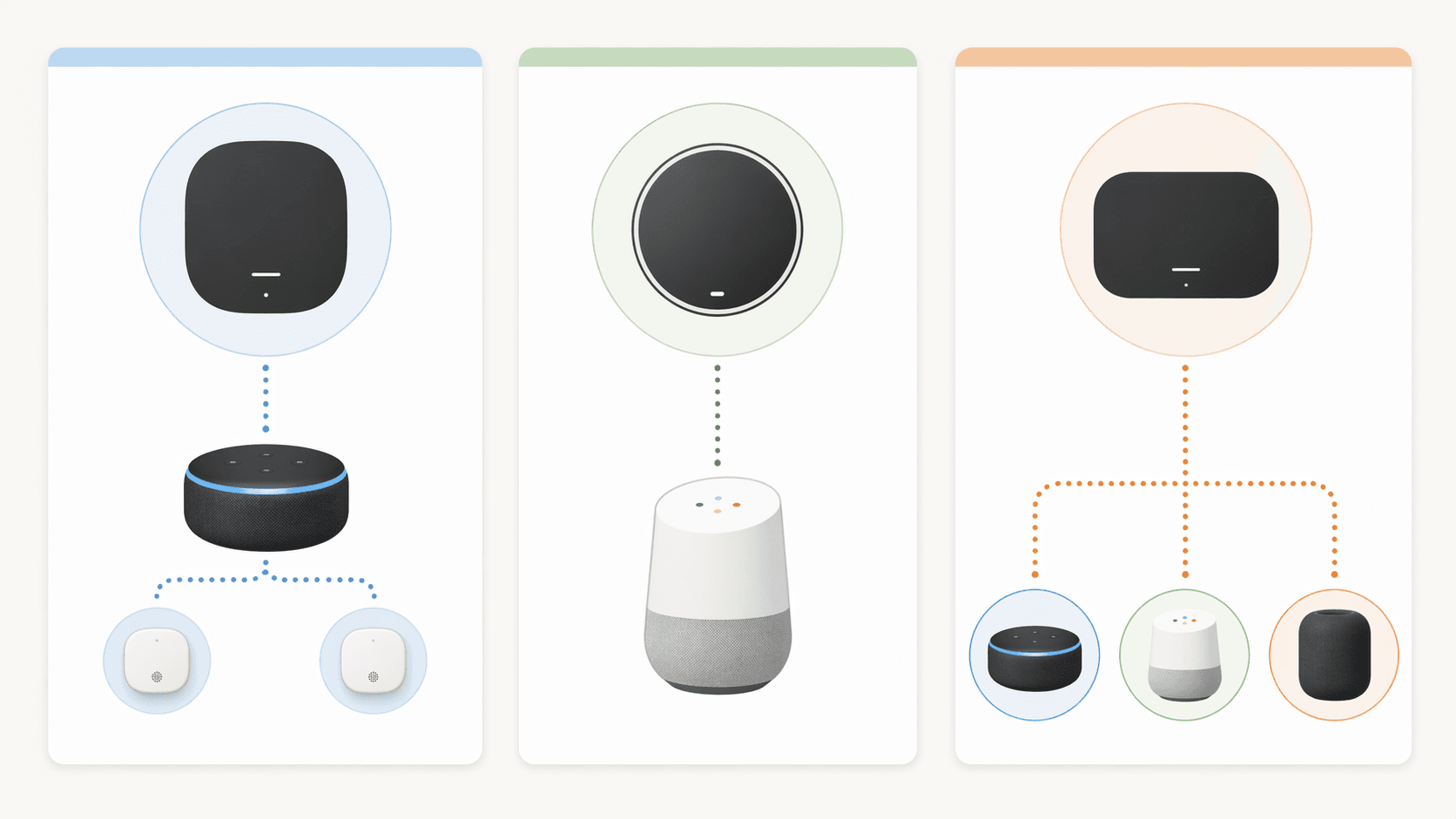
Ecobee Smart Thermostat Premium wins a different kind of argument. It is not the cheapest option, and it is not the most Google-native option. Its strength is that it does not make the household choose one assistant as the price of admission. Wirecutter identifies Ecobee Premium as the only thermostat that natively supports Alexa, Siri via AirPlay, Google Assistant, SmartThings, HomeKit, and IFTTT out of the box [3].
That breadth is easy to undervalue until a real household gets involved. One person wants to ask Alexa from the kitchen. Another has HomeKit scenes. A third uses Google Assistant from a phone. Someone else just wants the thermostat to keep working if the smart-home strategy changes next year. Ecobee’s appeal is not one spectacular assistant feature; it is the absence of a lot of small ecosystem fights.
This is also where “platform-agnostic” needs a little discipline. Ecobee is not independent of every cloud service or limitation, and no thermostat makes every platform behave identically. But compared with Amazon’s Alexa/Ring exclusivity and Nest’s Google-first design, Ecobee Premium gives the broadest native surface area for a household that refuses to organize itself around one assistant.
HomeKit buyers should look especially hard here. Apple-compatible thermostats are not impossible to find, but the list narrows quickly once you insist on a polished thermostat, wide assistant support, and fewer compromises. If you are still deciding how Apple should fit into the rest of the house, the Apple HomeKit platform overview gives the platform context; if you are already leaning Ecobee, the Ecobee Premium vs. Enhanced vs. Essential comparison is the more useful product-level decision.
Savings and rebates matter, but they do not decide the ecosystem question
Smart thermostats can have a reasonable payback case. ENERGY STAR says certified smart thermostats save an average of 8% on heating and cooling costs, about $50 per year [4]. Utility programs can also change the real purchase price: IMARC Group reports that North American utilities disbursed more than $1.2 billion in thermostat rebates and demand-response incentives in 2024 [5].
Those numbers are worth checking before you buy, especially because a rebate can narrow the price gap between a budget thermostat and a more flexible one. But they do not turn an Alexa-only thermostat into a HomeKit thermostat, or make a Matter bridge equivalent to native support. Savings are part of the purchase math; ecosystem fit is the part that determines whether you keep using the device after the novelty wears off.
Be careful with manufacturer savings claims that sound more dramatic than ENERGY STAR’s average. The research base here supports the independent ENERGY STAR figure; model-specific claims, especially when reported by manufacturers, should be treated as marketing until there is independent verification.
What about Honeywell and newer Matter-friendly models?
Honeywell should not be ignored, particularly for buyers who care about traditional thermostat design, brand familiarity, or Matter-friendly direction. The caution is timing. Bob Vila identifies the Honeywell Home X8S and X2S as newer 2025-2026 models, which means there is still limited long-term testing data compared with the more established Amazon, Nest, and Ecobee options in this ecosystem comparison [6].
That does not make the Honeywell models bad buys. It just makes them harder to rank with the same confidence if the question is deep, reliable ecosystem behavior over time. If you are considering that route, use a dedicated Honeywell smart thermostat comparison and pay close attention to which integrations are native, which are Matter-based, and which features still require the Honeywell app.
The ecosystem verdict
If your home is already Alexa and Ring, and you want the least expensive serious smart thermostat, buy the Amazon Smart Thermostat. Its Echo Dot satellite-temperature trick is genuinely useful in the right house, and its low price makes sense when you are not asking it to serve every platform.
If Google Home is the center of the house, buy the Nest Learning Thermostat 4th Gen. Treat Matter as welcome flexibility, not the main reason to buy. The deeper reason is that Nest is built for the Google Home and Google Assistant experience first.
If your household mixes assistants, wants HomeKit/Siri support, or simply does not want the thermostat to become another platform bet, buy Ecobee Smart Thermostat Premium. It is the strongest platform-agnostic choice here because its support is broad and native, not merely a chain of hopeful bridges.
Before ordering any of them, verify the boring parts: C-wire availability, HVAC type, voltage, local support, and whether the integration you need is native or bridged. International buyers should be especially careful because much of the available testing and rebate context is U.S.-focused. The smart thermostat compatibility guide is the right final check before turning an ecosystem decision into a purchase.
References
- The Best Smart Thermostats, PCMag
- Best Smart Thermostats, CNET
- The Best Smart Thermostat, Wirecutter
- Smart Thermostat FAQ, ENERGY STAR
- Smart Thermostat Market, IMARC Group
- The Best Smart Thermostats of 2026, Bob Vila
Discussion
Share your experience with the compared products, flag outdated pricing or specs, or ask clarifying questions about the comparison verdict.
Comments
Join the discussion with an anonymous comment.