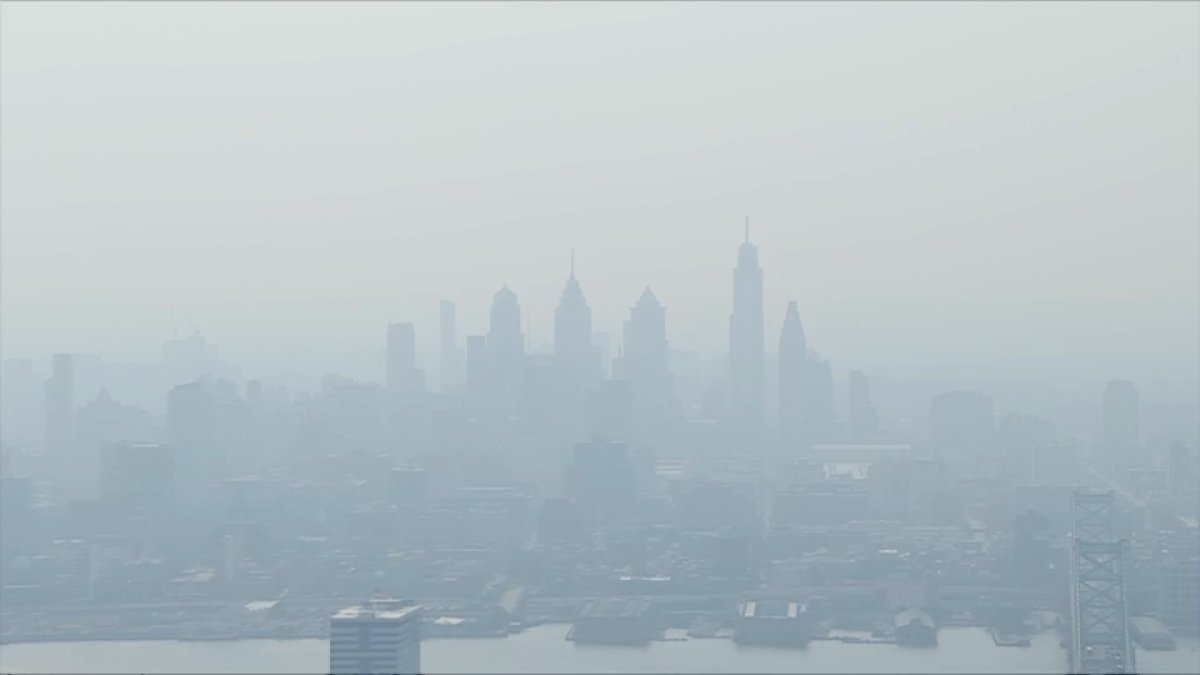
Pennsylvania’s July 17, 2026 Code Purple air quality alert turned wildfire smoke into a household buying problem. The Pennsylvania Department of Environmental Protection forecast PM2.5 AQI values from 201 to 300 statewide, labeled the air “Very Unhealthy,” tied the smoke to fires in Canada and Minnesota, and advised all residents to avoid outdoor exertion.[1] That is not the kind of alert where a decorative tabletop purifier or a quiet fan with an app is enough.
For Code Purple air quality in Pennsylvania, the best smart air purifier is the one that can move enough smoky air through a real particle filter, in the room where people will actually sleep, work, or wait out the alert. My buying floor is simple: smoke CADR of at least 245 CFM, True HEPA or H13/H14 filtration, a meaningful activated carbon layer, auto mode driven by a real-time PM2.5 sensor, WiFi/app control, and scheduling.
On that standard, the Levoit Vital 200S is the value pick for many Pennsylvania bedrooms and medium rooms. The Coway Airmega ProX is the premium answer when the room is genuinely large or open-plan. Blueair’s 311i Max and Mila are credible alternatives, but each has a narrower reason to buy.
What Code Purple Changes Indoors
AQI 201 to 300 is not a vague “bad air day.” AirNow defines that range as Very Unhealthy: everyone should avoid prolonged or heavy outdoor exertion, and sensitive groups should stay indoors.[2] For a household, that advice immediately raises practical questions. Which room becomes the clean-air room? Can the purifier exchange the air in that room fast enough? Will it notice when PM2.5 rises, or will someone have to keep checking the display?
Wildfire smoke is especially hard on small, underpowered purifiers because PM2.5 is fine particulate pollution. A filter can be excellent and still be too slow for the room. That is why smoke CADR matters more than brand language about “freshness,” “wellness,” or “smart air.” CADR tells you how quickly the machine delivers filtered air for a pollutant category. During a Code Purple event, the number to look for is smoke CADR, not just dust CADR, pollen CADR, or a maximum square-footage claim based on a single air change per hour.
There is good reason to use a portable purifier as part of a smoke plan. Consumer Reports cites EPA guidance that portable air cleaners with HEPA filters can reduce indoor particle concentrations by up to 85%.[3] That figure should not be read as a guarantee for every house, every leak path, or every floor plan. It does support the basic point: a properly sized purifier can materially lower indoor particle levels when outdoor air is unsafe.
The Specs I Would Not Compromise On
A Code Purple purifier should be chosen for a defined room, not for a whole address. In most Pennsylvania homes and apartments, that means starting with a bedroom, nursery, home office, or living room. If one machine has to come first, I would rather see it clean a 300- to 400-square-foot room well than claim to “cover” a much larger area slowly.
- Smoke CADR: at least 245 CFM, with higher numbers reserved for larger rooms and open layouts.
- Room sizing: look for coverage at about 5 air changes per hour when possible, not inflated maximum coverage claims.
- Particle filtration: True HEPA, H13, or H14 filtration for fine smoke particles.
- Carbon: a real activated carbon layer helps with smoke odor and some gases; a thin deodorizing sheet is less convincing.
- Smart control: auto mode should respond to a real particle sensor, ideally PM2.5, not just a vague dust or odor reading.
- App features: remote monitoring, scheduling, filter-life tracking, and fan control matter when smoke levels change by hour.
Smart features are not just gadget polish here. During the Pennsylvania alert, DEP noted that conditions could vary across the state, with forecast levels ranging from Code Orange to Code Maroon in different areas.[1] A purifier app will not replace official alerts, but a real PM2.5-driven auto mode can show whether the bedroom is improving after the windows are closed and the machine has been running.
This is also where many good-looking products fall out of consideration. A small desk unit may help beside a monitor in ordinary dust conditions, but if its smoke CADR is far below the 245 CFM threshold, it is not the machine I would buy for Code Purple wildfire smoke.
Best Smart Air Purifiers for Pennsylvania Code Purple Smoke
| Model | Why it makes the list | Best fit |
|---|---|---|
| Levoit Vital 200S | 249 CFM smoke CADR, 373 sq ft at 5 ACH, app control, auto mode, about $170.[4][5] | Best value for bedrooms and medium rooms |
| Coway Airmega ProX | 462 CFM smoke CADR, 693 sq ft at 5 ACH, laser particle sensor, auto mode, about $900.[5] | Premium pick for large open spaces |
| Blueair 311i Max | 250 CFM smoke CADR, 387 sq ft coverage, app control, 40.2 dBA on low.[4] | Quiet alternative near the minimum threshold |
| Mila | About 245 CFM CADR, multi-sensor package, app with AI assistant, about $350.[4] | Data-heavy smart-home users who want more sensing |
Levoit Vital 200S: The Value Pick Most Pennsylvania Homes Should Start With
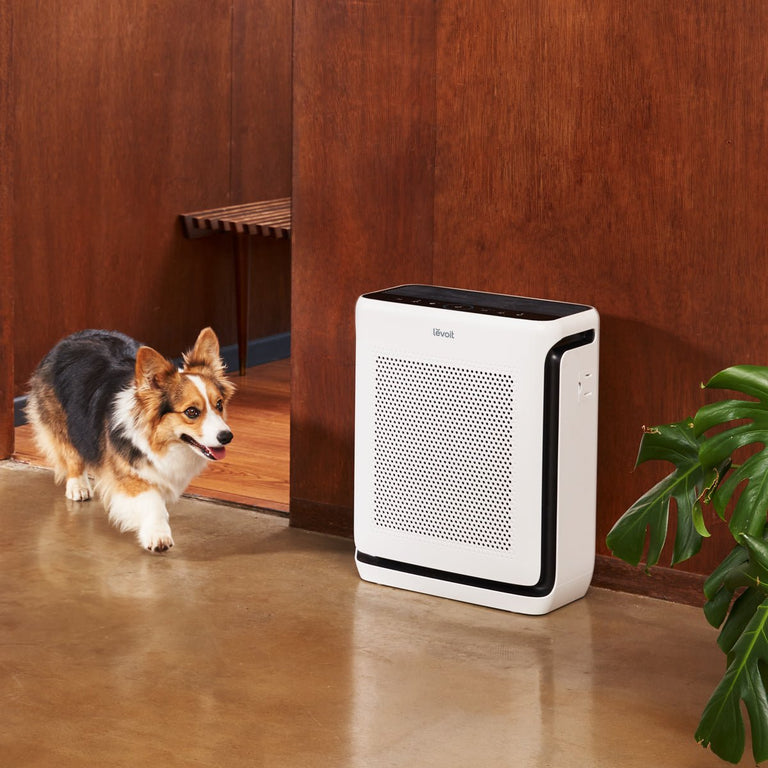
The Levoit Vital 200S is the easiest recommendation because it clears the Code Purple buying threshold without jumping into premium pricing. It is listed with a 249 CFM smoke CADR, coverage of 373 square feet at 5 air changes per hour, an IR dust sensor, auto mode, the VeSync app for scheduling and remote control, and a low setting measured at 38.3 dB.[4][5]
Those numbers put it in the right zone for a main bedroom, child’s room, rental living room, or home office. The 5 ACH coverage matters because it gives a more realistic clean-air target during smoke than a marketing claim based on occasional circulation. At about $170 in the research brief, it is also priced like something a household might buy before the next alert instead of debating for months.[4]
The compromise is the sensor. An IR dust sensor is useful for auto mode, but it is not the same as the laser particle sensing found in some pricier units. If you want a second opinion on indoor PM2.5, pair it with a standalone monitor or read more about smart air purifier features for wildfire smoke. Still, for the usual Pennsylvania use case — one strong machine in the room where people spend the most time — the Vital 200S is the practical value pick.
Coway Airmega ProX: The Premium Pick for Large Open Rooms
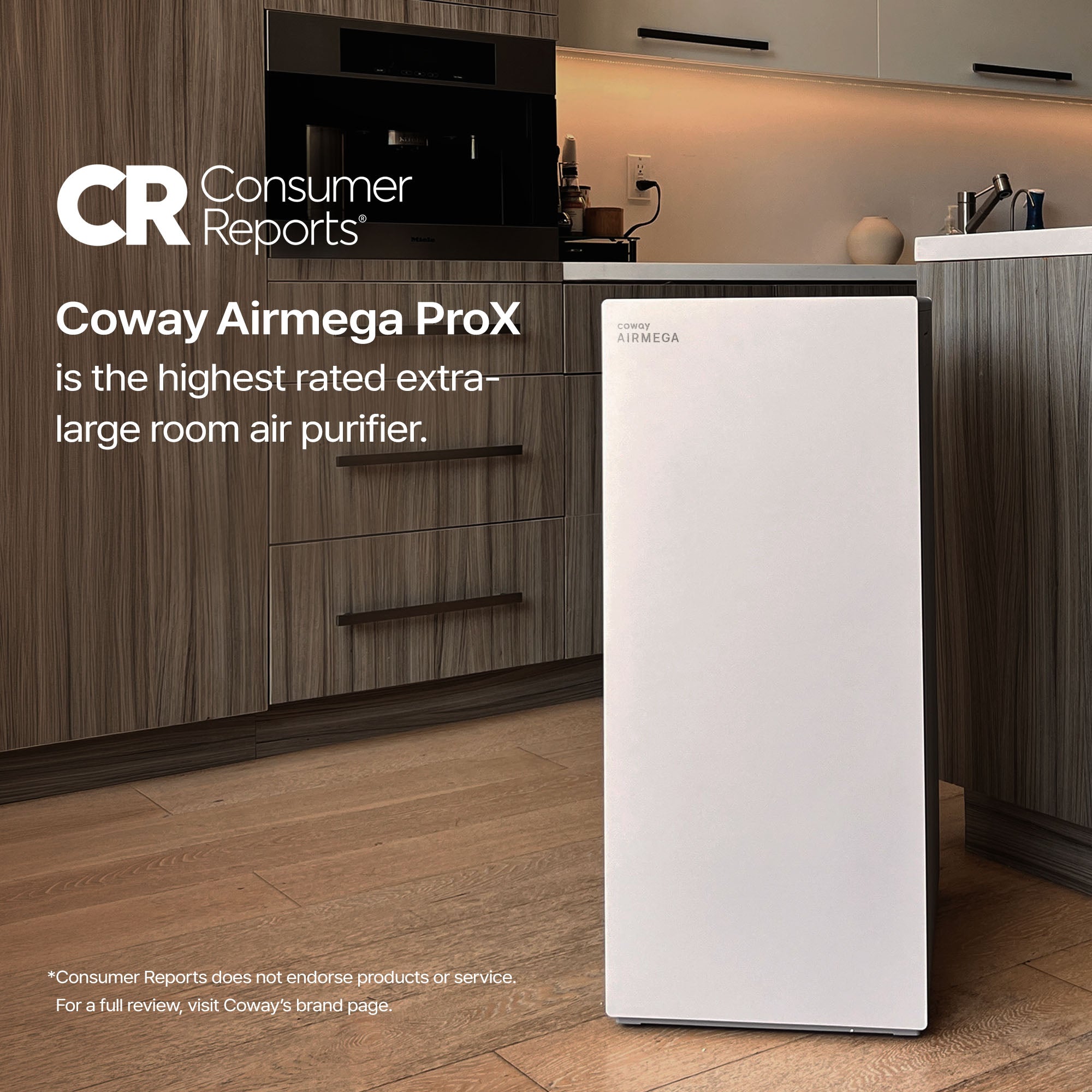
The Coway Airmega ProX is the machine I would look at when the target room is not really a room at all: an open living room and kitchen, a loft, or a large first-floor space where a 250 CFM purifier will be working too hard. HouseFresh lists the ProX at 462 CFM smoke CADR, with coverage of 693 square feet at 5 ACH, a laser particle sensor, auto mode, and a smart light-sensing sleep mode.[5]
At about $900, it should not be treated as the default answer for every Code Purple household.[5] The price makes sense only if the space demands the airflow. If you are trying to clean a closed bedroom, the ProX is likely more machine than you need. If you are trying to keep an open-plan main floor from becoming the weak point during a smoke alert, the extra CADR is the point.
Blueair 311i Max: A Quiet Alternative Around the Same Airflow Class
The Blueair 311i Max barely clears the same smoke CADR floor, with a listed 250 CFM smoke CADR, 387 square feet of coverage, app control, and a 40.2 dBA low setting.[4] That makes it a reasonable alternative if you prefer Blueair’s design, availability, or noise profile.
I would not pick it just because it looks calmer in a living room. I would pick it when the price is competitive, the room size fits, and the app and filter costs make sense for the household. It belongs on the shortlist, not above the Vital 200S on value.
Mila: Best for People Who Actually Want the Sensor Data
Mila is the more sensor-heavy option. Air Purifier First lists it at about 245 CFM CADR and about $350, with sensors for PM1, PM2.5, PM10, VOCs, CO2, temperature, and humidity, plus an app with an AI assistant.[4] That is appealing if you want the purifier to act more like an indoor air dashboard.
The caution is that 245 CFM is the floor, not a bonus. Mila makes more sense for a correctly sized room and a buyer who values the additional sensing. If the room is large, spend the money on more CADR before spending it on a richer app.
Why Auto Mode and PM2.5 Sensing Matter During an Alert
A smart purifier’s best feature during smoke is not a pretty graph after the fact. It is automatic fan response when particle levels rise. If someone opens a door, the HVAC fan pulls in a little outdoor air, or smoke slips through a leaky window frame, the purifier should move from quiet mode to a higher fan speed without waiting for a person to notice the haze.
That is why I separate app control from real sensing. WiFi is convenient. Scheduling is useful. Remote control is helpful if an older parent does not want to fuss with buttons or if a renter wants the bedroom cleaned before coming home. But none of those features makes a purifier smarter about smoke unless the auto mode is tied to a particle sensor that can respond to PM2.5 conditions.
Air Purifier First’s testing database shows that smart features are still not universal: among 101 air purifiers it tested, only 30 had smart app functionality and about 52 had auto mode.[4] So it is worth checking the spec sheet instead of assuming that every current purifier can be monitored or automated.
What a Purifier Cannot Do Alone
A purifier is not a force field. It works best after the obvious leaks are reduced: windows closed, exterior doors opened briefly, bathroom and kitchen exhaust fans used carefully, and the clean-air room chosen intentionally. If the room is too large, too drafty, or connected to smoky air by constant traffic, even a good machine will show its limits.
Central HVAC can help when it is set up for smoke. Wirecutter cites EPA guidance recommending MERV 13 or higher filters in central HVAC systems during smoke events, where the system can support that level of filtration.[6] That last clause matters. Some older systems struggle with restrictive filters, so homeowners should verify compatibility rather than forcing in the densest filter on the shelf.
DIY Corsi-Rosenthal boxes also deserve respect. Wirecutter reports that a design using four MERV 13 filters and a box fan can match 462 CFM for about $80 in materials, though it lacks carbon filtration and runs loud at 51 to 62 dB.[6] For a community center, classroom, basement project, or budget emergency build, that can be useful. For this guide’s main buyer — someone who wants a smart purifier with sensing, auto mode, and app control — it is a complementary route rather than the direct answer.
Buying Before the Next Code Purple Alert
The worst time to comparison-shop is after the alert has already hit. Prices and stock can move during smoke events, and the prices cited here — about $170 for the Levoit Vital 200S, $350 for Mila, and $900 for the Coway Airmega ProX — should be checked at purchase time.[4][5] CADR numbers also come from different test methods across publications and manufacturers, so treat them as buying guides rather than laboratory-perfect comparisons.
For a Pennsylvania household buying one machine now, this is the clean path: choose the room first, verify smoke CADR of at least 245 CFM, prefer 5 ACH coverage for that room size, confirm True HEPA or H13/H14 filtration, look for real activated carbon, require PM2.5-driven auto mode, and buy replacement filters with the purifier. If you want a broader national model comparison, use our best smart air purifiers for wildfire smoke guide after you have those thresholds in mind.
If you are building beyond one room, add a separate indoor air quality monitor, think about HVAC filtration, and consider simple automations that turn purifiers up when PM2.5 rises. Our guides to smart air quality monitors for wildfire smoke and whole-home wildfire smoke devices are better places for that next layer.
For most Pennsylvania homes preparing for another Code Purple smoke day, I would buy the Levoit Vital 200S first and put it in the room that needs protection most. For a large open-plan space where 250 CFM is not enough, I would step up to the Coway Airmega ProX instead.
References
- DEP Declares Statewide Code Purple Air Quality Alert for Friday, July 17, 2026, Pennsylvania Department of Environmental Protection, July 16, 2026.
- AQI Basics, AirNow.gov.
- Best Air Purifiers for Wildfire Smoke, Consumer Reports.
- Best WiFi Smart Air Purifier, Air Purifier First.
- Air Purifiers for Wildfire Smoke, HouseFresh.
- The Best Air Purifier for Wildfire Smoke, Wirecutter.
Reader Feedback
Share your purchase experience, flag outdated picks, or ask clarifying questions about the checklist items.
Comments
Join the discussion with an anonymous comment.