
Can OpenAI Astra Integrate With Your Smart Home?
OpenAI Astra was announced without any smart home integration, yet claims about native Apple Home, Google Home, Alexa, and Matter support are spreading. Here is a dated, status-labeled breakdown of what is verified versus rumored — including the only OpenAI-to-smart-home path that works today via Home Assistant.
Last updated
As of August 2, 2026, OpenAI Astra cannot control your smart home. OpenAI has publicly named Astra as an unreleased model family, but it has not announced an Astra device, API, smart-home integration, supported hub list, Matter support, or release date. Claims that sound more specific than that should be treated as unsupported unless they point to dated OpenAI product documentation. OpenAI’s own public mention of Astra came on August 1, 2026, and it did not include smart-home compatibility details [1]. Independent analysis of the Astra claims circulating around the announcement also flags precise-sounding items such as a “10 trillion parameter” figure or an “August launch” as unsupported by primary sources [2].
There is one OpenAI-to-smart-home route that works today, but it is not Astra: Home Assistant’s official OpenAI Conversation integration. That distinction matters if you are about to buy a hub, delay a Home Assistant setup, or assume a future OpenAI speaker will bridge Apple Home, Google Home, Alexa, and Matter for you.
Status snapshot: confirmed, rumored, works today
| Status | What is verified as of August 2, 2026 | What it means before you buy |
|---|---|---|
| Confirmed | OpenAI Astra exists as an unreleased OpenAI model family, publicly named on August 1, 2026. No OpenAI source announces an Astra smart-home integration, API, device, launch date, or supported ecosystem list [1][2]. | Do not treat Astra as compatible with any smart-home platform yet. |
| Rumored | Bloomberg reporting, carried by MacRumors, The Verge, and Reuters, describes a possible portable, screenless ChatGPT smart speaker with smart-home ambitions, camera, sensors, and GPT-Live, not expected before 2027. OpenAI has not confirmed it [4][5][6]. | Do not delay a purchase or redesign automations around this rumor. |
| Works Today | Home Assistant has an official OpenAI Conversation integration. It requires a paid OpenAI API key, uses the official OpenAI endpoint, defaults to gpt-4o-mini, and is classified as Cloud Polling [3]. | This is the only verified OpenAI smart-home control path documented here, and it is not Astra. |
First, make sure the “Astra” you saw is the OpenAI one
The name Astra is already overloaded. Google’s Project Astra is a separate Google DeepMind effort, not an OpenAI product and not evidence of OpenAI smart-home compatibility [7]. Astra-branded database and security products are also unrelated. If a post says “Astra works with smart homes” but mixes Google demos, database references, or security-vendor pages into the same evidence pile, it is not giving you a usable compatibility answer.
For a pre-purchase decision, the only useful question is narrower: has OpenAI published a dated integration path that lets OpenAI Astra control a specific home platform? Right now, the answer is no.
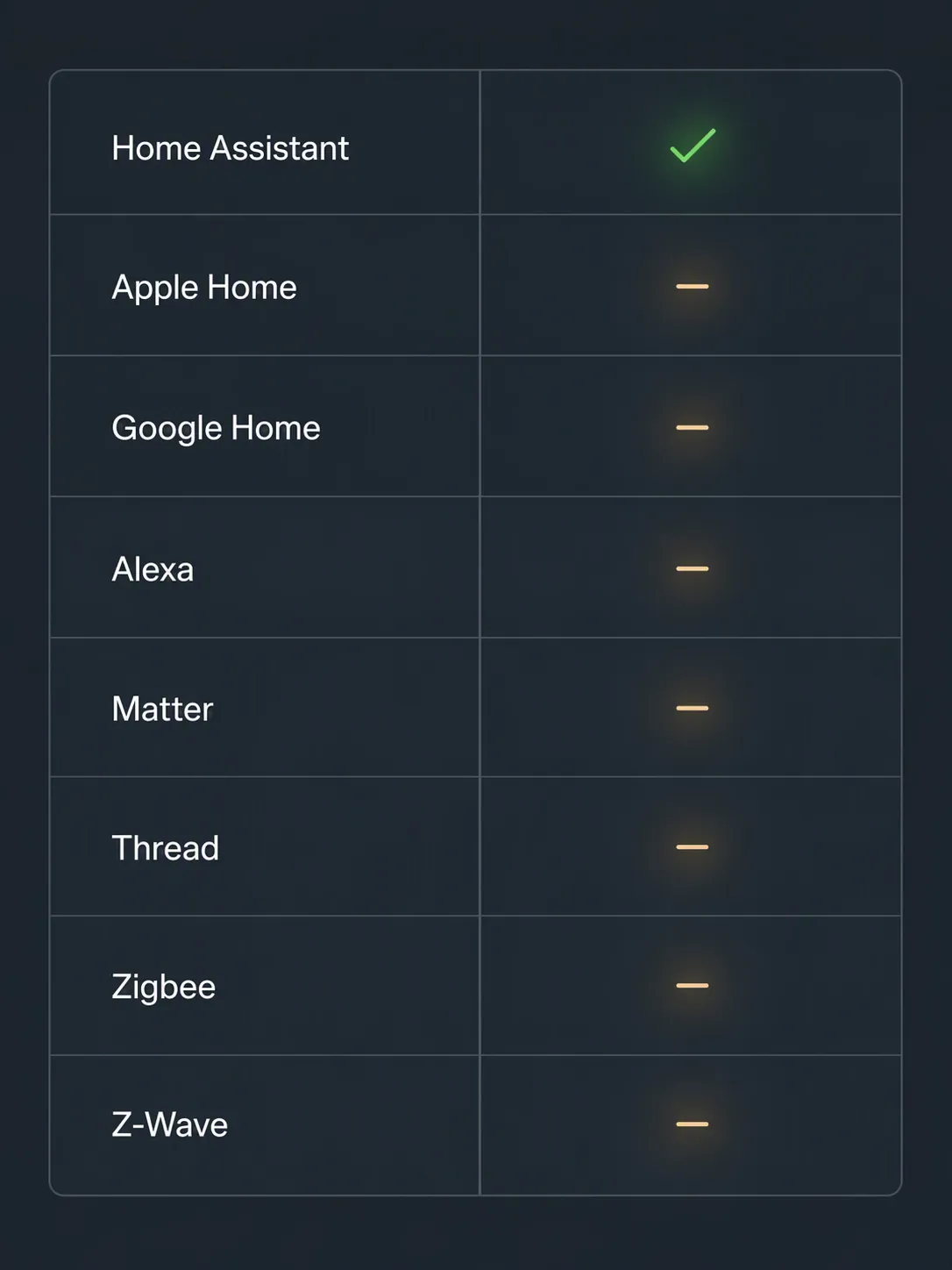
OpenAI Astra smart-home compatibility matrix
| Hub or ecosystem | Astra status | What is actually verified |
|---|---|---|
| Home Assistant | Works today with OpenAI API, not Astra | Home Assistant’s OpenAI Conversation integration is official, paid-API-key based, Cloud Polling, and defaults to gpt-4o-mini [3]. Astra is not listed as the model or product path. |
| Apple Home | Unconfirmed for Astra | No OpenAI source announces native Apple Home, HomeKit, Apple Home hub, or Thread border-router integration for Astra [1][2]. |
| Google Home | Unconfirmed for Astra | No OpenAI source announces Google Home or Google Assistant integration for Astra [1][2]. Do not confuse this with Google’s unrelated Project Astra [7]. |
| Amazon Alexa | Unconfirmed for Astra | No OpenAI source announces Alexa skill, Alexa Plus, Echo, or smart-home routine integration for Astra [1][2]. |
| Matter | Unconfirmed for Astra | No OpenAI source announces Matter controller, Matter bridge, or Matter fabric participation for Astra [1][2]. |
| Thread | Unconfirmed for Astra | No OpenAI source announces Thread radio hardware, Thread border-router support, or Thread accessory control for Astra [1][2]. |
| Zigbee | Unconfirmed for Astra | No OpenAI source announces Zigbee coordinator, Zigbee hub, or direct Zigbee accessory support for Astra [1][2]. |
| Z-Wave | Unconfirmed for Astra | No OpenAI source announces Z-Wave controller, Z-Wave hub, or direct Z-Wave accessory support for Astra [1][2]. |
Home Assistant: the only OpenAI path you can use now
If your goal is to put OpenAI into a smart-home workflow today, start with Home Assistant, not Astra. Home Assistant’s official OpenAI Conversation integration was introduced in Home Assistant 2023.2, appears on the official integration documentation, requires a paid OpenAI API key, works with the official OpenAI endpoint, defaults to gpt-4o-mini, and is classified as Cloud Polling [3]. The same documentation reports usage at roughly 4.5% of active installations [3].
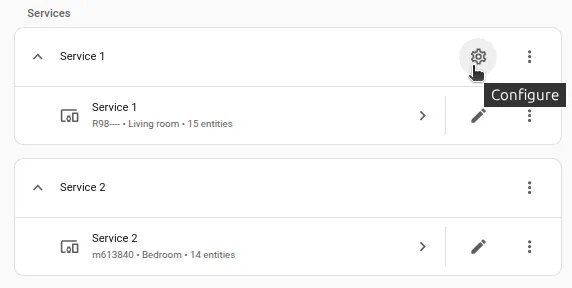
That gives you a real maintenance model. Home Assistant remains the system that knows your entities, rooms, automations, and permissions. OpenAI supplies a conversational layer through the API. If a light does not turn on, you can inspect the Home Assistant entity, automation trace, integration settings, API key, and cloud dependency instead of waiting for a rumored hardware product to become real.
It is still not a local assistant and it is still not Astra. The integration’s Cloud Polling classification means the OpenAI side depends on a cloud API call [3]. OpenAI’s current API flagship is GPT-5.6, described by OpenAI as Sol, Terra, and Luna; Astra is not the current API flagship and is not presented as the model behind Home Assistant’s existing OpenAI Conversation integration [8].
For setup decisions, that makes the verified path fairly plain: if you already run Home Assistant, use the official integration documentation and budget for paid API usage. If you do not run Home Assistant, do not buy it because Astra is coming; buy it only if you want Home Assistant’s normal local hub, automation, and integration model, with OpenAI as one optional cloud-backed conversation layer.
For a deeper baseline on the existing route, use the site’s OpenAI-in-Home-Assistant coverage. If you are deciding whether the cloud dependency is acceptable in a house with locks, cameras, or voice access, pair it with a smart-home assistant privacy audit before you put critical routines behind any AI service.
Apple Home: no Astra support is announced
There is no announced OpenAI Astra integration for Apple Home, HomeKit, HomePod, Apple TV, the Home app, or Apple’s Matter/Thread hub role. That is the whole compatibility answer for now. Apple Home support would need more than a model name: it would need a product surface, permissions, account linking or app integration, and a clear explanation of which device is acting as the home controller.
If your current decision is really about Thread, Matter, and Apple’s home hub mechanics, use the Apple Home hub explainer instead of waiting on an Astra rumor. The missing piece is not a clever command; it is an announced OpenAI-to-Apple-Home integration path.
Google Home: Project Astra does not make OpenAI Astra compatible
No OpenAI source announces Google Home support for OpenAI Astra. Google’s Project Astra makes this row especially easy to misread, because it puts the same name near assistant demos and AI-agent language. It is still a Google DeepMind project, not an OpenAI smart-home bridge [7].
Until OpenAI publishes Google Home integration documentation or Google announces an OpenAI Astra path inside its home ecosystem, the status remains unconfirmed.
Alexa: treat it as update-watch, not compatibility
There is no announced Astra integration for Alexa, Echo devices, Alexa routines, or Alexa Plus. A future AI-assistant update could change that, but today there is no OpenAI documentation that lets a buyer say, “Astra will run my Alexa home.”
This is the kind of thing to track as an assistant update, not as a buying assumption. The site’s Alexa update-watch coverage is a better model for how to handle that category: wait for the shipped behavior, then test what changed.
Matter, Thread, Zigbee, and Z-Wave: no protocol claim exists
Astra has no announced Matter, Thread, Zigbee, or Z-Wave support. These are not interchangeable checkboxes. Matter is an application-layer standard. Thread, Zigbee, and Z-Wave involve radios, network roles, and controllers. A language model family does not become a Matter controller or a Zigbee coordinator because a rumor says “smart home.”
This is where AI-home headlines tend to overpromise. An assistant can understand a command and still have no authorized path to the lock, light, thermostat, or scene. For the structural limits behind that distinction, see the site’s AI smart-home integration limits explainer.
The smart-speaker rumor is not a purchase plan
The most tempting rumor is the reported OpenAI hardware device. Bloomberg reporting, carried by MacRumors, The Verge, and Reuters on July 14, 2026, described a portable, screenless ChatGPT smart speaker that could control smart-home accessories, use GPT-Live, and include a camera and sensors. The same reporting said it was not expected before 2027 [4][5][6].
That is a rumor boundary, not a compatibility sheet. OpenAI has not confirmed the device, published supported ecosystems, named Matter or Thread roles, shown Apple Home or Google Home account linking, or explained how Alexa would fit. The reported device is also complicated by Apple’s trade-secrets lawsuit, filed July 10, 2026, which seeks an injunction and could affect timing if the hardware project is real and covered by the dispute [4][5].
The useful buyer translation is simple: “reported smart speaker” does not equal “compatible with my house.” A screenless speaker with sensors would still need a supported control surface, permissions, ecosystem partnerships, and a shipped product. Until those exist, it should not decide whether you buy a Home Assistant box, an Apple Home hub, an Echo, a Google Nest device, or Matter accessories.
What to do if you need OpenAI in a smart home now
- Use Home Assistant’s official OpenAI Conversation integration if you want a verified OpenAI path today. Expect a paid OpenAI API key and cloud dependency.
- Do not buy Apple Home, Google Home, Alexa, Matter, Thread, Zigbee, or Z-Wave hardware because you expect OpenAI Astra to support it. There is no announced Astra compatibility for those ecosystems.
- Do not delay a working hub purchase for the rumored OpenAI smart speaker unless you are comfortable waiting for an unconfirmed product that is not expected before 2027 in the reporting.
- Treat precise Astra claims without primary-source links—parameter counts, launch dates, supported hubs, protocol support—as unverified.
- Re-check only dated primary sources: OpenAI product posts, OpenAI API documentation, official Home Assistant documentation, and official ecosystem integration pages.
For now, OpenAI Astra is a non-factor in smart-home planning. If you want OpenAI control today, the practical route is Home Assistant plus the paid API integration. If you want native Apple Home, Google Home, Alexa, Matter, Thread, Zigbee, Z-Wave, or OpenAI smart-speaker support, wait for OpenAI to publish product details, integration documentation, supported ecosystems, and timing.
References
- Ten advances in mathematics and theoretical computer science — OpenAI — Aug 1, 2026
- OpenAI Astra: multi-agent model Senate — Pasquale Pillitteri
- OpenAI Conversation — Home Assistant
- OpenAI's First AI Hardware Device Will Reportedly Be a Smart Speaker — MacRumors — Jul 14, 2026
- OpenAI’s first hardware device might be a screenless smart speaker — The Verge — Jul 14, 2026
- OpenAI's first hardware device will be speaker, Bloomberg News reports — Reuters — Jul 14, 2026
- Project Astra — Google DeepMind
- GPT-5.6 — OpenAI — Jul 9, 2026
Known issues with this device / protocol
Spec-version history
For active regressions on this protocol, see Update Watch.
No linked Update Watch entries yet.