How DeepSeek V4 and GPT-5.5 plug into your smart home
Which of DeepSeek V4 or GPT-5.5 can you actually plug into your smart home? This compatibility map covers every integration path — Home Assistant's official OpenAI integration, the HACS and OpenRouter side doors, local Ollama — and shows why GPT-5.5 is the zero-friction choice today while DeepSeek V4 works only through side doors, with neither model configurable on Alexa, Google Home, or Apple Home.
Last updated
When comparing DeepSeek V4 vs GPT for smart home automation, the first useful question is not which model wins a benchmark. It is which box in your smart-home stack accepts the API key. Here, “GPT” means OpenAI GPT-5.5 used through Home Assistant’s official OpenAI Conversation integration, not a ChatGPT subscription or a generic chatbot account. Home Assistant’s OpenAI integration is an official path, but it is tied to OpenAI’s own endpoint and its docs explicitly send users to OpenRouter for non-OpenAI providers rather than treating every OpenAI-compatible API as interchangeable [1]. OpenRouter is also an official Home Assistant integration, added in Home Assistant 2025.8, and is the cleaner platform route for many non-OpenAI models [2]. The DeepSeek-specific HACS component is different: its published capabilities are developer-reported, require Home Assistant 2026.1+, and should be read as Workaround / community-reported until independently reproduced [3].
| Smart-home surface | GPT-5.5 path | DeepSeek V4 path | 2026 status |
|---|---|---|---|
| Home Assistant: official OpenAI Conversation integration | Yes, via OpenAI’s official endpoint, assuming the model is available to your OpenAI API account | No. DeepSeek’s OpenAI-compatible API does not make it a drop-in provider for this integration | Confirmed for GPT-5.5 path; not supported for DeepSeek through this specific integration |
| Home Assistant: official OpenRouter integration | Possible but usually unnecessary if you already use OpenAI directly | Primary official bridge to try for non-OpenAI routing, subject to OpenRouter model/provider availability | Confirmed integration path; verify the exact DeepSeek V4 model route before purchase |
| Home Assistant: HACS deepseek_conversation component | No | Yes, by custom component; requires Home Assistant 2026.1+ and defaults to V4 Flash | Workaround / community-reported |
| Home Assistant: local Ollama route | No practical local GPT-5.5 route; closed hosted model | Possible DIY local side path if the model build, hardware, and Home Assistant setup match | DIY side path, not a like-for-like replacement for the OpenAI integration |
| Alexa, Google Home, Apple Home / Siri | No native user-selectable GPT-5.5 conversation-agent setting | No native user-selectable DeepSeek V4 conversation-agent setting | No native configurable LLM brain as of 2026-08-01; re-check before buying hardware or credits |
Home Assistant is where the real choice exists
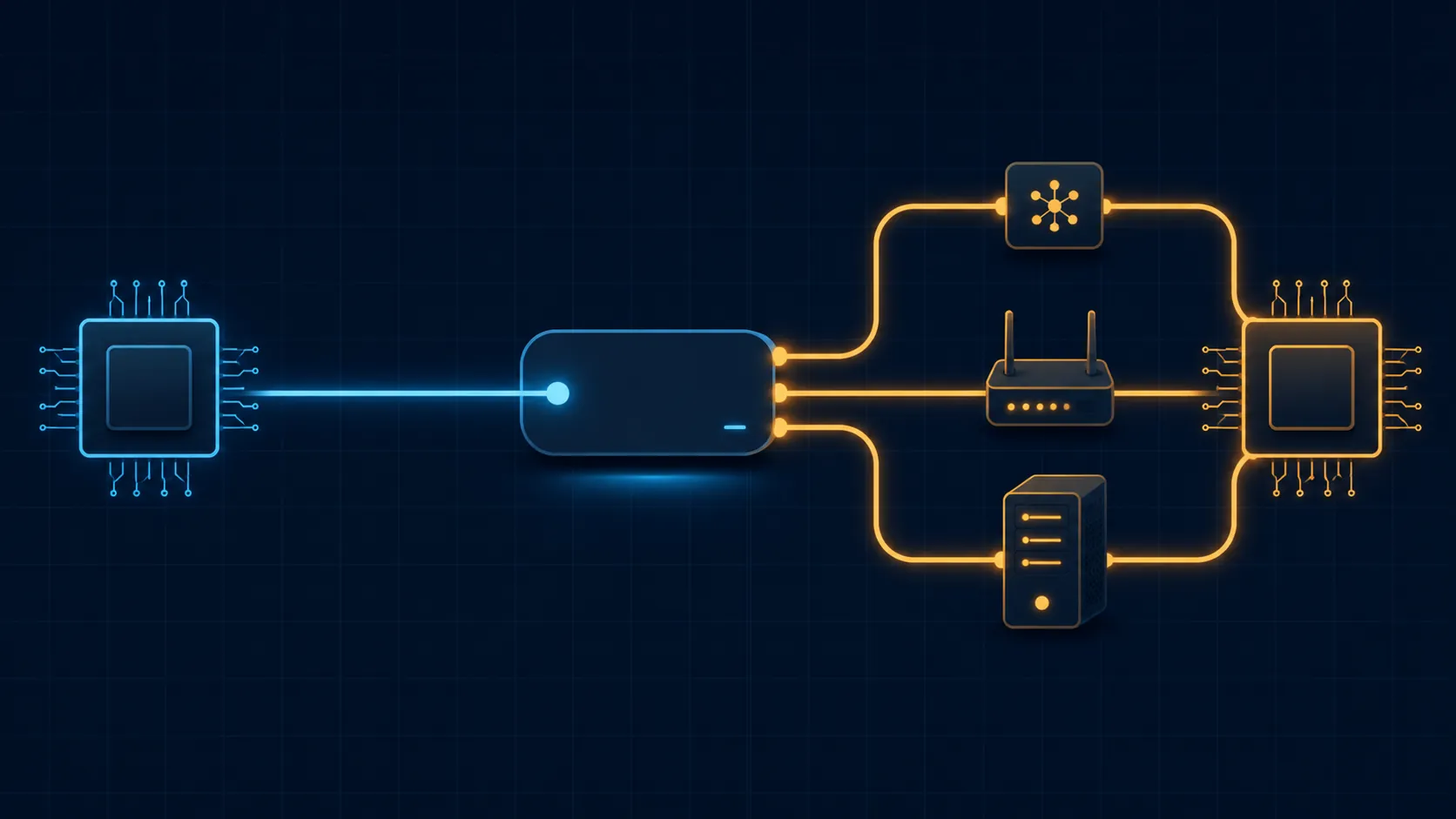
Home Assistant is the serious arena here because it actually lets the user choose a conversation agent. Home Assistant describes the conversation agent as the “brains” of the Assist pipeline, which is exactly the part people are trying to swap when they compare GPT-5.5 with DeepSeek V4 for automation control [4]. Alexa, Google Home, and Apple Home may expose routines, skills, automations, scenes, and assistant features, but they do not give the same clean decision surface: paste key, choose model, expose entities, test tool calls.
That is why the Home Assistant endpoint matters more than the model’s marketing label. A model can speak an OpenAI-style API and still fail at the platform UI seam if the integration only allows OpenAI’s own endpoint. DeepSeek V4’s API compatibility is useful in many software stacks, but Home Assistant’s official OpenAI Conversation integration is not a generic adapter for every OpenAI-compatible provider [1].
GPT-5.5: the zero-friction Home Assistant path
If you already have a working Home Assistant setup using OpenAI Conversation, GPT-5.5 is the least disruptive candidate. The integration is official, it has been around since Home Assistant 2023.2, and Home Assistant reports it on roughly 4.5% of active installs. Its documented default model is gpt-4o-mini, which is a reminder that the integration and the selected model ID are separate pieces: the integration gives you the socket; the model field decides which OpenAI model you call, subject to what your API account can access [1].
The practical advantage is boring in the best possible way. You keep the official integration, the same OpenAI account path, the same Home Assistant conversation-agent slot, and the same basic maintenance surface. If OpenAI changes model availability or pricing, you still have to adjust. But you are not rebuilding the route through HACS, OpenRouter, a local server, or a second provider gateway just to test the model.
For a user whose ChatGPT-style Home Assistant setup already works, this is the key migration fact: GPT-5.5 is a model change inside the OpenAI lane. DeepSeek V4 is a lane change.
DeepSeek V4 path one: HACS deepseek_conversation
The most direct-looking DeepSeek route is the HACS custom component published as deepseek_conversation. Its README says it requires Home Assistant 2026.1 or newer, defaults to V4 Flash, supports a thinking toggle, tool calling, tool loops, and token sensors, and notes that the legacy deepseek-chat and deepseek-reasoner model IDs were retired on 2026-07-24 [3].
That list is promising, but the status label stays Workaround / community-reported. A HACS component can be perfectly useful and still carry different maintenance risk from a core Home Assistant integration. If Home Assistant changes conversation-agent internals, if DeepSeek changes model names again, or if the component maintainer falls behind, the person holding the broken automation is the user, not the model benchmark chart.
For pre-purchase testing, the minimum checklist is plain: confirm your Home Assistant version is 2026.1 or newer, confirm the exact DeepSeek model ID you intend to call after the 2026-07-24 retirement date, create a small test set of exposed entities, and keep your existing OpenAI conversation agent until DeepSeek has survived your normal voice commands and automation edits for a few days.
DeepSeek V4 path two: OpenRouter as the cleaner bridge
For most users who want DeepSeek without installing a custom component, OpenRouter is the more defensible first stop. It is an official Home Assistant integration, it was added in Home Assistant 2025.8, Home Assistant lists about 2,304 installs, and its docs describe access to 400+ models across providers [2].
This does not make DeepSeek V4 identical to GPT-5.5 in Home Assistant. It adds another account, another billing surface, and another place where model availability and routing can change. The upside is that the Home Assistant side is official. The part to verify before spending money is not “does OpenRouter exist?” but “is the exact DeepSeek V4 or V4 Flash model I want available through the OpenRouter route I plan to use, at the price and capability level I expect?”
If your goal is to compare multiple non-OpenAI models behind one Home Assistant conversation-agent route, OpenRouter is also easier to reason about than one custom component per vendor. The sibling question for Anthropic users is covered separately in NestGrid’s Claude-to-Home-Assistant route comparison; this article is narrower on purpose because the DeepSeek-vs-GPT decision hinges on the OpenAI integration boundary.
DeepSeek V4 path three: local Ollama, if you really want local
The local route belongs in the map, but it should not be confused with a quick API swap. DeepSeek’s V4 Preview release describes MIT open weights, OpenAI Chat Completions and Anthropic API compatibility, a 1M-token context window, and three thinking modes [5]. Those traits make local and semi-local experiments more plausible than they would be with a closed hosted model.
In Home Assistant terms, however, local Ollama means a separate path with its own machine, model build, memory limits, latency, and update rhythm. If that is what you want, use NestGrid’s DeepSeek V4 Flash local Home Assistant recipe rather than treating it as a substitute for the official OpenAI Conversation integration.
Where neither model plugs in natively
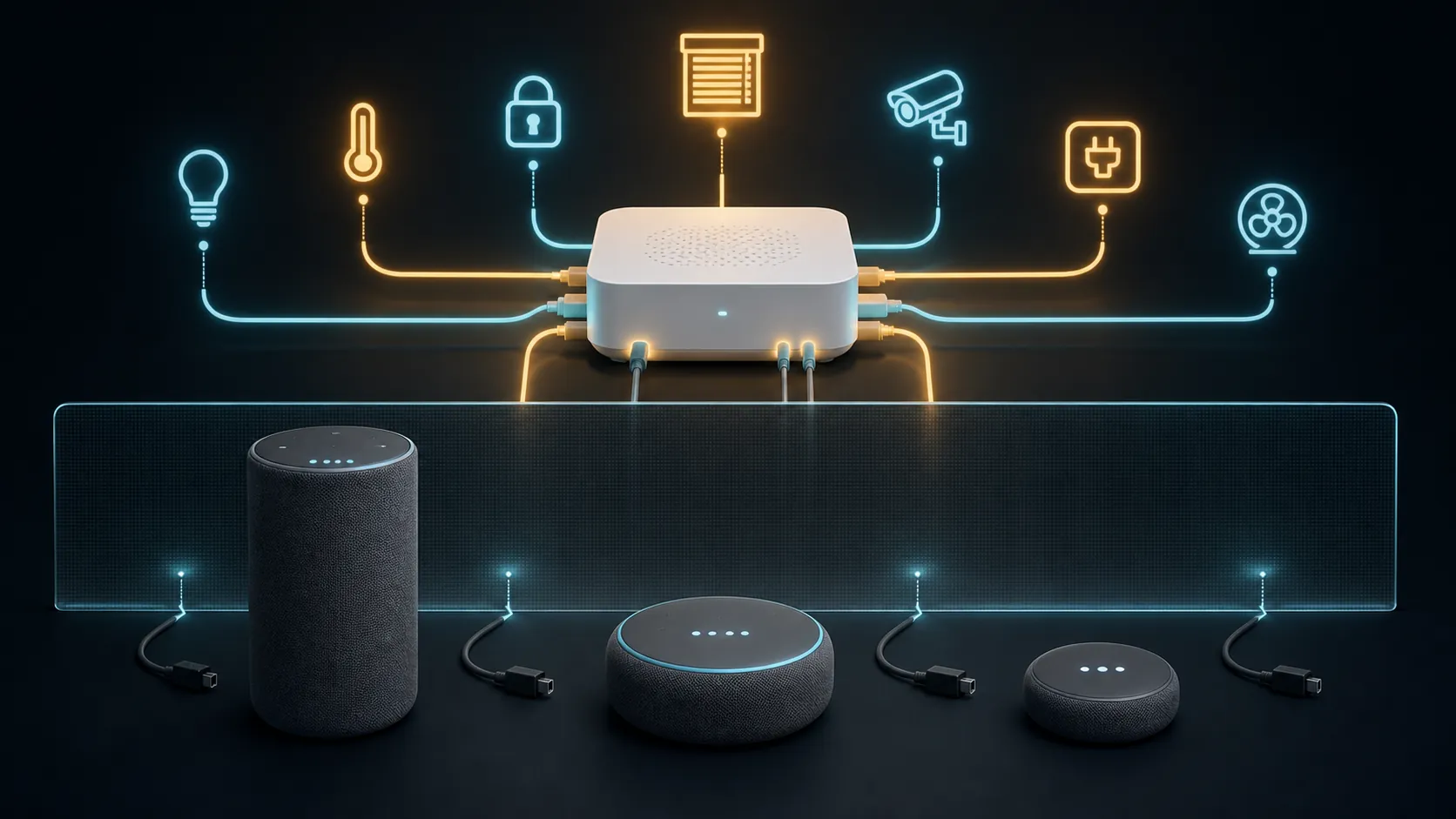
As of 2026-08-01, Alexa, Google Home, and Apple Home / Siri should be treated as No native configurable route for both GPT-5.5 and DeepSeek V4. The important word is “configurable.” These ecosystems may add new assistant features, branded AI upgrades, app actions, cloud automations, or developer surfaces. That is not the same as giving the user a Home Assistant-style setting where they choose GPT-5.5 or DeepSeek V4 as the conversation agent for the home.
This is the expensive wrong assumption to avoid. Buying DeepSeek credits will not make Siri use DeepSeek as the brain of Apple Home. Paying for OpenAI API access will not add a GPT-5.5 selector inside the Google Home app. Alexa’s AI direction is moving quickly, and NestGrid tracks part of that ecosystem churn in its Amazon Nova and Alexa smart-home watch, but that is still different from a user-controlled model picker.
For many households, the practical pattern is therefore hybrid: consumer speakers remain microphones, media devices, or routine triggers, while Home Assistant carries the experimental LLM brain. That pattern is one reason regressions and assistant churn in the big ecosystems keep pushing some power users back toward local or DIY hubs, a broader trend covered in NestGrid’s smart-home AI reliability watch.
The price and benchmark temptation
DeepSeek V4 is attractive for understandable reasons. Its Preview release on 2026-04-24 advertised V4 Flash pricing at $0.14 input and $0.28 output, and V4 Pro pricing at $1.74 input and $3.48 output, alongside the 1M context window and open-weight positioning [5]. Those numbers are the reason many Home Assistant users ask whether it can replace an OpenAI setup.
OpenAI’s side can look much more expensive in launch-era comparisons. DataCamp’s comparison listed GPT-5.5 at $5 input and $30 output, with a Pro tier at $30 input and $180 output, and described GPT-5.5 as closed weights. The same comparison reported benchmark gaps such as Terminal-Bench 2.0 at 67.9% for DeepSeek V4 versus 82.7% for GPT-5.5, and SWE-bench Pro at 55.4% versus 58.6%, but those figures should be read as vendor-reported and not clean head-to-head ground truth across identical harnesses [6].
For smart-home automation, the more useful conclusion is narrower: DeepSeek’s cost and open-weight story make it worth testing, especially for high-volume or local experiments. They do not make it appear inside Home Assistant’s OpenAI integration. If cost is the dimension you are optimizing, use NestGrid’s DeepSeek V4 Flash Home Assistant cost watch. If benchmark behavior is the dimension, use the DeepSeek V4 Flash benchmark verdict. This page is only answering the wiring question.
If you already have GPT working in Home Assistant
Do not delete the working OpenAI conversation agent just to test DeepSeek. Add the second path beside it, then switch the active conversation agent only after a small test set works. The failure modes are not abstract: model IDs can be retired, custom components can lag Home Assistant releases, OpenRouter routing can change, and a local model can be too slow for voice control even if it answers correctly.
- If you want the cleanest production path: stay with the official OpenAI Conversation integration and use GPT-5.5 if your OpenAI API account exposes it.
- If you want DeepSeek with the least Home Assistant-side custom code: test the official OpenRouter integration first, then verify the exact DeepSeek V4 route and price before relying on it.
- If you want the DeepSeek-specific HACS experience: treat it as Workaround / community-reported, confirm Home Assistant 2026.1+, and watch the model ID names.
- If you want local control: use the Ollama/local path as a separate project, not as a one-evening replacement for OpenAI Conversation.
2026 verdict
- Home Assistant + GPT-5.5: Confirmed clean path through the official OpenAI Conversation integration.
- Home Assistant + DeepSeek V4 through the OpenAI integration: Not supported; OpenAI-compatible does not mean compatible with that Home Assistant integration.
- Home Assistant + DeepSeek V4 through OpenRouter: Confirmed official bridge for non-OpenAI routing, with exact model availability and provider terms to verify.
- Home Assistant + DeepSeek V4 through HACS deepseek_conversation: Workaround / community-reported.
- Home Assistant + DeepSeek V4 through local Ollama: viable DIY side path, not a drop-in OpenAI replacement.
- Alexa, Google Home, and Apple Home / Siri: neither GPT-5.5 nor DeepSeek V4 is a native selectable smart-home brain as of 2026-08-01.
References
- OpenAI Conversation, Home Assistant
- OpenRouter, Home Assistant
- Homeassistant-Deepseek-Integration, GitHub
- AI in Home Assistant, Home Assistant, 2025-09-11
- DeepSeek V4 Preview release note, DeepSeek API Docs, 2026-04-24
- DeepSeek V4 vs GPT-5.5, DataCamp
Known issues with this device / protocol
Spec-version history
For active regressions on this protocol, see Update Watch.
No linked Update Watch entries yet.