
What AI Assistants Can and Can't Do for Smart Home Integration
This article examines the state of AI-driven smart home integration in 2026, explaining why Matter-certified devices still fail to work across platforms and why AI assistants like Alexa+ and Gemini for Home inherit rather than solve those silos. Readers will learn the structural limits of current smart home standards and what to realistically expect from AI.
Last updated
The most misleading smart-home promise in 2026 is not that Matter does nothing. It does plenty. A Matter light bulb is far less likely to trap you in one brand’s app than a random Wi-Fi bulb from a few years ago, and basic setup across Apple Home, Google Home, Alexa, or SmartThings is usually less painful than it used to be. The problem starts when the Matter logo is read as a promise that the same device will behave the same way everywhere.
That is where the AI smart-home conversation often gets ahead of the actual home. AI assistants can make supported devices easier to command, group, troubleshoot, and automate. They cannot make an unsupported device type appear inside a controller that does not support it, and they cannot reach into a manufacturer app to expose a lighting effect, camera permission, or scene that the manufacturer has chosen not to publish through Matter.
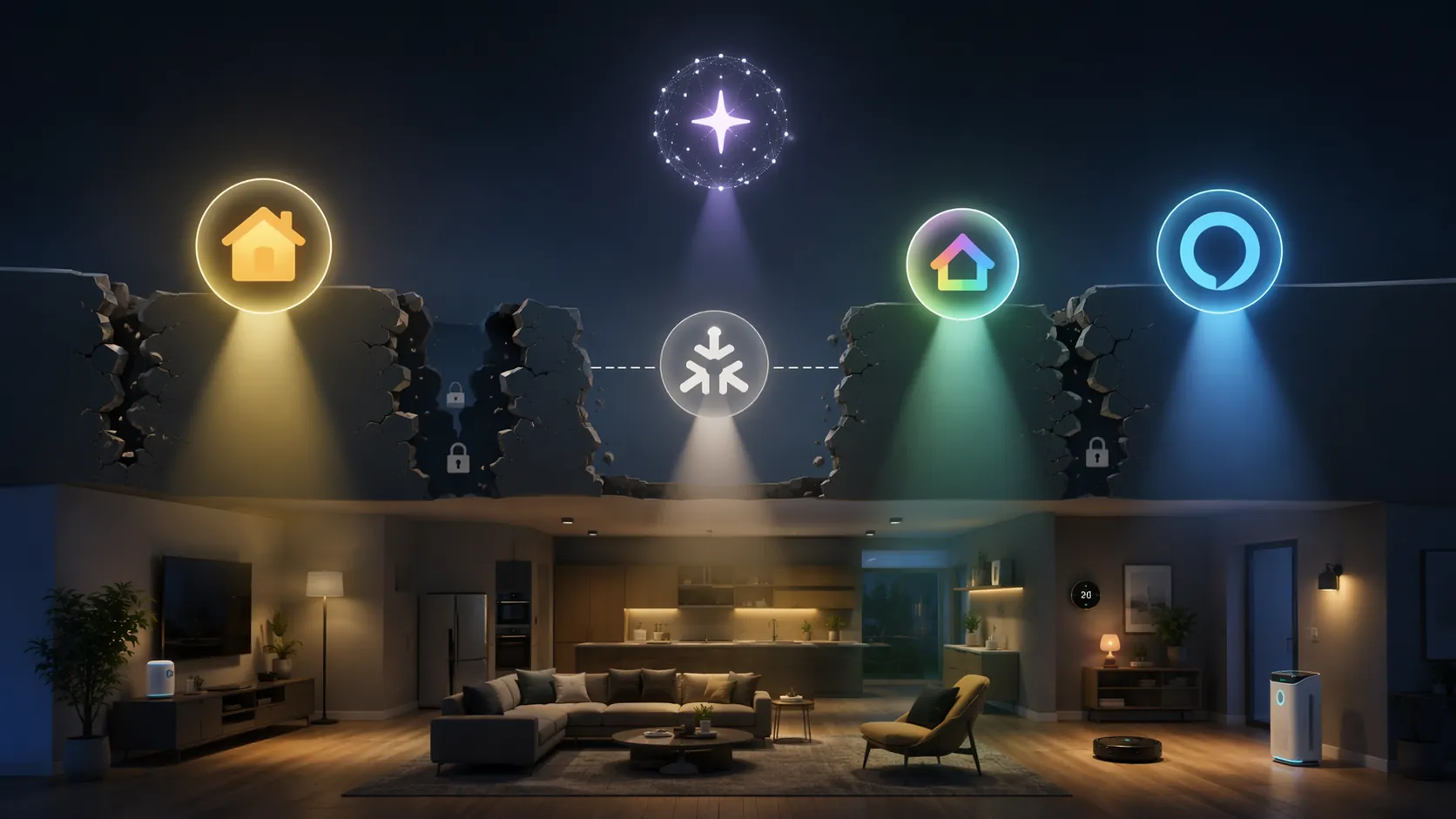
The distinction matters because the ecosystem is no longer tiny. Matter-smarthome.de, a German enthusiast tracker rather than the Connectivity Standards Alliance’s own compliance ledger, counted more than 750 Matter-certified products by 2026.[1] That number is useful evidence of momentum. It is not evidence that every certified product works identically in every major platform.
The Logo Solves Setup Before It Solves Parity
A realistic Matter expectation begins with the boring layer: discovery, pairing, basic device control, and the ability to add one device to more than one ecosystem. For many households, that alone is a genuine improvement. A light turns on. A plug reports power state. A sensor can be seen by more than one controller. A household split between iPhone and Android does not have to choose a single phone brand before buying a switch.
The disappointment usually arrives one layer higher. The device appears, but the feature you bought it for is missing. The bulb joins Apple Home, but its richer lighting scenes still live in the brand app. The camera can be viewed somewhere, but its more granular settings remain elsewhere. The device is technically onboarded, yet the daily control surface is still divided.
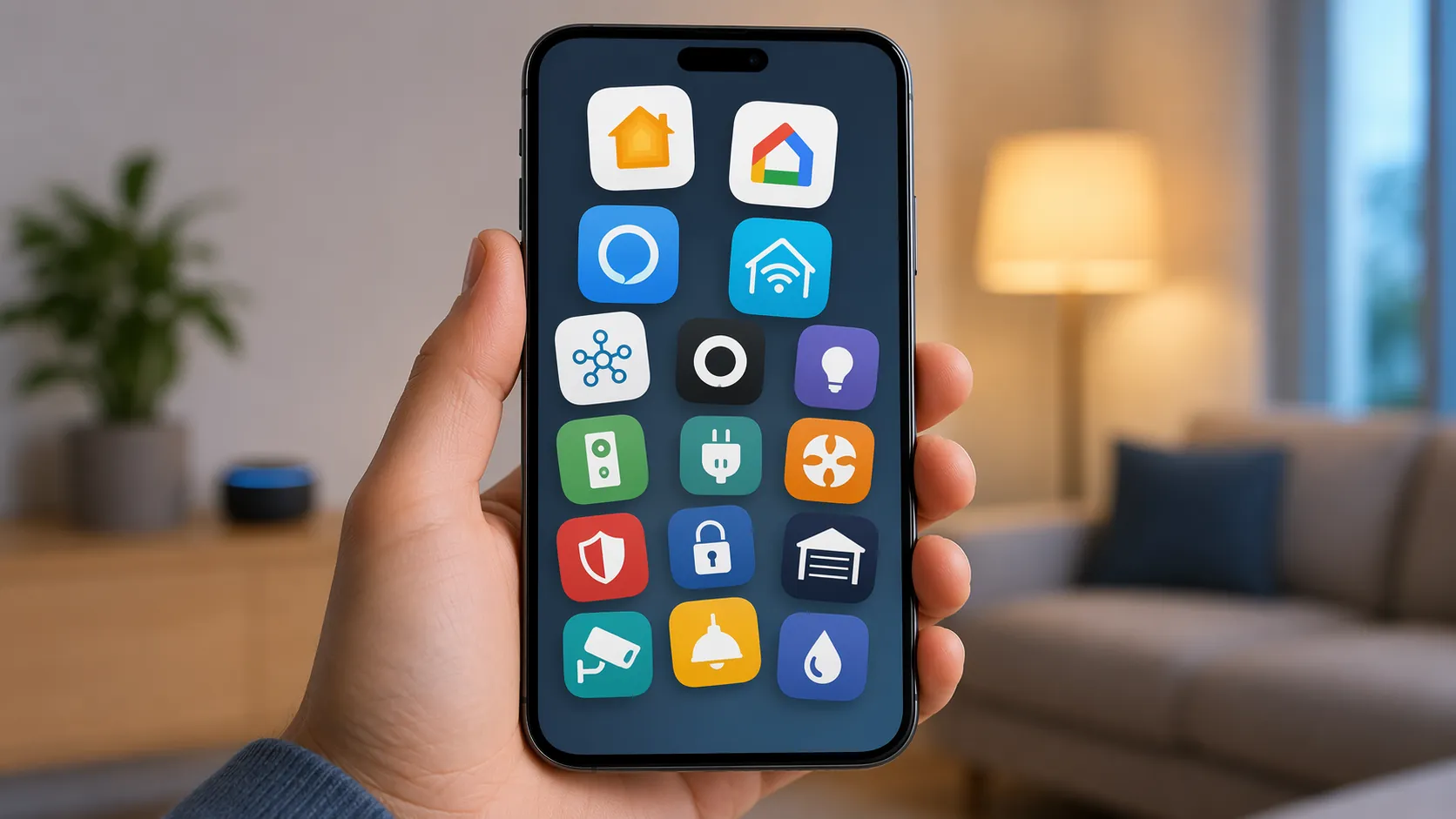
AppleInsider’s July 2026 reporting captured that gap better than another adoption chart would have. Even power users still needed eight or more vendor apps alongside Apple Home because scenes, lighting effects, camera settings, and user permissions remained siloed inside manufacturer applications.[2] That is not a failure of voice recognition. It is a map problem: the controller can only operate the surfaces exposed to it.
This is why a home can be “Matter-compatible” and still feel administratively messy. Apple Home may be the daily dashboard, Google Home may be the shared Android-friendly layer, Alexa may still run a few voice routines, SmartThings may expose something the others do not, and the manufacturer apps remain installed because deleting them would remove access to the settings that made some products worth buying.
Certified Does Not Mean Implemented Everywhere
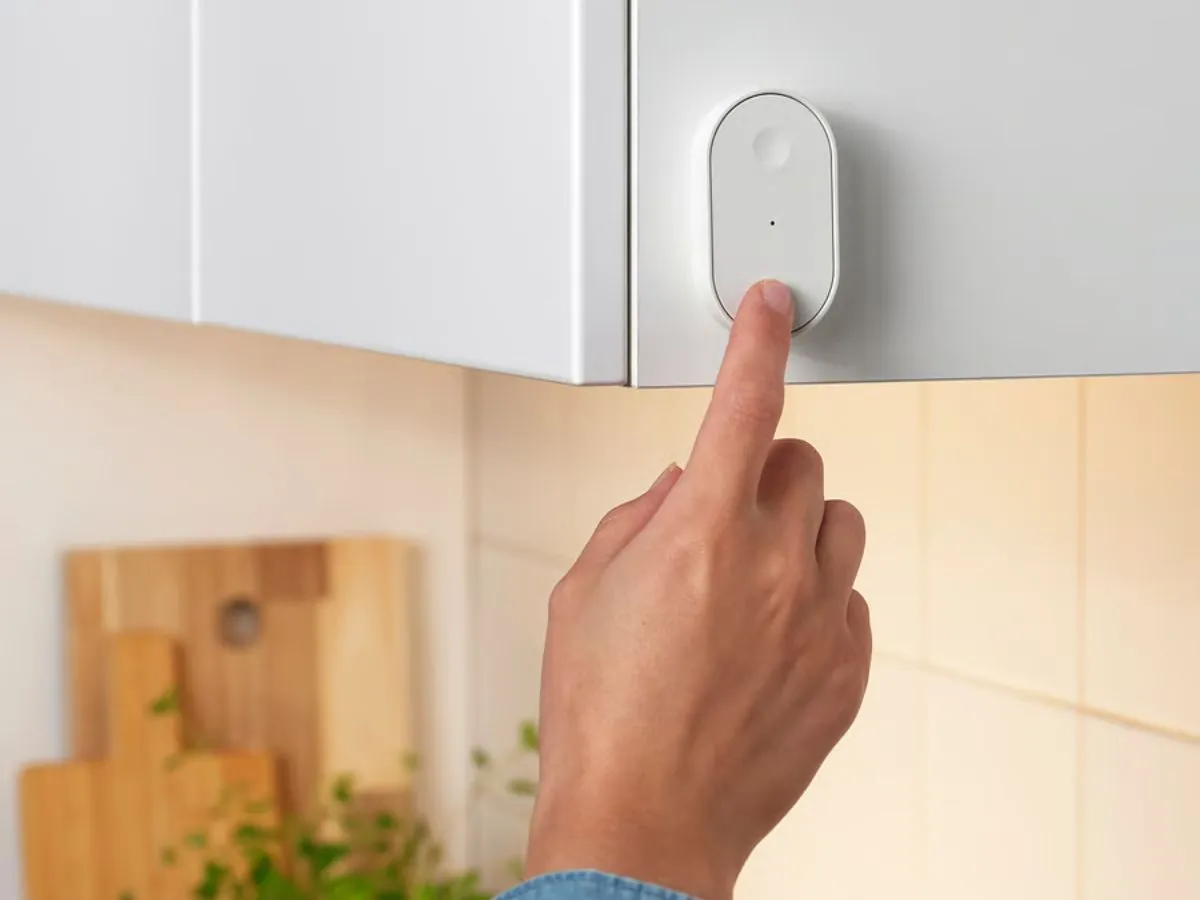
The more irritating failures are not subtle. A device may be certified under Matter, added correctly, and still fail in a specific platform because that platform has not implemented the relevant device type. The IKEA examples are useful because they are ordinary products, not edge-case lab hardware: the Bilresa remote fails in Google Home, while the Klippbok water detector fails in Amazon Alexa because those platforms lack support for the relevant device types.[2]
That is the part many compatibility pages flatten into a vague “works with” badge. Works how? As what device type? In which controller? Under which Matter version? With which feature cluster exposed? Those questions sound fussy until someone buys a certified button or leak sensor and discovers that the platform they actually use treats it as unsupported.
Matter is also not one frozen thing. In 2026, SmartThings was described as supporting Matter 1.5, while Apple Home was closer to the 1.2–1.3 range, and Google still lacked generic-switch support from Matter 1.0.[2] That version spread matters because a standard can define a capability before every major controller exposes it well to users.
The Google side is especially easy to misunderstand because people often mix up Matter controllers, Matter devices, Thread border routers, and Google Home’s own device-type support. NestGrid’s guide to Google Nest Matter controllers vs devices is useful background for that distinction: owning a product that can participate in a Matter network is not the same as having every controller in that network understand every device category the way you expect.
Thread Helps the Network, Not the Business Model
Thread deserves real credit. Thread 1.4’s credential sharing addresses one of the least friendly parts of multi-platform homes: making devices and border routers cooperate without forcing users through repeated network gymnastics.[2] For a household that wants Apple Home and Google Home to see the same low-power device fabric, that kind of plumbing improvement is not cosmetic.
Matter 1.5’s camera support is also meaningful progress.[2] Cameras have long been one of the clearest examples of smart-home fragmentation because live view, recording rules, detection zones, history, sharing, and privacy controls are all places where platforms and manufacturers have strong incentives to keep users inside their own interfaces.
But better network standards do not automatically make every product simpler in practice. The Aqara FP300 comparison is a good caution: Aqara quoted three years of battery life for Zigbee and two years for Thread, with real-world Thread life often lower because multi-admin polling can add overhead.[3] That does not make Thread the wrong direction. It does mean the cleaner marketing line — newer protocol, cleaner integration, better experience — needs testing in the kind of mixed-controller home people actually build.
| Claim | What It Usually Covers | What It May Not Cover |
|---|---|---|
| Matter-certified | Basic onboarding and standard control surfaces | Identical features across Apple Home, Google Home, Alexa, and SmartThings |
| Thread-enabled | Low-power mesh networking through Thread border routers | Equal battery life in every multi-admin setup |
| Works with a platform | Some level of recognition or control | Every device type, setting, scene, lighting effect, or permission |
| AI assistant support | More flexible language control over exposed devices | Access to manufacturer-only features or unsupported Matter device types |
Why AI Assistants Inherit the Silos
Alexa+ and Gemini for Home enter a home that is already divided. That matters more than the demo script. If an assistant can understand “turn the upstairs hallway into a soft night scene when motion is detected after bedtime,” it still needs the relevant motion sensor, lighting controls, scene parameters, and automation permissions to be available through the platform it is using.
The optimistic version is still worth taking seriously. A better assistant could reduce the number of brittle routines people maintain by hand. It could notice that a device is offline, explain which hub or border router it last used, suggest a repair path, or translate messy natural language into a valid automation. For ordinary supported devices, that would feel like real progress, not gimmickry.
The ceiling appears when the assistant runs into a locked surface. If a manufacturer keeps a premium lighting effect, camera setting, or permission model inside its own app, the assistant does not gain that feature just by being more conversational. If Alexa does not support the relevant Matter device type, a more agentic Alexa cannot safely pretend the category exists. If Google Home lacks generic-switch support, Gemini cannot turn that absence into a reliable button controller merely by producing a better sentence.
This is also where reviewer excitement needs to be read at the right scale. The Ambient and Automated Home both discussed agentic AI in 2026 as a promising direction for smart-home control, but those comparisons were editorial syntheses, not standardized compatibility benchmarks.[4][5] They are useful for understanding where assistants may improve the command layer. They do not prove that assistants can override the platform and manufacturer boundaries underneath.
The Commercial Incentive Is the Hard Part
The persistent app pile is not just technical debt. Manufacturer apps are where companies keep account relationships, upsells, firmware channels, advanced settings, cloud subscriptions, support flows, and differentiating features. A standard that exposes every premium feature equally to every controller would be cleaner for the buyer, but it would also make some branded apps easier to ignore.
That is why the problem should not be treated as a temporary bug waiting for one more software release. Matter can add device types. Thread can improve credential sharing. Platforms can close version gaps. AI assistants can make supported actions easier to discover and execute. None of those changes, by itself, removes the incentive for a manufacturer to keep its best control surface proprietary.
For buyers, the practical test is narrower than the badge. Before buying a device for a mixed home, check the exact platform you plan to use, the device category it appears as, the Matter version or support note if available, and whether the feature you care about is exposed outside the manufacturer app. “Can I add it?” and “Can I use the feature I bought it for?” are different questions.
What to Expect Next
The near future of AI smart-home integration is likely to be better at language than at control ownership. Expect assistants to make supported devices easier to command, automate, and troubleshoot. Expect fewer awkward routine builders and more natural requests that become usable automations when the underlying devices and permissions are already exposed.
Do not expect AI to unlock manufacturer-only features, normalize unsupported device types, or turn Matter certification into full cross-platform parity. The smart home is becoming more interoperable at the basic layer. It is not becoming one universal control surface yet.
References
- Matter devices, matter-smarthome.de
- Matter's smart home promise is still broken in 2026, AppleInsider, July 2026
- Aqara FP300 battery-life comparison, Aqara
- Agentic AI smart home assistant comparison, The Ambient, 2026
- Agentic AI smart home assistant comparison, Automated Home, 2026
Known issues with this device / protocol
Spec-version history
For active regressions on this protocol, see Update Watch.
No linked Update Watch entries yet.