
Did the Alexa+ July 2026 Update Break Your Smart Home?
The July 2026 Alexa+ update introduces powerful new AI tools but also breaks device groups containing switches and causes routine failures. This article separates Amazon's announced capabilities from user-reported regressions and explains how to revert if your setup is affected.
If Alexa groups that used to include switches suddenly stopped responding after the July 2026 Alexa+ update, you are not imagining a private failure. The clearest reported pattern is narrow but ugly: device groups containing switches stop working correctly after migration, while some households also report routines that only partly run, skills that stop responding, and multi-room music groups that fail on older Echo hardware. These are user-reported regressions, not a measured platform-wide outage, but the switch-group failure has been described in enough repeatable detail on Amazon’s own forum to treat it as a known reported pattern rather than random household drift.[1]
The practical escape hatch to try first is simple: say, Alexa, exit Alexa Plus. WIRED documented the Alexa+ opt-out path earlier in 2026, and July user reports say the same command can restore the prior Alexa behavior immediately, though some users notice the reverted voice still has changed inflections, suggesting the voice pipeline underneath may not be identical to what they had before.[2]
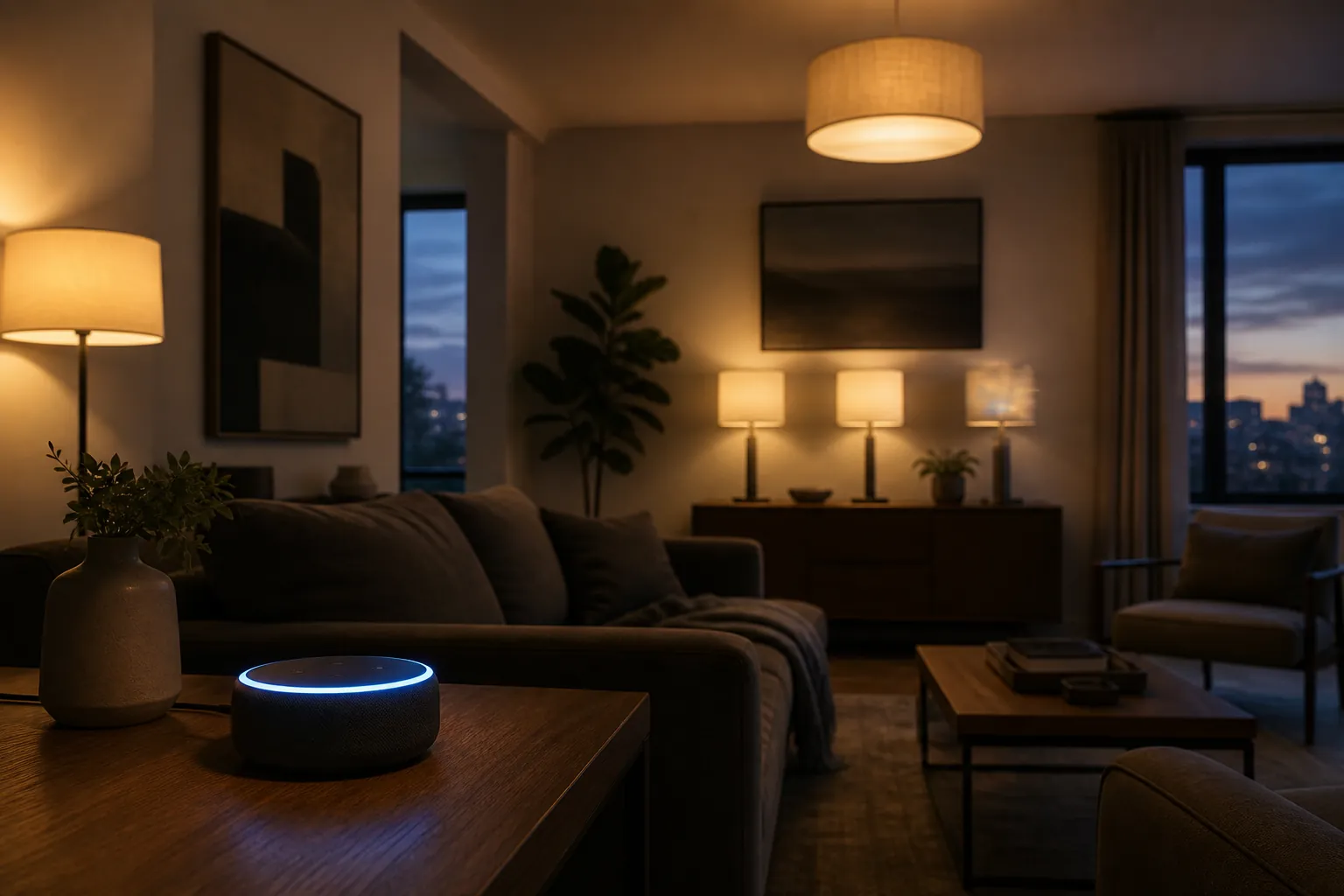
That matters because the July update is not just a cosmetic app refresh. Amazon’s AI model strategy for Alexa smart home control is now colliding with the least glamorous part of a connected home: the old group names, switch types, audio zones, and routines people expect to survive without attention.
What Seems to Break After the Alexa+ Migration
The most useful way to read the current evidence is not “Alexa+ broke everything.” It is more specific: certain existing smart-home abstractions appear to be interpreted differently after migration. A household can have dozens of devices still visible in the Alexa app and still lose the one command that matters at dinner time: “turn on the kitchen.”
| Reported symptom | What it looks like in the home | Evidence status |
|---|---|---|
| Groups containing switches fail | A room or device group that includes a switch no longer responds correctly to a group command, even though individual devices may still be present. | Repeated user reports in Amazon’s forum thread; still self-selected, not prevalence data.[1] |
| Routines partially execute | A routine starts but does not complete every expected action, such as running one device command while skipping another. | User-reported pattern; no public Amazon incident report cited in the available material. |
| Skills stop working | A previously usable third-party skill no longer responds as expected after Alexa+ migration. | User-reported pattern; needs device, skill, and account-level confirmation. |
| Multi-room music groups fail on older Echo models | Audio groups that previously played together no longer behave reliably, especially where older Echo hardware is involved. | User-reported pattern; not yet tied to a specific Echo generation list in the available material. |
Groups with switches deserve the most attention because they are the easiest failure to recognize and the least acceptable to hand-wave away. A switch is not an exotic integration. It is the boring device type that often sits behind under-cabinet lights, fans, lamps, holiday plugs, dumb fixtures made smart, and the “good enough” automations that keep a home livable. If Alexa can still see the switch but mishandles the group containing it, the problem is not that the household forgot how to speak to Alexa.
A partial routine failure is harder to diagnose because it can hide behind timing. One device turns on, another does not. A spoken confirmation happens, but the downstream action never arrives. A scene fires through one integration and stalls at another. That can look like a cloud outage, a flaky device, a vendor skill problem, or a routine logic problem. The July reports are useful because they cluster around migration: routines that survived previous app redesigns or device replacements begin misbehaving after Alexa+ enters the account.
Skills add another layer of ambiguity. A skill can fail because the vendor changed its service, because account linking expired, because permissions changed, or because Alexa’s interpretation of the request no longer routes the same way. The current evidence supports “some users report skills ceasing to work after Alexa+,” not “Alexa+ universally breaks skills.” That distinction is not hedging; it is the difference between a fixable household triage note and a claim no one has measured.
Multi-room music is similarly sensitive. Old Echo models, speaker groups, household profiles, default services, and network conditions all matter. Still, when an audio group works before migration and fails after it, the user is right to treat Alexa+ as a suspect. Multi-room audio is one of those features that only feels optional to people who do not use it every day.
Amazon Really Did Ship a Major Alexa+ Push
None of this means the July Alexa+ release is vaporware. On July 23, Amazon announced new ways for developers to build Alexa+ experiences, including an AI-powered toolkit, Model Context Protocol support, Amazon Wallet integration, and launch partners including Bosch, Delta, Ecovacs, Govee, iRobot, Moen Flo, SONOFF, Tapo, Twinkly, Whirlpool, Yale Home, and Anker/Eufy.[3]
For smart-home users, MCP support is the genuinely interesting part. In plain terms, it points toward Alexa being able to interact with partner systems through more capable, context-aware integrations instead of relying only on brittle command trees and one-off skill invocations. That is the version of Alexa+ worth wanting: fewer exact phrases, better device context, routines that understand intent without making the user become the household’s unpaid QA engineer.
Amazon also has engagement numbers to point to. Forbes reported that Alexa+ users showed a 50% increase in smart-home activity in the first month, and that Routines usage was 2X among Alexa+ users.[4] Those numbers indicate adoption and activity among Alexa+ users; they do not prove that every existing setup migrated cleanly, and they do not measure the prevalence of the July regression reports.
This is the awkward split-screen moment. Amazon can be right that Alexa+ is driving more smart-home use, and affected users can also be right that a basic group command broke. Platform engagement can rise while a particular old automation path regresses. The average curve does not turn the kitchen lights on.
Why the AI Routing Layer Can Affect a Basic Switch Command
A smart-home voice command looks simple from the room side. Someone says a phrase, a speaker hears it, and a device changes state. The hidden path is less simple: speech recognition, intent interpretation, household context, device graph lookup, partner service routing, permission checks, and execution all have to line up. If Alexa+ changes the layer that decides what a command means and where it should go, even an old command can land differently.
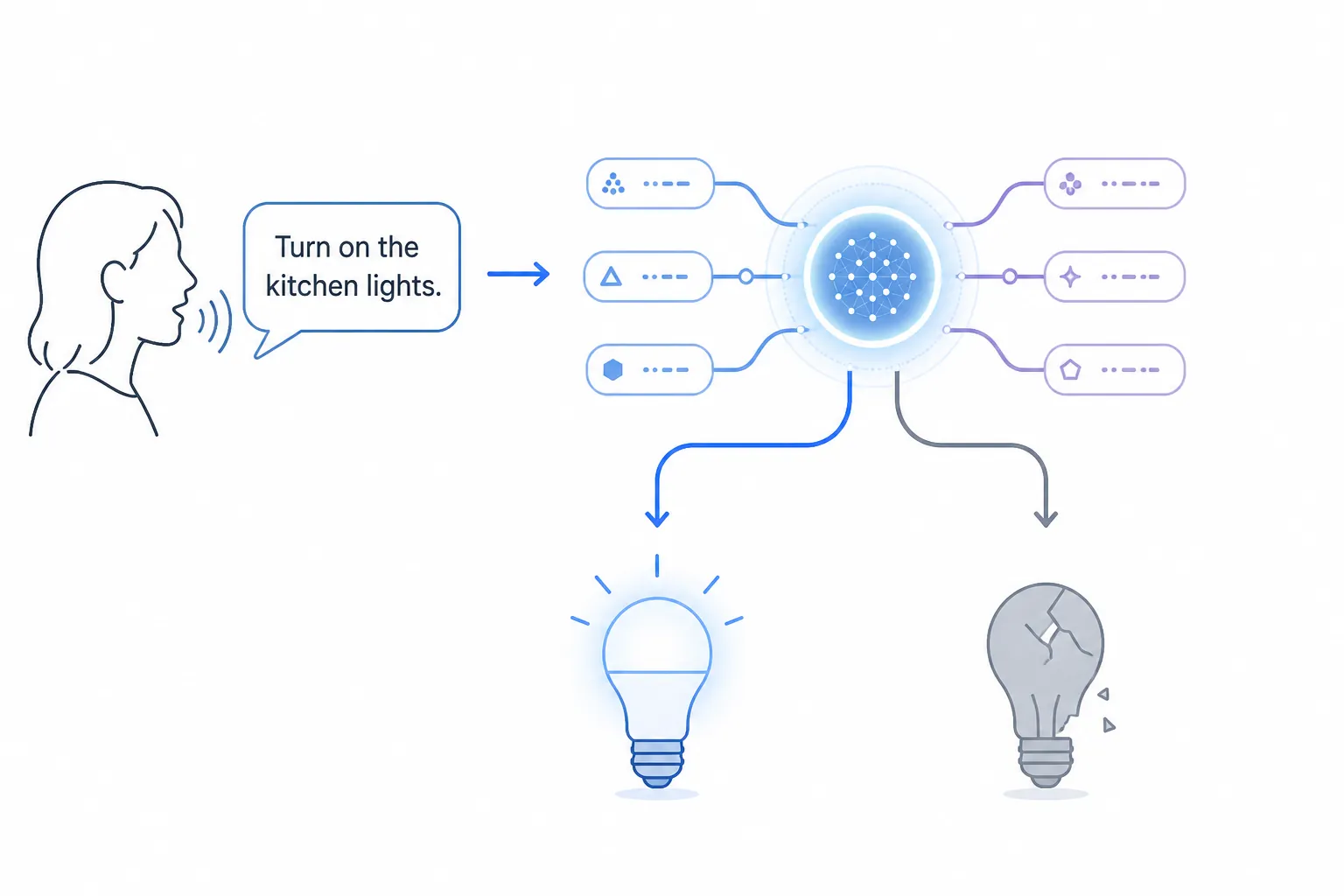
That is why model routing is not an abstract AI-industry concern here. If a group contains bulbs and a switch, Alexa has to decide whether the user is asking for a room, a device class, a named group, a scene, or a mixed set of endpoints. A more flexible assistant may eventually handle that better. During a migration, though, a change in interpretation can expose assumptions that the old Alexa path had tolerated for years.
Business Insider reported on July 23 that internal Amazon documents projected Alexa+ AWS costs at about $1.7 billion for 2026 and that Amazon was working to lower costs by moving Alexa “Experts” from Anthropic’s Claude Sonnet toward in-house Nova models.[5] That reporting is important context for why the model layer may be changing under familiar smart-home commands. It is not, by itself, proof that a specific broken switch group was caused by a specific Nova routing decision.
Reuters, republished by Business Insider, then reported on July 28 that Amazon was winding down most flagship AI models in a strategy overhaul, including Nova Premier, Omni, Reel, and Canvas.[6] Put next to the Alexa+ cost reporting, the picture is of an AI stack in motion: model selection, cost targets, in-house capabilities, and product rollout are all moving at once. That is exactly when boring smart-home compatibility needs extra guardrails.
The careful version is this: Amazon’s cost and model-routing changes are plausible context for the July Alexa+ behavior changes, especially where command interpretation is involved. The available evidence does not let anyone honestly say that cost-cutting directly broke every affected group, routine, skill, or music zone. The household consequence is real either way, but the cause still needs clearer confirmation from Amazon.
Forced Migration Makes the Breakage Feel Worse
The migration path is part of the story because consent changes how people experience repair work. WIRED reported in January 2026 that Alexa+ was becoming available broadly and explained how to turn it off; the same period also established the concern that Prime members could find themselves moved into Alexa+ without feeling they had made a deliberate smart-home migration choice.[2]
The available July reports suggest that feeling persists for some users, though the evidence does not prove Amazon’s exact current opt-in flow for every account. Still, for a household, the distinction can be blunt: yesterday the routine worked, today Alexa+ appeared, and now someone is repairing device groups before coffee. Whether the product team calls that enablement, rollout, or migration, the user inherits the cleanup.
What to Do Now If Your Alexa Smart Home Changed
Start by confirming whether your failure matches the reported pattern. Do not delete a working household structure before you know what changed. Device groups, routines, skills, and speaker groups are all annoying to rebuild, and rebuilding can erase the evidence that helps you tell whether Alexa+ was the trigger.
- Test the individual device first. If the switch, bulb, speaker, or appliance works by its own name, the device is probably still reachable.
- Test the group command next. If the group fails only when it includes a switch, your setup matches the strongest reported regression pattern.
- Run the routine manually from the Alexa app. If only some actions execute, write down which device types or skills are skipped.
- Check multi-room audio separately from lighting or switch control. Speaker-group failures can have different causes than smart-home endpoint failures.
- Try the revert command:
Alexa, exit Alexa Plus. If the old behavior returns immediately, keep notes before changing names, groups, or routines.
If reverting fixes the issue, that is meaningful evidence for your household, even if it is not platform-wide proof. It says the pre-Alexa+ path handled your setup in a way the current Alexa+ path does not. That is enough reason to stay reverted until Amazon provides a fix, a migration note, or a control that lets users choose when their smart-home command path changes.
If reverting does not fix it, avoid assuming Alexa+ is innocent. Some reports note that the reverted voice still sounds different, which may mean parts of the underlying voice or model pipeline have changed even outside the visible Alexa+ experience.[2] At that point, isolate by device class: switches, bulbs, plugs, vendor skills, and speaker groups. The fastest repair often comes from finding the one class that changed rather than rebuilding the whole home.
Current Status
As of Q3 2026, Alexa+ is a real smart-home upgrade with real developer momentum, visible partner support, and reported increases in smart-home activity. It is also carrying user-reported regressions serious enough that affected households should not wait politely while basic groups and routines fail.
The practical judgment is provisional: if your groups with switches, routines, skills, or older Echo multi-room music setup changed after the July 2026 Alexa+ rollout, try Alexa, exit Alexa Plus and treat the issue as unresolved until Amazon explains the migration behavior or ships a fix.
References
- Update to Alexa Plus breaks Smart Home Device Support for Groups with Switches — Amazon Forum thread 0D5Kf00003VLEGXKA5
- Amazon Alexa+ Is Becoming Available to Everyone. Here's How to Turn It Off — WIRED, January 2026
- Alexa+ launches new ways to build experiences — Amazon Developer Blog, July 23, 2026
- Alexa Is About To Get Smarter — Forbes, July 25, 2026
- Inside Amazon's Push to Lower Alexa AI Costs — Business Insider, July 23, 2026
- Amazon winds down most flagship AI models in strategy overhaul — Reuters/Business Insider, July 28, 2026
Resolution
Investigating — no confirmed fix yet.
Protocol background
For general spec/firmware mechanics, see Compatibility & Protocols.
No linked protocol reference for this update yet.