Why Permanent DST Won't Save Your Smart Home Energy
The House just passed permanent daylight saving time, but the energy research tells a different story than the "brighter evenings" pitch. This article breaks down what the studies actually found and how it affects your smart home's heating, cooling, and lighting costs.
Update Watch: the House vote is real; your clock has not changed yet
As of Q3 2026, permanent daylight saving time belongs in the “monitor closely” file, not the “rewrite every automation tonight” file. The House passed H.R. 139, the Sunshine Protection Act, on July 14, 2026, but the bill still faces the Senate process, where it was referred to the Committee on Commerce, Science, and Transportation. Other clock-change proposals are also in play, including standard-time and partial-DST alternatives, so the status is live rather than settled.[1][2]
NestGrid is covering this now because the old energy-saving pitch is back in circulation. Permanent DST sounds friendly to a smart home: more usable evening daylight, fewer lights on after work, maybe a lower bill. That chain of reasoning is tidy. It is also where the claim starts to break down.
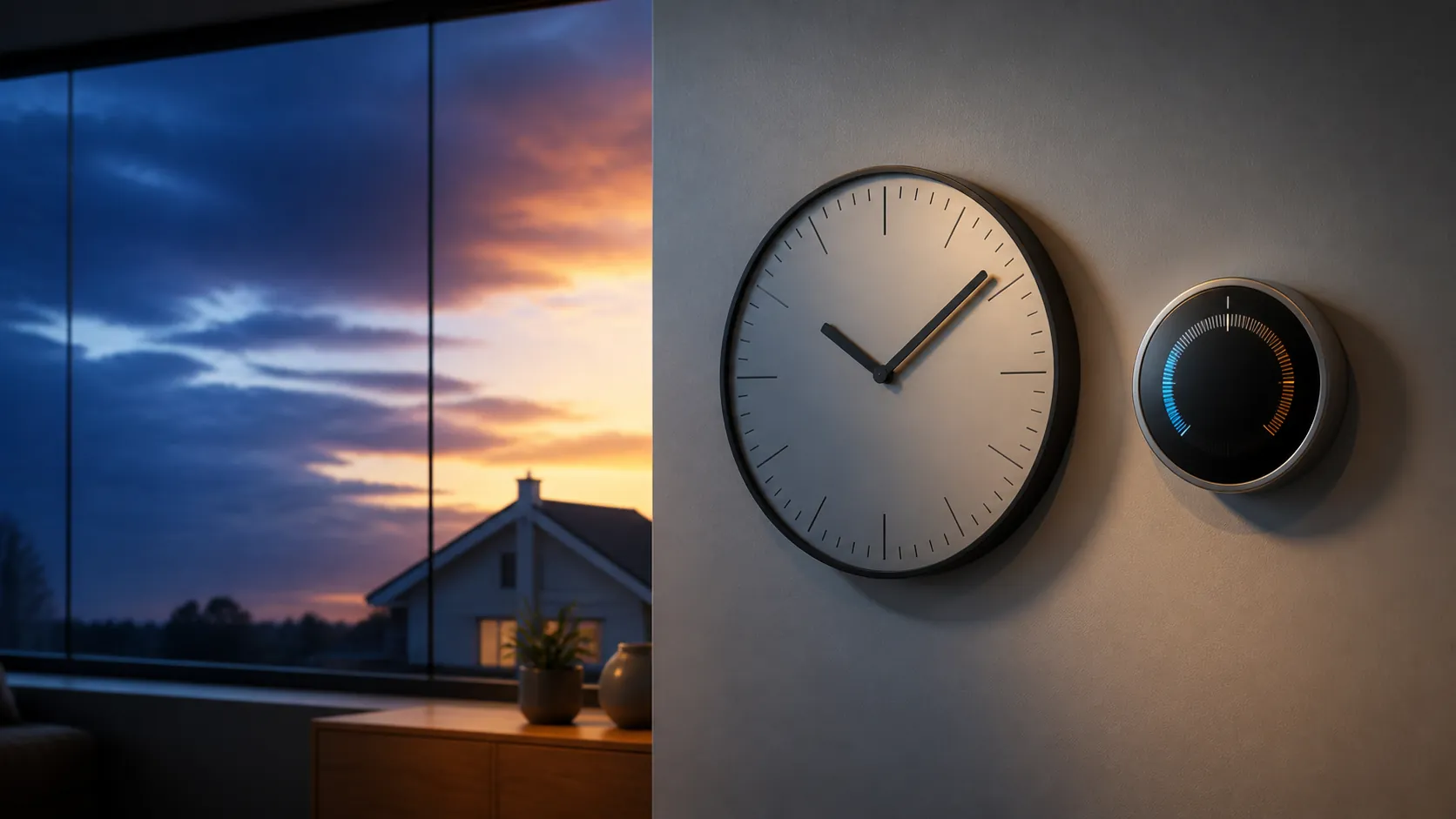
The research record does not support treating permanent daylight saving time as a reliable household energy saver. At best, older studies found small electricity savings in some settings. Other evidence found the savings offset by heating and cooling, or reversed into higher residential demand. For a modern smart home, the main question is not whether the porch light stays off longer. It is whether heating, cooling, and rate-period timing move into more expensive or more intensive parts of the day.
The energy case is weaker than the “brighter evenings” pitch
The strongest version of the DST energy argument came from a different household baseline: more incandescent lighting, fewer always-on devices, and less automation around thermostats, plugs, and rates. Shift daylight later, the argument went, and people turn on fewer lights during active evening hours. That mechanism is real in a narrow sense. It is just much smaller than it used to be in a home full of LEDs, chargers, routers, displays, security cameras, standby electronics, and heat pumps or air conditioners doing the expensive work.
The best-known U.S. numbers do not describe one single experiment. They come from different policy changes and eras: the 1973–74 year-round DST trial, the 2007 DST extension, Indiana’s 2006 adoption of DST in counties that had not previously observed it, and later reviews of European and California evidence. Those are adjacent questions, not interchangeable answers.
| Evidence point | What it measured | What it says about household energy |
|---|---|---|
| DOE analysis of the 2007 DST extension | A later start to standard time and earlier start to DST, not permanent DST | Secondary summaries report about 1.3 TWh saved, or roughly 0.03% of national electricity consumption. That is a small system-level effect, not a promise that a smart home bill drops noticeably.[3][4] |
| Indiana 2006 adoption study by Kotchen and Grant | Residential electricity demand in Indiana counties newly observing DST | Secondary summaries report roughly a 1% increase in residential electricity demand under DST, with lighting savings outweighed by heating and cooling use.[3][2] |
| 1973–74 U.S. year-round DST trial | A national emergency-era experiment during the energy crisis | The U.S. Department of Transportation review cited savings in the 0.4%–1.5% range, while public support reportedly fell from about 80% to 42% during the trial.[2] |
| European, NBER, and California evidence summarized in the sleep-medicine literature | Different regions and time-change settings | The pattern is mixed: lighting can fall slightly, but heating demand can rise; one European finding summarized heating demand rising about 9%, while NBER and California evidence found little net gain once heating and cooling were included.[5] |
The DOE result is often the most convenient number for DST supporters because it points in the saving direction. But its scale matters. A national electricity reduction of about 0.03% is not the same thing as “your home will save energy,” and it was tied to the 2007 DST extension, not to making DST permanent all winter.[3][4]
The Indiana study is the uncomfortable counterweight. It looked at a setting where some counties changed DST behavior, giving researchers a more useful comparison than a simple before-and-after national story. The reported result was not a saving: residential electricity demand increased by about 1%, with air-conditioning and heating outweighing reduced lighting use.[3][2]
Neither number should be promoted into a universal forecast. A Seattle heat-pump household, a Phoenix AC-heavy household, and a New England gas-heated household do not respond to later daylight in the same way. The useful conclusion is narrower and stronger: DST energy effects are small, climate-sensitive, and easy to offset once HVAC is counted.
Lighting is no longer the load that decides the bill
If a home still ran mostly incandescent bulbs, evening daylight would deserve more billing attention. Most smart homes are not in that world. A sunset rule that turns on six LED fixtures later may save something, but the avoided load is small compared with a compressor running into a hot evening or a heat pump recovering from an overnight setback before sunrise.
Beth Malow and other sleep-medicine commentators have made the same practical point from the energy side: older energy analyses are less transferable now because modern homes run electronics around the clock, not just lamps after dark.[5] That does not mean lighting is irrelevant. It means lighting has been demoted from the main event to one controllable line item.
This is where smart-home dashboards can be misleading if you read them too quickly. A lighting automation may show shorter evening runtime under permanent DST. At the same time, the thermostat may call for heat longer on dark winter mornings, or delay cooling less effectively on summer evenings because the house is occupied and sun-warmed later. The bill sees the net load, not the most photogenic automation.
The real smart-home impact is HVAC timing
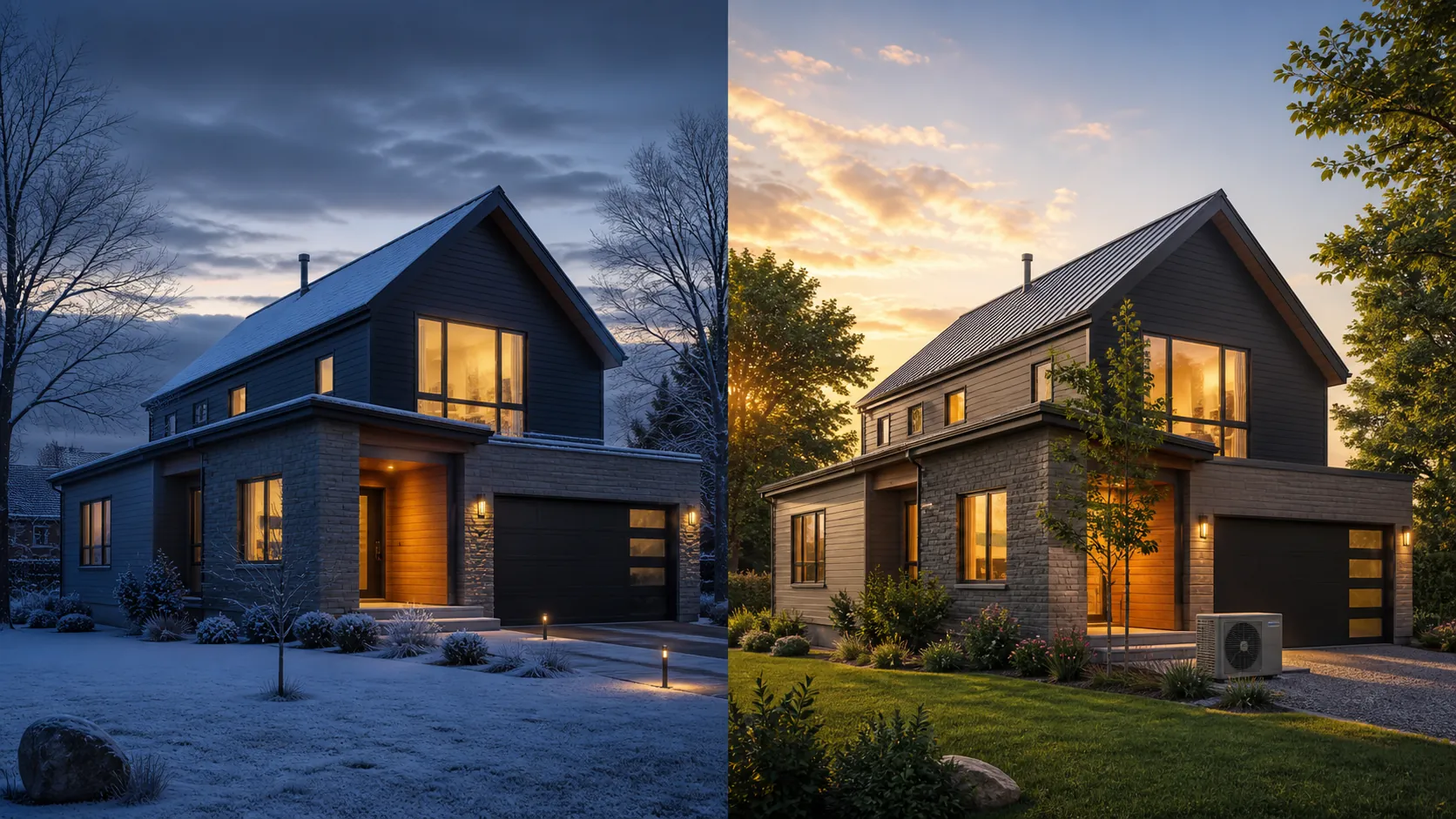
Permanent DST would not make your home intrinsically easier to heat or cool. It would change the clock labels attached to daylight, occupancy, and outdoor temperature. That matters because most smart thermostat schedules are still built around human routines: wake, leave, return, sleep. If sunrise moves later by the clock in winter, a morning recovery period can happen in colder, darker conditions. If usable evening light lasts later in summer, cooling may stay active during occupied hours that overlap with utility peak periods.
A smart thermostat can manage those shifts, but it cannot delete the heating or cooling load. It can choose when to preheat, how deeply to set back, whether to precool before a peak rate window, and how aggressively to recover comfort. Those are scheduling decisions. They are not permanent-DST savings created by the law itself.
That distinction matters for homeowners who already run utility-rate automations. A fixed 4 p.m.–9 p.m. peak window, for example, does not move just because daylight feels better after work. If later summer daylight keeps people active at home, cooking, cooling, laundry, EV charging, and entertainment loads may still pile into the same expensive period unless the automations are retuned.
The same goes for winter mornings. A thermostat that starts recovery before the household wakes may need a different offset if permanent DST creates darker, colder clock mornings. The device can smooth the recovery curve, but the furnace, boiler, or heat pump still has to bring the building up to temperature.
What not to infer from smart-thermostat savings claims
Smart-thermostat marketing often discusses energy savings in broad ranges, based on vendor methods, household assumptions, and climate conditions. That is a separate claim category. It does not measure permanent DST’s impact on smart-home energy use, and it should not be pasted into this debate as if a thermostat savings comparison also proves a clock-policy savings result.
If you are deciding whether a thermostat is worth buying, use a thermostat-specific comparison, not the DST debate. NestGrid’s smart thermostat savings comparison is the better place to check purchase assumptions. If rates just went up and you are trying to reduce cost rather than energy use, the more relevant guide is lowering your electric bill after a rate hike.
Under permanent DST, the valuable thermostat features are not magical efficiency features. They are ordinary controls used carefully: adaptive recovery, temperature setbacks, precooling, demand-response coordination, and rate-aware scheduling. In hot weather, that may mean applying the same logic you would use for heat-wave thermostat settings: move some cooling earlier when it helps, avoid expensive rebound, and do not let comfort recovery collide blindly with peak rates.
Lighting and plug automations still need attention, just not for the reason usually advertised
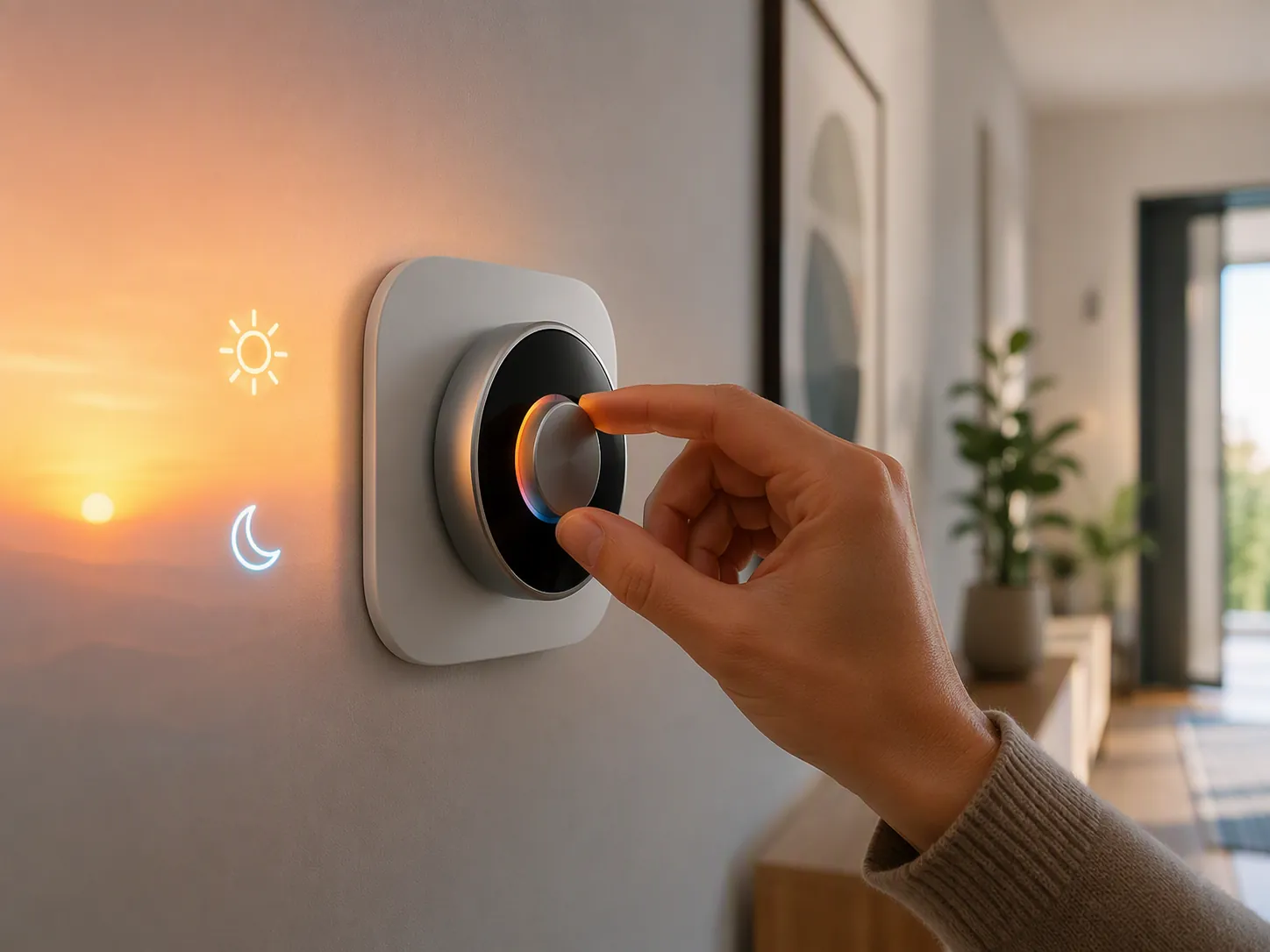
Permanent DST would make sunset and fixed clock schedules disagree in new ways. That is an operational issue, not proof of an energy dividend. If a lamp rule says “on at 6:30 p.m.” because that used to approximate darkness, later evening daylight can leave lights running when nobody needs them. If a porch light follows actual sunset, it already tracks daylight and may need less intervention.
The right migration path is to move daylight-dependent routines to sun-time logic where possible and audit fixed-clock rules that were really placeholders for sunrise or sunset. NestGrid already covers that mechanics layer in Switch Smart Home Schedules to Sun Time for Permanent DST. If a platform misfires after a clock change, use Fix Smart Home Schedules After Daylight Saving Time rather than rebuilding every automation from scratch.
For energy interpretation, the key is modesty. LED lighting rules are worth cleaning up because waste is still waste. They are not usually the place where a permanent-DST policy will make or break the bill. HVAC, water heating, EV charging, pool pumps, dehumidifiers, and major appliances are more likely to determine whether later daylight merely feels convenient or actually changes costs.
Public preference is not the same as energy evidence
There is a real lifestyle argument for brighter evenings. People dislike changing clocks, and AP-NORC polling found little affection for the current twice-a-year system, with more support for year-round evening light than for the status quo.[6] Realtor.com has also framed the issue through ordinary homeowner concerns: routines, commuting, morning darkness, and how a home feels at the edges of the day.[7]
Those are legitimate civic and household preferences. They just do not settle the energy question. A policy can be popular, convenient, or emotionally intuitive without lowering electricity demand. In a smart home, “more evening daylight” often means the load has moved: lights down a little, cooling up or shifted, morning heat changed, rate exposure different.
The verification judgment for smart-home owners
Permanent daylight saving time should not be sold to smart-home owners as an energy-efficiency upgrade. The research record is too mixed, the measured effects are too small or context-dependent, and the old lighting rationale fits modern homes poorly. The more defensible claim is that permanent DST may change when your home uses energy.
If the bill advances, the homeowner action is not panic-buying devices. It is auditing the automations that already control meaningful load: thermostat recovery, setbacks, summer precooling, winter morning heat, utility peak avoidance, sunset lighting, and any plug schedules that quietly became fixed-clock habits.
For Update Watch purposes, the legislative label remains monitoring as of August 3, 2026. The House vote is confirmed through secondary legislative coverage, but final enactment is not. The DOE and Kotchen-Grant figures used here are also treated as source-document checkpoints because the original PDFs were not directly reviewed; the numbers should be verified against the original reports before being cited as definitive. Even with that caution, the household judgment is unchanged: permanent DST may change your smart-home schedule, but the available evidence does not justify promising a smart-home energy dividend.
References
- Latest Updates on Daylight Saving Time Legislation Change — Sleep Foundation
- Why permanent daylight saving time has failed in the U.S. before — The Hill
- Trump’s Push to Make Daylight Saving Time Permanent — FactCheck.org — June 2026
- Does daylight saving time really save energy? — Entergy
- Permanent standard time is the optimal choice for health and safety: an American Academy of Sleep Medicine position statement — PMC
- Few people support the daylight saving time system and more want year-round light in the evenings — AP-NORC
- How Permanent Daylight Saving Time Would Affect Homeowners — Realtor.com
Resolution
Investigating — no confirmed fix yet.
Protocol background
For general spec/firmware mechanics, see Compatibility & Protocols.
No linked protocol reference for this update yet.