
Is the FCC robot vacuum ban about security or reshoring?
The FCC's robot-vacuum ban is sold as security policy, but its waiver process demands corporate structure, supply-chain, and onshoring plans — and asks nothing about encryption, authentication, or data handling. See which parts of the 'reshoring, not security' reading are confirmed fact and which are interpretation, so you can judge the rule's real purpose.
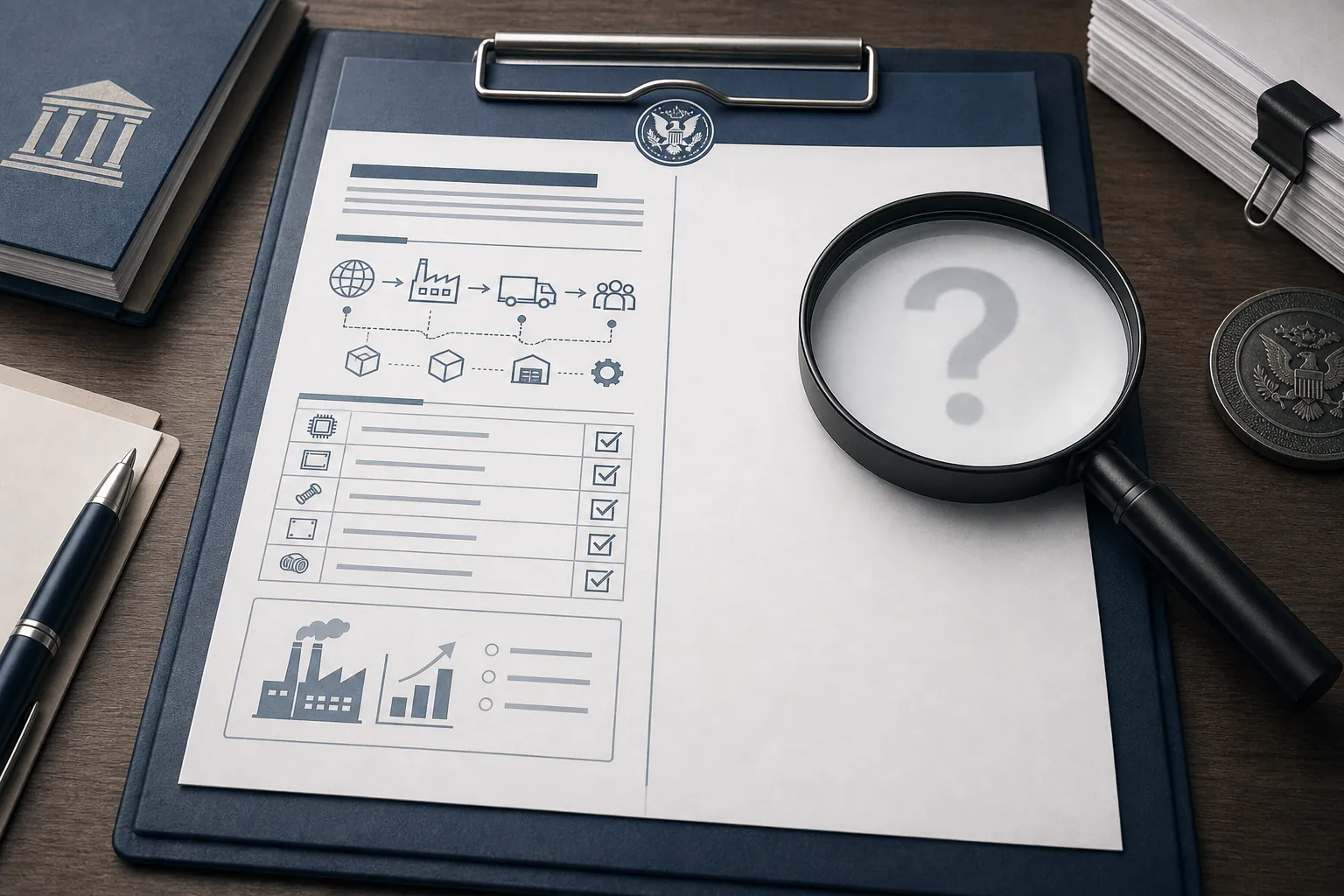
The oddest part of the FCC’s foreign robot-vacuum ban is not that Washington found a security concern in a mapping robot with cameras, microphones, cloud accounts, and remote-control pathways. That concern is easy to understand. The odd part is that the conditional-approval path described in the reporting asks manufacturers for corporate structure, supply-chain and bill-of-materials disclosures, and a U.S. manufacturing or onshoring plan — while asking no reported questions about encryption, authentication, local-versus-cloud data flows, vulnerability disclosure, or data retention rules.[1][2]
That distinction matters for anyone trying to understand the FCC ban’s impact on foreign robot vacuums, including Roomba-related concerns, while separating a practical device-security rule from a broader reshoring rule. A security rationale can be real, and still be poorly matched to the mechanism chosen to enforce it. On the documented record, the FCC has not admitted that the rule is industrial policy. The safer reading is narrower: the confirmed application requirements look much more like an industrial-policy gate than a cybersecurity test.
What the rule actually makes manufacturers prove
A device-security rule can be built in several ways. It can test the product: how it authenticates users, how it encrypts video or map data, how long it keeps logs, whether it can be patched after sale, whether it separates local navigation from cloud services, and how quickly the vendor handles vulnerability reports. Or it can test the company: who owns it, where its components come from, where it manufactures, and whether it is willing to move more of that chain into the United States.
The FCC process, as reported, lands heavily in the second camp. The agency’s FAQ describes the covered device class as “advanced robotic devices,” and explains the framework for devices from entities on the Covered List; the reported conditional-approval materials then focus on corporate and supply-chain disclosures rather than product-level cybersecurity controls.[1][2][3]
| What the conditional path reportedly asks for | What that tests |
|---|---|
| Corporate structure and ownership information | Who controls the company and its affiliates |
| Supply-chain and bill-of-materials disclosure | Where components and dependencies come from |
| A U.S. manufacturing or onshoring plan | Whether production can be moved or committed domestically |
| No reported questions on encryption, authentication, data handling, or cloud/local data flows | No direct test of the device behaviors most consumers would recognize as robot-vacuum cybersecurity |
Supply-chain control can be a security instrument. A regulator may reasonably care whether a connected device depends on vendors, firmware paths, or ownership structures that create pressure points outside U.S. jurisdiction. That is the strongest version of the FCC’s likely theory, and it should not be waved away. But if supply-chain location is the test, the rule should be described with that precision. A vacuum with poor authentication and U.S.-aligned manufacturing may pass a reshoring gate more easily than a foreign-produced vacuum with strong encryption, clean data minimization, and a serious patch process. The reported application does not appear to make that comparison.
That is why the waiver gap is more important than the public label around the rule. The public rationale says national security. The operational checklist, as reported, asks the applicant to document where the company and its parts live.
The Romo breach is real, but it does not repair the gap
The DJI Romo incident is the kind of smart-home failure that makes “it’s just a vacuum” sound unserious. A software engineer said he accidentally accessed live camera, microphone, and floor-plan data from roughly 7,000 DJI robot vacuums worldwide using a PS5 controller; DJI patched the flaw on February 24, 2026.[4]
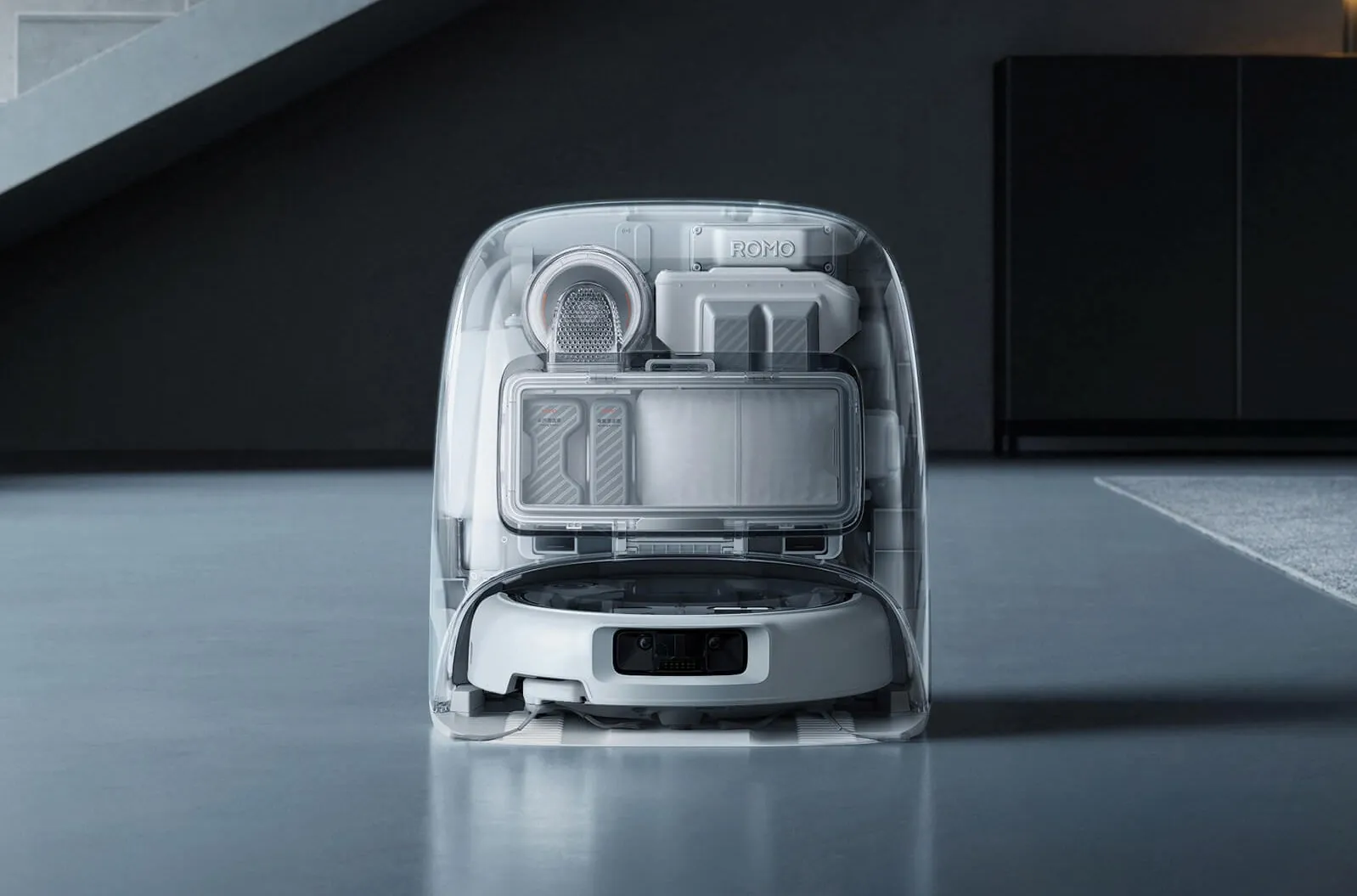
That case deserves to be taken literally. Live camera access, microphone access, and interior floor-plan exposure are not abstract national-security theater inside a home. They are precisely the kind of failure that a connected-device security regime should be designed to catch before shipment and punish after disclosure.
But the Romo breach also sharpens the mismatch. If the policy lesson from that incident is “robot vacuums can expose sensitive home data,” then the waiver process should ask how a robot vacuum prevents that exposure. It should ask about authentication boundaries, remote access controls, map storage, microphone permissions, firmware signing, security-update commitments, and incident reporting. The reported conditional-approval path asks about company structure, supply chain, bill of materials, and onshoring instead.[1][2]
The Romo facts make the security concern credible. They do not make the application’s omissions disappear.
A category-wide ban sweeps past individual security posture
The rule’s category-wide behavior is the next problem. It does not start by asking whether a particular robot vacuum has a bad security record, weak patching, exposed cameras, careless retention, or an abusive cloud design. It starts from the class of device and the covered status of the maker or supplier. That makes the rule easier to administer, but it also means individual security posture is not the first filter.[3]
This is where the Roomba panic can get misleading. For the consumer-level baseline — whether already-owned models keep working, what the FCC rule says in plain English, and how to read the affected-device categories — use NestGrid’s full rule explainer. If your question is specifically whether the FCC ban affects your iRobot device, the more practical off-ramp is the Roomba impact guide. This piece is not trying to re-explain those basics; it is asking what the enforcement mechanism reveals.
A rule that starts with category and origin will inevitably catch devices that differ in actual security behavior. Some may be sloppy. Some may be careful. Some may have no camera. Some may run mostly local navigation. Some may rely heavily on cloud accounts. The waiver process, as reported, does not appear to sort those differences in the way a device-security review would.
The line around robot vacuums is harder to defend than the concern itself
WIRED’s useful pressure point is that the FCC’s line stops at robot vacuums while smart speakers and always-on camera devices remain outside the same category treatment. Robot vacuums can map homes, but many do not stream live video in the way a security camera does, and the rule does not apply the same line to every connected device with microphones, cameras, or persistent home presence.[5]
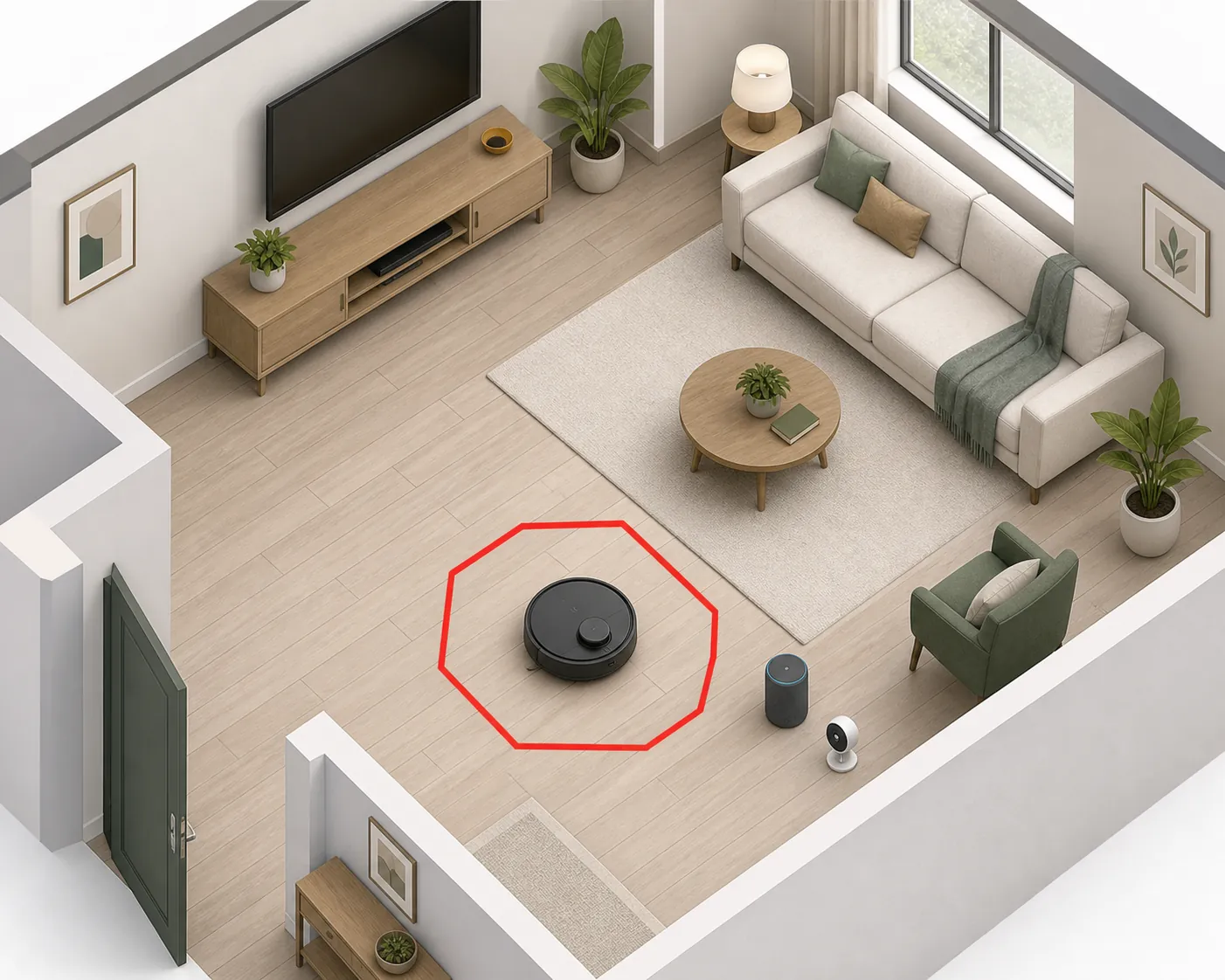
That does not prove the FCC picked robot vacuums at random. Robot vacuums are mobile, they build spatial maps, and higher-end models increasingly combine navigation sensors, cameras, microphones, docking stations, apps, and cloud services. A device that moves through bedrooms, offices, and children’s rooms deserves scrutiny.
Still, the category line is revealing. If the underlying risk is “devices inside the home can observe sensitive spaces,” a rule that singles out one appliance category while leaving other always-listening or always-watching devices outside the same framework looks incomplete. If the underlying risk is “foreign-controlled supply chains for strategically important connected devices,” the robot-vacuum focus makes more sense — but then the policy is no longer mainly a product-security test.
Confirmed facts versus the industrial-policy reading
The cleanest way to read this rule is to keep the status labels separate. Some points are documented. Some are fair inferences. Some remain open.
| Status | What can be said |
|---|---|
| Confirmed | The reported conditional-approval materials require corporate structure, supply-chain and bill-of-materials disclosure, and a U.S. manufacturing or onshoring plan.[1][2] |
| Confirmed | The reported application contents do not include questions about encryption, authentication, or data handling.[1][2] |
| Confirmed | The DJI Romo incident involved roughly 7,000 robot vacuums and was patched on February 24, 2026.[4] |
| Confirmed | The FCC FAQ says continued consumer use is unrestricted.[3] |
| Corroborating context | Reuters, citing four unnamed sources, reported that the FCC was expected to exempt many non-Chinese suppliers from the restrictions.[6] |
| Interpretation | The rule operates more like reshoring or industrial policy than a product-level cybersecurity test. |
That Reuters point is interesting, but it should not carry more weight than it can bear. Four unnamed sources can show how people close to the process expect enforcement to work; they do not establish the final exemption pattern, and they do not substitute for published conditional approvals. As of the research record, the question of which robot-vacuum makers actually receive conditional approval remains open.[6]
The Consumer Technology Association’s pushback fits the same reading. CTA said policies should be “targeted, transparent, and focused on genuine security risks, not unnecessary costs or supply chain disruption.” That is industry advocacy, not neutral technical analysis, but the criticism lands because the reported waiver checklist is supply-chain-heavy and security-question-light.[1]
There is also a terminology wrinkle worth noting rather than overplaying. The FCC FAQ refers to approval authority using “Department of War (DoW)” terminology. That is the FCC’s label in the FAQ, not a separate finding about how the national-security review will operate in practice.[3]
Why this still matters to owners after the panic fades
For current owners, the most important immediate fact is simple: the FCC FAQ says continued consumer use is unrestricted.[3] The rule is not a command to unplug an existing vacuum tonight. It is also not a magic switch that makes a working Roomba stop cleaning the floor.
The longer-term issue is maintenance. Reuters reported that the FCC retains authority to later revoke authorizations for already-sold models through the Section 2.939(e) public-notice process.[6] Separately, the FCC waiver record creates a January 1, 2029 firmware-update cutoff as the current floor, not a guarantee of open-ended extensions.[3] That turns a policy dispute into a device-hygiene problem: a robot vacuum can remain physically usable while becoming riskier to keep on a network if firmware support narrows or stops.
That is the piece consumers should not lose under the louder ban language. A smart-home device’s useful life depends on parts, cloud services, apps, security patches, and regulatory authorization. If any of those weaken, the owner bears the practical consequence. For buying decisions under the same rule, NestGrid’s robot-vacuum alternatives guide is the better place to compare options rather than treating this analysis as a shopping list.
The same “verify before you buy” habit now applies across the home. If a device category depends on cloud access, sensors, or long support windows, the relevant questions are not only whether it works with your home platform, but who maintains it and under what rules. That is already familiar in privacy-sensitive categories like home security cameras and compatibility-dependent ecosystems like Matter devices. Robot vacuums have now joined that list.
The strongest defensible conclusion
The FCC does not need to be wrong that robot vacuums present security risks. The Romo breach is enough to make that concern concrete. Nor is supply-chain control irrelevant to national security. A regulator can treat ownership, production location, and component provenance as part of the risk surface.
But on the documented record, the mechanism does not behave like a product-level cybersecurity test. It applies at category and supplier level, not by demonstrated device behavior. Its reported conditional-approval route asks for corporate structure, supply-chain and bill-of-materials disclosure, and a U.S. manufacturing or onshoring plan. It asks no reported questions about encryption, authentication, or data handling. The scare case is a real patched vulnerability, but the waiver path does not appear designed to test the controls that would have mattered most in that case.
So the careful answer is not that the FCC secretly confessed to reshoring policy. It did not. The careful answer is that the ban’s public rationale is security, while its operational standard looks more like an industrial-policy gate. That is enough to judge the rule by what it makes manufacturers do, not only by what it says it is for.
References
- What FCC Ban on Foreign-Made Robot Vacuum Means for U.S. Consumers — Consumer Reports
- The US government just banned Roombas — The Verge
- Covered List FAQs: Robots and Inverters — Federal Communications Commission
- Hacker says he accidentally breached 7,000 DJI robot vacuums with a PS5 controller — Mashable
- How the FCC's New Rule Will Affect Robot Vacuums — WIRED
- Trump administration bans new Chinese humanoid robots... — Reuters, July 28, 2026
Resolution
Investigating — no confirmed fix yet.
Protocol background
For general spec/firmware mechanics, see Compatibility & Protocols.
No linked protocol reference for this update yet.