Introduction: Why 2026 Is the Year of Choice
The smart home market has reached an inflection point. Fortune Business Insights valued the global market at $121.6 billion in 2024 and projects it will hit $147.5 billion in 2025, growing at a 23.1% CAGR through 2032. In the United States alone, household penetration is expected to climb from 43.8% in 2022 to 68.6% by 2027. These numbers reflect a market that has matured past the early-adopter phase and into mainstream adoption — and with that maturity comes a clear split in the product landscape.
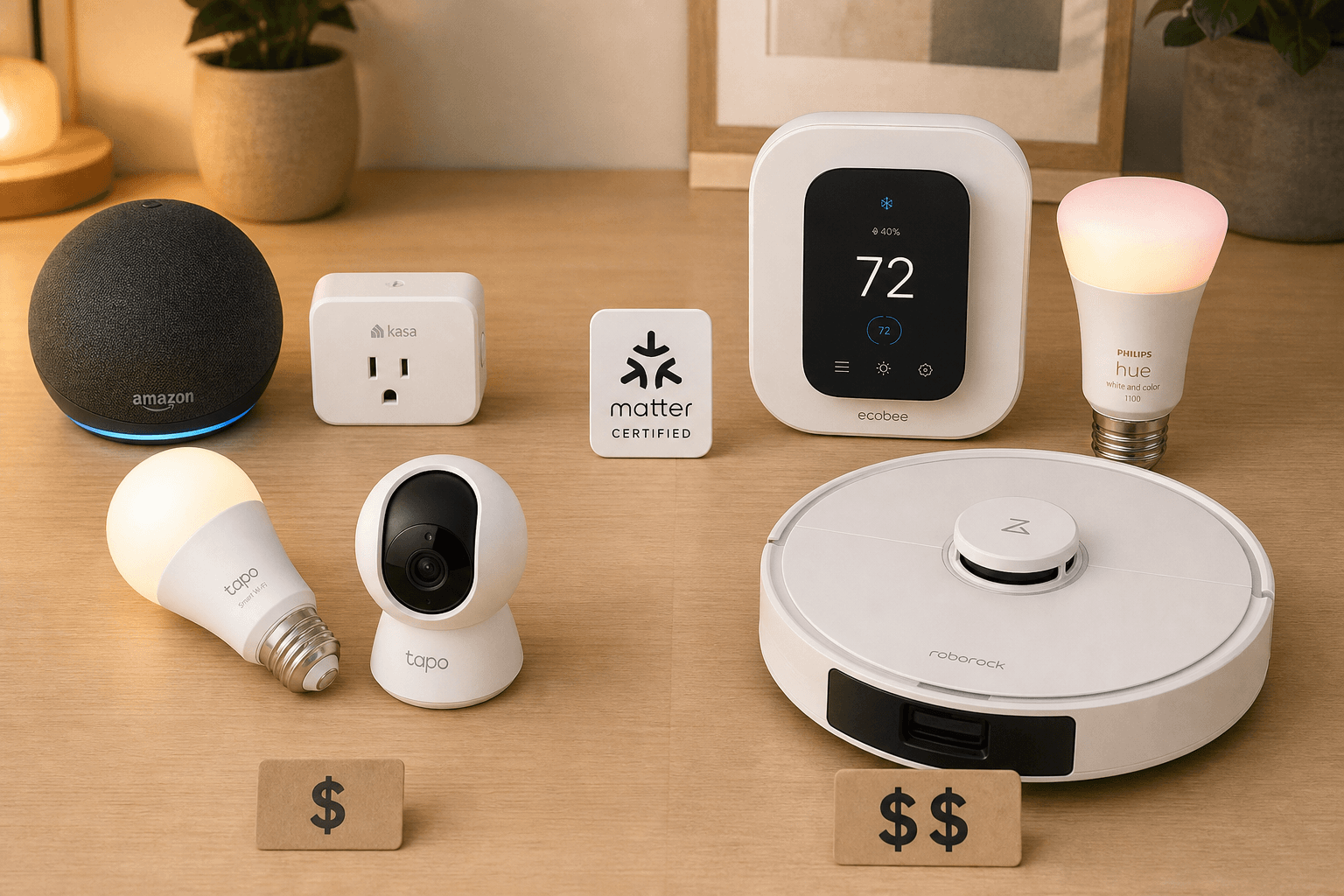
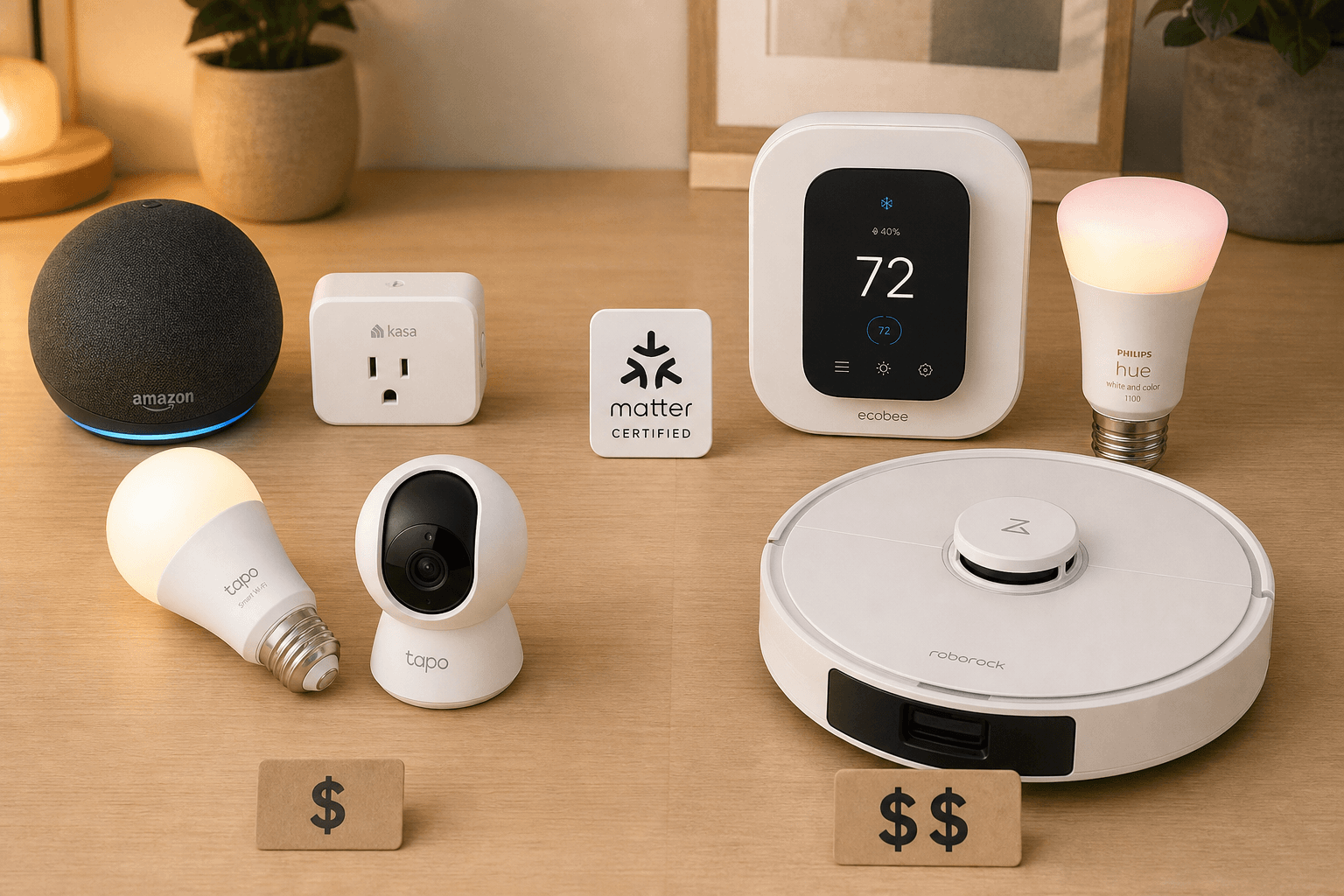
On one side, budget gadgets under $50 from brands like Kasa, Tapo, Govee, and Aqara now deliver reliable voice and app control for lights, plugs, sensors, and indoor cameras — often with no hub or subscription required. On the other, premium devices from Ecobee, Roborock, and Philips Hue command higher prices by offering Matter and Thread support, local processing, superior build quality, and energy savings that can recover the premium within one to three years.
This article is not a flat category-by-category survey — that angle is already covered in our Best Smart Home Devices 2026: A Category-by-Category Buyer's Guide. Instead, we are asking a different question: given the widening price spectrum, which tier actually delivers the best return on investment for your specific situation? The answer depends heavily on hidden costs, ecosystem choices, and how long you plan to keep your devices.
Budget Tier ($10–$50): Smart Plugs, Bulbs, Sensors, and Cameras
The budget tier has quietly become the most compelling entry point for new smart home users. Devices in this range cover the four most common use cases — lighting control, outlet scheduling, environmental monitoring, and indoor security — without requiring a long-term subscription commitment.
| Device | Price (MSRP) | Key Features | Hub Required? | Subscription? |
|---|---|---|---|---|
| Kasa Smart Plug (2-pack) | $17.99 | UL-certified, works with Alexa/Google, no hub | No | No |
| TP-Link Tapo L535E Bulb | $14.99 | Matter-certified, 1,100 lumens, energy monitoring | No | No |
| Aqara Water Leak Sensor | $18.99 | IP67, detects water as low as 0.5mm, local alarm | Yes (Aqara Hub) | No |
| Amazon Echo Dot (5th Gen) | $49.99 | Built-in temp/motion sensors, doubles as Zigbee hub | No | No |
| Tapo 2K Indoor Pan/Tilt Camera | $24.99 | 2K resolution, 360° pan, night vision to 30 ft, siren | No | No |
| Kasa Outdoor Smart Plug | $24.99 | IP64 weather-resistant, 300 ft Wi-Fi range, 2 outlets | No | No |
Several patterns stand out. First, none of these devices require a subscription for core functionality. The Tapo camera stores footage locally via microSD and the Kasa plugs work entirely through the app or voice assistants without a paid plan. Second, the Echo Dot (5th Gen) at $49.99 is a notable outlier — it functions as both a smart speaker and a Zigbee hub, meaning it can directly control compatible Zigbee devices without an additional bridge.
All budget devices listed here require a 2.4GHz Wi-Fi network. Some dual-band mesh routers combine the 2.4GHz and 5GHz bands under a single SSID, which can cause setup failures. If your router does not allow band separation, you may need to temporarily disable the 5GHz band during initial pairing.
Mid-Range ($50–$250): Thermostats, Doorbells, and Smart Displays
The mid-range tier is where Matter support, energy tracking, and local processing options begin to appear. These devices typically offer a meaningful step up in capability without the multi-hundred-dollar commitment of premium ecosystems.
| Device | Price (MSRP) | Key Features | Matter? | Subscription? |
|---|---|---|---|---|
| Ecobee Smart Thermostat Premium | $249.99 | Remote sensor, Eco+ AI, energy reports, works with all major platforms | Yes | No |
| Amazon Smart Thermostat | $79.99 | ENERGY STAR certified, Alexa integration, C-wire required | Yes | No |
| Arlo Video Doorbell (2nd Gen) | $79.99 | 2K video, 180° FOV, HDR, night vision | No | Optional (cloud storage) |
| Echo Show 8 | $179.99 | 8-inch display, Matter controller, Zigbee hub, video calling | Yes | No |
The Ecobee Smart Thermostat Premium at $249.99 is the standout in this tier. It includes a remote sensor that you can place in a different room to ensure consistent temperature, and its Eco+ AI features adjust heating and cooling based on weather forecasts and occupancy patterns. For a deeper comparison of Ecobee models, see our Ecobee Smart Thermostat Premium vs. Enhanced vs. Essential guide.
The Amazon Smart Thermostat at $79.99 is a more affordable Matter-certified option, but it requires a C-wire for installation — a common barrier in older homes. The Echo Show 8 serves a dual role as a smart display and a Matter controller with a built-in Zigbee hub, making it a practical hub for mixed-protocol households.
Premium ($250+): Robot Vacuums, Lighting Ecosystems, and Specialty Gadgets
The premium tier is where the smart home becomes a multi-year ecosystem investment. Devices in this range justify their cost through AI-driven features, Matter and Thread support, local processing, and build quality that outlasts budget alternatives. However, subscriptions are more common here, and the upfront cost can be substantial.
| Device | Price (MSRP) | Key Features | Subscription? | Best For |
|---|---|---|---|---|
| Ecovacs Deebot X8 Pro Omni | $1,399.99 | Self-emptying, self-washing, AI obstacle avoidance, mapping | Optional | Hands-off floor care |
| Philips Hue Ecosystem (starter kit) | $199.99+ | Zigbee-based, millions of colors, extensive third-party integrations | No | Whole-home lighting control |
| Brisk It Origin 940 Smart Grill | $1,099.99 | Wi-Fi/Bluetooth, app-controlled temperature, recipe guidance | No | Outdoor cooking enthusiasts |
| Tonal 2 | $4,295.00 | AI-powered strength training, digital weight, live classes | $44/month | Home gym replacement |
The Ecovacs Deebot X8 Pro Omni at $1,399.99 represents the ceiling of robot vacuum technology — it empties its own dustbin, washes and dries its mop pads, and uses AI to avoid cables and pet waste. The Philips Hue ecosystem, while starting at a higher per-bulb cost than budget alternatives, offers the most reliable and extensive smart lighting platform on the market, with support for every major voice assistant and automation platform.
The Tonal 2 at $4,295 is the most extreme example of subscription dependency in this tier: the hardware is expensive, and the $44/month membership is required for most features. This is a fundamentally different purchase model from a $17.99 smart plug that works forever with no ongoing cost.
Hidden Costs: Subscriptions, Hubs, and Cloud Dependence
The single biggest hidden cost in the 2026 smart home is subscription fees. Many devices that appear affordable at purchase require ongoing payments for core features — cloud storage for camera footage, advanced automation logic, or even basic remote access.
| Device / Service | Subscription Cost | What You Lose Without It |
|---|---|---|
| Ring Protect (camera doorbell) | $5–$20/month | Cloud recording, person/package alerts, video history |
| SimpliSafe Monitoring | $27.99–$44.99/month | Professional monitoring, cellular backup, app control |
| Tonal Membership | $44/month | All workouts, strength tracking, live classes |
| Arlo Secure (cloud storage) | $4.99–$14.99/month | Cloud recording, AI detection, activity zones |
| Home Assistant Cloud | $6.50/month | Remote access, voice assistant integration (optional) |
Hub requirements are another hidden cost. The Aqara Water Leak Sensor is a clear example: the sensor itself costs $18.99, but you need an Aqara Hub (around $40–$60) to use it. The Echo Dot (5th Gen) at $49.99 avoids this by doubling as a Zigbee hub, but not all budget devices have this flexibility.
Cloud dependence is the third hidden cost — and it is not always financial. Devices that require a cloud connection for basic functions become unresponsive during internet outages. Local control, where commands are processed on a hub or device within your home, is increasingly available through Matter and Thread, but it is not universal. The Matter in 2026: An Honest Status Review covers which devices currently support local control and which still depend on the cloud.
ROI Analysis: Energy Savings, Water Savings, and Leak Prevention
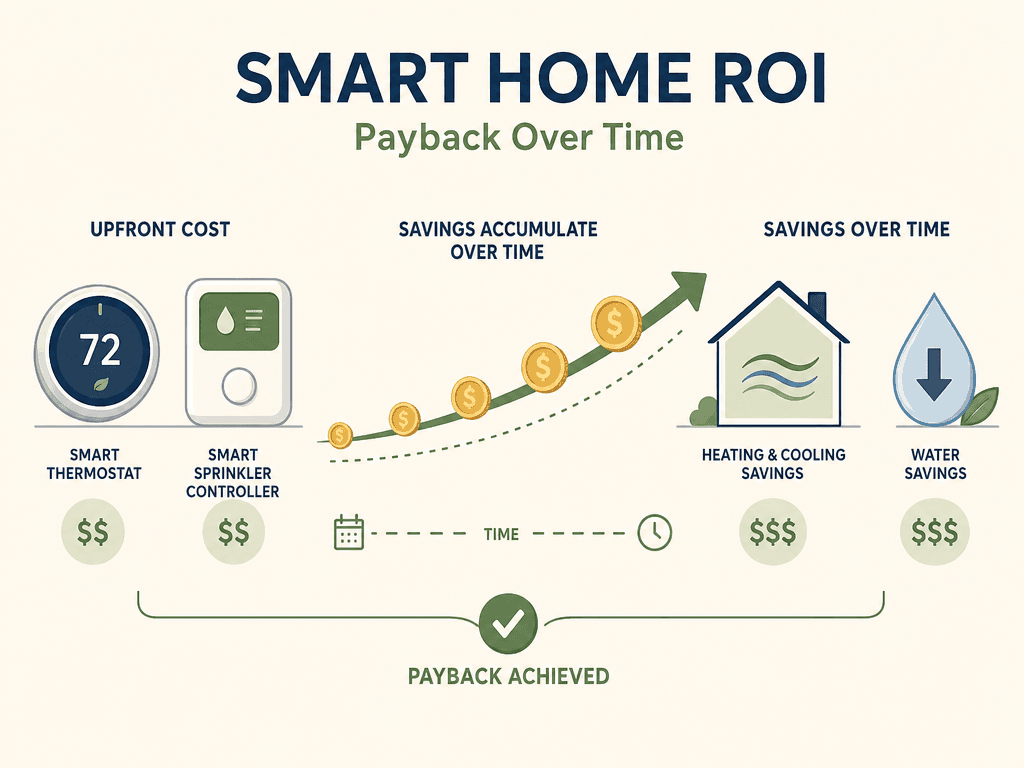
For many buyers, the decision between budget and premium comes down to payback period. Devices that save energy or prevent damage can recover their cost within months or a few years, while purely convenience-oriented gadgets may never offer a financial return.
| Device | Upfront Cost | Estimated Annual Savings | Payback Period | Source |
|---|---|---|---|---|
| Ecobee Smart Thermostat Premium | $249.99 | 23% on HVAC (ENERGY STAR estimate) | Under 2 years | ENERGY STAR |
| Rachio 3 Smart Sprinkler | $229.99 | Up to 40% water reduction | 1–2 seasons | Manufacturer data |
| Aqara Water Leak Sensor (+ Hub) | $60–$80 total | Prevents $10,000+ avg. water damage | Immediate (one claim) | Insurance Information Institute |
| TP-Link Tapo P110M Smart Plug | $29.99 | Varies by device usage | 6–18 months | ENERGY STAR |
The Ecobee Premium's 23% HVAC savings is a program-wide ENERGY STAR estimate. Actual savings depend on your climate zone, home size, and how aggressively you use Eco+ features like schedule adjustments and weather-aware comfort. For a deeper breakdown of thermostat payback calculations, see our Is a Smart Thermostat Worth It? guide.
The Rachio 3 smart sprinkler controller at $229.99 uses weather data and soil moisture estimates to adjust watering schedules. The manufacturer claims up to 40% water reduction, which in many regions translates to $100–$200 in annual savings — enough to pay for the device within one to two growing seasons.
Platform Compatibility Comparison: Alexa, Google, HomeKit, Home Assistant, and Matter
Ecosystem compatibility is the most important long-term factor in smart home purchasing. A device that works with your chosen platform today may lose functionality if the platform changes its API or deprecates support. Matter is designed to solve this, but adoption is still uneven across price tiers.
| Platform | Compatible Devices | Local Control? | Voice Assistant | Monthly Cost |
|---|---|---|---|---|
| Amazon Alexa | 140,000+ | Partial (Echo 4th Gen+ as Zigbee hub) | Alexa | Free |
| Google Home | 50,000+ | Limited | Google Assistant (93% accuracy) | Free |
| Apple HomeKit | 1,000+ | Yes (via Apple TV/HomePod) | Siri | Free |
| Home Assistant | 2,500+ integrations | Fully local | Multiple (Alexa, Google, Siri) | Free (or $6.50/mo for cloud) |
| Matter | 850+ certified | Yes (by design) | Platform-dependent | Free |
Alexa's 140,000+ compatible devices make it the widest ecosystem by a significant margin. Google Home supports 50,000+ devices, and its Google Assistant correctly answered 93% of questions in head-to-head testing. Apple HomeKit is the most restrictive at 1,000+ devices, but it offers strong local control and privacy guarantees.
Home Assistant stands apart as a fully local, open-source platform with 2,500+ official integrations. It can bridge devices from any ecosystem and run entirely without cloud dependence. The optional cloud service at $6.50/month provides remote access and voice assistant integration, but the core functionality remains free. For a detailed look at Alexa's ecosystem, see our Amazon Alexa Platform Overview 2026.
Verdict: Which Tier Wins for First-Time Buyers, Upgraders, and Enthusiasts?
There is no single winner across all scenarios. The right tier depends on your existing ecosystem, your tolerance for ongoing costs, and whether you view smart home devices as disposable gadgets or long-term infrastructure.
- First-time buyers: Start with the budget tier. A Kasa Smart Plug 2-pack ($17.99), a Tapo L535E bulb ($14.99), and an Echo Dot ($49.99) give you voice-controlled lighting and outlet scheduling for under $85 with no subscriptions. If you find the experience useful, you can expand into mid-range devices later without having wasted money on expensive hardware that does not fit your needs.
- Upgraders: Focus on mid-range devices with Matter support. The Ecobee Smart Thermostat Premium ($249.99) and Echo Show 8 ($179.99) offer energy savings, local control, and cross-platform compatibility that budget devices cannot match. Matter certification ensures these devices will work with whatever ecosystem you choose next.
- Enthusiasts: Premium devices make sense when you value local processing, AI features, and ecosystem depth. The Philips Hue ecosystem, Roborock Saros, and Home Assistant as a backbone create a setup that is fast, private, and highly customizable. Be prepared for subscription costs on some devices — the Tonal 2 at $4,295 plus $44/month is a clear example of the premium trade-off.
The gap between budget and premium is narrowing, largely because of Matter. A $14.99 Tapo L535E bulb with Matter certification offers the same cross-platform compatibility as a $50 Philips Hue bulb — though the Hue bulb offers better color accuracy, more reliable Zigbee mesh networking, and a more mature ecosystem. The choice is no longer about whether a budget device will work, but about how much reliability, speed, and longevity you are willing to pay for.
Discussion
Share your experience with the compared products, flag outdated pricing or specs, or ask clarifying questions about the comparison verdict.
Comments
Join the discussion with an anonymous comment.