Introduction: The Smart Home in 2026 — Smarter, More Affordable, and Interoperable
The smart home market has crossed a threshold. According to Statista, global smart home revenue reached an estimated $117.6 billion in 2022 and is projected to grow at a compound annual rate of 12.47% through 2027. In the United States alone, household penetration is expected to hit 68.6% by 2027, up from 43.8% in 2022. The average American household already owns roughly five smart device types, and 57% of households own a smart TV. This is no longer a niche category for early adopters — it is the new normal for how people manage their homes.
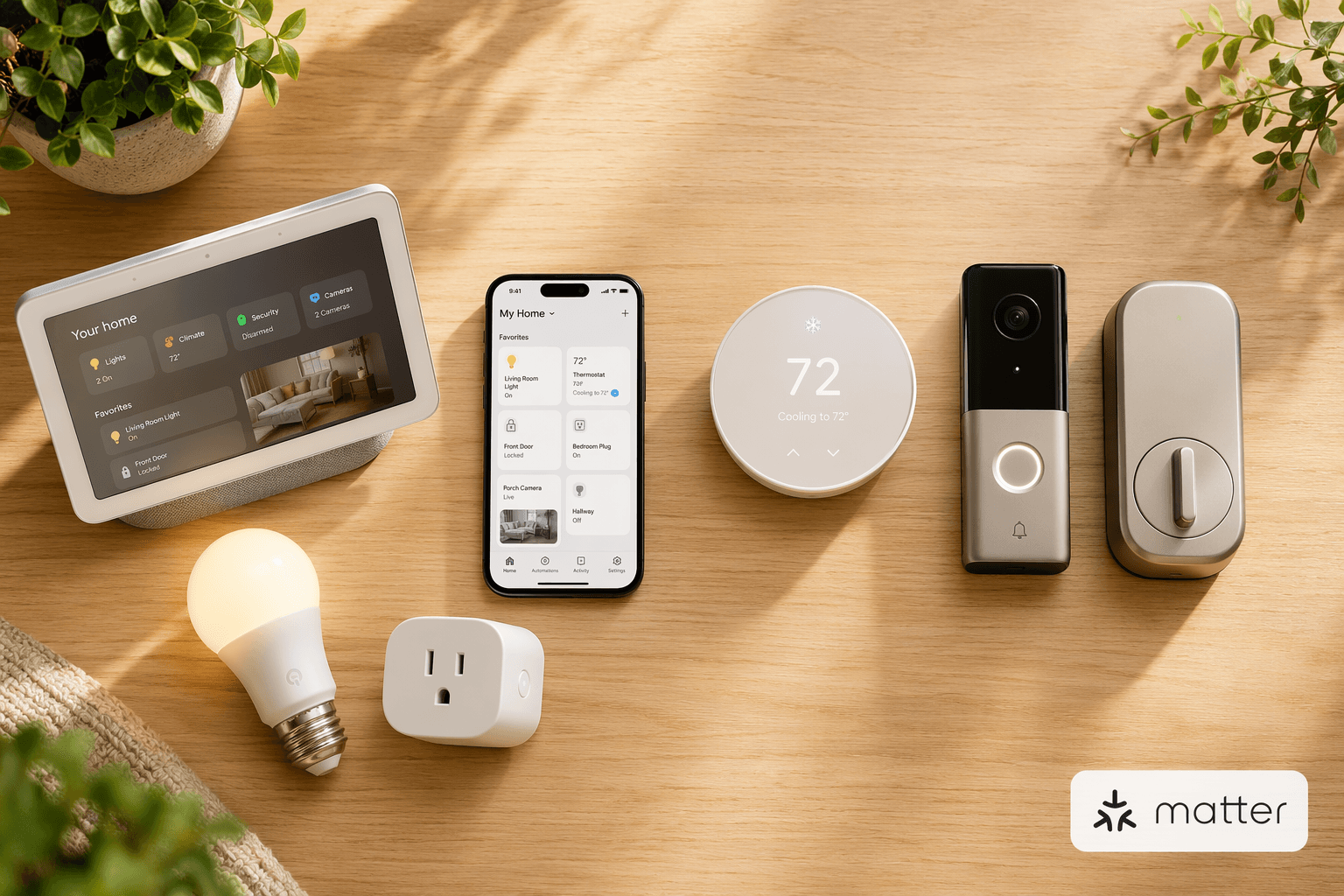
The real shift in 2026 is interoperability. The arrival of Matter — backed by Amazon, Apple, Google, Samsung, and roughly 280 other companies — means that devices from different brands can now talk to each other locally, without relying on cloud bridges. More than 850 Matter-certified devices are on the market as of mid-2026, and that number is climbing. For buyers, this changes the calculus: you no longer have to bet your entire setup on a single ecosystem. You can buy the best smart lock for your door and the best thermostat for your HVAC system, and trust that they will work together.
This guide is structured as a decision matrix. Each category covers the current top picks, the price range you should expect, the ecosystem compatibility you need to check, and whether the device supports Matter. If you are starting from scratch, the budget starter pack section shows how to assemble a high-impact setup — covering voice control, energy savings, security, and lighting — for under $500. If you already own devices, the ecosystem decision guide will help you choose your next platform commitment wisely.
Quick-Pick Comparison Table: Best Smart Home Devices by Category
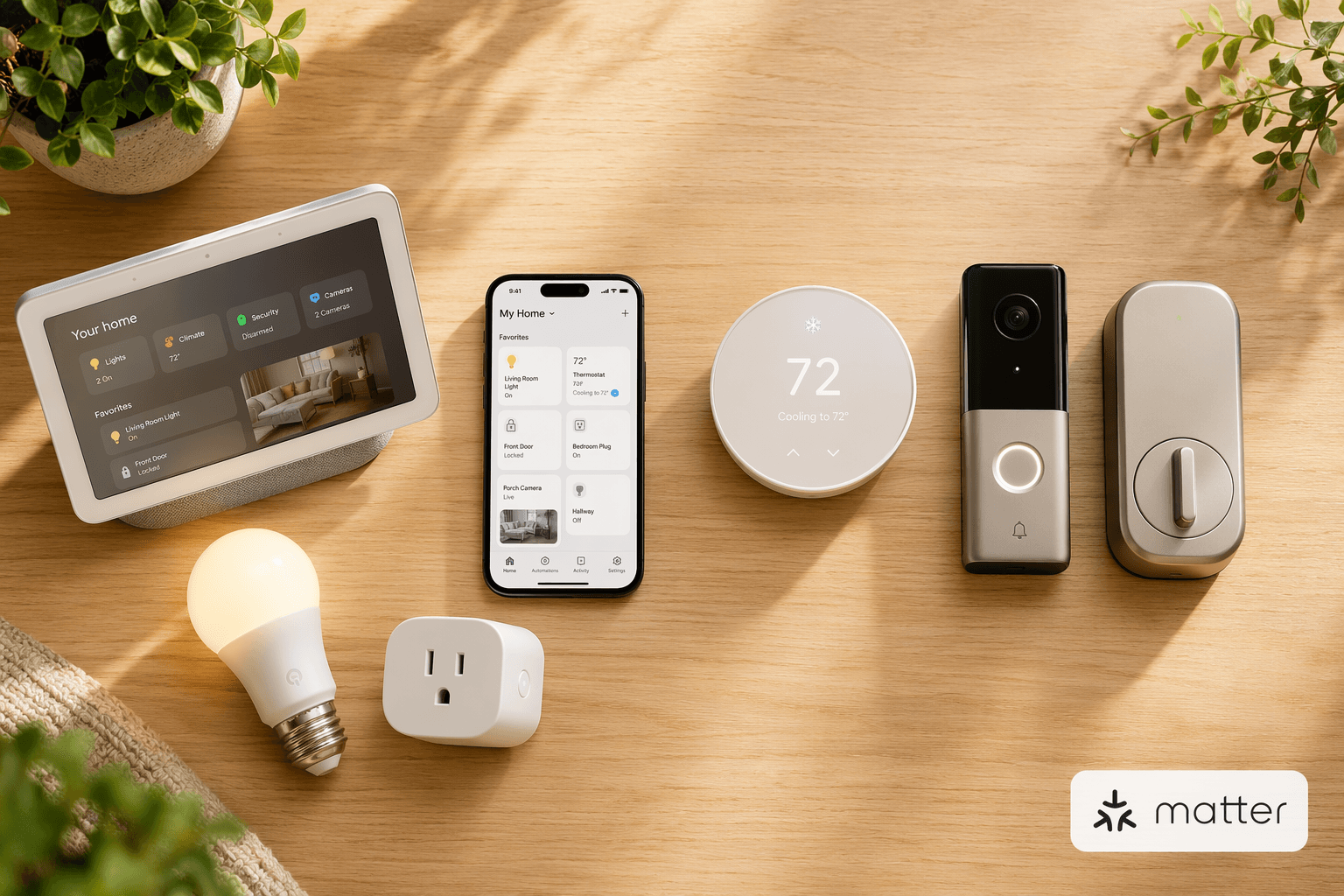
If you want the highlights before diving into the details, the table below summarizes the top pick in each category, its price range, the standout feature, the ecosystems it works with, and whether it supports Matter. Use this as a starting point, then read the category sections for the full rationale.
| Category | Top Pick | Price Range (USD) | Key Feature | Ecosystem Compatibility | Matter Support |
|---|---|---|---|---|---|
| Smart Speaker | Amazon Echo Dot 5th Gen | $49 | Alexa voice control, compact size | Alexa | No (Thread Border Router) |
| Smart Display | Google Nest Hub Max | $229 | 93% voice AI accuracy, 10-inch screen | Google Home | Yes (Thread Border Router) |
| Smart Thermostat | Nest Learning Thermostat 4th Gen | $249 | Self-learning, eco mode, satellite sensor | Google Home, Alexa | Yes |
| Video Doorbell | Ring Battery Doorbell Plus | $179 | Battery-powered, 1536p HD, package detection | Alexa | No |
| Smart Lock | Schlage Encode Plus | $299 | Built-in Wi-Fi, Apple Home Key, ANSI Grade 1 | HomeKit, Alexa, Google Home | Yes |
| Smart Lighting | Philips Hue White Ambiance Starter Kit | $79 (2-bulb) | Most reliable ecosystem, 200+ device capacity | Alexa, Google Home, HomeKit | Yes (via Bridge) |
| Security Camera (Outdoor) | Aqara Camera Hub G5 Pro | $179 | 4MP sensor, Thread/Zigbee hub, local storage | HomeKit, Alexa, Google Home | Yes |
| Smart Plug | TP-Link Tapo P125M (3-pack) | $25 | Matter-certified, power monitoring, $8/unit | Alexa, Google Home, SmartThings | Yes |
| Robot Vacuum | Roborock S8 Pro Ultra | $1,399 | Self-emptying, mopping, LiDAR navigation | Alexa, Google Home | Yes |
| Sensor (Presence) | Aqara FP2 mmWave Sensor | $49 | Micro-movement detection, room occupancy | HomeKit, Alexa, Google Home | No (Zigbee) |
Smart Speakers and Displays: The Voice Hub of Your Home
For most households, the smart speaker or display is the first device purchased — and it often determines which ecosystem the rest of the home will be built around. According to Market.us Scoop, smart speakers are installed in 79% of US households, making them the most widely adopted smart home device category. The choice here is less about hardware specs and more about which voice assistant you want to live with.
Amazon's Echo lineup remains the most ecosystem-agnostic option. The Echo Dot 5th Gen at $49 is the most affordable entry point into voice control, and Alexa works with more than 140,000 smart home devices according to Security.org's June 2026 testing. The Echo Dot Max ($99.99) adds three times the bass of the standard Dot and includes the new Alexa+ generative AI capabilities. For audio quality, the Echo Studio (2025) delivers spatial audio and is CNET's top pick for sound, though its Alexa Plus features require a $20/month subscription for non-Prime members.
Google's Nest Hub Max ($229) takes the lead on voice AI accuracy. Security.org's head-to-head testing found that Google Assistant answers questions correctly 93% of the time, outperforming Alexa and Siri. The 10-inch display makes it useful for video calls, recipe walkthroughs, and streaming YouTube TV. It also functions as a Thread Border Router, which is essential if you plan to build a Matter-based smart home.
Apple's HomePod Mini ($99) is the privacy-focused choice. It processes Siri requests locally and uses end-to-end encryption for all smart home commands. It also serves as a Thread Border Router and a Home Hub, making it a critical component for any HomeKit household. The trade-off is a smaller device library — HomeKit supports roughly 1,000+ compatible products, far fewer than Alexa or Google.
Smart Thermostats: Save Energy and Money with Intelligent Climate Control
A smart thermostat is the single highest-ROI device you can add to your home. According to CNET, a properly programmed smart thermostat can save 10% on heating and cooling bills. SmartHomeLabs puts the savings range at 10-15%, with a payback period of 12-18 months. For the average US household spending roughly $1,200 annually on HVAC energy, that translates to $120-$180 in savings per year.
The Nest Learning Thermostat 4th Gen ($249) is CNET's top pick for 2026. It learns your schedule and temperature preferences, adjusts based on sunlight and room occupancy via its satellite sensor, and supports eco mode when you are away. It works with Google Home and Alexa, and supports Matter for cross-platform control.
The Ecobee Smart Thermostat Premium ($249.99) is PCMag's top pick, particularly for households that need remote sensors to manage uneven temperatures across multiple rooms. It includes a built-in Alexa speaker and works with HomeKit, Google Home, and SmartThings. The Amazon Smart Thermostat ($79.99) is the budget champion — a TechHive Editors' Pick for nearly five years running — and works exclusively with Alexa.
| Model | Price | Energy Savings | Payback Period | Ecosystem | Matter |
|---|---|---|---|---|---|
| Nest Learning Thermostat 4th Gen | $249 | 10-15% | 12-18 months | Google Home, Alexa | Yes |
| Ecobee Smart Thermostat Premium | $249.99 | Up to 26% (with sensors) | 12-18 months | HomeKit, Alexa, Google, SmartThings | Yes |
| Amazon Smart Thermostat | $79.99 | 10-15% | 6-12 months | Alexa only | No |
| Google Nest Thermostat | $129 | 10-15% | 12-18 months | Google Home, Alexa | Yes |
For a deeper dive into thermostat-specific picks, see our Best Smart Thermostats for HomeKit, Alexa, and Google Home Households (2026) guide.
Video Doorbells: See Who's at the Door from Anywhere
Video doorbells are the most visible security upgrade you can make. The Ring Battery Doorbell Plus ($179) is the best all-around pick for most households. It delivers 1536p HD video, has a 150-degree field of view, and runs on a rechargeable battery — no wiring required. It includes package detection and customizable motion zones, and works with Alexa. The Ring Video Doorbell Pro 2 ($249) adds 3D motion detection and bird's-eye view for users who want the most advanced motion tracking.
For Google Home households, the Google Nest Doorbell (wired, 3rd gen, $179) is the clear choice. It records in 2K resolution and uses Gemini AI for natural-language event search — you can ask "show me when the package was delivered yesterday" and get a clip. It requires existing doorbell wiring for continuous recording.
The Tapo D225 ($90 street price) is the budget standout. It offers 2K resolution (2560x1920), works on battery or hardwired, supports microSD storage up to 512GB (no subscription needed), and works with Alexa and Google. The trade-off is no Apple Home support.
- Ring Battery Doorbell Plus ($179): Best overall, battery-powered, Alexa-only
- Ring Video Doorbell Pro 2 ($249): Best motion detection, wired, Alexa-only
- Google Nest Doorbell (3rd gen, $179): Best for Google Home, 2K, wired
- Tapo D225 ($90): Best budget, 2K, no subscription, Alexa/Google
Smart Locks: Keyless Entry for Peace of Mind
Smart locks have matured significantly. The Schlage Encode Plus ($299) is the gold standard for 2026. It carries the highest security rating from ANSI/BHMA testing (Grade 1), includes built-in Wi-Fi (no separate hub required), and supports Apple Home Key — meaning you can unlock your door with a tap of your iPhone or Apple Watch. It works with HomeKit, Alexa, and Google Home, and supports Matter.
The Yale Assure Lock 2 ($199) is CNET's top pick for versatility. It offers multiple access methods — keypad, fingerprint, Apple Watch, and the Yale Access app — but requires a separate Wi-Fi module ($79) for remote access. It supports HomeKit and Matter.
The Level Lock Pro ($249) is the most discreet option. It fits inside your existing deadbolt, so the exterior looks like a standard lock. It supports NFC, phone, watch, PIN, geofencing, and Matter. PCWorld named it best smart lock for its design and compatibility.
| Model | Price | Security Rating | Access Methods | Hub Required | Matter |
|---|---|---|---|---|---|
| Schlage Encode Plus | $299 | ANSI Grade 1 | Keypad, Apple Home Key, app, voice | No (built-in Wi-Fi) | Yes |
| Yale Assure Lock 2 | $199 | ANSI Grade 2 | Keypad, fingerprint, Apple Watch, app | Yes (Wi-Fi module $79) | Yes |
| Level Lock Pro | $249 | ANSI Grade 2 | NFC, phone, watch, PIN, geofencing | No (built-in) | Yes |
| Tapo DL100 | $70 | ANSI Grade 3 | Keypad, app, voice | No (Wi-Fi) | No |
For a more detailed breakdown of lock types, installation requirements, and renter-friendly options, see our Best Smart Locks 2026: DIY-Friendly Picks for Renters and Homeowners guide.
Smart Lighting: Set the Mood and Save Energy
Smart lighting is the most accessible smart home upgrade — and one of the most satisfying. According to Market.us Scoop, smart lighting is the dominant device type globally, installed in 26% of smart homes. The Philips Hue ecosystem remains the gold standard. The new Bridge Pro can handle over 200 devices (150 lights plus accessories) and can turn Hue lights into motion sensors for automation. The Philips Hue White Ambiance A19 bulb starts at around $31 for adjustable color temperature, or $44 for full color. A 2-bulb starter kit with the Bridge is $79.
For users who do not want a hub, Philips Hue bulbs now support Bluetooth, so you can control up to 10 bulbs directly from your phone. The Lutron Caséta system is the best choice for lighting control — it works with Alexa, HomeKit, Google Home, SmartThings, and Sonos, and uses a dedicated hub for rock-solid reliability.
Govee offers the most affordable full-color lighting, with LED strips and bulbs that sync to music and gaming. The TP-Link Tapo L535E ($17.99) is a Matter-compatible smart bulb that delivers 1,100 lumens — bright enough for most rooms — and works with Alexa, Google, and SmartThings without a hub.
- Philips Hue White Ambiance ($31/bulb): Best ecosystem, hub required for full features, Matter-compatible via Bridge
- Lutron Caséta ($60/dimmer + hub): Best lighting control, works with all major platforms, no cloud dependency
- Govee LED Strips ($25-$60): Best for color and ambiance, app-controlled, no hub needed
- TP-Link Tapo L535E ($17.99): Best budget Matter bulb, 1,100 lumens, no hub required
Security Cameras: Indoor, Outdoor, and Floodlight Options
Security cameras are the second most popular smart home device category, installed in 23% of smart homes globally. The Aqara Camera Hub G5 Pro ($179.99) is PCMag's top pick for outdoor security. It features a 4-megapixel sensor (2688x1520 resolution), supports Matter, Thread, and Zigbee, and doubles as a Zigbee hub for other Aqara sensors. It works with Apple HomeKit Secure Video, Alexa, and Google Home, and supports local storage via microSD.
The Eufy Floodlight Cam E340 ($179) is the best floodlight camera. It features dual cameras — a 3K wide-angle and a 2K telephoto — with 360-degree pan and up to 2,000 lumens of brightness. It records locally with no subscription required, and works with Alexa and Google Home.
For budget-conscious buyers, Reolink offers subscription-free cameras starting at $40. The Arlo Pro 3 ($249.99) delivers 2K resolution with a wire-free design and works with Alexa, Google, and HomeKit, but requires an Arlo Smart subscription ($12.99/month) for advanced AI features like person, package, and animal detection.
| Model | Price | Resolution | Storage | Subscription Required | Matter |
|---|---|---|---|---|---|
| Aqara Camera Hub G5 Pro | $179.99 | 4MP (2688x1520) | microSD up to 512GB | No (HomeKit Secure Video optional) | Yes |
| Eufy Floodlight Cam E340 | $179 | 3K + 2K dual | Local (16GB built-in) | No | No |
| Arlo Pro 3 | $249.99 | 2K | Cloud (Arlo Smart) | Yes ($12.99/mo for AI) | No |
| Reolink Argus 3 Pro | $99 | 2K | microSD or NVR | No | No |
For a full breakdown of camera types, AI features, and subscription costs, see our Best Smart Security Camera 2026: How to Choose by Camera Type, AI Features, Subscription Cost, and Ecosystem guide.
Smart Plugs and Sensors: Affordable Automation Building Blocks
Smart plugs are the cheapest way to make any dumb device smart. The TP-Link Tapo P125M is the standout pick for 2026: it is Matter-certified, supports power monitoring (so you can track energy usage of connected appliances), and is available in a 3-pack for $25 — roughly $8 per unit. It handles up to 1,800-watt incandescent loads, making it suitable for lamps, fans, coffee makers, and space heaters.
Sensors are where the real automation magic happens. Aqara's mmWave presence sensors (starting at $49) can detect micro-movements and room occupancy — not just motion, but whether someone is sitting still in a chair. This enables automations like "turn off the lights when the room is empty for 10 minutes" without false triggers. SwitchBot also offers mmWave sensors at a similar price point.
- TP-Link Tapo P125M 3-pack ($25): Best smart plug, Matter-certified, power monitoring, $8/unit
- TP-Link Tapo P110M ($29.99): Single plug with power monitoring, Matter-certified
- Aqara FP2 mmWave Sensor ($49): Best presence sensor, detects micro-movements, Zigbee
- SwitchBot mmWave Sensor ($39): Affordable presence detection, works with SwitchBot ecosystem
Budget Starter Pack: Build a High-Impact Smart Home for Under $500
You do not need to spend thousands to get real value from a smart home. The following starter pack covers voice control, energy savings, front-door security, and lighting — the four highest-impact categories — for a total of $436. This is based on current pricing from SmartHomeLabs and PCWorld, verified as of June 2026.
- Amazon Echo Dot 5th Gen ($49): Voice hub for the entire system, Alexa controls all other devices
- Google Nest Thermostat ($129): Energy savings of 10-15%, pays for itself in 12-18 months
- Ring Battery Doorbell Plus ($179): Front-door security, package detection, battery-powered
- Philips Hue 2-bulb Starter Kit ($79): Reliable smart lighting for living room and bedroom
Total: $436. This setup gives you voice control over lights and thermostat, energy savings that will offset the thermostat cost within 18 months, and front-door security with motion alerts. From here, you can expand with smart plugs ($25 for a 3-pack), a smart lock ($70-$299), and additional sensors as your needs grow.
Ecosystem Decision Guide: Alexa vs Google Assistant vs Apple HomeKit vs Matter
Choosing your primary ecosystem is the most consequential decision you will make as a smart home buyer. Your choice determines which devices work natively, how automations are built, and how much control you have over your data. Here is how the four main options compare in 2026.
| Factor | Alexa | Google Assistant | Apple HomeKit | Matter |
|---|---|---|---|---|
| Device Compatibility | 140,000+ devices | 50,000+ devices | 1,000+ devices | 850+ certified devices |
| Voice AI Accuracy | Good | 93% question accuracy | Good (Siri) | N/A (protocol, not assistant) |
| Privacy | Cloud-dependent | Cloud-dependent | Local processing, end-to-end encryption | Local control (no cloud required) |
| Hub Required | Echo device | Nest device | HomePod or Apple TV | Thread Border Router |
| Best For | Widest device selection | Best voice AI | Privacy-focused users | Cross-platform compatibility |
| Lock-in Risk | Medium | Medium | High (Apple-only devices) | Low (open standard) |
Alexa remains the safest choice for maximum device compatibility. If you want to buy whatever smart lock, camera, or light bulb catches your eye and have it work, Alexa is the platform. Google Assistant is the best choice if voice control is your primary interface — its 93% question accuracy means fewer frustrating misunderstandings. Apple HomeKit is the right choice if privacy is your top priority: all commands are processed locally with end-to-end encryption, and no data is sent to Apple's servers for routine operations.
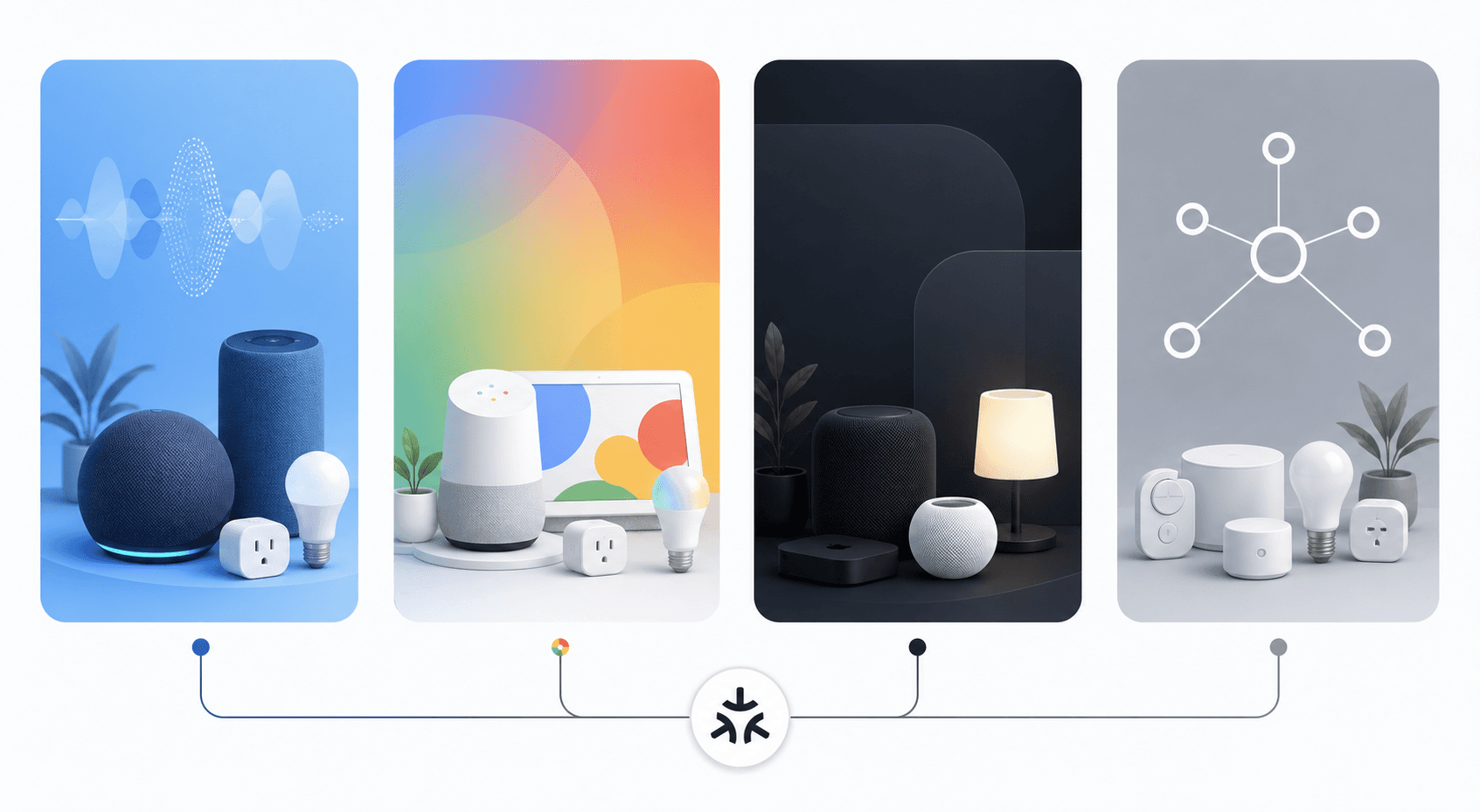
Matter is not a replacement for these platforms — it is a compatibility layer that lets devices from different ecosystems work together locally. If you buy a Matter-certified smart lock, it will work with Alexa, Google Home, and Apple HomeKit simultaneously, as long as you have a Thread Border Router (built into devices like the Echo 4th Gen, HomePod Mini, Apple TV 4K, and Google Nest Hub Max). For a deeper understanding of how Matter works and what it means for your purchasing decisions, see our Matter Protocol Explained: What It Is, How It Works, and What to Know Before You Buy in 2026 explainer.
Frequently Asked Questions
- Do I need a hub? It depends on the device. Some devices (like the Schlage Encode Plus) have built-in Wi-Fi and need no hub. Others (like Philips Hue) require a Bridge for full features. Matter devices need a Thread Border Router, which is built into many modern smart speakers and routers.
- What is Matter and do I need it? Matter is a universal smart home standard that ensures devices work together regardless of brand. You do not need it, but buying Matter-certified devices future-proofs your setup and enables local control that works even during internet outages.
- Can I mix Alexa and Google devices? Yes, but with caveats. You can control both from their respective apps, but cross-platform automations (e.g., an Alexa routine triggering a Google-compatible light) are not possible without a Matter bridge or a platform like Home Assistant.
- How much can a smart thermostat save? Between 10-15% on heating and cooling bills, according to CNET and SmartHomeLabs. At average US HVAC costs of $1,200/year, that is $120-$180 in annual savings. Most thermostats pay for themselves within 12-18 months.
- Are smart locks secure? Yes, when properly installed. Look for ANSI Grade 1 or 2 certification. The Schlage Encode Plus carries Grade 1, the highest residential rating. Smart locks are generally more secure than leaving a key under the mat, but they introduce digital attack surfaces — keep firmware updated and use strong passwords.
- What's the easiest way to start? Buy a smart speaker (Echo Dot or Nest Mini) and a smart plug. Plug a lamp into the smart plug, set up a voice routine to turn it on and off, and you have your first automation. From there, add a thermostat for savings, a doorbell for security, and lighting for ambiance.
Final Verdict: Start Small, Think Ecosystem, Future-Proof with Matter
The smart home market in 2026 is more accessible, more reliable, and more interoperable than it has ever been. You can build a high-impact starter setup for under $500 that covers voice control, energy savings, front-door security, and lighting — and every device you add will work better than it would have three years ago, thanks to Matter and the maturation of core platforms.
The key is to start with your ecosystem decision. Choose Alexa if you want the widest device selection. Choose Google Assistant if voice AI accuracy matters most. Choose Apple HomeKit if privacy is non-negotiable. And regardless of which platform you pick, prioritize Matter-certified devices to ensure your setup remains flexible as the standard evolves.
Build gradually. Start with a smart speaker and a thermostat — those two devices will deliver the most immediate value. Add a doorbell for security, lighting for ambiance, and plugs for automation. Before you know it, you will have a home that responds to your needs without you having to think about it.
Reader Feedback
Share your purchase experience, flag outdated picks, or ask clarifying questions about the checklist items.
Comments
Join the discussion with an anonymous comment.