The Promise Revisited: What Matter Was Supposed to Fix
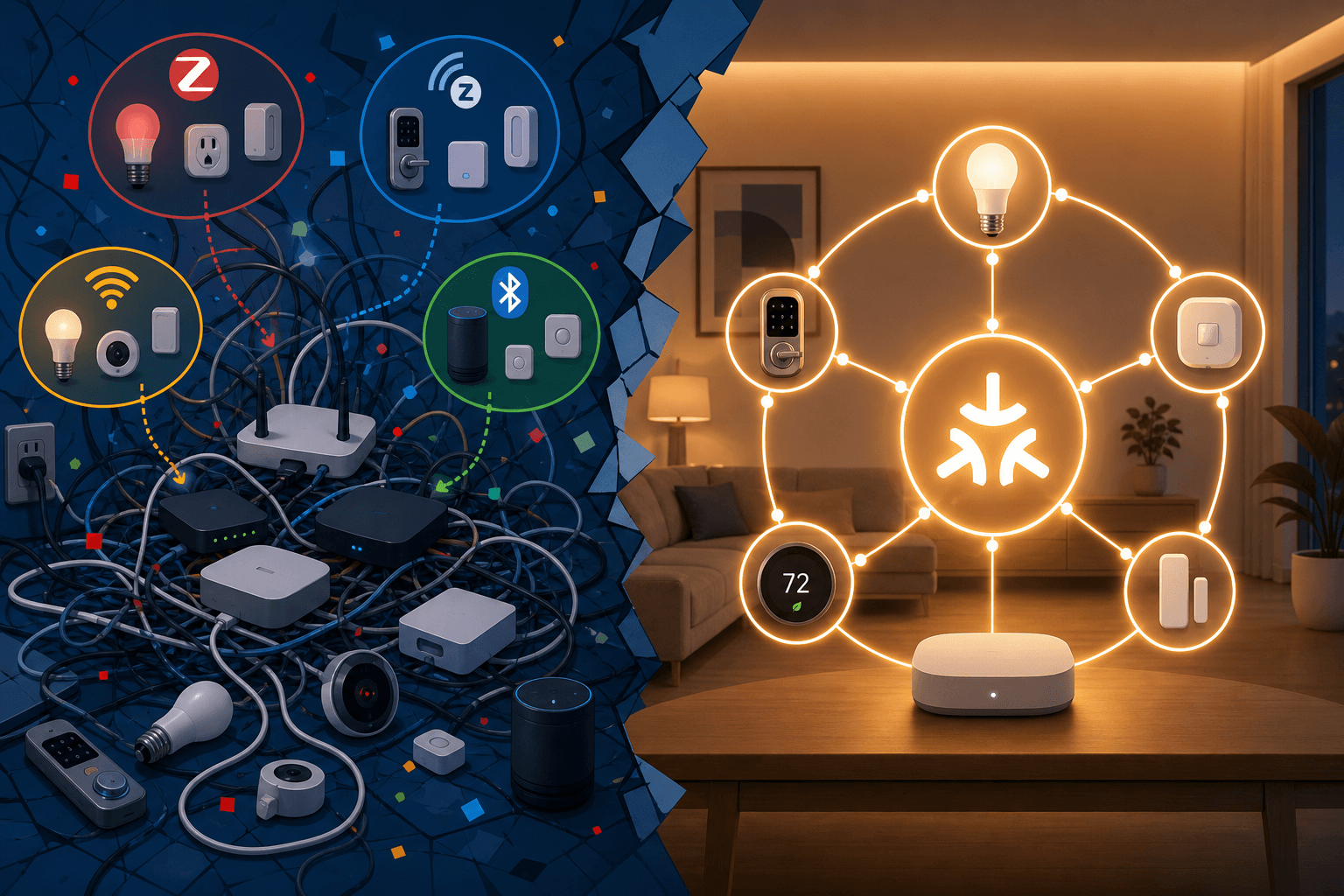
When the Connectivity Standards Alliance (CSA) launched Matter in late 2022, the pitch was disarmingly simple: buy any Matter-certified device, pair it with any Matter-compatible platform, and it would just work. No more checking whether a bulb works with Alexa but not HomeKit. No more wondering if your next lock requires a proprietary hub. The standard promised to collapse the smart home's fragmentation into a single, universal interoperability layer.
Three and a half years later, the reality is more complicated. Matter has shipped real updates, crossed meaningful certification milestones, and attracted hundreds of manufacturers. But it has also frustrated early adopters with inconsistent feature support, platform-specific gaps, and reliability quirks that the original marketing glossed over. This article is a mid-2026 status review — not a rehash of how Matter works (we cover that in our Matter Protocol Explained explainer), but a data-driven assessment of whether the standard has delivered on its core promise and, more importantly, whether you should bet your next smart home purchase on it.
Where Matter Has Genuinely Improved in 2026
Let's start with the good news, because there is plenty of it. The Matter ecosystem has grown substantially in both breadth and depth over the past eighteen months, and several structural improvements have addressed early criticisms.
Thread 1.4 Unifies the Mesh
One of the most significant technical improvements arrived before 2026 even started. Thread 1.4, which standardized credential sharing between Thread networks, became mandatory for all new border router certifications on January 1, 2026. This means that new Thread border routers — devices like the Amazon eero 7, IKEA Dirigera, and GL.iNet GL-S20 — can automatically share network credentials with one another, effectively merging what were previously isolated Thread meshes into a single, cohesive network. For users, this translates to fewer connectivity headaches and more reliable device-to-device communication.
Matter 1.5 Expands Device Categories
Matter 1.5, released in November 2025, represents the most substantial feature update since the standard's inception. It added native support for cameras and video doorbells (using WebRTC for streaming, with pan-tilt-zoom and detection zone controls), closures (motorized shades, gates, awnings), and soil sensors. It also introduced energy management capabilities including dynamic pricing integration — a move that positions Matter to compete in the growing home energy management market.
Certified Product Count Crosses 850
As of June 17, 2026, the CSA's device overview lists over 850 certified Matter products, up from a few hundred in late 2024. This count excludes regional variants and includes bridges that can connect thousands more legacy Zigbee and Z-Wave devices. The growth is real, and it spans categories from lighting and plugs to locks, sensors, thermostats, robot vacuums, and the newly added camera and shade categories.
IKEA Drives Down Cost
IKEA has been a critical force in driving Matter adoption at the low end, bringing Matter-over-Thread products to market for well under $10. This price point is a genuine breakthrough — it makes Matter accessible to buyers who would never consider a $40 smart bulb. However, as we will discuss in the next section, IKEA's rollout has also highlighted some of the standard's persistent weaknesses.
| Milestone | Date | Impact |
|---|---|---|
| Thread 1.4 mandatory for new border routers | January 1, 2026 | Unifies previously isolated Thread meshes; improves reliability and reduces commissioning failures |
| Matter 1.5 released | November 2025 | Adds cameras, video doorbells, closures, soil sensors, and energy management with dynamic pricing |
| 850+ certified products listed | June 2026 | Broad category coverage from lighting to cameras; bridges connect thousands more legacy devices |
| IKEA sub-$10 Matter devices | Ongoing 2025–2026 | Dramatically lowers entry cost; but rollout has exposed ecosystem fragmentation issues |
| Matter 1.4.2: border routers must support 150+ devices | 2025 | Raises minimum device capacity for Thread border routers, improving scalability |
Where Matter Still Falls Short
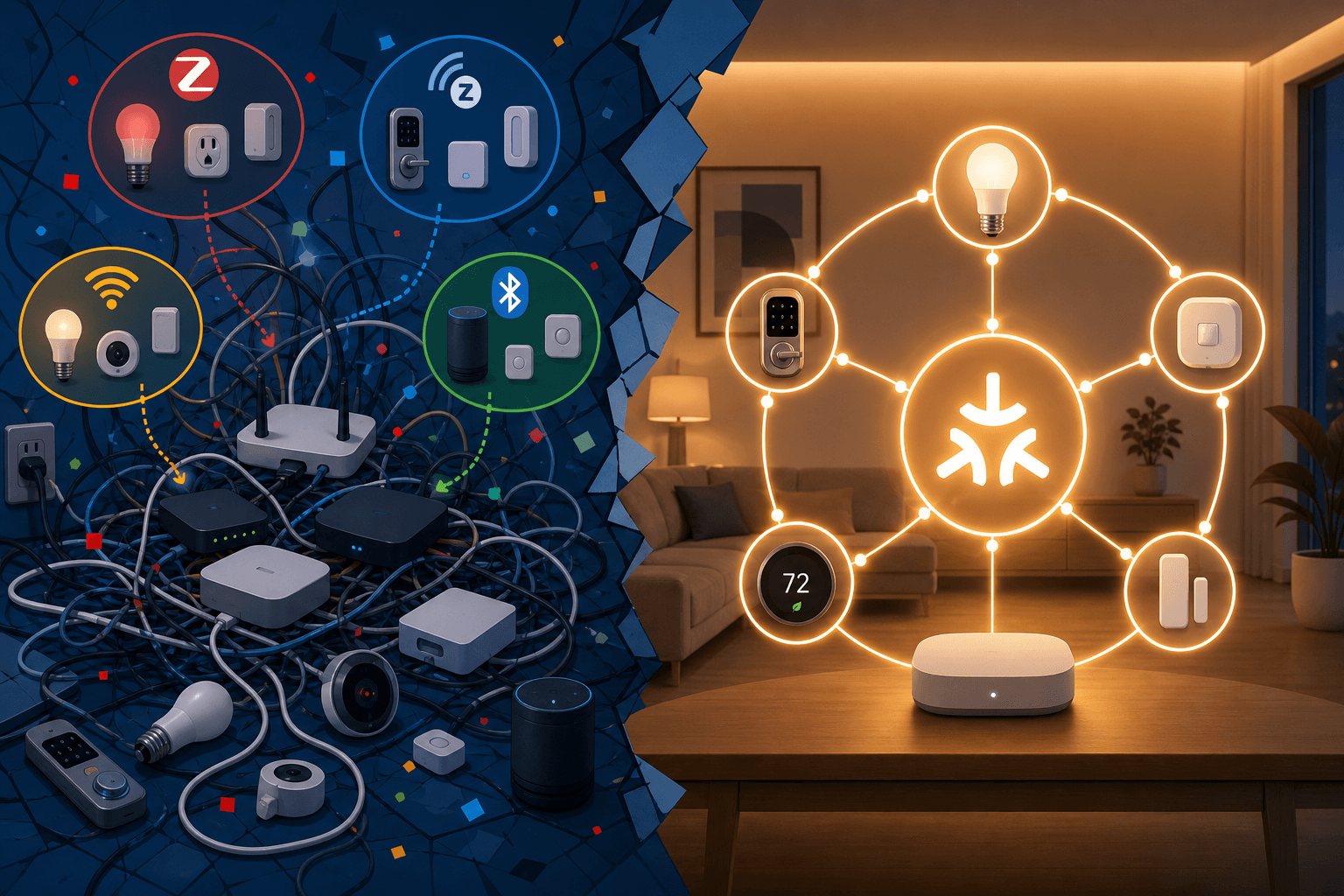
For all the progress, Matter in mid-2026 is not the seamless, universal layer its architects envisioned. Several structural problems remain unresolved, and they directly affect the buying decisions of anyone building a smart home today.
Platform Fragmentation: No One Implements the Full Spec
The most persistent issue is that no single platform — Apple Home, Google Home, Amazon Alexa, or Samsung SmartThings — implements the complete Matter specification. Each platform picks and chooses which device types and features to support, creating a fragmented experience that undermines the standard's core value proposition.
A concrete example: Generic Switches (simple smart buttons) have been part of the Matter specification since version 1.0, but as of mid-2026, neither Google Home nor Amazon Alexa supports them. This means a Matter-certified smart button like the Arre carries the Matter logo but simply will not work with Google Home or Alexa — a deeply confusing experience for any buyer who assumes the logo guarantees compatibility.
| Feature / Device Type | SmartThings | Apple Home | Google Home | Amazon Alexa |
|---|---|---|---|---|
| Matter 1.5 support (cameras, closures) | Supported (first platform to adopt) | Partial (supports robot vacuum Service Area Clusters; gaps in 1.4 adoption) | Not yet supported | Not yet supported |
| Generic Switches (smart buttons) | Supported | Supported | Not supported | Not supported |
| Power monitoring over Matter | Supported | Supported | Supported | Lost when paired via Matter (Eve Energy plug reported) |
| Adaptive lighting (Apple Home) | N/A | Broken over Matter (works over HomeKit) | N/A | N/A |
| Thread 1.4 border router support | Supported (Dirigera) | Supported (Apple TV, HomePod) | Supported (Nest Hub Max) | Supported (eero 7) |
The 'Popcorn Effect' on Lighting Groups
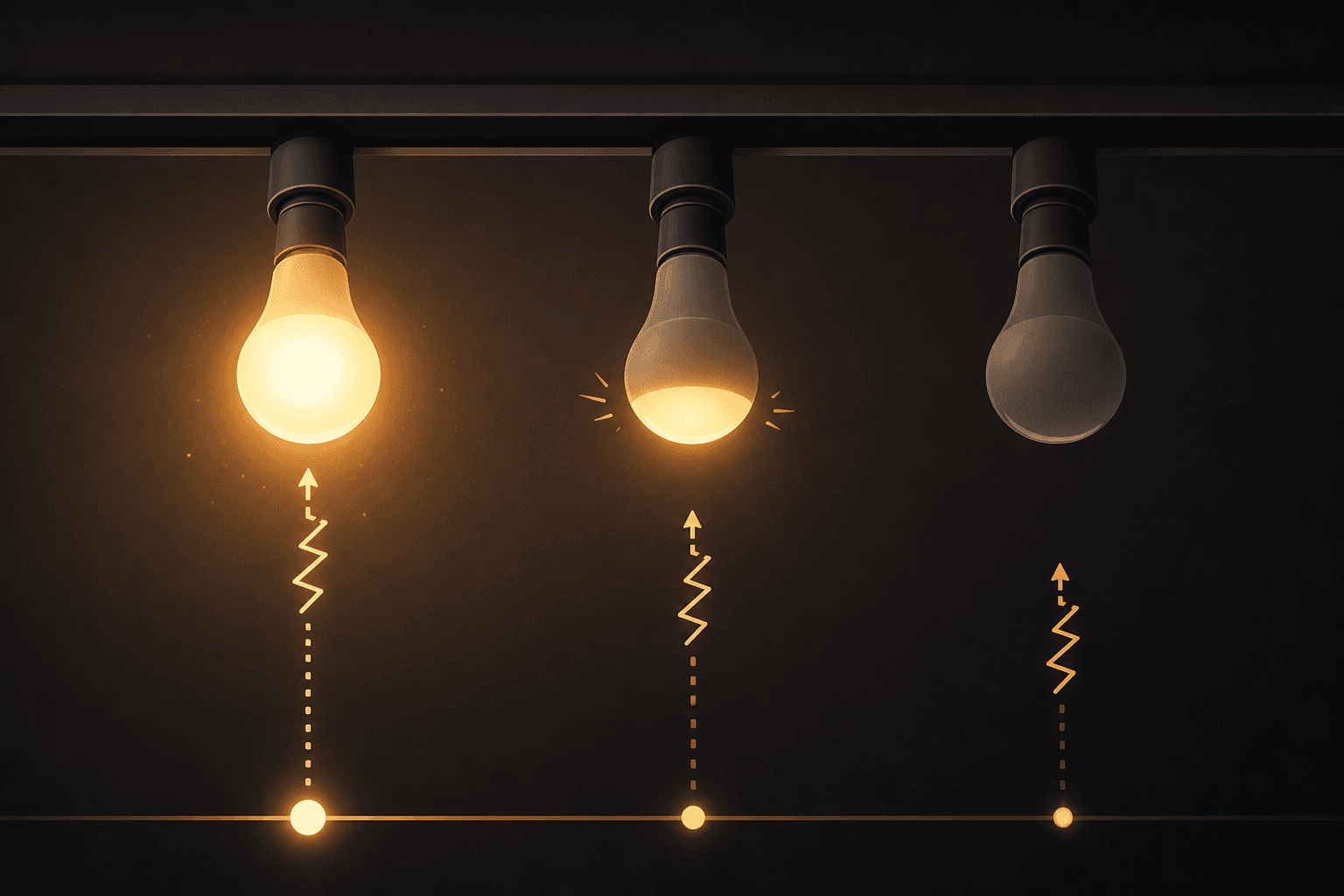
Users who group multiple Matter lights together in a single command — for example, turning off all kitchen lights at once — sometimes experience the 'popcorn effect,' where individual lights respond at slightly different times instead of simultaneously. This is not a Matter-specific bug per se; it is a consequence of the protocol's reliance on individual device addressing over a shared mesh. But it is a noticeable regression for users coming from Zigbee groups, which typically fire simultaneously because the group command is handled at the coordinator level.
Battery Life Trade-Offs: Thread vs. Zigbee
For battery-powered sensors, the protocol choice has a direct impact on how often you will be changing batteries. Aqara's FP300 multi-sensor, which supports both Zigbee and Thread, specifies up to 3 years of battery life on Zigbee versus approximately 2 years on Thread. This gap is not a flaw in either protocol — it reflects Thread's higher baseline power consumption due to its always-listening mesh architecture. For a home with a dozen sensors, the difference adds up to a noticeable maintenance burden over time.
Zigbee also maintains a commanding lead in device selection, with over 3,500 certified products compared to Matter's approximately 850–1,000. While Matter is growing fast, Zigbee's head start means that for many niche device types — specific sensors, actuators, and specialty controllers — Zigbee remains the only option.
Platform-by-Platform Reality Check
Each major platform's Matter implementation has distinct strengths and weaknesses. Here is a concise, honest assessment of where each stands in mid-2026.
Samsung SmartThings: Fastest Adopter, Closest to Full Spec
SmartThings has been the most aggressive platform in adopting new Matter versions. It was the first to support Matter 1.5 within weeks of its November 2025 release, and it supports the widest range of device types, including Generic Switches. For users who want the most complete Matter experience today, SmartThings is the platform to beat. Its hub ecosystem (including the SmartThings Station and Aeotec hubs) also provides robust Thread border router support.
Apple Home: Most Polished, but Gaps in 1.4 Adoption
Apple Home delivers the most polished consumer experience for Matter devices — the onboarding flow is smooth, the Home app is well-designed, and the ecosystem integrates tightly with Apple's privacy posture. However, Apple has been slower to adopt certain Matter 1.4 features. Notably, it supports robot vacuum Service Area Clusters (a Matter 1.5 feature) despite not fully implementing Matter 1.4, creating an uneven feature profile. Adaptive lighting, a signature Apple Home feature, does not work over Matter — it only functions over native HomeKit.
For a deeper look at Apple Home's overall platform strategy, see our Apple HomeKit Platform Overview 2026.
Google Home: Lags on Device Types
Google Home's Matter implementation has notable gaps. The platform still does not support Generic Switches, a device type that has been in the Matter spec since 1.0. It also lags on support for newer device categories like closures and cameras. For users heavily invested in the Google ecosystem, this means some Matter-certified devices simply will not work — or will work with reduced functionality. Google's Thread border router support (via Nest Hub Max and newer Nest devices) is solid, but the platform's device-type coverage needs to catch up.
Amazon Alexa: Implements a Subset
Amazon Alexa implements a subset of the Matter specification, with gaps similar to Google's — Generic Switches are not supported, and some features like power monitoring are lost when devices are paired through Alexa's Matter integration (as reported with the Eve Energy smart plug). Alexa's strength remains its enormous ecosystem breadth and third-party skill support, but its Matter implementation is not the place to look for cutting-edge feature support.
For a comprehensive look at Alexa's ecosystem, see our Amazon Alexa Platform Overview 2026.
Practical Verdict: Who Should Buy Matter Now and What to Check
After reviewing the progress and the problems, here is the actionable conclusion: Matter is ready for some buyers, but not for all. The decision depends on your platform, your device needs, and your tolerance for edge cases.
Adopt Matter Now If:
- You are in the SmartThings or Apple Home ecosystems and buying basic devices: lighting, plugs, locks, and sensors. These categories have mature Matter support, and the platforms handle them well.
- You are a new smart home buyer with no existing Zigbee or Z-Wave investment. Starting fresh with Matter gives you access to a growing ecosystem and avoids the complexity of managing multiple protocols.
- You want to use a Matter bridge to bring legacy Zigbee or Z-Wave devices into a modern platform. Bridges like the Philips Hue Bridge (with its Matter update) and Hubitat Elevation can connect hundreds of existing devices to Matter controllers.
Wait If:
- You need full feature parity. If you rely on adaptive lighting (Apple Home), power monitoring over Matter (which can break on Alexa), or Generic Switches (unsupported on Google and Alexa), Matter is not ready for your use case.
- You are building complex automations that depend on simultaneous group commands. The 'popcorn effect' on lighting groups may be a dealbreaker for scenes that require instant, synchronized response.
- Maximum battery life is critical. For a home with many sensors, Zigbee's ~3-year battery life (vs Thread's ~2 years) reduces maintenance significantly over time.
- You need a niche device type that is only available in Zigbee or Z-Wave. With 3,500+ certified Zigbee products versus ~850–1,000 Matter products, Zigbee still offers vastly more choice.
Pre-Purchase Checklist: What to Verify Before Buying a Matter Device
If you decide to buy Matter now, use this checklist to avoid the most common pitfalls:
- Confirm platform support for the specific device type. Just because a device is Matter-certified does not mean your platform supports every feature. Check the platform's device-type compatibility list before purchasing.
- Verify hub requirements. Some Matter devices connect directly over Wi-Fi; others require a Thread border router. If you do not already have a Thread border router (Apple TV 4K, HomePod mini, Nest Hub Max, eero 6 or later, SmartThings Station), you will need to buy one.
- Check firmware versions. Matter device functionality can change significantly with firmware updates. Look for devices that have received recent firmware updates and check community forums for any known issues with your specific platform.
- Ensure your network handles IPv6 multicast. Many ISP-provided routers aggressively filter IPv6 multicast traffic, which can break Matter commissioning. If you experience setup failures, check your router's IPv6 settings or consider a dedicated smart home router.
- Avoid hybrid Zigbee/Thread setups if possible. Running both protocols divides your mesh relay nodes, weakening both networks. Choose one primary protocol for your sensor and device mesh.
Once you have your devices set up, our Smart Home Automation in 2026 guide provides practical recipes for building automations that take advantage of Matter's strengths. And if you are still deciding on a controller hub, our Home Automation Controller Decision Framework can help you choose the right platform for your needs.
Updates & Corrections
Protocol specifications and platform features change rapidly — especially with Matter version evolution. Report version changes, certification count updates, or platform policy changes that have occurred since the last editorial review.
Comments
Join the discussion with an anonymous comment.