
Which smart home devices actually survive a hurricane?
Devices offline during multi-day power and internet outage
Last updated
Start with the outage, not the app
The useful window for smart home devices for hurricane storm prep is not the first hour after the lights blink. It is day four, day five, day six, when the refrigerator has been opened too many times, the router has been dead since landfall, and nobody is checking a push notification because there is no cloud path left to deliver it. Helene and Milton are recent examples of storms that made a 4–7 day outage window feel very real, but they are examples, not a forecast for the next storm at your address.[1]
That changes the buying order. A hurricane-ready smart home is not one rugged gadget with a dramatic product page. It is a four-category system: power, water shutoff, cellular cameras, and battery-backed smoke/CO alarms. The money case is blunt, too: cited 2026 prep data places food spoilage around $300–$500 for a 4–7 day outage, with hotel displacement running $600–$1,200 in the same planning frame.[1][2]
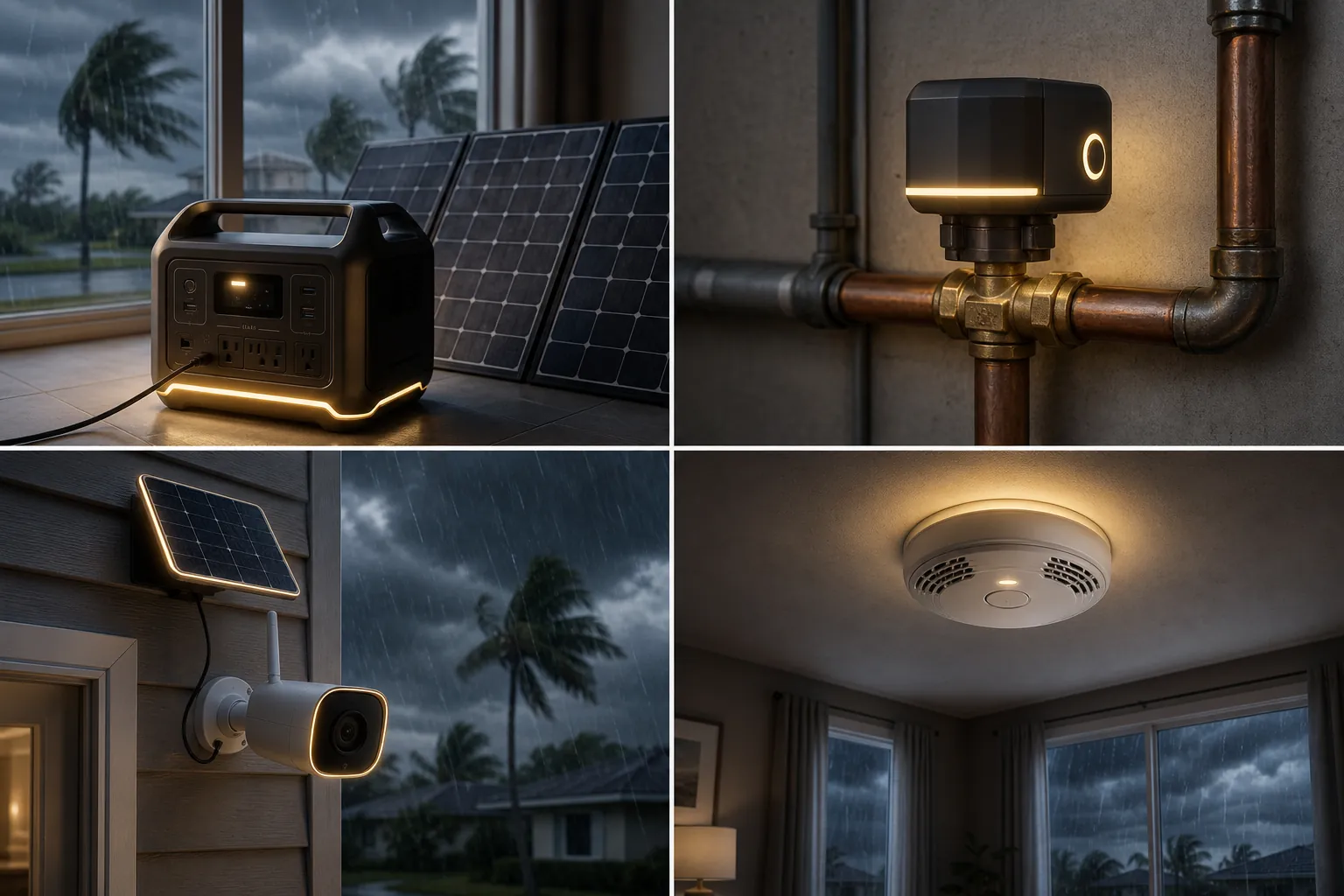
The short list: four jobs, four failure modes
| Category | Recommended device or shortlist | Survival spec that matters | Fallback connectivity | Approx. price in cited 2026 data | Claim boundary |
|---|---|---|---|---|---|
| Power | EcoFlow DELTA Pro 3; Anker SOLIX C800 + 200W solar; Bluetti AC180 | DELTA Pro 3: 4096Wh; cited 5–7 day essential-use planning window. Anker: 768Wh, 58-minute wall charge. Bluetti: 1152Wh.[1][3] | Power is the fallback. Solar input helps only when weather and placement cooperate. | EcoFlow $2,599; Anker $619; Bluetti $469.[1] | Runtime depends on actual loads, duty cycles, battery age, and recharge opportunities. A continuous 150–250W load is not the same as rationed appliance and device use. |
| Water shutoff | Phyn Plus 2nd Gen vs Moen Flo 1-inch | Phyn: ultrasonic detection, zero moving parts, optional cellular add-on. Moen Flo: insurer-published 96% claims-reduction figure.[1] | Phyn can add cellular monitoring. Moen Flo is Wi-Fi-only in the cited comparison.[1] | Phyn $579; Moen Flo $608.[1] | Moen’s 96% figure is Moen + HSB insurer-published data, not an independently audited universal result. |
| Cellular cameras | Reolink Go PT Ultra; Eufy 4G LTE Cam S330 | Reolink: native 4G LTE + solar; SmartHomeExplorer resilience score 8.9/10. Eufy: 4G LTE with dual-mode auto-failover and HomeKit-native support in the cited data.[1] | Cellular path instead of depending entirely on home broadband. | Reolink $229; Eufy $168.[1] | SmartHomeExplorer’s resilience score is a third-party methodology, not an official industry standard. |
| Smoke/CO alarm | First Alert SC5 SMCO600NV | 10-year sealed lithium battery; local 85dB alarm.[1] | The siren works locally. Push notifications pause when internet service is gone. | $111.[1] | This is a life-safety fallback pick, not a guarantee that every smart feature remains available during an outage. |
That table is the shopping logic. Power comes first because every connected device eventually becomes a decorative plastic brick without it. Water shutoff comes next because one pipe failure can turn a storm trip into a flooring and drywall job. Cameras are for knowing whether the driveway, side gate, or dock still exists when broadband does not. Smoke/CO is last in price and complexity, not in importance, because its essential function should already be local and loud.
Power: size the battery for the boring loads
The first bad battery purchase is usually too small. Not because the buyer is careless, but because smart-home marketing likes phone-charging numbers and leaves the refrigerator, CPAP, modem, lights, and battery chargers in separate mental boxes. During a 4–7 day outage, those boxes merge.
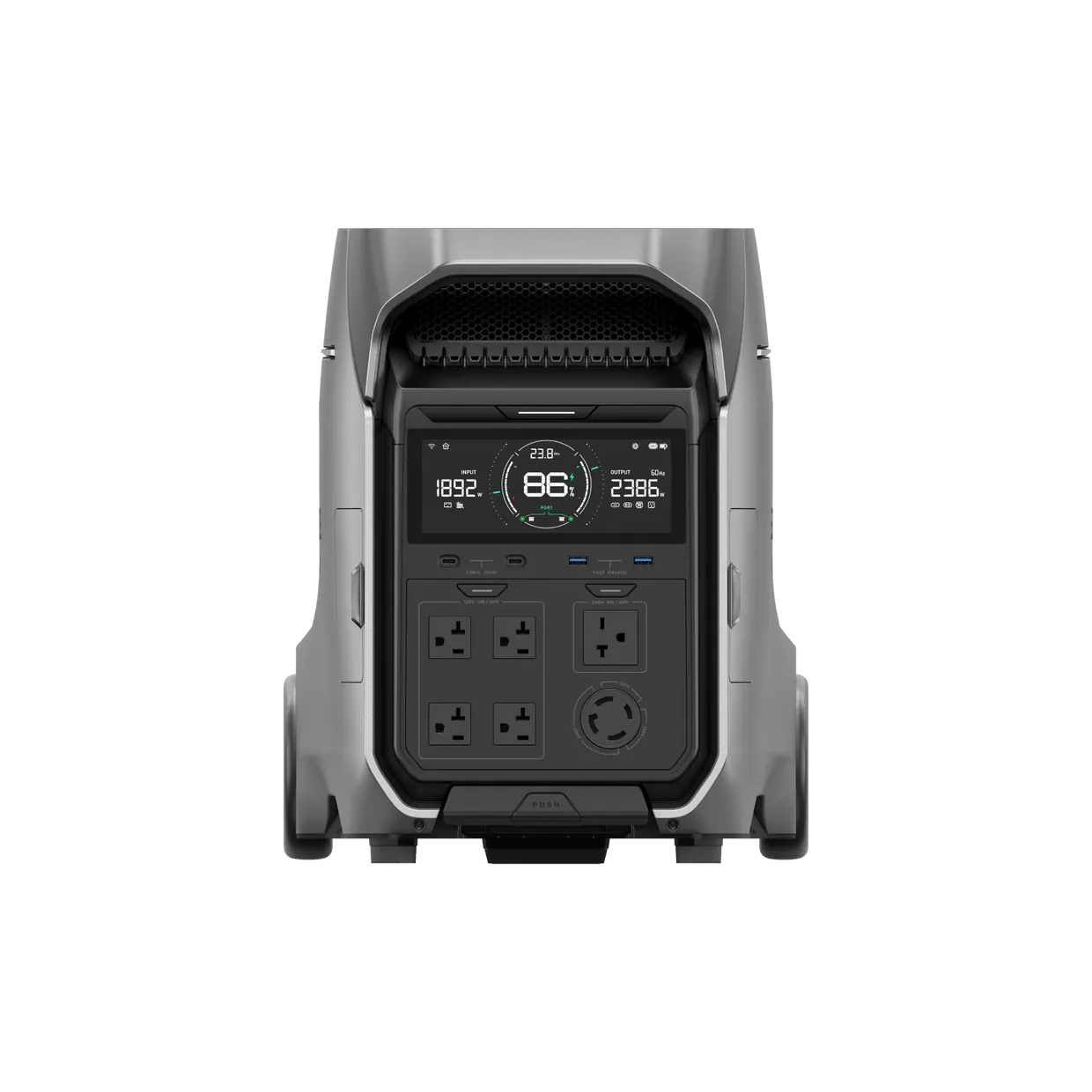
The EcoFlow DELTA Pro 3 is the strongest single pick in the cited set because it starts with 4096Wh. EcoFlow’s hurricane backup guidance and the 2026 device comparison both position it for multi-day outage planning, but the important word is planning: 4096Wh is a large portable battery, not magic. If a load actually pulls 200W continuously, the math is measured in hours, not a week. The 5–7 day use case only makes sense when the owner rotates loads, lets a refrigerator cycle instead of run continuously, charges small devices in batches, and recharges the station when solar or another safe source is available.[1][3]
That is why the DELTA Pro 3 belongs in homes where the outage plan includes a refrigerator, a medical device, phones, rechargeable lanterns, and maybe the router long enough to check whether internet service has returned. At $2,599 in the cited 2026 pricing, it is not the cheap answer. It is the answer that can make sense across two or three serious storm events when the alternative includes spoiled food, hotel nights, and emergency replacement shopping after everyone else had the same idea.[1][2]
The Anker SOLIX C800 with a 200W solar panel is the more compact, budget-aware version of the same idea. Its cited 768Wh capacity is not a refrigerator-for-a-week plan, but the 58-minute wall-charge claim matters before landfall: it lets someone top off quickly while grid power is still available. The solar panel gives it a second act after the storm, assuming safe outdoor placement and enough sun.[1]
The Bluetti AC180 sits in the middle with 1152Wh and the best watt-hour-per-dollar value in the cited shortlist at $469. It is the easier recommendation for renters, smaller homes, and buyers who need phones, lights, cameras, and intermittent small-appliance support more than whole-kitchen resilience.[1]
A UPS still has a place, but not the place people want it to have. HomeTechHacker’s smart-home UPS guidance puts typical 850–1000VA runtime estimates in the 45–90 minute range, with actual results varying by load, battery condition, and manufacturer.[4] That is useful for preventing a hub or router from crashing during a short flicker. It is not a hurricane power plan.
- Use a UPS for short interruptions, clean shutdowns, and keeping a hub alive long enough for automations to finish.
- Use a portable power station for the outage window that outlasts the UPS by days.
- Use solar as a recharge path, not as a guaranteed daily quota during storm weather.
Water shutoff: Phyn and Moen are different risk bets
A smart water shutoff has one job during storm season: close the valve before a leak becomes a room. The part to scrutinize is not whether the app has a nice usage chart. It is whether the system can still detect trouble, send a useful signal, and actuate when home Wi-Fi is down or unstable.
Phyn Plus 2nd Gen is the more outage-minded design in the cited comparison because it uses ultrasonic sensing with zero moving parts and offers an optional cellular add-on. The zero-moving-parts distinction matters after a storm, when pressure changes and debris are not imaginary edge cases. The cellular add-on matters because broadband is often one of the first “smart” assumptions to disappear.[1]
Moen Flo’s strongest evidence is different. Its 96% claims-reduction figure is a big number, and it deserves attention, but the boundary belongs in the same sentence: the figure comes from Moen + HSB insurer-published data. That is stronger than a vague manufacturer slogan, but it is not the same thing as an independently audited standard that predicts every installation. In the cited comparison, Moen Flo is also Wi-Fi-only, which means the protection plan should assume local valve behavior and app visibility are not the same thing during an outage.[1]
So the choice is not “which one wins?” It is which failure mode you are trying hardest to avoid. If cellular fallback and fewer mechanical sensing parts are the priority, Phyn gets the nod. If the insurer-published claims data carries more weight for your situation and you can live with the Wi-Fi dependency, Moen Flo remains a serious candidate.
Cellular cameras: a camera on dead Wi-Fi is just a witness you cannot call
Outdoor cameras are often sold as if the house will always have power, broadband, and a working router. That is fine on a calm Tuesday. It is not a storm plan. During a hurricane outage, the useful camera is the one that can keep its own power budget and send video without asking the dead modem for permission.
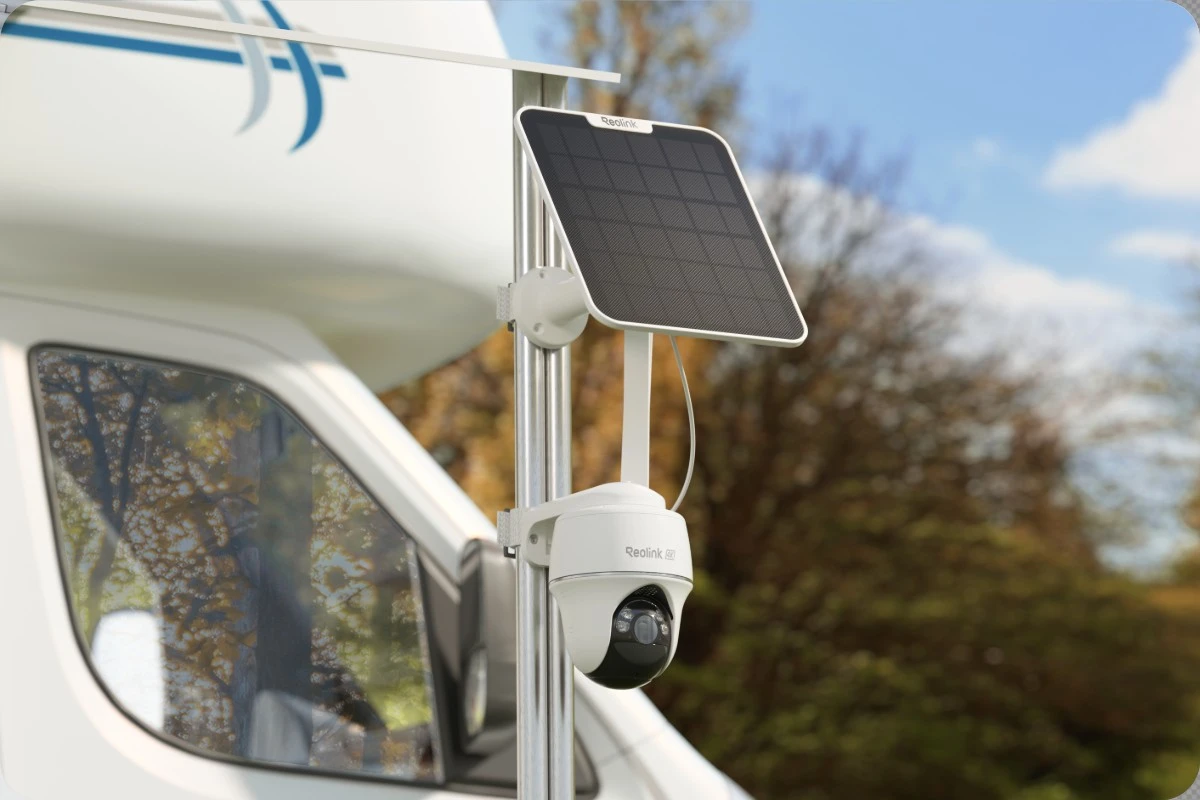
The Reolink Go PT Ultra is the cleaner storm-survival pick because native 4G LTE and solar power remove two home-infrastructure dependencies at once. SmartHomeExplorer gives it an 8.9/10 resilience score, which is useful as a comparison method but should not be mistaken for an official industry certification. The underlying design is the real reason it belongs here: it can watch a driveway, gate, shed, or dock without waiting for home broadband to return.[1]
The Eufy 4G LTE Cam S330 is the more ecosystem-friendly alternative in the cited data, with dual-mode auto-failover and HomeKit-native support. That makes it attractive for homes that want normal Wi-Fi operation most of the year but still need a cellular path when the ISP goes dark. The catch is the same as every cellular camera: confirm the carrier plan, the coverage at the actual mounting location, and the current data pricing before treating it as a safety device.[1]
Review-level storm scenarios cited in the 2026 comparison found LTE-and-solar setups continuing through multi-day Florida storm conditions where Wi-Fi cameras went offline quickly, but this article is not claiming first-party hands-on testing.[1] The practical takeaway is narrower and more useful: for hurricane monitoring, cellular is not a premium convenience. It is the fallback path.
Smoke and CO: the siren matters more than the notification
Smoke and carbon monoxide alarms are where smart-home thinking needs the least romance. The First Alert SC5 SMCO600NV recommendation rests on a simple fact pattern: a 10-year sealed lithium battery and a local 85dB alarm. Wirecutter’s 2026 smart smoke alarm coverage verifies the model in that category, and the storm-prep comparison highlights the same grid-independent life-safety function.[1][5]
If the internet is out, push notifications can pause. That is annoying. It is not the life-safety failure. The failure would be an alarm that cannot wake people in the house without a cloud service, and that is why the local siren and sealed battery carry the recommendation.
Where Starlink Mini fits — and where it does not
Starlink Mini is best treated as a restoration layer, not a fifth essential smart-home category. If you need cloud-dependent alerts, remote camera access, or app control after the ISP fails, satellite internet can bring part of that path back. The cited 2026 comparison lists Starlink Mini hardware around $199 and Standby Mode at $5/month as of May 2026, with the option to activate fuller service when a storm threatens and pause afterward.[1]
That pricing must be verified against Starlink’s current terms before you rely on it or purchase. Plan names, pause rules, and regional availability are service details, not device specs. A $5 standby line item that was reported in May is not something to bake into a hurricane budget later in the season without checking it again.
Compatibility still matters, but only after the fallback path is real
Matter, Thread, Zigbee, Z-Wave, HomeKit, Alexa, Google Home, Home Assistant, Hubitat, and Homey Pro can all matter in a normal smart home. During hurricane prep, they are secondary to a harsher question: what happens when the internet is gone?
Local protocols and local hubs can preserve automations inside the house, but they do not power a refrigerator, create a cellular path for a camera, or make a Wi-Fi-only leak alert leave the property. Ecosystem compatibility is worth checking after the device has passed the outage test.
Before you buy, verify these four things
- Runtime at realistic loads. Write down what the power station must run: refrigerator, medical device, phones, lights, router, camera charger. Do not shop from a headline watt-hour number alone.
- Fallback path when Wi-Fi is down. For water shutoff and cameras, confirm whether cellular is built in, optional, or absent. “Works with Alexa” does not answer that.
- Local safety function. Smoke/CO alarms and shutoff valves should still perform their core job without cloud service. Notifications are helpful; sirens and closed valves are better.
- Current service pricing. Cellular camera plans and satellite standby plans can change. Verify carrier coverage, activation rules, pause rules, and monthly costs at the time you buy.
For Q3 2026 hurricane prep, these are the four device categories worth buying for outage survival: a power station sized around real loads, a water shutoff with a credible fallback path, a cellular camera that does not depend entirely on home broadband, and a smoke/CO alarm whose local siren works without the cloud.
References
- Best Smart Home Devices for Hurricane Prep 2026: 4–7 Day Outage Ready — SmartHomeExplorer
- The Best Hurricane Preparedness Supplies and Strategies for 2026 — Wirecutter
- Battery Backup for Hurricanes: Home Power Outage Protection — EcoFlow
- How to Choose the Right UPS for a Smart Home — HomeTechHacker
- The 3 Best Smart Smoke Alarms of 2026 — Wirecutter
Corroborating context
For protocol background on why this failure happens, see Compatibility & Protocols.
Not currently linked to a known regression. Background on the underlying protocol lives in Compatibility & Protocols.