
Are Flock Safety Cameras Reliable for Home Security?
False stolen-vehicle alerts and data governance issues
Last updated
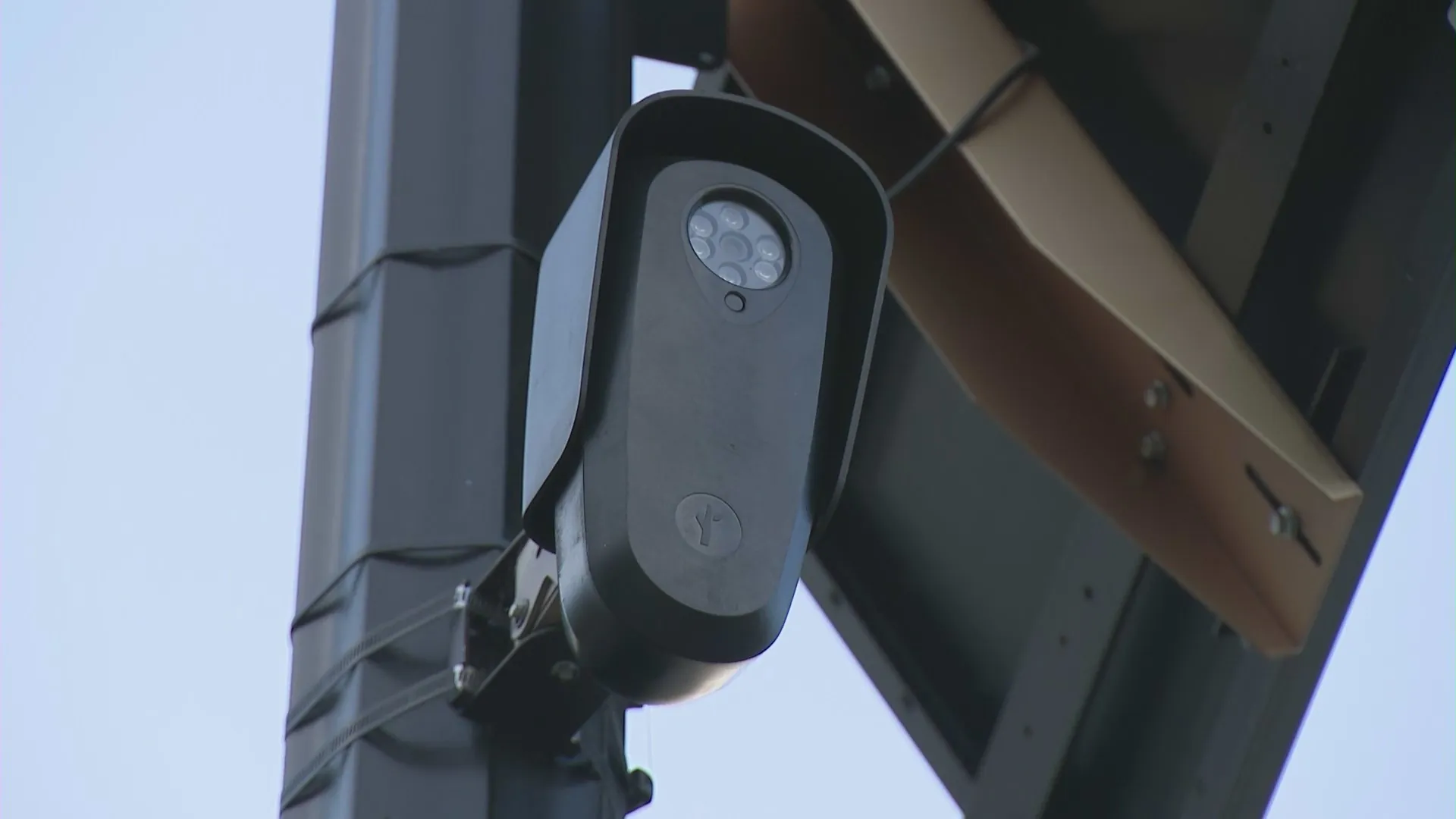
A neighborhood camera is only useful as a home security system if the alert can be trusted when it matters. That is the plain version of the Flock false-flag problem: when a plate reader says a passing car is stolen, will the next step be a helpful notification, or will an innocent driver be treated like a felony suspect?
That distinction matters in HOA rooms. Most boards are not buying a theory of surveillance. They are reacting to stolen cars, porch thefts, gate damage, and residents who want a visible deterrent at the subdivision entrance. Flock Safety’s pitch fits that moment neatly: cameras read license plates, compare them to hot lists, and help police locate vehicles tied to crimes. The trouble is that the most important reliability test is not whether the camera can capture many plates. It is whether the alerts that trigger police action are accurate enough to justify the risk they create.
The LAPD audit is the reliability warning HOAs should not wave away
The strongest evidence now available is not a viral anecdote. It is an LAPD inspector general audit reported in July 2026. In that review, Flock cameras generated 498 stolen-vehicle alerts during a two-month deployment window in August and September 2025. Of those alerts, 161 were false positives, a 32.3% false-positive rate for that specific stolen-vehicle alert category. LAPD subsequently canceled its Flock contract. [1]
That number should be handled carefully. It does not prove that Flock misreads every license plate one-third of the time. It does not measure every ordinary plate capture. It does not automatically transfer to every city, every camera model, every lighting condition, or every police department’s confidence setting. The audit measures stolen-vehicle alerts in one LAPD deployment over a specific period.
But that narrower finding is still severe. Stolen-vehicle alerts are exactly the type of alert most likely to send police toward a driver with urgency. A false positive in that category is not like a doorbell camera missing a raccoon. It can become a traffic stop, a drawn weapon, a child watching from the back seat, or a resident later asking why the camera their dues helped pay for put the wrong person in danger.
For an HOA, the audit changes the burden of proof. Before that contract is treated as ordinary neighborhood infrastructure, the vendor should be able to show current, independent, deployment-relevant accuracy evidence for the alerts that matter most. A slide that says cameras “help solve crime” is not enough when a documented deployment produced 161 false stolen-vehicle alerts out of 498.
A single wrong character can become an armed stop
The individual false-flag cases matter because they show the mechanism. They are not proof of how often Flock fails nationwide, and they should not be inflated into a universal rate. They do show why “almost right” is not good enough when an automated license plate reader is tied to stolen-car enforcement.
| Reliability failure | Documented case | Why it matters for an HOA decision |
|---|---|---|
| Single-character confusion | In Toledo, Brandon Upchurch was stopped after a camera read a “7” as a “2.” He was ordered out at gunpoint and mauled by a police dog. [2] | A plate that is one character off can still be treated as close enough to trigger a dangerous police response. |
| Zero-versus-letter mismatch | In Tennessee, the Herron family was stopped at gunpoint after “L0VEY” was read as “LOVEY.” A 3-year-old was in the car. [2] | Common plate ambiguities, such as zero and the letter O, can push ordinary families into felony-stop conditions. |
| Bad or partial hot-list data | In the Joel Feder case, “34 10 DTM” was entered as “34 DTM” in NCIC, causing Flock to flag vehicles containing those characters across multiple jurisdictions for days. [2] | The camera is only one part of the system; bad database entries can propagate across jurisdictions. |
| Another one-character misread | In Atherton, the Burkleo case involved an “H” being read as an “M.” [2] | The failure is not always a complete nonsense read. It may look close enough to invite overconfidence. |
The Joel Feder case is especially instructive for boards that assume the camera itself is the whole product. The false flag was not just an optical problem. A plate entered into the National Crime Information Center without the full character sequence caused vehicles with overlapping characters to be treated as possible matches across multiple jurisdictions. Once that bad entry was in the enforcement chain, the error traveled. [2]
That is the part homeowners rarely see in a vendor presentation. The camera at the subdivision entrance is connected to a larger process: plate image, machine read, hot-list comparison, agency settings, dispatch interpretation, officer judgment, and roadside tactics. Reliability has to survive that whole chain. If the system produces a plausible but wrong stolen-vehicle hit, the person who pays the price is not the HOA treasurer who approved the invoice.
The cases reported by Business Insider fit a broader ALPR failure pattern. The Institute for Justice has documented dozens of innocent motorists who were pulled over, detained at gunpoint, or jailed because of AI license plate camera errors. [3]
The reliability issue is not only optical recognition
Even if a board were satisfied with the plate-reading performance, it would still need to ask whether the physical device and the data system are dependable. Independent researchers demonstrated root-level access to a Flock camera through the front-panel button in under 30 seconds using standard Android platform tools. Malwarebytes also reported that Condor cameras had streamed live footage to the open internet without authentication. [4]
Flock’s response matters here, too. The company’s CISO said the findings either did not apply to properly installed systems or had been fixed. That may be true for some deployments. But for a board buying security, “trust us, it is fixed” is not the same thing as a public, current, independently repeatable audit. Flock also does not have a public bug-bounty program that would let outsiders continuously validate those fixes. [4]
A camera installed for neighborhood security should not create a new device-security problem at the entrance. If a pole-mounted system can be physically accessed, misconfigured, or exposed, the board has to account for that as part of the system’s reliability, not as a separate technical footnote.
Homeowners may not control where neighborhood plate data goes
The next reliability question is governance: can the HOA actually control the data collected at its entrances? In Mountain View, California, 29 of 30 Flock cameras reportedly had statewide lookup enabled without the city’s knowledge. The Electronic Frontier Foundation reported more than 600,000 unauthorized queries by more than 250 agencies over 12 months. [5]
That is not a character-recognition error. It is a control failure. Residents may believe their neighborhood bought a camera for local safety, while the collected plate data becomes searchable far outside the neighborhood purpose they understood.
The backlash has not been theoretical. TechTimes reported in June 2026 that Flock had crossed 100,000 cameras and that more than 53 municipalities had canceled, paused, not renewed, or removed contracts over unauthorized federal data access concerns. The exact cancellation count is messy because sources aggregate contract outcomes differently, but the direction of the dispute is clear: local buyers are discovering that data-sharing settings are not a minor administrative detail. [6]
This is where HOA contracts deserve much more scrutiny than they usually get. A subdivision camera can feel local because it is mounted on a familiar street. The network behind it is not necessarily local. If default access, interagency sharing, federal searches, retention settings, and audit logs are not spelled out before approval, the board is accepting a governance risk on behalf of every driver who passes that camera.
The cost makes this an ongoing trust decision
Flock is commonly sold on a lease model, not as a one-time hardware purchase. Fort Worth Report described the pricing as $2,500 per camera per year, with HOAs never owning the hardware. In north Fort Worth, HOAs paid $26,000 per year while cameras were placed on public property without permits. [7]
That recurring price matters because the HOA is not simply buying a pole-mounted gadget. It is buying a relationship with a vendor, a police workflow, a data-sharing architecture, maintenance assumptions, and whatever accuracy evidence the vendor is willing to provide year after year.
Trust is also affected by how a vendor behaves with public bodies. The ACLU has documented examples it says show Flock misleading city councils, police departments, and the public, including an Oshkosh heat-map claim that led to a contract being rescinded in one day and false claims about an ACLU partnership. [8]
None of that proves every Flock proposal is dishonest. It does mean an HOA board should not let a sales presentation substitute for written commitments, independent verification, and a policy review by someone who is not trying to close the contract.
The missing proof: residential crime reduction
A board can accept some risk if the security benefit is strong and well proven. The problem is that independent evidence for residential crime reduction is thin. EFF’s guide for homeowners associations concluded that available studies do not provide independent evidence that Flock cameras reduce residential crime. [9]
Anecdotes can still be real. A camera may help police recover a stolen car. It may give a detective a lead. It may make some residents feel safer at the entrance gate. But adoption is not effectiveness, and one useful investigation is not proof that the system is a dependable home security layer for the whole neighborhood.
For readers who want the broader smart-home and privacy context beyond reliability, see Flock Safety Camera Risks Every Smart Home Owner Should Know. The narrower question here is whether the system has earned the level of trust that HOAs tend to give to security infrastructure once it is installed.
What an HOA should require before approving Flock cameras
If a board is still considering Flock or any ALPR vendor, the approval standard should be specific. The vendor and any participating police agency should be able to answer these points in writing before residents are asked to fund the system:
- A current, independent accuracy audit for the exact alert categories the HOA is relying on, especially stolen-vehicle alerts.
- False-positive rates at the confidence thresholds that will actually be used by the local police department.
- A written rule that officers may not conduct a high-risk or gunpoint stop based solely on an ALPR hit without additional verification.
- A hot-list data-quality process that explains who enters plates, who reviews partial matches, and how errors are removed quickly.
- Explicit limits on data sharing, including whether federal agencies, out-of-state agencies, or neighboring jurisdictions can query neighborhood-collected plate data.
- Resident-facing audit logs or regular reports showing searches, shares, hits, false hits, and any corrective action.
- A physical and cybersecurity assessment that is not limited to the vendor’s own assurance.
- A termination clause that lets the HOA exit if accuracy, data sharing, permitting, or security commitments are violated.
The most important item is the police-response safeguard. A false alert is bad. A false alert followed by an armed stop is a different category of harm. No HOA should approve a system unless the downstream enforcement policy is part of the decision, not something left to sort out after installation.
Reliability verdict
Based on the evidence available in Q3 2026, Flock cameras do not currently deserve to be treated as a dependable home or HOA security layer without much stronger proof. The LAPD audit found a 32.3% false-positive rate in the stolen-vehicle alert category it reviewed. Reported cases show one-character and partial-match errors leading to gunpoint stops. Independent researchers have raised physical and data-security concerns. Municipal disputes show that data-sharing controls can fail in ways local buyers did not understand.
That is not a theatrical argument that no license plate reader can ever help an investigation. It is a practical judgment about trust. If a system can mislabel the wrong driver as a stolen-vehicle suspect, the HOA should demand independent accuracy proof, strict police-response limits, and explicit data-sharing controls before spending residents’ money on it.
If your board has already approved a contract and now needs a practical exit path, start with How to Cancel Your HOA's Flock Safety Contract.
References
- LAPD cancels Flock contract after cameras falsely flagged vehicles as stolen, San.com, July 2026
- Flock Safety's AI Cameras Misread Plates. Innocent People Pay., Business Insider, March 2026
- Dozens of innocent motorists have been pulled over, detained at gunpoint, or jailed due to AI license plate camera errors, Institute for Justice
- The backlash against Flock cameras is spreading, Malwarebytes, July 2026
- EFF’s Investigations Expose Flock Safety’s Surveillance Abuses: 2025 in Review, Electronic Frontier Foundation, December 2025
- Flock Safety Crosses 100,000 Cameras; 53 Cities Cancel Over Unauthorized Federal Data Access, TechTimes, June 29, 2026
- Surveillance company skirted regulations as it expanded across north Fort Worth HOAs, Fort Worth Report, October 8, 2024
- Flock Safety’s credibility lost as it repeatedly lies to city councils, police departments, and public across the country, ACLU
- Flock License Plate Reader for Homeowners Association: Safe? Problems?, Electronic Frontier Foundation, September 2020
Corroborating context
For protocol background on why this failure happens, see Compatibility & Protocols.
Not currently linked to a known regression. Background on the underlying protocol lives in Compatibility & Protocols.