If you searched for “vivint smart home security” and found Security Starter, Doorbell Security, HomeProtect, and HomeProtect Pro all floating around at once, the confusion is not your fault. Vivint’s current buying decision is best understood as a choice between two 2025-era paths: HomeProtect for monitored essentials, or HomeProtect Pro for the fuller smart security system with cameras, integrations, and the stronger control panel.
The short version: choose HomeProtect Pro if you already know you want Vivint cameras, smart-home integrations, and app-connected camera features. Choose HomeProtect only if you want the lowest monitored entry point now and would be comfortable upgrading later, because Vivint says the original HomeProtect equipment purchase can be credited toward a Pro upgrade.[1]
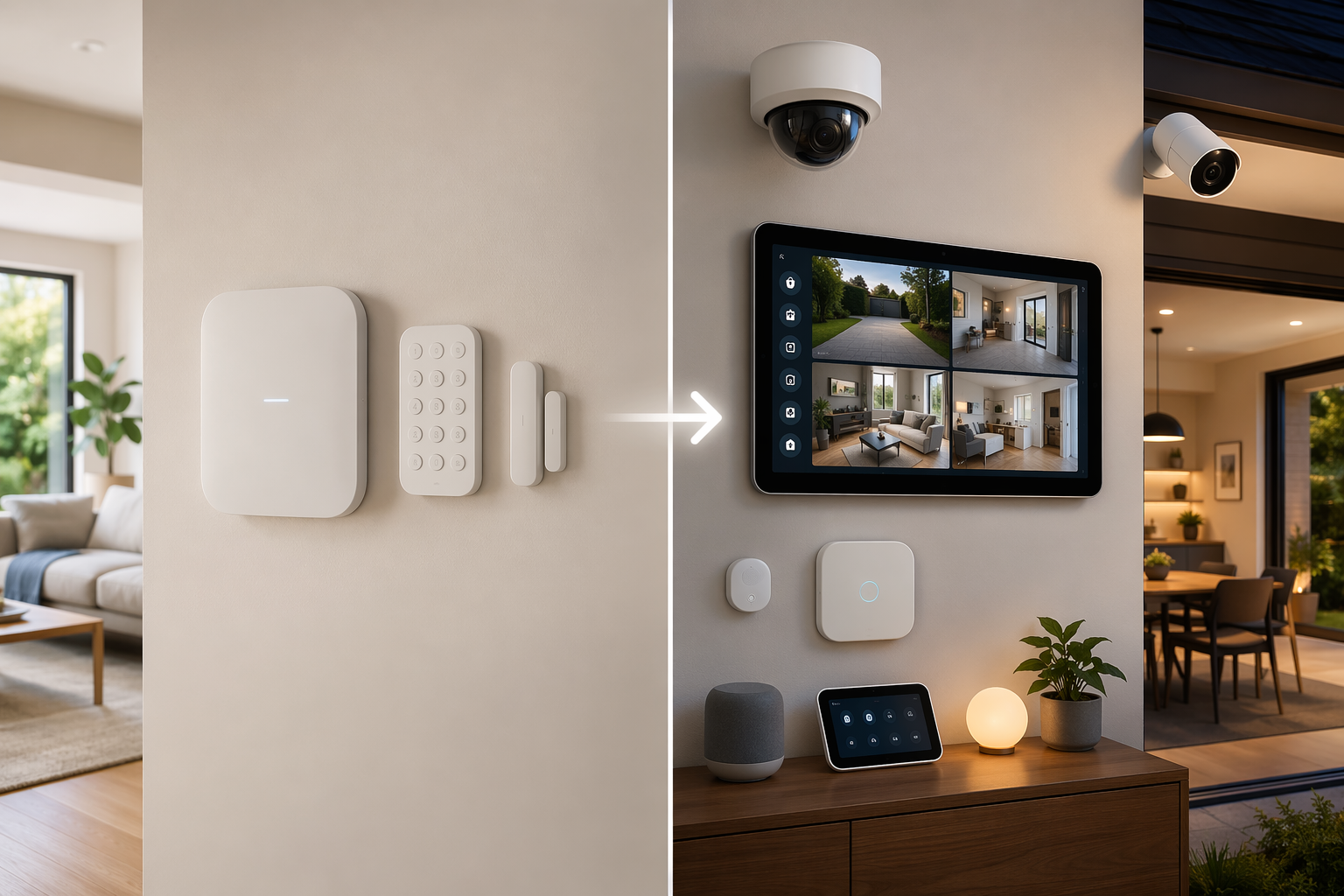
The package comparison that matters first
| Decision point | HomeProtect | HomeProtect Pro |
|---|---|---|
| Starting equipment cost | $199 with a 36-month contract, or $349 without contract plus installation, based on Security.org’s pricing page.[2] | $599.99 minimum equipment spend, based on SafeHome.org’s Vivint review.[3] |
| Installation | Professional installation; no-contract installation listed at $199.[2] | Professional installation included with the Pro package minimum, according to Vivint and third-party reviews.[1][3] |
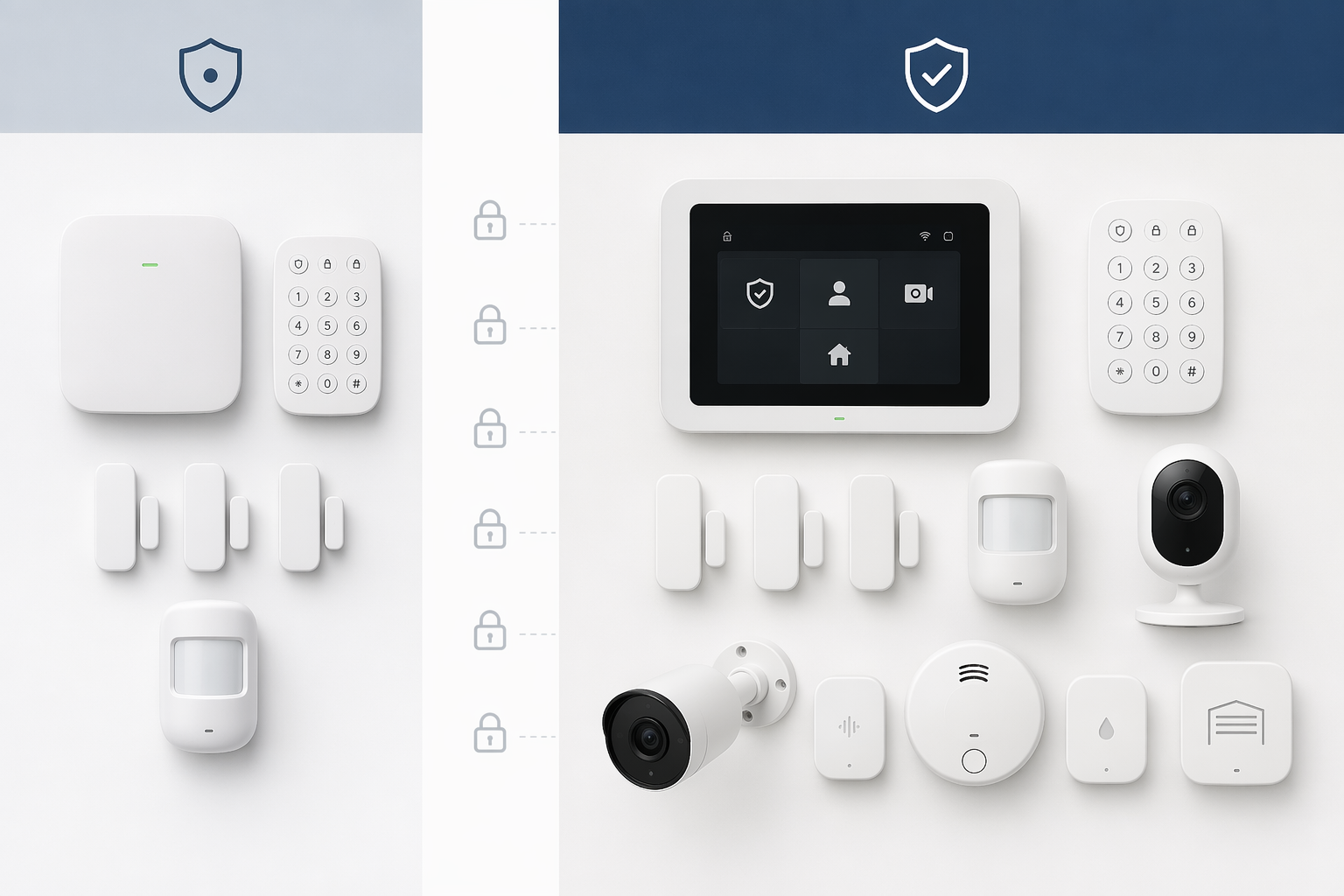
| Control hardware | Panel-less Security Hub plus long-range keypad.[2] | 7-inch Smart Hub Pro 2 touchscreen with 100 dB siren, 24-hour battery backup, cellular backup, Z-Wave, and Zigbee.[3] |
| Included security devices | Three door/window sensors, one motion detector, and yard sign.[2] | Four door/window sensors and one motion detector, with the Smart Hub Pro 2 as the center of the system.[1][3] |
| Monitoring | Professional monitoring required; Basic starts at $24.99 per month and is alarm-only with no camera support.[2] | Professional monitoring required; Premium starts at $49.99 per month and enables camera access, cloud storage, and Smart Deter features.[2] |
| Camera path | Does not support Vivint’s Indoor Camera Pro or Outdoor Camera Pro.[1][4] | Supports Vivint cameras, including Outdoor Camera Pro and advanced camera features when paired with Premium monitoring.[1][2] |
| Smart-home integrations | Does not support Philips Hue, MyQ, or Google Home integration.[1][4] | Supports broader integrations available to the Pro ecosystem, including Google Home, Philips Hue, and MyQ as listed in Vivint’s comparison materials.[1] |
| Upgrade position | Original equipment purchase can be credited toward Pro upgrade.[1] | Already starts in the full Vivint ecosystem. |
Those prices should be treated as starting figures, not a final invoice. Vivint does not publish a complete transparent equipment menu, and third-party pricing can shift with regional offers, promotions, camera count, cloud storage, financing, and the exact devices a salesperson adds to the quote.
HomeProtect is an alarm system, not a small version of Pro
HomeProtect makes sense when the job is simple: cover the main openings, add motion detection, route alarms to professional monitoring, and avoid a bigger equipment bill on day one. Its $199 contract price is the number that gets attention, but the more important detail is what that $199 is attached to: a 36-month monitoring commitment at a listed starting price of $24.99 per month.[2]
The equipment is intentionally spare. Security.org lists HomeProtect as a panel-less Security Hub, long-range keypad, three door/window sensors, one motion detector, and a yard sign.[2] That can be enough for a small home, a townhome, or a buyer who mainly wants monitored intrusion coverage without turning the house into a camera-and-automation project.
The catch is growth. HomeProtect does not simply become Pro one device at a time. Vivint’s comparison materials and GearBrain’s guide list several Pro-side devices and integrations that HomeProtect does not support, including Indoor Camera Pro, Outdoor Camera Pro, Spotlight Pro, glass break sensor, smoke/CO detector, water sensor, garage door controller, emergency pendant, Philips Hue, MyQ, and Google Home integration.[1][4]
That boundary is easy to miss during quote shopping. A first-time buyer may hear “you can add devices later” and assume the cheaper package is just a smaller cart. For HomeProtect, the better assumption is narrower: you are buying the essential monitored security lane, with an upgrade route if you later decide you wanted the full ecosystem after all.
HomeProtect Pro is where Vivint becomes a smart security ecosystem
HomeProtect Pro costs more up front because it is built around a different center of gravity. The package starts with a $599.99 minimum equipment spend and includes the Smart Hub Pro 2, four door/window sensors, and a motion detector, according to SafeHome.org and Vivint’s own comparison.[1][3]
The Smart Hub Pro 2 is the part that changes the daily experience. SafeHome.org describes it as a 7-inch touchscreen panel with a 100 dB siren, 24-hour battery backup, cellular backup, Z-Wave, and Zigbee, and called it “the most capable control panel in the residential security market.”[3] That is not just a nicer screen. It is the control layer that lets the rest of the Vivint system behave like one installed platform instead of a handful of separate accessories.
Pro is also the practical starting point for cameras. Vivint’s Outdoor Camera Pro line is where features such as Smart Deter and newer camera intelligence live, and Vivint announced an Outdoor Camera Pro Gen 3 with RADAR+AI detection in 2025.[5] Those capabilities are relevant only if the package and monitoring tier support the camera side of the system.
That is why the monitoring tier matters as much as the hardware. Security.org lists Basic monitoring at $24.99 per month for alarm-only service, while Premium starts at $49.99 per month and enables camera access, cloud storage, and Smart Deter features.[2] A buyer who wants outdoor video, indoor video, deterrence features, and saved clips should not price the system as if Basic monitoring will carry the experience.
The add-on limits are the real fork in the road
The most expensive mistake is not choosing fewer sensors on day one. It is choosing a package that cannot support the devices you already know you will want by month six.
- If you want exterior or indoor cameras, start with HomeProtect Pro.
- If you want glass break, smoke/CO, water detection, garage control, or an emergency pendant inside the Vivint system, HomeProtect is too narrow.[1][4]
- If you want Philips Hue, MyQ, or Google Home integration, HomeProtect Pro is the relevant lane.[1][4]
A cautious buyer does not need to buy every device on the first quote. In fact, trimming a quote can be sensible when a salesperson loads it with cameras and sensors for rooms you have not thought through. But the package tier should match the kind of system you eventually expect to own. HomeProtect is a monitored alarm starter. HomeProtect Pro is the Vivint smart home security platform.
Monitoring dependence changes the ownership math
Vivint is not a self-monitoring brand in the way many DIY buyers expect. Both HomeProtect and HomeProtect Pro require professional monitoring, and if the subscription lapses, the system becomes a local-only alarm with no app access. That point belongs near the top of the decision, not buried after the equipment list.
This is also where Vivint differs from the buyer who wants to install a few devices over a weekend and decide later whether to pay for service. Vivint is better suited to households that want installation, monitoring, cellular backup, and support handled for them. If you are still deciding between that model and a system you install and manage yourself, it is worth comparing the trade-offs in a DIY vs professional smart home security guide before signing a monitored contract.
For the right house, professional installation is a benefit. SafeHome.org’s installation guide says Vivint installation typically takes 2 to 3 hours, with free installation under contract and a $199 installation charge without contract.[6] That can be a fair trade for a larger home, a busy household, or anyone who does not want to spend a Saturday troubleshooting sensor placement and Wi-Fi camera behavior.
Contracts, cancellation, and moving deserve a kitchen-table review
The HomeProtect price looks small until it is paired with the standard 36-month term. SafeWise reports a 36-month standard contract, a 3-day cancellation window after installation, early termination penalties, and a relocation fee up to $298.[7] Those are not unusual details for a professionally installed monitored system, but they are exactly the details that should be reviewed before the technician arrives.
The 3-day cancellation window is especially unforgiving for buyers who are still hazy on package limits. If the system is installed on Monday and you realize later that HomeProtect will not support the cameras or garage controller you assumed you could add, the contract—not the product brochure—will determine your options.
Before signing, the cleanest move is to ask the sales rep to put four things in writing: the exact package name, every device included, the monitoring tier and monthly cost after promotions, and whether each future device you care about is compatible with that package. That will not eliminate every billing or service frustration, but it reduces the chance that a package-name shuffle becomes your problem later.
The upgrade credit keeps HomeProtect from being a dead end
HomeProtect would be much harder to recommend if it trapped the buyer in a permanently limited setup. The important relief valve is Vivint’s upgrade-credit policy: Vivint says the original HomeProtect equipment purchase can be credited toward a HomeProtect Pro upgrade.[1]
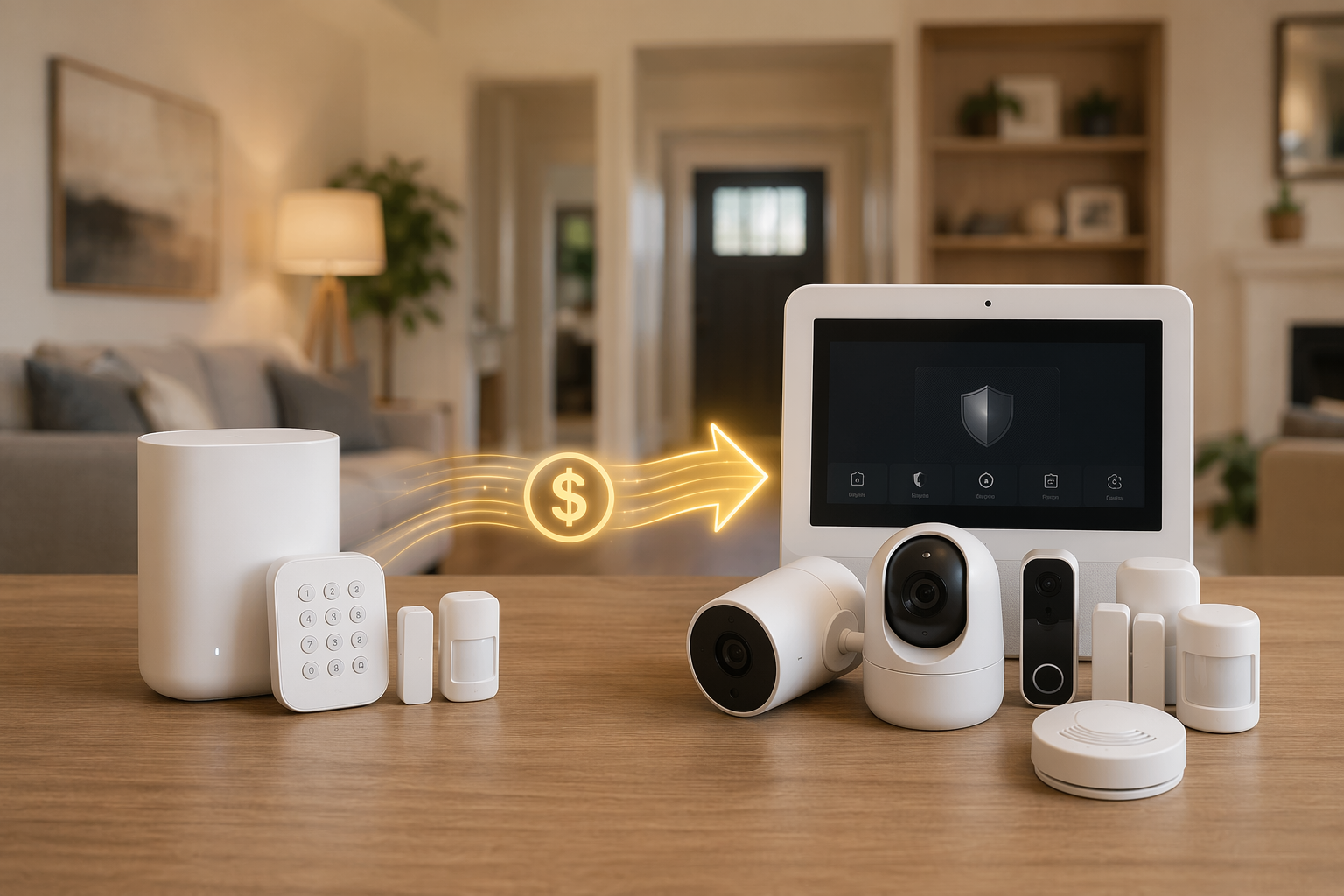
That policy changes the tone of the recommendation. HomeProtect is not the best value for someone who already wants cameras and integrations; starting there would add friction. But for someone who genuinely only wants monitored entry sensors and a motion detector today, the credit makes the lower tier a more defensible trial position.
The practical question is whether your uncertainty is about Vivint or about smart-home scope. If you are unsure whether you want a professionally monitored system at all, a 36-month Vivint contract is still a major commitment. If you are confident about Vivint monitoring but unsure whether you need the bigger camera-and-automation package, HomeProtect is easier to justify.
Which package fits which home?
HomeProtect fits a buyer who wants monitored basics, accepts the limited device path, and values the lower entry price more than touchscreen control, camera features, and smart-home integrations. It is strongest when the home is simple and the buyer is deliberately postponing the bigger system decision.
HomeProtect Pro fits the buyer who already pictures cameras at the front door or driveway, wants app-connected video, may add smart locks or garage control, and expects the Vivint system to become the house’s security command center. It costs more because it is the package where Vivint’s main smart-home promise actually lives.
So the decision is not really “cheap package versus expensive package.” It is monitored essentials versus the full Vivint ecosystem. Start with HomeProtect Pro if cameras, integrations, and the Smart Hub Pro 2 are part of the plan. Start with HomeProtect only if the essential alarm setup is enough for now and the equipment credit gives you the confidence to move up later.
References
- HomeProtect vs HomeProtect Pro, Vivint
- Vivint Smart Home Review 2026, Security.org
- Vivint Home Security Review 2026, SafeHome.org
- Vivint HomeProtect vs HomeProtect Pro Full Guide, GearBrain
- Vivint Announces New Outdoor Camera Pro Gen 3, Vivint Newsroom
- Vivint Installation Guide, SafeHome.org
- Vivint Home Security Review 2026, SafeWise
Policy Updates & Reader Notes
Privacy policies, monitoring plan prices, and security disclosures change frequently. Report new data retention terms, updated plan pricing, or new vulnerability disclosures below. For formal editorial corrections, use the contact page.
Comments
Join the discussion with an anonymous comment.