The paradox in one number
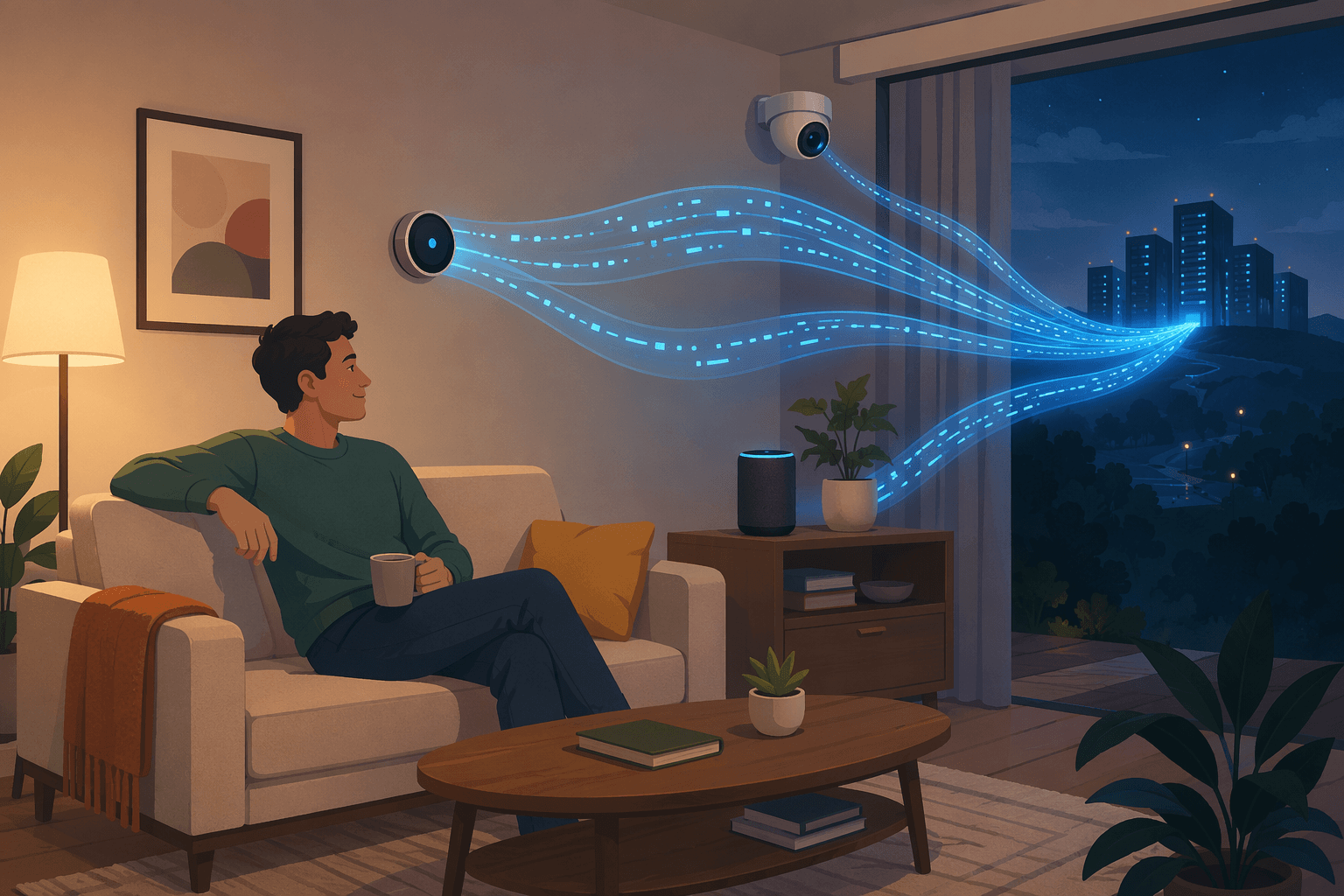
Last year, 61% of U.S. households had at least one security camera. That is 74.9 million homes, up from 52% in 2024, according to SafeHome.org’s February 2026 survey of 2,435 adults. The same survey found that 87% feel more peace of mind — but 37% worry about who might access their footage. That is the paradox.
I should note where those numbers come from. SafeHome.org is a home security review site; the survey is proprietary. The methodology is transparent — quota-sampled to Census benchmarks, ±2% margin of error — but the source has a commercial interest in the space. I am not discarding the data; I am noting where it comes from before letting it stand.
Now add the Copeland 2026 Smart Home Data Privacy Study (2,000 U.S. homeowners, sponsored by a maker of smart home controls). It found that 55% of smart thermostat owners have little to no understanding of how their device collects data. Only 8% research a manufacturer’s data privacy policy before buying — down from 13% in 2022. If anything, awareness should have risen. That it fell bothers me.
The fingerprint in your living room
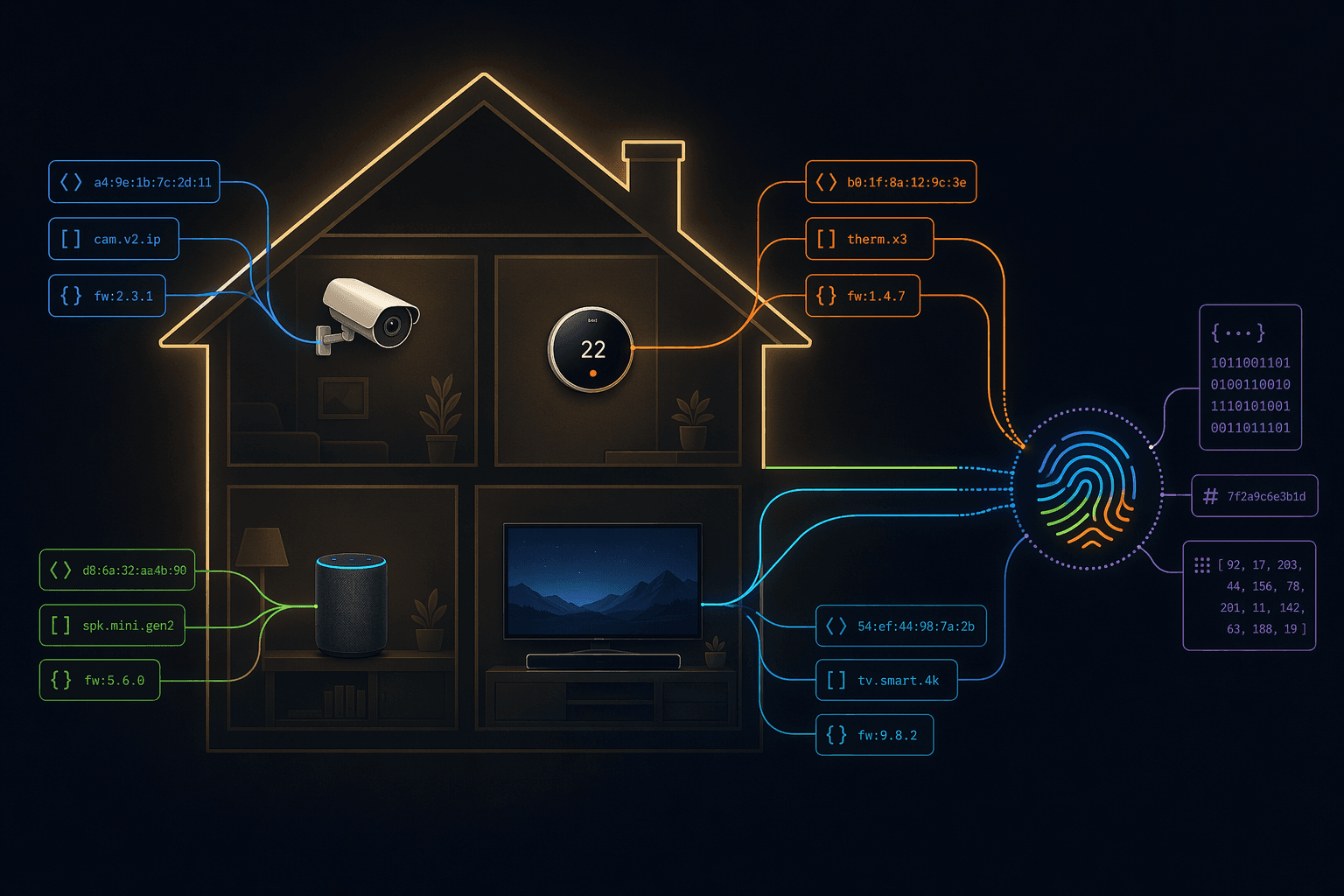
This is where the abstract worry becomes a concrete exposure. A 2023 study by NYU Tandon and IMDEA Networks (published at ACM IMC 2023) analyzed local network interactions between 93 IoT devices and mobile apps. It found that devices inadvertently expose three types of identifiers via local protocols (UPnP, mDNS): hardware address, UUID, and unique device name. When a smart home has all three, it can be fingerprinted with a uniqueness of one in 1.12 million smart homes. For comparison, the simplest browser fingerprinting technique yields one in 1,500.
The study also found that spyware apps and advertising companies can abuse UPnP to silently access sensitive information such as geolocation without user awareness. The research is from 2023 — no large-scale follow‑up has been published — and modern routers and firewalls can mitigate some of the exposure. But the mechanism is real, and it does not depend on a cloud breach. The risk is in your own local network.
What people say vs. what they do
The Copeland study reports that 70% of homeowners say they would replace their thermostat for a more privacy-focused option. That is an attitude — a stated intention. The SafeHome.org survey measured actual behavior: only 7% of users switched home security providers in the past three years, and only 12% of those switchers cited privacy or data concerns. The top reasons for choosing a system are ease of use (50%) and monthly cost (46%). Professional monitoring ranks 9th at 14%.
The two numbers — 70% and 7% — do not cancel each other out. They describe two different things: one is what people think they would do, the other is what they actually did. The gap tells me that privacy is a consideration, but not yet a decisive one. It becomes decisive only when the price is right and the effort is low. The industry has a transparency problem, but consumers are still voting with their convenience.
What you can actually control
The analysis above makes one thing clear: you cannot rely on reading privacy policies, because almost nobody does. You cannot rely on the industry voluntarily fixing the transparency gap, because the incentives are not aligned. What you can control are the physical and network choices you make today.
- Choose cameras with local or SD storage. Hybrid cloud‑and‑local (49% preference) gives you a backup without making the cloud your only copy. Pure local (19%) is the most private option.
- Use Ethernet instead of Wi‑Fi where possible. Wired connections avoid the wireless signals that are easier to intercept and that contribute to local‑network fingerprinting.
- Segment IoT devices on a separate VLAN or guest network. This prevents a compromised camera from reaching your laptop or phone. Many consumer routers support this in the settings.
- Prioritize vendors that have a track record of timely firmware updates and that offer end‑to‑end encryption for both storage and transmission. Check the Device Library for spec panels that include encryption status.
- Test your own network exposure. Free tools like Fing or the Wireshark packet capture can show what devices are broadcasting on your local network and what identifiers they expose.
Still, 32% of users remain on cloud‑only storage, creating a subscription‑dependent vulnerability. And the features that most excite users — AI detection, facial recognition — require even more data processing, which can deepen the privacy trade‑off. The industry is moving, but not always in the direction of privacy. For deeper dives on data retention policies and specific brand settings, see our Smart Home Camera Data Retention and Privacy Guide and the Ring Camera Privacy Settings Guide. (Ring was the most common brand, cited by 43% of users in the SafeHome survey.) For those considering a new system, our DIY Home Security System Buyer Guide 2026 compares the top options. And if you are wondering about the role of new protocols in privacy, the Matter and Thread article explains how interoperability might eventually improve privacy controls.
The paradox remains: 61% of households have cameras, most feel safer, and most also worry. The trust gap is real, but it is not a reason to abandon smart security. It is a reason to be deliberate about what you buy and how you connect it. The industry has a transparency problem. You have a network problem. One of them you can fix today.
Policy Updates & Reader Notes
Privacy policies, monitoring plan prices, and security disclosures change frequently. Report new data retention terms, updated plan pricing, or new vulnerability disclosures below. For formal editorial corrections, use the contact page.
Comments
Join the discussion with an anonymous comment.