The programmable thermostat arrived with a clean promise: set it once, and it would automatically turn your heating and cooling down when you didn't need them. The U.S. Department of Energy said you could save as much as 10% a year by pulling the temperature back 7–10°F for eight hours a day. That was the theory. In practice, people kept overriding it.
ENERGY STAR, the EPA's efficiency certification program, had been stamping programmable thermostats for years. Then in 2009 it quietly suspended the certification. The reason: field performance didn't match the lab claims. Homes with programmable thermostats were not saving the promised energy. The device itself was fine; the problem was the person standing in front of it.
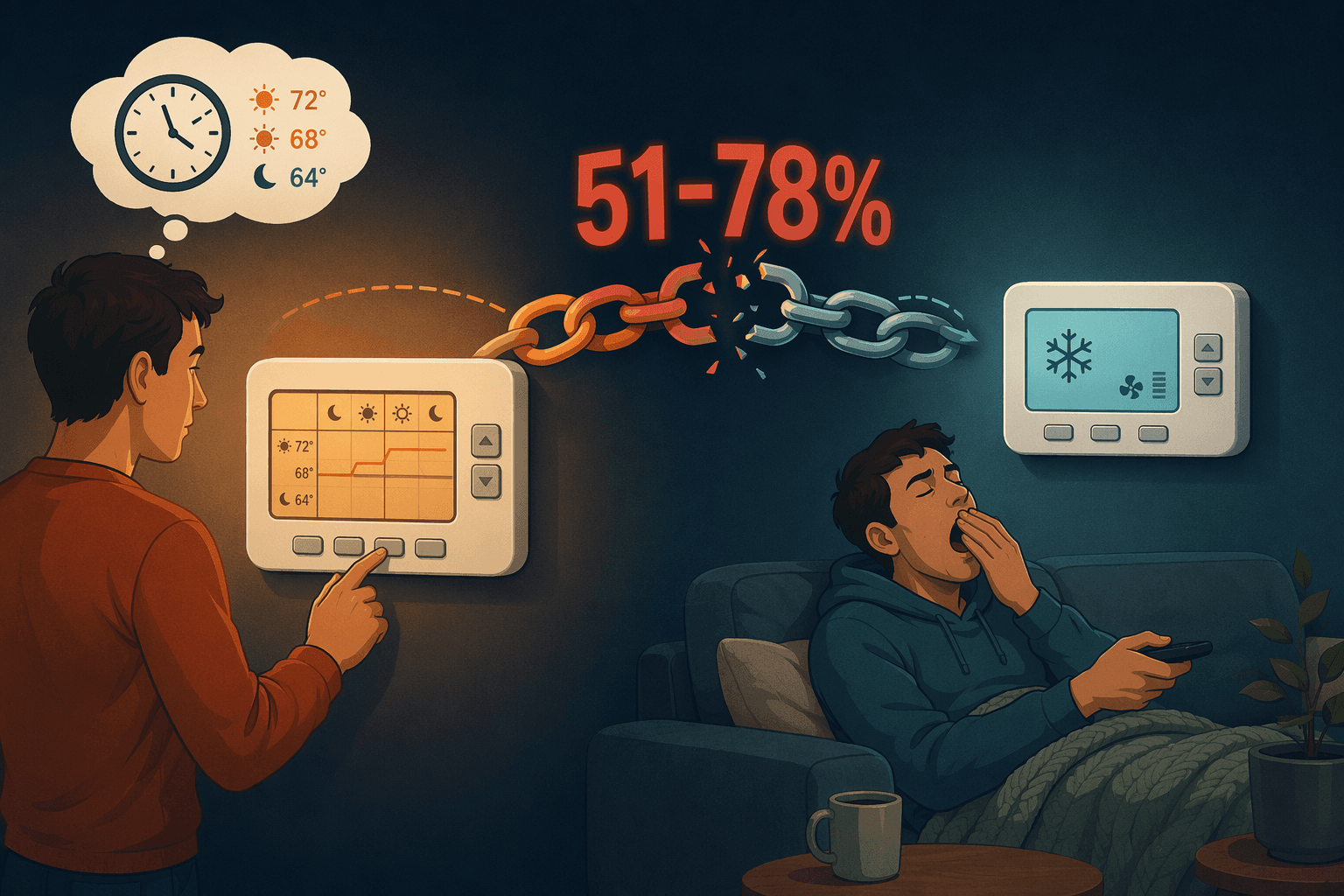
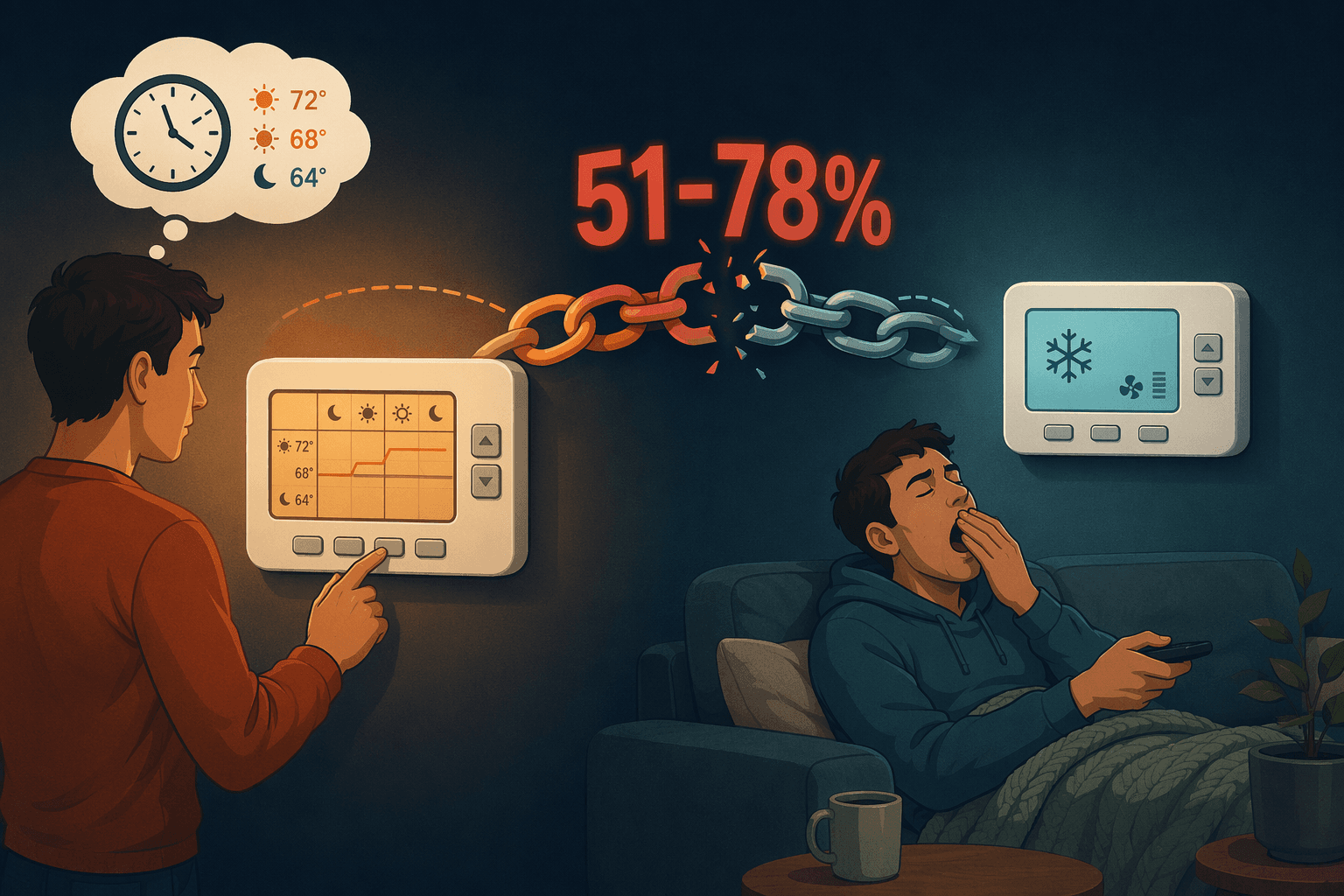
The American Council for an Energy-Efficient Economy (ACEEE), working with Cadmus, studied what actually happened in homes served by two Indiana utilities. They found that 51–78% of programmable thermostat users regularly overrode their programmed schedule. Another 29% of owners, according to a Consumer Reports survey, never even bothered to set a schedule in the first place. The same device that promised to save energy had become a glorified hold button. That is the core problem: the device works, the person does not.
What the Field Data Actually Shows
The ACEEE/Cadmus study is the cleanest head-to-head comparison I have seen. It put programmable and smart thermostats in real homes within the same utility territories and measured actual gas savings. The results: programmable units saved about 5% on gas heating. Smart thermostats saved between 12.5% and 16.1%. That is not a minor improvement. That is 2.5 to 3.2 times the savings.
I should note the limits. The study was done at two Indiana utilities. Climate, housing stock, and local energy prices vary. But the gap is so large that I find it hard to dismiss. The programmable's 5% is essentially the savings from a thermostat that is set and then largely ignored or overridden. The smart thermostat's 12.5–16.1% approaches what the DOE said was theoretically possible. That is what happens when automation closes the behavior gap.
Manufacturer claims are another story. Nest reports 12–15% savings; Ecobee claims up to 26%. Those are marketing numbers, not independent measurements. The table below separates what you can trust from what you should treat as directional.
| Thermostat Type | Real-World Gas Heating Savings | Source |
|---|---|---|
| Programmable | ~5% | ACEEE/Cadmus (two Indiana utilities) |
| Smart | 12.5%–16.1% | ACEEE/Cadmus |
| ENERGY STAR certified smart (all fuels) | ~8% | ENERGY STAR FAQ |
| Nest self-reported | 12–15% | Google Nest research (manufacturer claim) |
| Ecobee self-reported | up to 26% | Ecobee marketing |
If you already have a rock-solid routine and program your thermostat faithfully, a smart upgrade may add little. But for most households—the ones that override, forget, or never program—the smart thermostat solves a problem that the programmable never could: it does the discipline for you. That is the real 2–3x gain.
Data Updates
Know about updated rebate programs, changed subscription prices, or new ENERGY STAR certifications? Submit a note below to help keep this content current. For formal data corrections, use the contact page.
Comments
Join the discussion with an anonymous comment.