Why the 'Best' Thermostat Doesn't Exist
I have watched a friend open the box, remove the old thermostat, and stare at two wires. No C-wire, no power, no install. The glossy recommendation that led him to that model never mentioned it. That moment is more common than you'd think. Roughly half of US homes lack a C-wire, and that single missing wire stops more installations than any other factor. The real barrier to a smart thermostat isn't brand or price — it's compatibility with your specific home. So before you look at a single product, check your wall. Then check your system. Then check your privacy.
Do You Have a C-Wire?
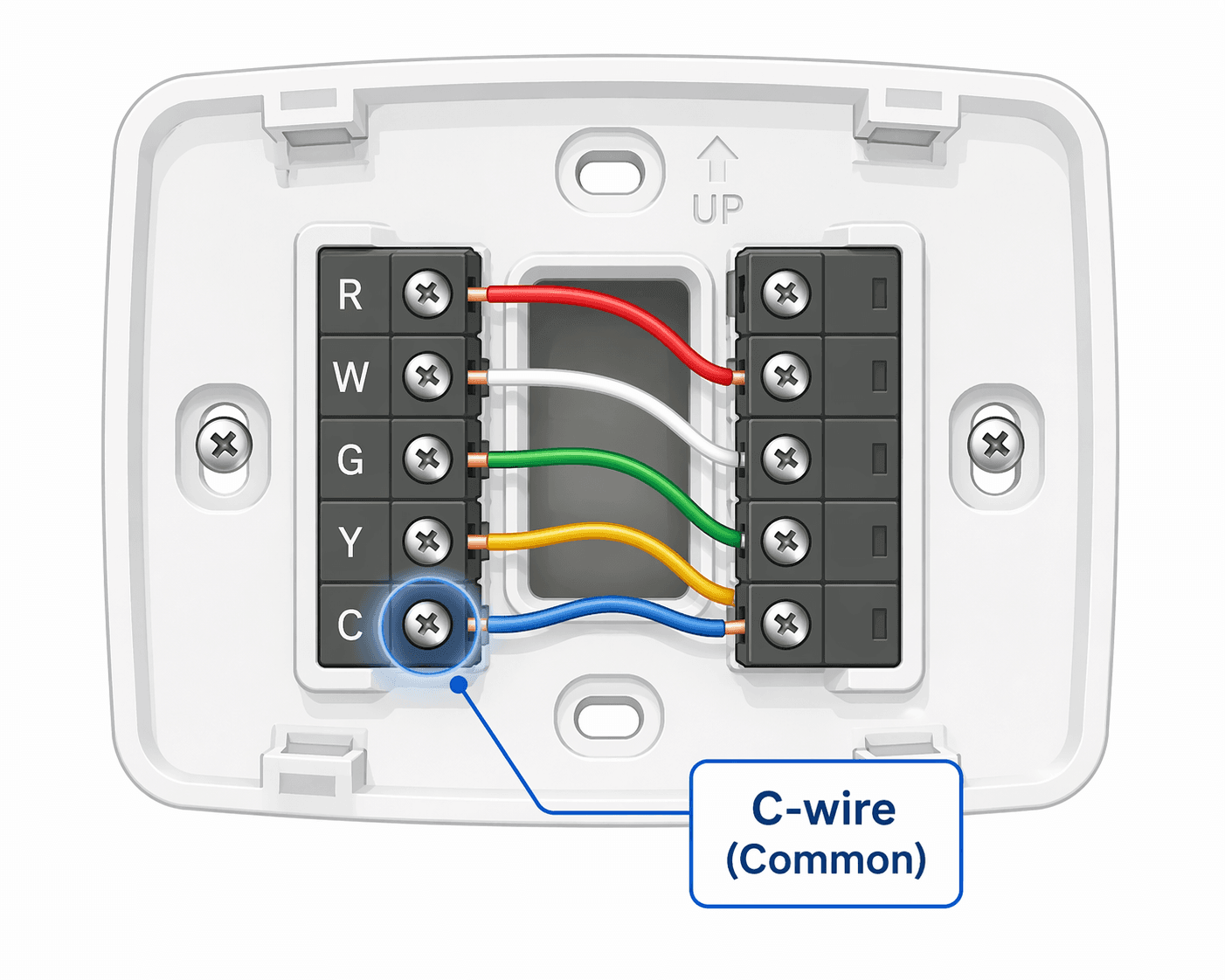
The C-wire (common wire) supplies constant 24-volt power to your thermostat. Without it, many smart thermostats won't turn on. The good news: you can check in thirty seconds. Pop off your current thermostat cover and look at the terminal labels. If you see a wire connected to a terminal labelled 'C', you're set. If not, you have options.
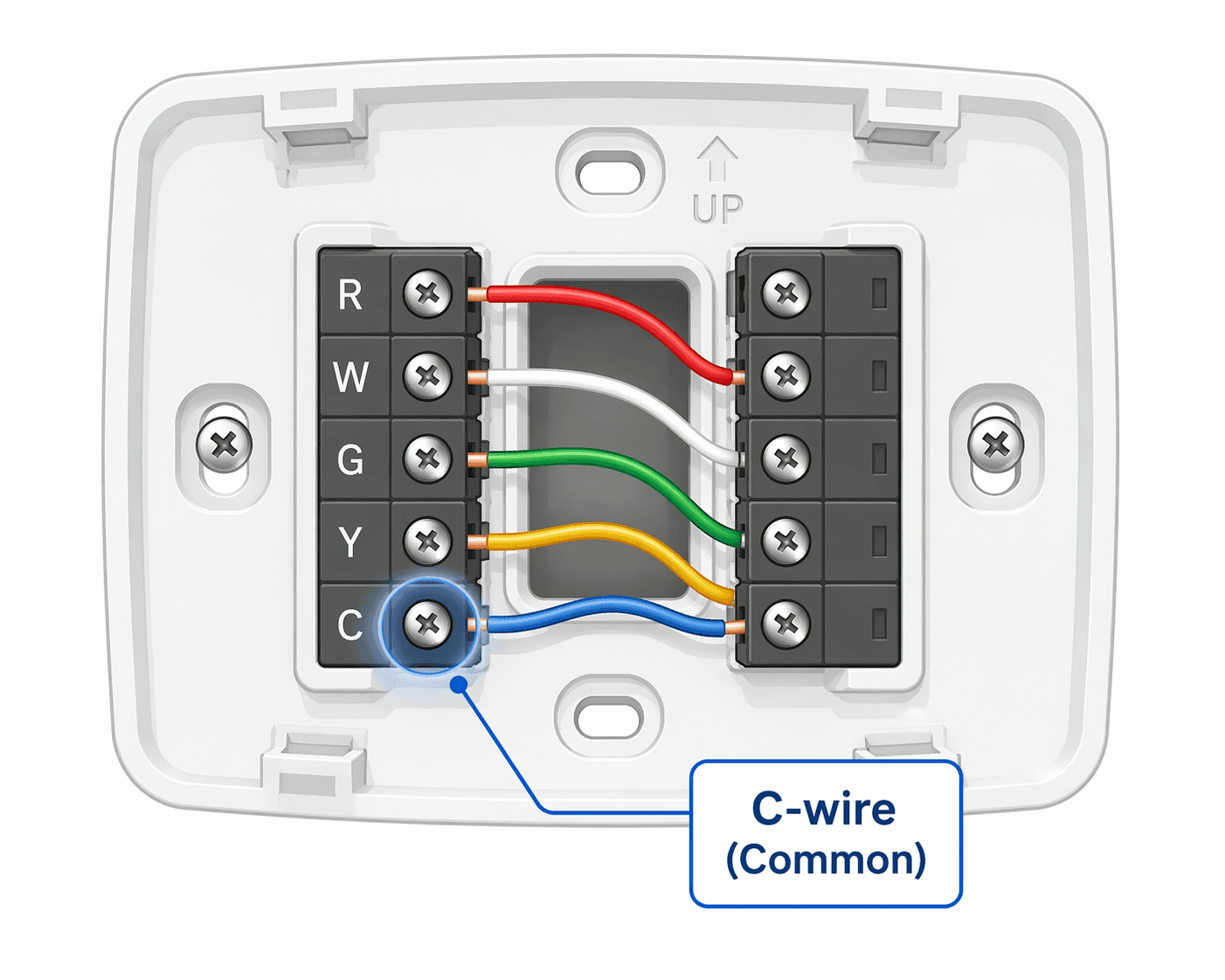
I've seen too many people assume they have a C-wire only to find nothing labeled C. Check now, not after unboxing. Three paths exist for homes without a C-wire:
- A thermostat that includes a power adapter kit (also called a Power Extender Kit or PEK). The Ecobee Premium and Ecobee3 Lite both include one — they work with 2-wire, 4-wire, and nearly every common setup.
- A thermostat that uses power stealing. The Google Nest Learning Thermostat does not require a C-wire in most cases, but even the manufacturer recommends using one if available. Power stealing can cause issues with some older HVAC systems.
- A battery-powered thermostat (fewer features, not recommended for homes with Wi-Fi required).
One model to watch: the Amazon Smart Thermostat requires a C-wire or a C-wire adapter (not included). If you have no C-wire and no adapter in the box, that model adds an unexpected expense and installation step.
If you need detailed wire-by-wire guidance, our Ecobee vs. Nest comparison covers installation details step by step.
What Heating and Cooling System Do You Have?
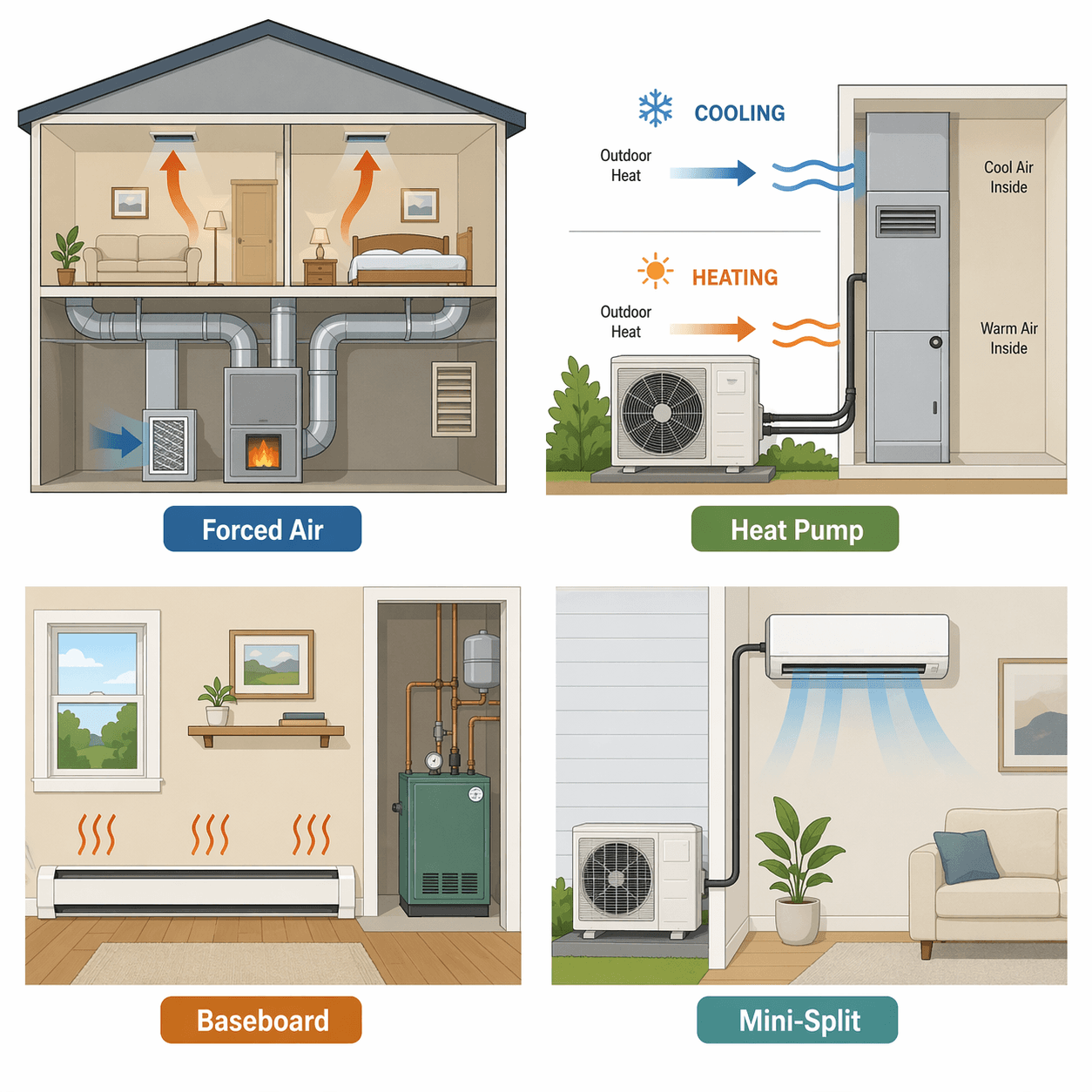
Forced-air furnaces are the most common and easiest to support. Almost every smart thermostat works with them. Heat pumps, however, are a different story. They use auxiliary electric resistance heat when it's very cold, and if the thermostat doesn't manage that transition properly, your energy bill can spike. I've had to explain to a neighbor why his new thermostat kept running the expensive electric strips in November. He didn't know about auxiliary heat lockout.
The key feature is called auxiliary heat lockout temperature. This setting tells the thermostat: don't turn on the expensive backup heat unless the outdoor temperature drops below a certain point. Without it, the system may default to aux heat too often. Ecobee's Heat Pump Balance and Nest's Heat Pump Balance both let you set this lockout. Not all thermostats offer it.
Baseboard electric heating and mini-split systems are less compatible. Many smart thermostats won't handle them at all unless you use a separate line-voltage controller. If you have baseboard heat, don't assume a standard thermostat will work. Check the specifications for "line voltage" compatibility specifically.
Do You Need Remote Sensors?
You've probably heard: "If you have a two-story home with a single HVAC zone, sensors are mandatory." That's an oversimplification. Remote sensors measure temperature in a different room and let the thermostat prioritize comfort there. They can help with the hot-upstairs problem, but they are not a substitute for zoning or fixing poor ductwork.
Sensors help when you have a specific room that's consistently too hot or too cold and a thermostat that can use presence data to shift focus. The Ecobee Smart Thermostat Premium comes with one remote sensor that detects both temperature and presence — it can prioritize the occupied room. Nest works with optional sensors sold separately. If your temperature complaints are mild, you may not need sensors at all. If you have a three-story house with one thermostat and every room is different, sensors won't fully solve the problem.
Remote sensors are oversold. If your house is just slightly uneven, you might be better off with a programmable schedule. The real question: Is the discomfort constant and tied to a specific area? If yes, sensors are worth it. If you just want to save energy, the thermostat's scheduling and geofencing will do more for you than a sensor.
Which Smart Home Ecosystem Are You Locking Into?
Every thermostat you buy ties you to a platform. That platform controls your automation routines, voice commands, and long-term feature updates. In 2026, the smart home ecosystem is more fragmented than ever — even with Matter.
Matter was supposed to fix this, but in 2026 it's more like a polite agreement to disagree. The reality is version fragmentation. SmartThings has already implemented Matter 1.5, while other platforms are stuck on version 1.2. A thermostat certified for Matter 1.2 may not support features introduced in 1.4, like Thread border router certification. Certification also doesn't guarantee full feature parity — some thermostats support Matter only as a peripheral, missing advanced features like energy reporting or schedule sync.
Your existing smart home setup matters more than any single thermostat feature. If you're already deep into Apple HomeKit, choose a thermostat that supports HomeKit natively (like Ecobee). If you use Alexa, the Amazon Smart Thermostat makes sense — but check C-wire first. If you haven't chosen a platform yet, our ecosystem comparison guide lays out the trade-offs. For platform-specific thermostat picks, see best thermostats for HomeKit, Alexa, and Google Home. And if you're considering HomeKit, read our HomeKit platform overview for hub requirements and privacy details.
How Much Privacy Are You Willing to Trade for Convenience?
This is the decision most guides skip. Smart thermostats collect occupancy data, temperature schedules, and sometimes presence information. Most of this data travels to the cloud. Some manufacturers process it locally; most don't. I'm asked about this more than any other feature now. People are reading the fine print. I wish more manufacturers made it easy to find.
A recent survey by Spanr found that seven in ten homeowners say they would switch brands for better data protection. That's a striking figure — but it comes from Spanr's own survey, not an independent study. Treat it as a directional indicator, not a verified fact. Still, the sentiment is real: privacy is becoming a purchase factor.
Which brands handle data best? Wirecutter calls Ecobee's privacy policy best-in-class, and the company still supports its earliest models — a rare commitment. Nest (Google) uses data for its learning algorithms and shares anonymized data across Google's ecosystem. Amazon's policy is tied to its broader advertising business. Read the fine print before you buy.
There's another layer: utility demand-response programs. Many utilities offer rebates of $50–$200 for ENERGY STAR certified thermostats, but those programs often require the utility to adjust your thermostat during peak events. The savings are real — our energy savings article has the full payback math — but the trade-off is that you give your utility a degree of control. Some homeowners are fine with that; others aren't.
A quick rule: if privacy is a top concern, prioritize a thermostat that offers local control options and a clear, short privacy policy. Ecobee is the current leader there.
Putting It All Together: A Decision Matrix for Your Home
No single thermostat fits every home. The table below maps common scenarios to models that work well. Use it as a starting point, not a final answer.
| Your Situation | C-Wire Needed? | Sensor Support | Ecosystem | Good Options |
|---|---|---|---|---|
| No C-wire, forced air, single zone | No (adapter included) | Yes, 1 included | Alexa / Google / HomeKit | Ecobee Premium, Ecobee3 Lite |
| No C-wire, heat pump, single zone | No (adapter included) | Yes | HomeKit / Alexa | Ecobee Premium (Heat Pump Balance) |
| C-wire present, forced air, two stories | Yes | Optional (add more) | Any | Nest Learning, Ecobee Premium |
| C-wire present, heat pump, multi-zone | Yes | Optional | Alexa (preferred) | Nest Learning (with Heat Pump Balance), Amazon Smart (check adapter) |
| No platform yet, privacy focused, forced air | Check first | Yes | HomeKit or independent | Ecobee Premium |
If you want product-level recommendations matched to specific use cases, our main buyer guide covers that. But the decision framework here will keep you from buying something that doesn't work in your home.
There is no universally best thermostat. There is only the one that works in your home, with your system, and that you trust with your data.
Data Updates
Know about updated rebate programs, changed subscription prices, or new ENERGY STAR certifications? Submit a note below to help keep this content current. For formal data corrections, use the contact page.
Comments
Join the discussion with an anonymous comment.