
Which Z-Wave Smart Switch Should You Buy in 2026?
Compare the top Z-Wave smart switches of 2026 — Leviton Decora Smart, Zooz 800LR, HomeSeer HS-WX300, and GE/Enbrighten — to find the best model for your home's wiring, feature needs, and budget. This article explains chip generation differences, neutral wire requirements, and 3-way wiring approaches to help you decide.
Last updated
The best Z-Wave smart switch in 2026 is the one that survives the first look inside the wall box. If you have neutral wires and want the strongest price-to-feature mix, start with the Zooz 800LR line. If you want the more polished mainstream pick with strong independent review signals, look at Leviton Decora Smart Z-Wave 800. If there is no neutral in the switch box, HomeSeer HS-WX300 is the main current recommendation. GE/Enbrighten is the practical retail choice when availability and straightforward installation matter. Inovelli Red remains interesting, but stock and older chip-generation limits keep it from being the default plan.
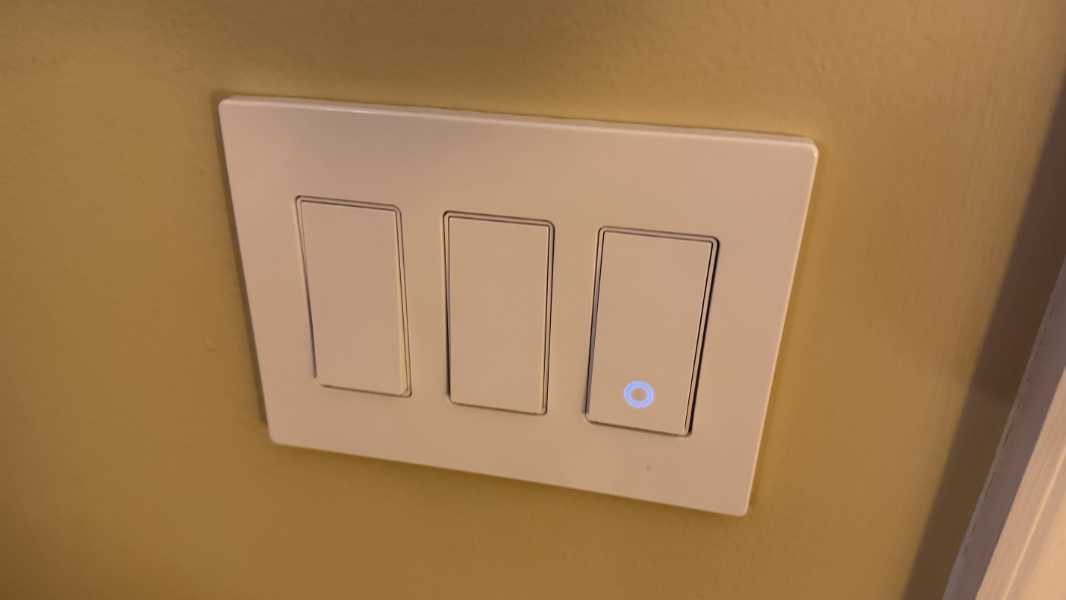
That answer assumes you already want Z-Wave rather than Wi-Fi, Zigbee, Thread, or a proprietary lighting system. A Z-Wave smart switch still needs a compatible hub, so the switch decision should sit next to the hub decision, not after it. If you are still choosing that foundation, start with a hub primer such as What Is a Smart Home Hub and Do You Need One? or a current Best Home Automation Hub 2026 comparison before buying ten wall controls.
The Short Buying Answer
| Your situation | Best first look | Why |
|---|---|---|
| Neutral wire, single-pole or flexible 3-way retrofit | Zooz 800LR ZEN71 or ZEN77 | Strong value, 800-series Long Range support, smart bulb mode, multi-tap scenes, and direct 3-way or 4-way wiring with existing dumb switches on supported models |
| Neutral wire, polished mainstream install | Leviton Decora Smart Z-Wave 800 ZW6HD or ZW15S | Top Z-Wave pick from Wirecutter and highly rated by PCWorld, with a cleaner mainstream product feel and OTA update support |
| No neutral in the switch box | HomeSeer HS-WX300 | No-neutral support, dimmer-or-switch configuration, and a customizable RGB notification strip |
| Need a switch today from a major retailer | GE/Enbrighten or UltraPro by Jasco | Broad retail availability, 800-series models, QuickFit/SimpleWire installation aids, and SmartStart QR pairing |
| Want RGB notifications and no-neutral capability, and can verify stock | Inovelli Red Series | Capable feature set, but older 500-series hardware and intermittent availability make it a caveated alternative |
Do not skip the wiring check. Most Z-Wave switches require a neutral wire, and older homes may not have neutrals in the switch box, especially homes built before the mid-1980s or before the 2011 NEC code update made neutral availability more common in new switch-box wiring.[1] If the box lacks neutral, a cheap neutral-required switch is not a bargain; it is a return label waiting to happen.
Why 800-Series Z-Wave Matters, Without Pretending Walls Disappear
The 800-series generation changes the 2026 buying calculation because it brings Z-Wave Long Range support into the switch aisle. The Z-Wave Long Range specification supports up to 1 mile in open-air conditions and a node scale above 2,000 devices, compared with 232 nodes on standard Z-Wave mesh; standard Z-Wave is commonly described around 50 feet per hop.[2] Those are specification and open-air figures, not a promise that a switch behind tile, metal boxes, and two floors of framing will behave like a radio test field.
The practical reason to prefer 800-series in a new purchase is simpler: it is the current platform with better forward-looking value. If the price difference is small, an 800-series switch is easier to justify than a 500- or 700-series model, especially when you are filling multiple boxes and expect the system to stay in place for years.
Z-Wave still has the ordinary protocol appeal that brought many buyers here in the first place. In North America it operates at 908.42 MHz, away from the 2.4 GHz band used by Wi-Fi, Zigbee, Bluetooth, and Thread; Z-Wave switches also act as repeaters in the mesh.[3] One source comparing low-power protocols lists Z-Wave active power consumption at about 2.5 mA versus about 40 mA for Zigbee, though that figure should be treated as a protocol-level comparison rather than a guarantee about every finished switch design.[4]
Start at the Wall Box
Before comparing scene controls, LED strips, or app screenshots, pull the existing switch out safely with the breaker off and identify the circuit. A single-pole switch controls one load from one location. A 3-way circuit controls the same light from two locations. A 4-way circuit adds a third or later control point. The buying consequences are immediate: some models reuse ordinary companion switches, some require branded add-ons, and no-neutral models can narrow the load types that behave well.
- If neutral is present and the circuit is single-pole, Zooz, Leviton, and GE/Enbrighten all stay in play.
- If neutral is present and the circuit is 3-way, compare the required companion wiring before comparing features.
- If neutral is absent, look first at HomeSeer HS-WX300 and verify LED-load compatibility instead of assuming every bulb will dim cleanly.
- If you are using smart bulbs, check for smart bulb mode or relay-disable behavior so the bulbs are not cut off from power.
This is where Zooz earns attention from people doing real retrofits. The Smart Cave calls Zooz the best price-to-performance Z-Wave switch option and highlights direct 3-way and 4-way support with existing dumb toggle switches on relevant 800LR models, without requiring an add-on switch.[5] That can save money, but the bigger win is avoiding a second device choice in every multi-way circuit.
Leviton’s Decora Smart Z-Wave 800 switches take a different route. They require neutral wiring and use a companion switch for 3-way setups, according to current reviews of the Z-Wave 800 line.[6] That is not a flaw if you want a matched Decora setup and predictable parts. It is a cost and planning item.
Zooz 800LR: Best Value for Feature-Heavy Neutral-Wire Installs
For most neutral-wire Z-Wave buyers, Zooz is the first switch I would price out. The ZEN71 and ZEN77 800LR family sits around $27–40 in current comparisons, supports Z-Wave Long Range, and includes the features that matter after installation: multi-tap scene triggers, smart bulb mode, night light mode, and the direct multi-way wiring behavior that keeps existing dumb switches useful in supported configurations.[5]
The value is not just the sticker price. A house with five 3-way circuits can turn companion-switch requirements into a small second shopping list. If a supported Zooz wiring method lets you keep the existing auxiliary toggles, the project becomes easier to budget and easier to explain to the next person who opens the wall plate.
The catch is hub support. A switch may expose multi-tap scenes, smart bulb mode, or advanced parameters, but your hub decides how gracefully you can configure them. Hubitat and Home Assistant users are often comfortable with device parameters and custom drivers. SmartThings users may need to check the current driver situation. Ring users should be especially careful, because security-focused Z-Wave hubs do not always expose every lighting feature.
Leviton Decora Smart Z-Wave 800: The Polished Pick
Leviton is the safer recommendation for buyers who care less about squeezing every feature per dollar and more about fit, finish, and review-backed reliability. Wirecutter names the Leviton Decora Smart Z-Wave 800 dimmer its top Z-Wave in-wall dimmer pick for 2026, while PCWorld rated the Leviton Decora Smart Z-Wave 800 switch 4.5 out of 5 and called it “the best Z-Wave switch” in a review that emphasized reliability and OTA update support.[6][7]
That praise needs its proper fence around it. Wirecutter’s overall smart-switch recommendation is not necessarily a Z-Wave model; Leviton is the Z-Wave pick for people choosing this protocol. PCWorld’s test experience also depends on the hub used in the review, so it is a strong signal about the device, not a guarantee that every Z-Wave hub will expose every function identically.[7]
Leviton makes the most sense when you want a mainstream electrical-brand feel, clean Decora aesthetics, and a current 800-series device without chasing niche features. The trade-off is that neutral wiring is required and 3-way installations use Leviton companion hardware rather than ordinary dumb switches.[6]
HomeSeer HS-WX300: When No Neutral Is the Constraint
No-neutral buyers should not pretend they are shopping the same shelf as everyone else. HomeSeer HS-WX300 is the main current Z-Wave recommendation in this group, with no-neutral capability, a switch-or-dimmer configuration, and a fully customizable 7-LED RGB notification strip.[8] HomeTechHacker’s recommendations also point to the HS-WX300 as a strong no-neutral smart-switch option.[9]
The HS-WX300 costs around $70 in current pricing references, so it is not the value pick if your wall box has neutral and you do not need its notification strip.[8] It is the pick when the old wiring is setting the rules. That distinction matters because no-neutral dimming can carry LED-load and minimum-load caveats; check the exact bulbs and fixture type before installing a row of them.
HomeSeer’s RGB strip is more than decoration if your hub can use it well. A hallway switch can show that the garage door is open, a basement light can warn about a leak sensor, or a bedroom switch can indicate alarm state. Those are useful only if the hub integration exposes the controls cleanly; otherwise, the premium becomes harder to defend.
GE/Enbrighten and UltraPro: Easy to Find, Easier to Standardize
GE/Enbrighten and UltraPro by Jasco are the Z-Wave switches I would not dismiss just because they are less exciting on a spec sheet. They are widely available at retailers including Lowe’s and Amazon, now include 800-series options, and use installation aids such as QuickFit/SimpleWire plus SmartStart QR pairing on supported models.[10] Current comparisons put pricing at roughly $30–70 depending on model and retailer.[5]
Availability becomes a real feature during a multi-room job. If one switch arrives broken, a color variant was ordered incorrectly, or a homeowner adds two more circuits after the first weekend, being able to buy matching hardware locally can keep the project moving. That still does not make GE/Enbrighten the automatic best Z-Wave smart switch; it makes it a sensible standardization choice when procurement matters as much as advanced parameters.
Where Inovelli Red Fits Now
Inovelli Red Series switches remain appealing because they combine no-neutral capability, RGB notifications, and energy monitoring.[5] The problem is not that the idea is weak. The problem is that the Red Series context points to older 500-series hardware and intermittent stock issues, so availability should be verified before it becomes the plan.[5]
If you already own Inovelli Red switches and they work well with your hub, there is no reason to panic-replace them for a chip-generation badge. If you are buying fresh in 2026, the 800-series alternatives deserve the first pass unless Inovelli’s specific feature mix solves a wiring or notification problem the others do not.
Feature Depth Only Counts If Your Hub Exposes It
Scene control, smart bulb mode, LED notifications, OTA updates, and parameter tuning are not equally available across every hub. The same switch can feel excellent on one platform and strangely limited on another. Before buying several units, check the current integration notes for SmartThings, Hubitat, Home Assistant, Ring, or your security-panel hub.
Multi-tap scene control is most useful where the switch is already a natural control point: double-tap the entry switch for an evening scene, triple-tap to shut down a floor, or hold to adjust a dimming group. Smart bulb mode matters when the wall switch controls smart bulbs that should remain powered. RGB notification strips matter when the switch is visible enough for a status signal to be noticed.
If you are still deciding between smart bulbs, switches, and larger lighting-control approaches, that is a separate design question. A guide such as Smart Bulbs, Switches, or a Whole-Home System is a better place to sort out the control philosophy before picking hardware.
Matter Is Not the Escape Hatch Yet
Matter should not drive this particular purchase unless you are choosing a different product category. As of Q2 2026, the narrow caveat is this: Z-Wave switches themselves are not Matter-compatible, and there is no widely available Z-Wave-to-Matter bridge to treat as a settled solution. Leviton has released Matter-compatible Wi-Fi switches alongside its Z-Wave line, but that does not make the Z-Wave models Matter devices.[7][11]
That does not make Z-Wave obsolete. It means the hub remains the translation layer for automations, voice assistants, dashboards, and routines. If Matter is the main requirement, compare Matter switches directly. If Z-Wave reliability, sub-GHz operation, and a mature hub ecosystem are the reasons you are here, buy the better Z-Wave switch and choose the hub carefully.
The Decision That Usually Holds Up
Buy Zooz 800LR if your boxes have neutral, your hub supports the features you want, and the combination of price, smart bulb mode, multi-tap scenes, and direct 3-way behavior fits the house. Buy Leviton Decora Smart Z-Wave 800 if you would rather pay for a polished, well-reviewed mainstream switch with OTA support and you are comfortable using companion switches where needed.
Buy HomeSeer HS-WX300 when no-neutral wiring is the actual constraint and the RGB notification strip is worth the premium. Buy GE/Enbrighten or UltraPro when retail availability, 800-series options, and straightforward installation aids are more important than squeezing out the deepest feature set. Treat Inovelli Red as a capable alternative only after verifying current stock and accepting the older 500-series context.
References
- The Smartest House Wiring Guide, The Smartest House
- Z-Wave Long Range Specification, Z-Wave Alliance
- Z-Wave vs Zigbee vs WiFi, HomeSeer
- Zigbee vs Z-Wave vs Matter, Aqara
- Best Z-Wave Switch, The Smart Cave
- The 4 Best In-Wall Smart Light Switches and Dimmers of 2026, Wirecutter
- Leviton Decora Smart Z-Wave 800 review, PCWorld
- HomeSeer HS-WX300, HomeSeer
- Smart Switch Recommendations, HomeTechHacker
- Jasco Z-Wave FAQ, Jasco
- Leviton Product Announcements, Leviton
Known issues with this device / protocol
Spec-version history
For active regressions on this protocol, see Update Watch.
No linked Update Watch entries yet.