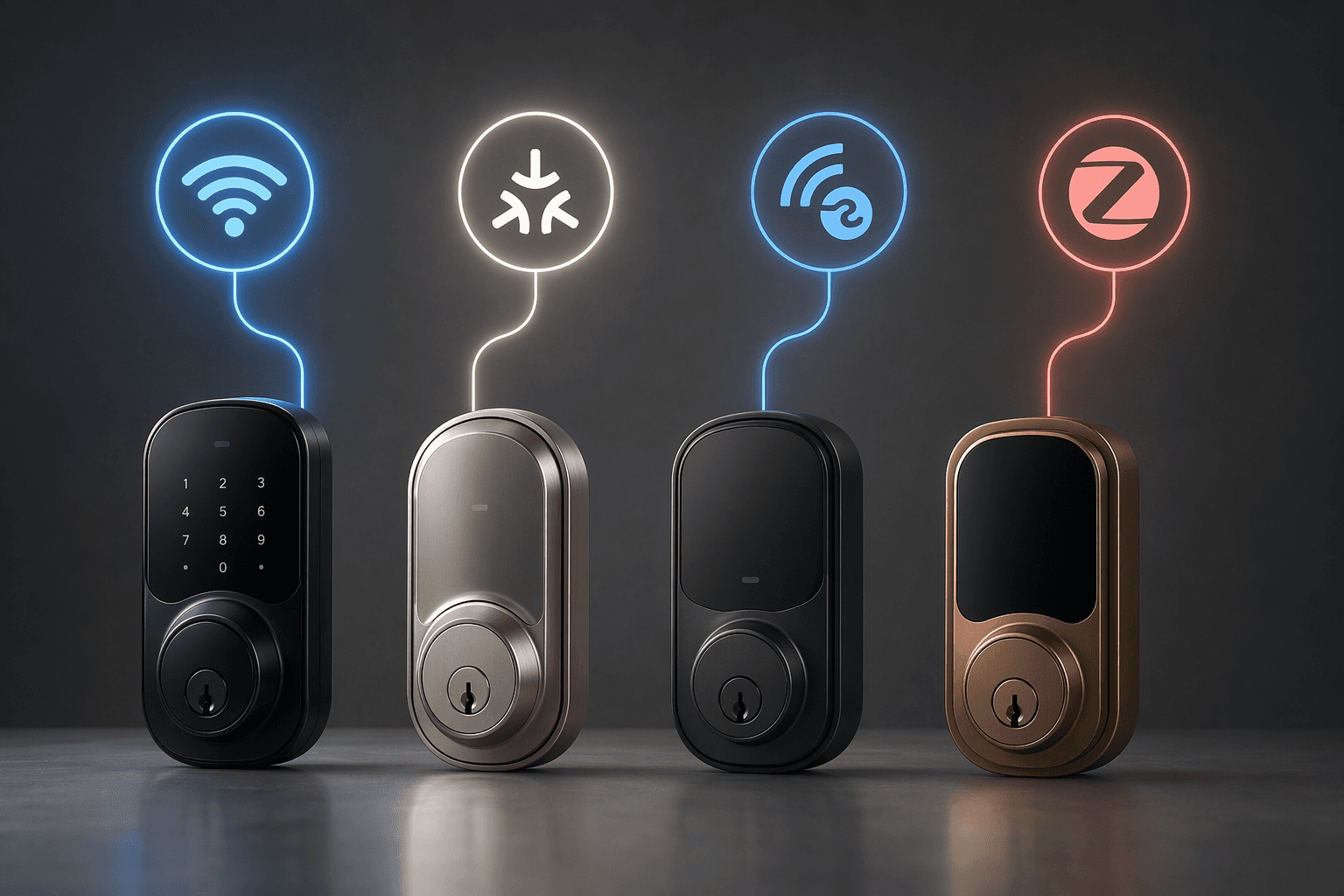
Kwikset smart locks look easier to choose than they are. The outside trim may be a keypad, a touchscreen, or a fingerprint reader, but the purchase decision usually turns on less visible questions: whether the lock talks directly to Wi-Fi, rides through Thread or a Z-Wave/Zigbee hub, keeps the features you expect after pairing, and has the physical grade you want on that particular door.
That is why the best starting point is not “Which Kwikset lock is newest?” It is: what does the door need to do six months from now, after the novelty is gone and someone is dealing with batteries, guests, tenants, keys, or a hub that already runs the rest of the home?
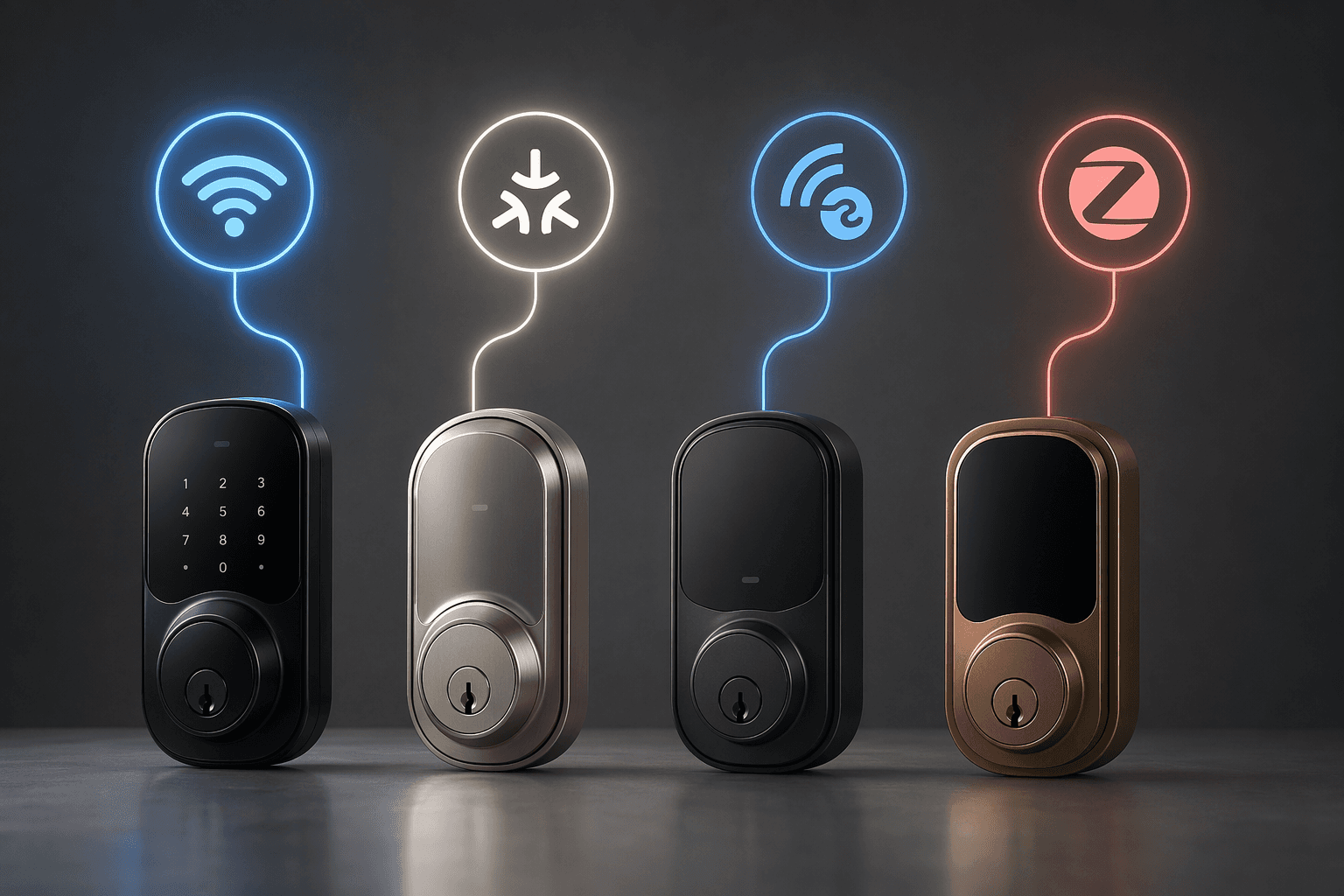
The 2026 Kwikset lineup, mapped by the decision that actually matters
Kwikset’s official comparison materials and current product pages show a lineup spread across Wi-Fi, Matter-over-Thread, Z-Wave, Zigbee, Bluetooth, and older platform-specific models, with Halo Select standing out because it can be run either as a Wi-Fi lock or as a Matter lock depending on setup.[1] Pricing also varies by finish and retailer, so the ranges below should be treated as shopping bands, not fixed street prices; Security.org’s 2026 pricing review compared averages across Amazon, Home Depot, and Lowe’s.[2]
| Kwikset model family | Primary connectivity | Typical 2026 price position | Security grade | Best fit |
|---|---|---|---|---|
| Halo Select / Halo Select Plus | Wi-Fi or Matter-over-Thread in one lock | Premium; Halo Select listed around $279 | Grade 1 | Homes that may move between hub-free Wi-Fi and Matter/Thread, if the feature trade-offs are acceptable |
| Aura Reach | Matter-over-Thread only | Lower than Halo Select; listed around $189 at launch | Grade 2 | Matter/Thread households that do not need direct Wi-Fi |
| Halo Wi-Fi / Halo Touch | Wi-Fi | Mid-to-premium depending on keypad, fingerprint, and finish | Varies by model; check exact SKU | Homes that want remote access without adding a separate smart-home hub |
| Home Connect | Z-Wave or Zigbee, depending on version | Usually below premium Wi-Fi/Matter models | Commonly Grade 2–3 depending on model | Existing Z-Wave or Zigbee homes where the hub is already the control point |
| SmartCode connected models | Z-Wave, Zigbee, or keypad-only variants depending on SKU | Broad value-to-midrange band | Commonly Grade 2–3 depending on model | Hub-centered homes, rental doors, and buyers who want a familiar keypad format |
| Obsidian | Connected versions vary; keyway-free touchscreen design | Mid-to-premium depending on availability | Security performance is its main reason to consider it | Security-first doors where resistance to physical attack matters more than having a conventional key |
| Aura Bluetooth | Bluetooth | Generally lower than Wi-Fi models | Check exact SKU | Local app control without remote access unless another system bridges the gap |
| Premis | Apple HomeKit-oriented older model | Availability-dependent | Check exact SKU | Apple households only if current availability and support still make sense |
| Kevo | Older Bluetooth/touch-to-open platform | Availability-dependent | Check exact SKU | Narrow replacement or legacy situations rather than a default new purchase |
For broader brand-level buying advice, the Kwikset Smart Lock Complete Buyer’s Guide is the companion piece. The map here is stricter: choose the lock by door, protocol, platform behavior, battery expectation, and grade before letting price break the tie.
Halo Select and Aura Reach are the key 2026 fork
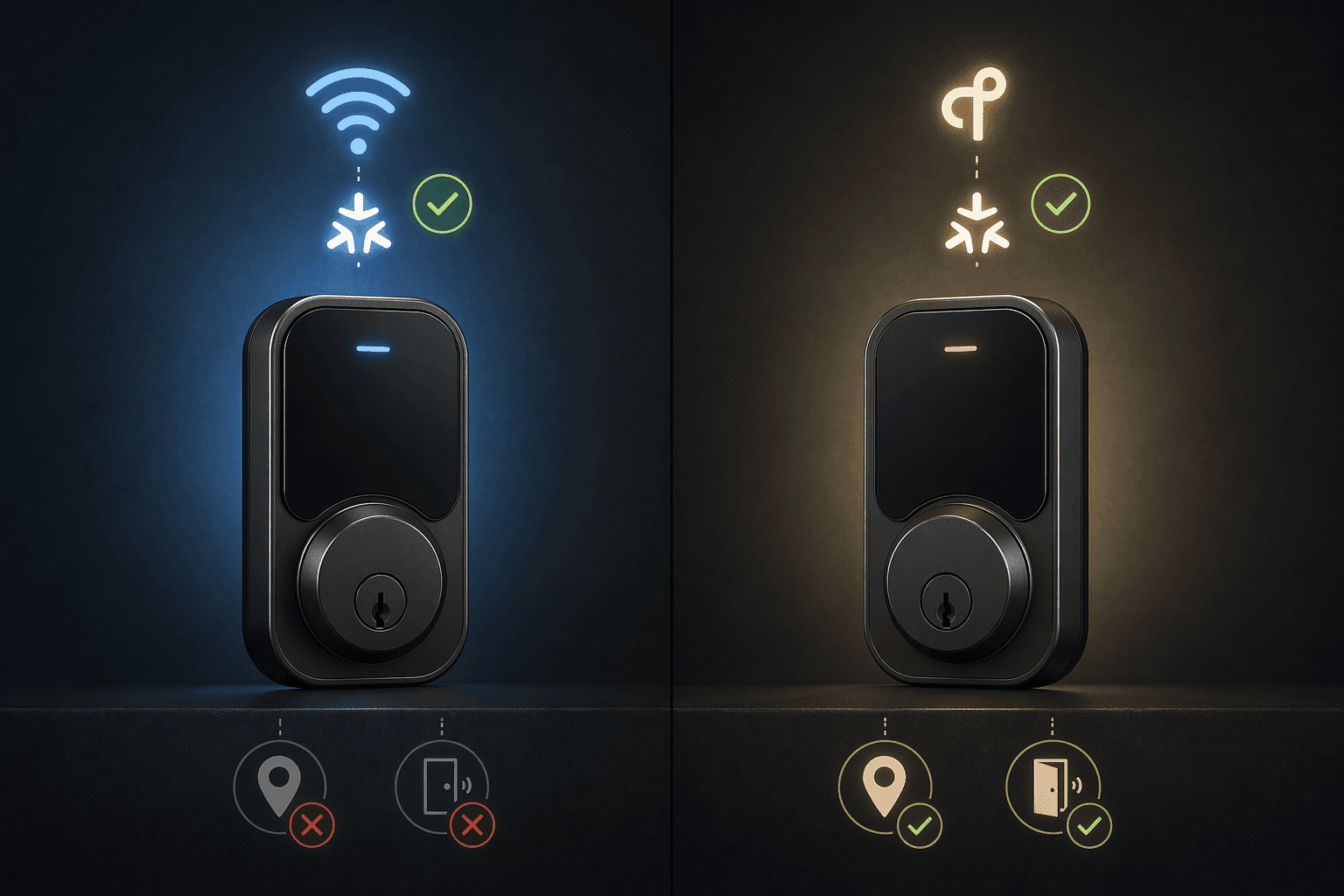
Halo Select is the most flexible Kwikset lock on paper because it gives one piece of hardware two setup paths: Wi-Fi for hub-free remote access, or Matter-over-Thread for a newer smart-home network. That flexibility is real, but it is not free. The Verge reported that Halo Select’s auto-unlock worked “flawlessly” in its review, while also noting that Matter mode removes that auto-unlock behavior; geofencing and the door sensor are also reported as disabled in Matter mode, so current firmware is worth verifying before purchase.[3]
That is not a small footnote for some households. If the lock is supposed to unlock when someone arrives with groceries, or if a routine depends on knowing whether the door is open or closed, Matter mode changes the operating plan. It may still be the better setup, but it should be chosen deliberately. For readers deciding whether Thread and Matter belong in the home at all, the Matter protocol explainer is the better place to sort out the platform layer before buying hardware.
Aura Reach points in the other direction. It was announced at CES in January 2026 as a lower-cost Matter-over-Thread option, listed around $189, but it drops Wi-Fi entirely.[3] For a home that already has the right Thread border router and wants Matter control without paying for Halo Select’s dual-connectivity option, that can be the cleaner purchase. For a household expecting the lock to connect directly to the router with no platform planning, it is the wrong shortcut.
Hub-free Wi-Fi is convenient, not automatically better
Wi-Fi models are attractive because they remove an extra box from the diagram. A Halo Wi-Fi lock can provide remote access without a Z-Wave hub, Zigbee hub, or Thread border router. That matters in apartments, small homes, and family installs where nobody wants to maintain a smart-home controller.
Available testing and model data support a broad expectation of roughly 3–6 months for Wi-Fi models and 12+ months for Z-Wave, Zigbee, and Matter-over-Thread models, while usage pattern and door alignment can move those numbers significantly. PCWorld’s Halo Select review made the difference visible in one test: about 50% battery drain in five weeks on Wi-Fi, compared with about 10% in three weeks on Thread.[4]
That PCWorld result should not be treated as a universal forecast for every door. A deadbolt that rubs the strike plate, a busy entry, cold weather, weak signal, or frequent remote commands can all change the outcome. But it is a useful warning against the lazy rule that hub-free equals better. Sometimes the hub, border router, or mesh network is the thing that lets the lock stop acting like a tiny Wi-Fi computer bolted to a door.
SafeWise’s coverage also notes user-reported installation times and battery complaints, which fits the same pattern: the lock itself may be fine, while the door prep, alignment, network, and daily traffic decide how pleasant it is to live with.[5] If the lock starts eating batteries or failing to throw the bolt, the Smart Lock Troubleshooting Guide is more useful than replacing the lock with another model that will fight the same misaligned door.
Physical security and app features are separate decisions
Connectivity does not tell you how the lock behaves under force. Consumer Reports’ lab-tested ratings found the Kwikset Obsidian to be the strongest against brute-force attack of any lock it tested, which is a different claim from saying it has the best app or the best platform support.[6]
This is where grade deserves more attention than it usually gets in smart-lock roundups. Available grade data identifies Halo Select as Grade 1, Aura Reach as Grade 2, and most SmartCode/Z-Wave models as Grade 2–3, while DoorsForPros’ analysis of Kwikset versus Schlage hardware grading reinforces that grading and hardware construction should be treated separately from smart features.[7]
For a front door exposed to street traffic, a Grade 1 lock like Halo Select or a brute-force standout like Obsidian may be worth prioritizing before platform elegance. For an interior garage-entry door, a side door inside a gated area, or a rental unit where the hub standard is already fixed, a Grade 2 or Grade 3 connected model may be acceptable if the rest of the system fits. The important part is not pretending that Matter, Wi-Fi, fingerprint access, or a nice app substitutes for the mechanical job of the deadbolt.
SmartKey matters most when keys keep changing hands
Kwikset’s SmartKey rekeying deserves more than a bullet in a feature list because it affects household operations. The practical cases are obvious: a tenant moves out, a dog walker stops working for the family, a contractor had a temporary key, or someone loses a key and nobody wants to swap the whole deadbolt.
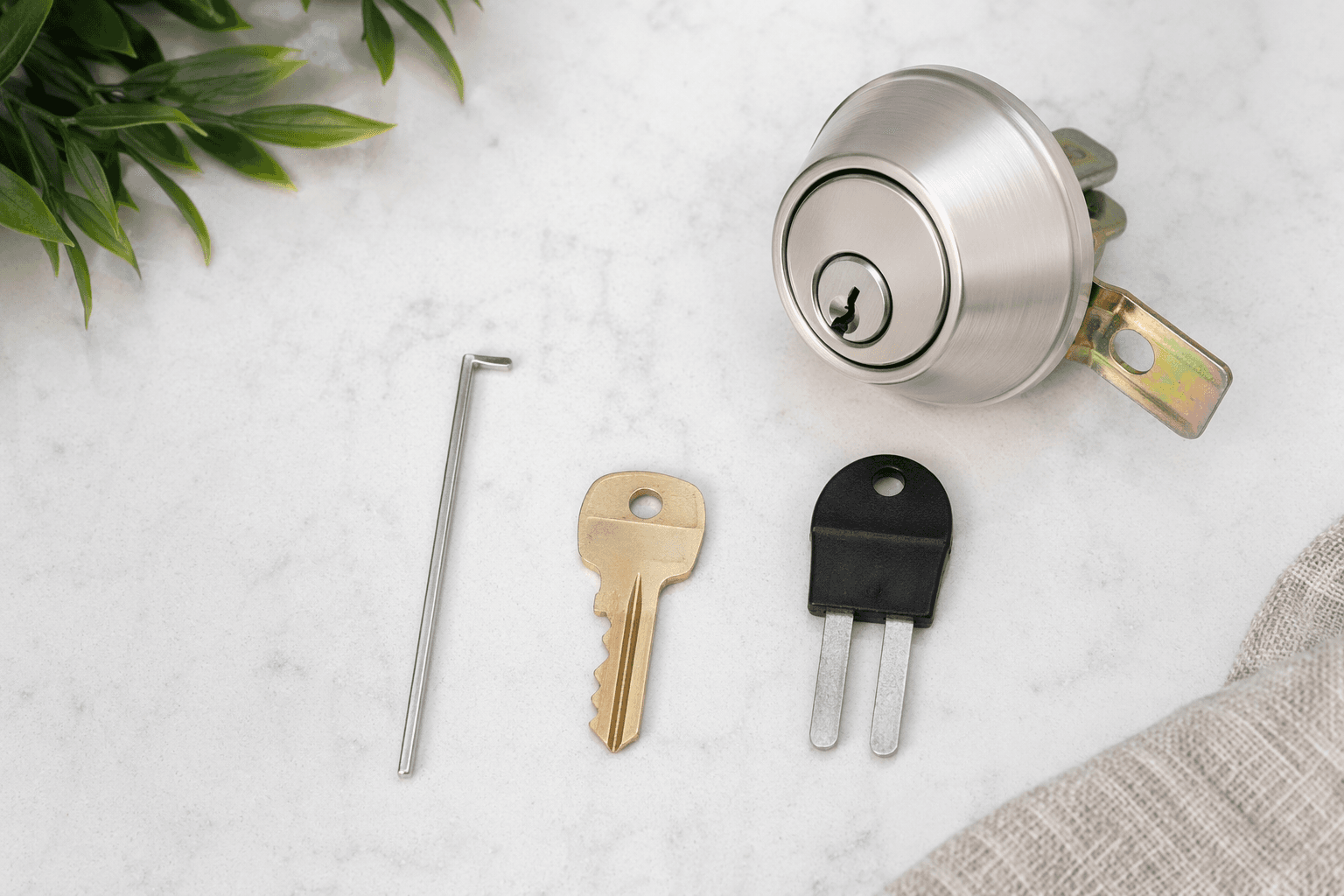
For a homeowner who never gives out physical keys, SmartKey may not move the decision much. For a small landlord or property manager, it can be the difference between a quick turnover task and a service call. It also gives Kwikset a real differentiator against brands where changing the physical key path is less convenient, provided the exact model and cylinder support the feature.
Which Kwikset smart lock fits which home?
For a Wi-Fi-only home
Start with Halo Wi-Fi, Halo Touch, or Halo Select in Wi-Fi mode. This is the straightforward path when there is no Z-Wave hub, no Zigbee hub, no Thread border router, and no interest in adding one. It is also the path most likely to make sense for a relative’s house where remote code management matters more than building a full smart-home system.
The caution is battery expectation. If the door is heavily used or slightly misaligned, Wi-Fi can become the maintenance cost. Before blaming the lock, check that the deadbolt extends freely by hand with the door closed, because a motor fighting the strike plate will punish any model.
For a Matter and Thread household
Choose between Halo Select and Aura Reach. Halo Select is the safer hardware hedge if the household may use Wi-Fi now and Matter later, or if the buyer wants Grade 1 hardware in this branch of the lineup. Aura Reach is the cleaner value choice when the home already has a suitable Thread setup and the buyer does not need the lock to connect directly over Wi-Fi.
The feature check is mandatory. If geofencing or auto-unlock routines are part of the plan, confirm which behaviors survive in the chosen mode. The Home Automation Recipes can help separate a lock feature from an automation that depends on a platform, a phone location rule, or a door sensor.
For an existing Z-Wave or Zigbee hub
Do not abandon a working hub just because a Wi-Fi model looks simpler on the shelf. Home Connect and compatible SmartCode variants are often the better fit when a Z-Wave or Zigbee controller already handles lights, sensors, automations, and user rules. The lock becomes one node in a system instead of another cloud-connected device with its own battery appetite.
The main work is SKU verification. Kwikset model names can look similar while the radio inside changes. A Z-Wave SmartCode and a Zigbee SmartCode are not interchangeable purchases, and neither should be assumed to work with a random hub without checking compatibility.
For renters, landlords, and small multifamily turnover
The first question is not the app; it is who will maintain access. A landlord or small property manager may care more about code changes, rekeying, battery replacement, and simple tenant instructions than about the newest protocol. SmartKey becomes important here, as does choosing a model whose connectivity matches whatever system will remain in place between occupants.
For a single rental with no hub, a Wi-Fi Halo model may be easiest to administer remotely if battery checks are part of the routine. For several units, hub-based SmartCode or Home Connect locks can be more predictable if the property already standardizes on Z-Wave or Zigbee. For a tenant buying a lock for personal use, permission, reversibility, and whether the original cylinder can be restored matter as much as the feature list.
For a security-first front door
Put grade and physical test performance before platform preference. Halo Select’s Grade 1 position makes it a serious candidate if its connectivity trade-offs fit. Obsidian belongs on the shortlist when keyway-free design and Consumer Reports’ brute-force result matter more than retaining a conventional key path.
That choice has a consequence: a keyway-free lock changes failure planning. The backup plan becomes battery access, alternate entry, or another door, not a spare key hidden with a neighbor. Some households will like that. Others should not discover it during the first dead battery warning.
Older Kwikset models: buy only for a specific reason
Premis and Kevo should be handled as availability-dependent options in 2026. They may still solve a narrow problem: replacing an existing unit, keeping a familiar Apple HomeKit-oriented setup alive, or matching a door where the buyer already understands the limitations. They are not where most new buyers should start.
If a retailer has old stock at an attractive price, check app support, platform compatibility, return policy, and whether the model still receives the kind of maintenance the household expects. A discontinued or fading platform can turn a discount into a future replacement project.
Price should break ties, not create the shortlist
A cheaper Kwikset lock can be the right lock when it matches the system already in the home. A more expensive one can be wasteful if its best features disappear in the mode the buyer plans to use. That is the trap with a lineup this broad: the model names are familiar enough to feel interchangeable, while the radios, grades, and feature behavior are not.
For cross-brand context before committing to Kwikset, compare the finalists against the Best Smart Locks for Home in 2026. Within Kwikset, the matching rule is simpler: choose Halo Select only if its dual-connectivity flexibility matters and the disabled Matter-mode features are acceptable; choose Aura Reach if affordable Matter-over-Thread and battery expectations matter more than Wi-Fi; choose Home Connect or SmartCode variants when an existing Z-Wave or Zigbee hub is the center of the home; consider Obsidian when physical attack resistance carries more weight than conventional key access; and treat price as the final filter after protocol, platform, battery expectations, security grade, and daily behavior are matched.
References
- Kwikset official comparison chart and Halo Select Plus / Aura Reach product pages, Kwikset.
- Kwikset Smart Lock Review & Pricing, Security.org, 2026.
- Halo Select review and Aura Reach CES announcement, The Verge.
- Halo Select review, PCWorld.
- Kwikset smart lock installation and battery coverage, SafeWise.
- Consumer Reports lab-tested smart lock ratings, Consumer Reports.
- Kwikset vs Schlage hardware grading analysis, DoorsForPros.
Corrections & Community Notes
Spotted an outdated spec, changed compatibility, or new firmware behavior? Submit a correction below to help keep this profile current. For formal editorial updates, use the contact page.
Comments
Join the discussion with an anonymous comment.