Kwikset Smart Locks with Matter: What You Gain and Lose
Kwikset's Matter-over-Thread locks let you control your door from any major platform, but switching to Matter disables features like geofencing auto-unlock and in-app guest code management. This article breaks down the trade-offs across the Halo Select, Halo Select Plus, and Aura Reach models.
Last updated
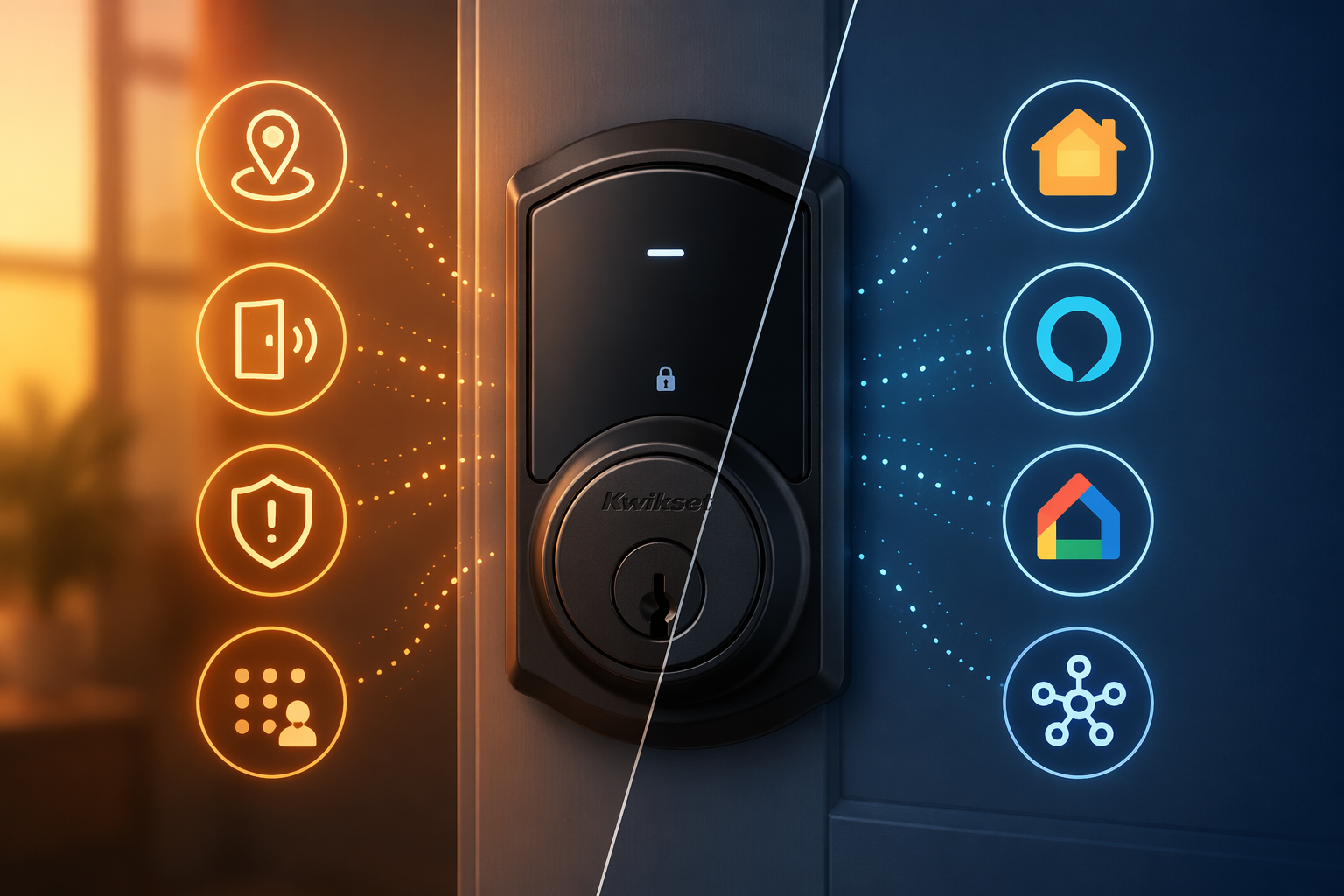
The important thing about Kwikset smart locks with Matter is not that they finally talk to more platforms. They do. The important thing is that Matter mode is a different operating path, not Wi-Fi mode with extra logos printed on the box. In Q2 2026, choosing Matter-over-Thread on Kwikset’s compatible locks can move the lock into Apple Home, Alexa, Google Home, or SmartThings without making the household live inside one manufacturer app forever, but it also removes several Kwikset app features that many people treat as part of the lock’s everyday value.
| If you choose native Wi-Fi mode | If you choose Matter-over-Thread mode |
|---|---|
| You keep Kwikset app features such as geofencing auto-unlock, door status alerts, intrusion detection, and app-based guest code management. | You gain broader platform control through major Matter ecosystems, including Apple Home, Alexa, Google Home, and SmartThings. |
| You stay more dependent on Kwikset’s app and cloud path for the lock’s richer features. | You give up several Kwikset-native automations and management features documented in current reviews. |
| Battery life may be more exposed to Wi-Fi behavior; SafeWise reported 10% battery drain in the first month of Wi-Fi use on Halo Select. | Thread is designed for low-power smart home devices, but real battery life still depends on the lock, network, usage, and firmware. |
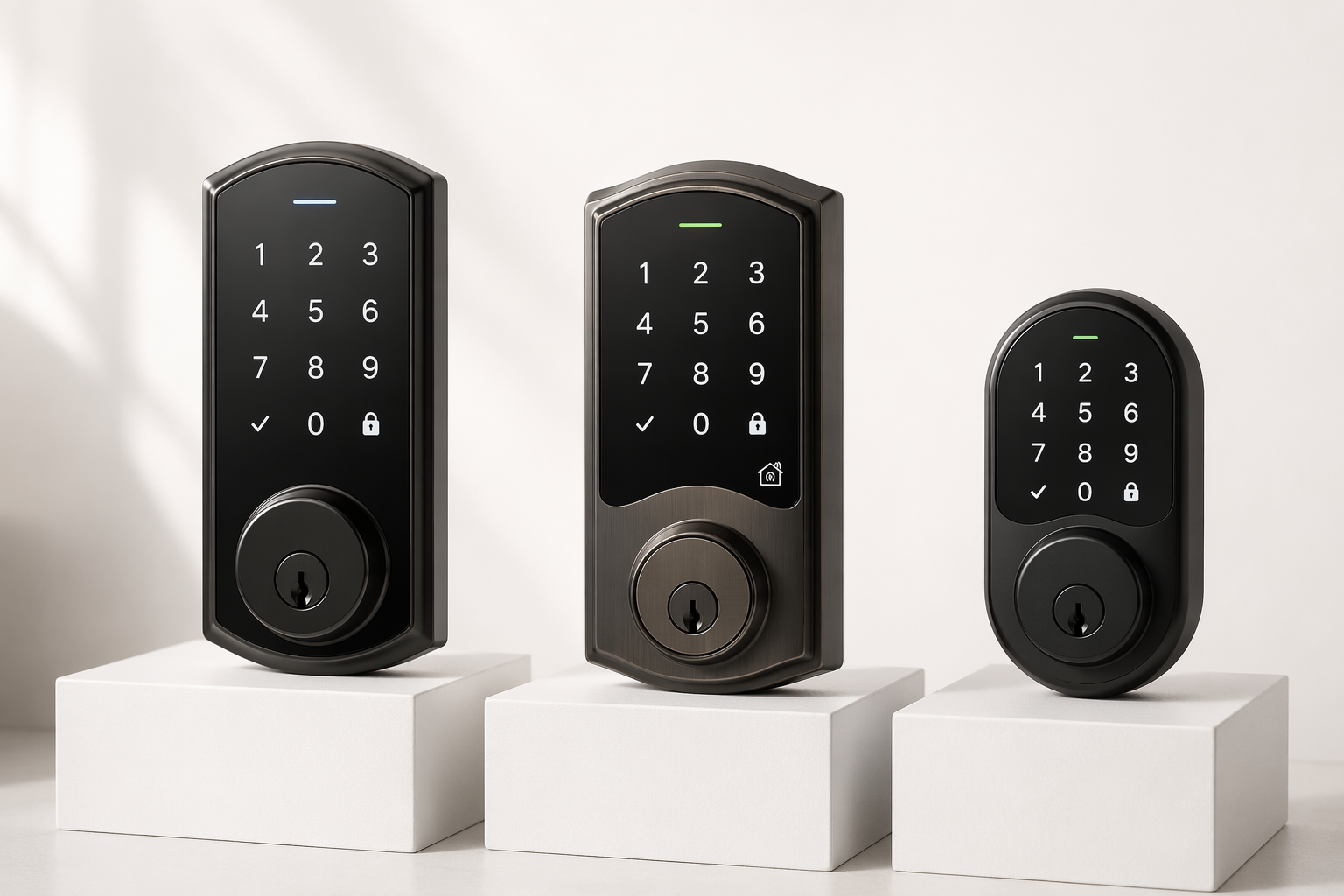
Kwikset’s official comparison places Halo Select, Halo Select Plus, and Aura Reach among the company’s smart-lock options with Matter support, while also showing that prices, grades, connectivity, and user-code capacity differ across the lineup rather than forming one interchangeable product family.[1]
What Matter actually buys you on a Kwikset lock
Matter-over-Thread buys freedom from a single smart-home front end. A household can put the lock into Apple Home, Alexa, Google Home, or SmartThings, then let different people control the same front door from the platform they already use. For anyone who has rebuilt routines after changing speakers, phones, hubs, or voice assistants, that is not a small benefit.
It also makes Kwikset easier to consider in homes that are already standardizing around Matter. If the rest of the house is moving toward Thread sensors, Matter switches, and multi-platform control, a lock that can join that fabric has a cleaner long-term story than one that only speaks through a brand cloud or a single ecosystem. For a broader view of where the standard stands outside locks, see Matter in Mid-2026: What Works, What Doesn't, and What to Buy.
The catch is that a front door is not a light bulb. Losing a favorite automation on a lamp is annoying. Losing the expected way a family enters the house, gets notified about the door, or manages a temporary code for a cleaner or relative changes the ownership experience immediately.
The feature loss in Matter mode is the part to read twice
SafeWise’s Halo Select review is unusually useful because it does not stop at “Matter supported.” It documents the practical split between Wi-Fi and Matter operation: when Halo Select is used in Matter mode, geofencing auto-unlock, door sensor alerts, and Kwikset app-based code management are not available in the same way they are in Wi-Fi mode.[2] Gear Diary’s Halo Select Plus testing reaches the same practical territory from the higher-end model, noting the Matter and Apple Home experience while also flagging the exclusions that come with commissioning into Matter.[3]
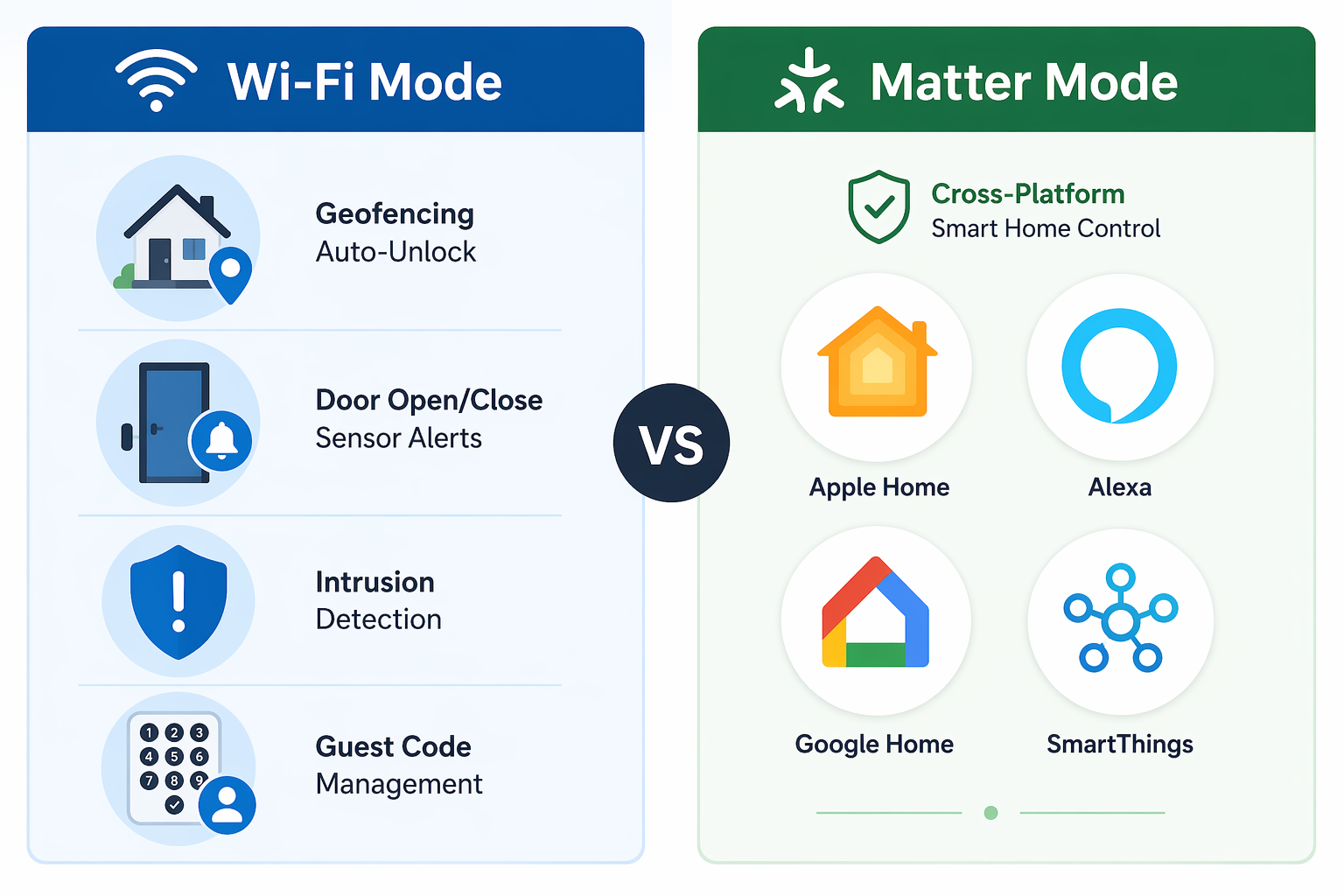
The everyday consequences are easy to underestimate before purchase. Geofencing auto-unlock is the feature that lets the lock anticipate arrival rather than making someone open an app or tap a control. Door status alerts are the small prompts that tell a parent the door was left open or a side entry changed state. Intrusion detection is not a decorative spec if the lock is on the main entry. App-based guest code management is the difference between creating a temporary code from the lock maker’s interface and having to work within whatever the Matter-connected ecosystem exposes.
That last point matters because Matter support does not guarantee every manufacturer feature appears equally in every controller. Matter gives the lock a common language for core smart-home control. It does not automatically reproduce the full Kwikset app experience inside Apple Home, Alexa, Google Home, or SmartThings.
This is the cleanest current rule: choose Matter mode if platform independence is the feature you value most; choose Wi-Fi mode if Kwikset’s native lock automations are central to how the household expects the door to behave. That rule is based on current documented behavior as of Q2 2026. Firmware can change the balance later, but a buyer should not pay today based on features that are not available today.
Halo Select: the core trade-off model
Halo Select is the model that most clearly exposes the decision. It is the mainstream Kwikset option where the buyer can look at Wi-Fi and Matter as two viable paths rather than two marketing lines. Kwikset’s own comparison places the Halo Select within a smart-lock lineup that spans roughly $149 to $309 depending on model, finish, and retail channel, and independent pricing checks have also found variation across the broader Kwikset smart-lock range.[1][4]
In Wi-Fi mode, Halo Select is the better fit for someone who bought a smart lock because they want automation around the door itself: auto-unlock as they arrive, alerts tied to door state, intrusion notifications, and guest code handling from the Kwikset app. In Matter mode, it is the better fit for someone who wants the lock to sit inside the same multi-platform architecture as the rest of the home, even if that means giving up Kwikset’s richer native feature set.
Battery life is another reason not to treat the modes as equivalent. SafeWise reported 10% battery drain in the first month while using Halo Select over Wi-Fi, and its broader experience with Wi-Fi Halo models points to real-world battery life closer to months than the kind of annual expectations sometimes associated with lower-power lock radios.[2] That does not prove every Halo Select installation will behave the same way, but it is a useful warning against reading a manufacturer-style battery estimate as a guarantee for a busy front door on a noisy network.
Halo Select Plus: the one to consider if Apple Home Key matters
Halo Select Plus deserves separate treatment because it adds the feature that can genuinely change the Apple household experience: Apple Home Key. Gear Diary’s 2026 hands-on review covers Halo Select Plus with Matter commissioning and Apple Home Key, including tap-to-unlock behavior from an iPhone or Apple Watch.[3] Kwikset’s comparison also places Halo Select Plus at the top end of this group, with a listed price around $309 before normal finish and retailer variation.[1]
Home Key is not just another ecosystem badge. It can make the lock feel less like a gadget and more like a normal access method: walk up, tap the phone or watch, and open the door. If the household is already deeply invested in Apple Home, Halo Select Plus is the Kwikset model that should be on the short list. For buyers comparing categories across the Apple ecosystem, Apple HomeKit Devices 2026: A Category-by-Category Buyer's Guide is the more appropriate place to zoom out.
Still, Home Key should not distract from the same Matter trade-off. If the lock is commissioned in Matter mode, the exclusions around Kwikset’s native automations still have to be accepted. A buyer choosing Halo Select Plus should be choosing it because Home Key and Matter platform flexibility are worth the premium, not because the higher price magically avoids the Wi-Fi-versus-Matter split.
Aura Reach: promising, cheaper, and still early
Aura Reach is the exciting newcomer in this group because it brings Matter-over-Thread down to a lower price. Kwikset introduced Aura Reach at CES in January 2026 with a $189 price, Bluetooth plus Thread connectivity, BHMA Grade 2 hardware, and no Wi-Fi radio.[5] That last detail is not a footnote: Aura Reach is not a “try Wi-Fi now, switch to Matter later” lock in the same way a dual-path buyer might imagine. Its remote-access story depends on having the right Matter controller and Thread border-router environment.
The appeal is obvious for a Matter-first home. If the household already has an Apple HomePod mini or Apple TV, a compatible Echo device, a Google Nest hub, or a SmartThings hub acting in the Matter/Thread chain, Aura Reach can make more sense than paying for a Wi-Fi path the buyer does not want to use. But because Aura Reach launched in January 2026, it does not yet have the same long-term review base as the Halo line, which has been in the market far longer.[5]
That makes Aura Reach easier to recommend as a promising Matter-first choice than as the default safe pick. The lower price is real. The reduced hardware grade relative to Grade 1 competitors matters. The lack of Wi-Fi simplifies the decision but also removes a fallback path for households that later decide they miss Kwikset’s native Wi-Fi features.
The three Kwikset Matter choices, side by side
| Model | Best fit | Matter position | Important caveat |
|---|---|---|---|
| Halo Select | Buyer who wants the main Kwikset Wi-Fi-versus-Matter choice without paying for Apple Home Key | Can serve either a native Wi-Fi setup or a Matter-over-Thread setup, depending on which features matter more | Matter mode gives broader ecosystem support but removes several Kwikset app features documented in current reviews |
| Halo Select Plus | Apple Home household that specifically wants Home Key tap-to-unlock | Higher-end Matter option with Apple Home Key support | The Home Key premium does not eliminate the Matter-mode feature exclusions |
| Aura Reach | Matter-first buyer who wants a lower-cost Thread lock and already has the right controller environment | Matter-over-Thread from the start, with Bluetooth plus Thread and no Wi-Fi | Newer January 2026 model, BHMA Grade 2, and thinner long-term review history |
Kwikset’s SmartKey Security is still worth noting because re-keying without replacing the whole lock can be a practical homeowner benefit. It should not, however, be allowed to carry the Matter argument. SmartKey is a Kwikset differentiator across parts of the brand’s lock family, not the deciding reason to choose Matter mode on these models.
Setup friction to expect
Matter setup is better than it used to be, but it is still not invisible. Gear Diary’s Halo Select Plus review describes a Matter commissioning process that ultimately produced stable Thread behavior in daily use, which is the experience buyers hope for after the QR-code phase is finished.[3] MacRumors forum users discussing Kwikset’s Matter setup in January 2026 also reported more fiddly cases, including issues around special characters in Wi-Fi passwords and a manual Matter pairing-code fallback when automatic setup did not cooperate.[6]
Those reports should not scare off someone comfortable with early smart-home gear. They should set the right expectation. If the lock is going into a Matter home, make sure the controller and Thread border router are already working, keep the pairing code accessible, and do the setup when nobody is waiting outside with groceries.
Where Schlage and Yale fit into the comparison
Cross-shopping is unavoidable because Schlage Encode Plus and Yale Assure Lock 2 sit in the same mental aisle. Schlage has a strong reputation around hardware grade and construction, while Yale’s Assure line has become a common modular smart-lock choice for buyers who care about ecosystem options.[7] That context is useful, but it does not erase the Kwikset-specific decision: the buyer still has to choose between Kwikset’s native Wi-Fi feature set and Matter’s platform flexibility.
Battery expectations also differ by radio path across the category. ButterflyMX’s smart-lock battery discussion broadly distinguishes power demands across connectivity types, and that matches the common pattern: Wi-Fi locks tend to be harder on batteries than lower-power smart-home radios, while real-world life still depends on usage, signal quality, and lock behavior.[8] For non-Matter Kwikset alternatives, especially if the home is already built around a hub, Best Z-Wave Hub in 2026 is the better comparison point than forcing every buyer into Matter.
Which one should you buy?
Buy Halo Select if you want the most straightforward Kwikset decision and are still deciding whether Wi-Fi features or Matter control is more important. It is the model where the trade-off is easiest to see before spending extra for Home Key or giving up Wi-Fi entirely.
Buy Halo Select Plus if the home is Apple-centered and Home Key is a feature people will actually use every day. The premium is easier to justify when tap-to-unlock from an iPhone or Apple Watch changes the normal entry routine. If Home Key is merely nice to have, the price jump is harder to defend.
Buy Aura Reach if the home is already Matter-and-Thread ready, the lower $189 launch price is appealing, and you are comfortable with a newer Grade 2 model that depends on a Matter controller for remote access.[5] It is the cleanest Matter-first Kwikset option, not the most proven long-term bet.
Stay in native Wi-Fi mode if geofencing auto-unlock, door alerts, intrusion detection, and Kwikset app-based guest code management are part of how the household expects the front door to work. Choose Matter mode if Apple Home, Alexa, Google Home, or SmartThings flexibility is more important than those Kwikset-native features. That is the real purchase decision hiding behind the compatibility badge.
References
- Compare Smart Locks, Kwikset.
- Kwikset Halo Select Review, SafeWise, July 2025.
- Kwikset Halo Select Plus Review, Gear Diary, May 2026.
- Kwikset Smart Lock Review, Security.org, 2026.
- Aura Reach, Kwikset, January 2026.
- MacRumors forum thread on Kwikset Matter setup, MacRumors Forums, January 2026.
- Kwikset vs Schlage comparison, DoorsForPros, November 2025.
- Smart lock battery life report, ButterflyMX.
Known issues with this device / protocol
Spec-version history
For active regressions on this protocol, see Update Watch.
No linked Update Watch entries yet.