
Pick a Team? That Advice Is Dead
Every smart home guide I read a couple of years ago started the same way: pick your platform first—Amazon Alexa, Google Home, or Apple HomeKit—then buy devices that work with it. The logic was simple: swap later and you’d be replacing half your hardware. That was true then. It’s less true today.
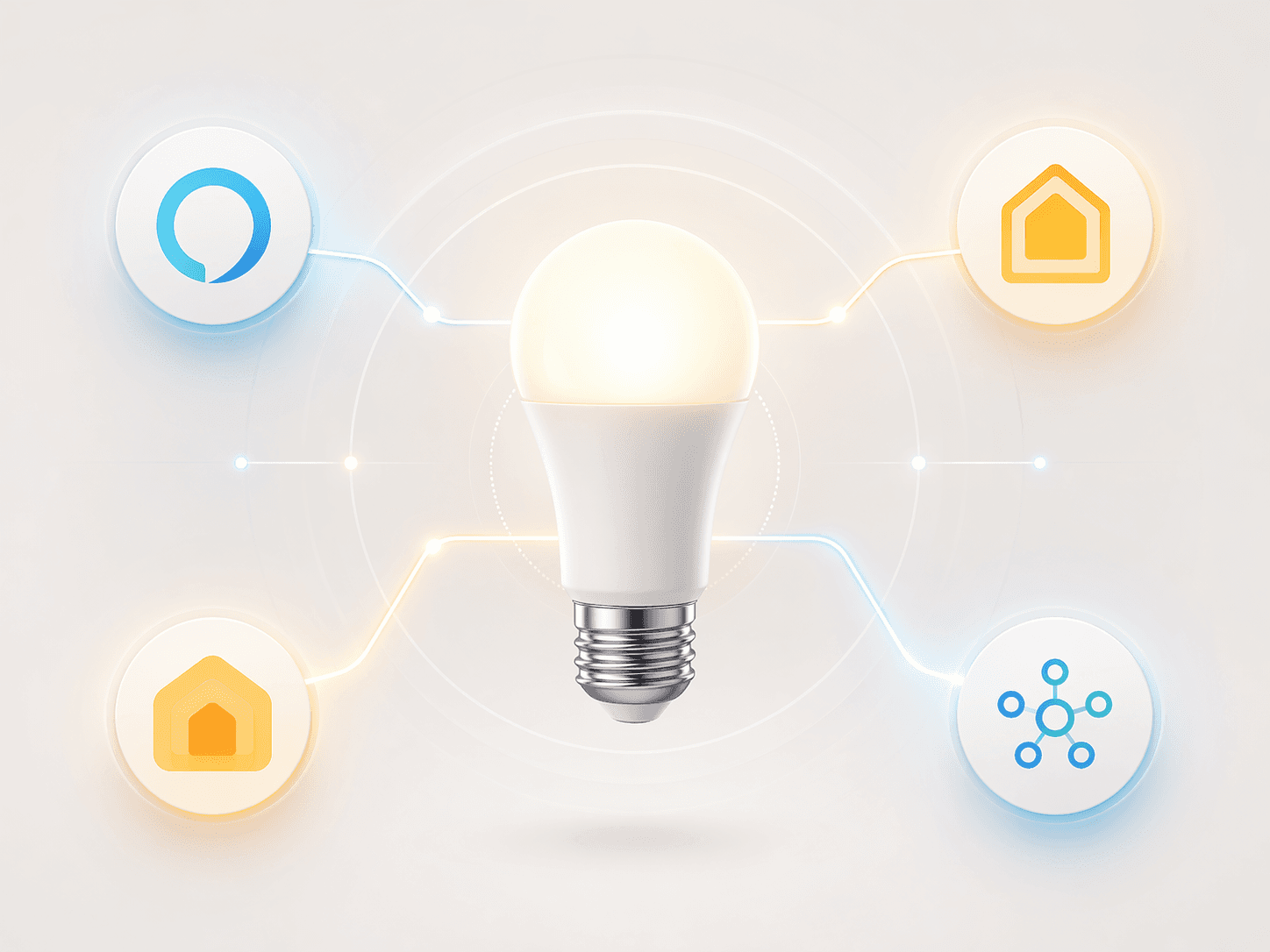
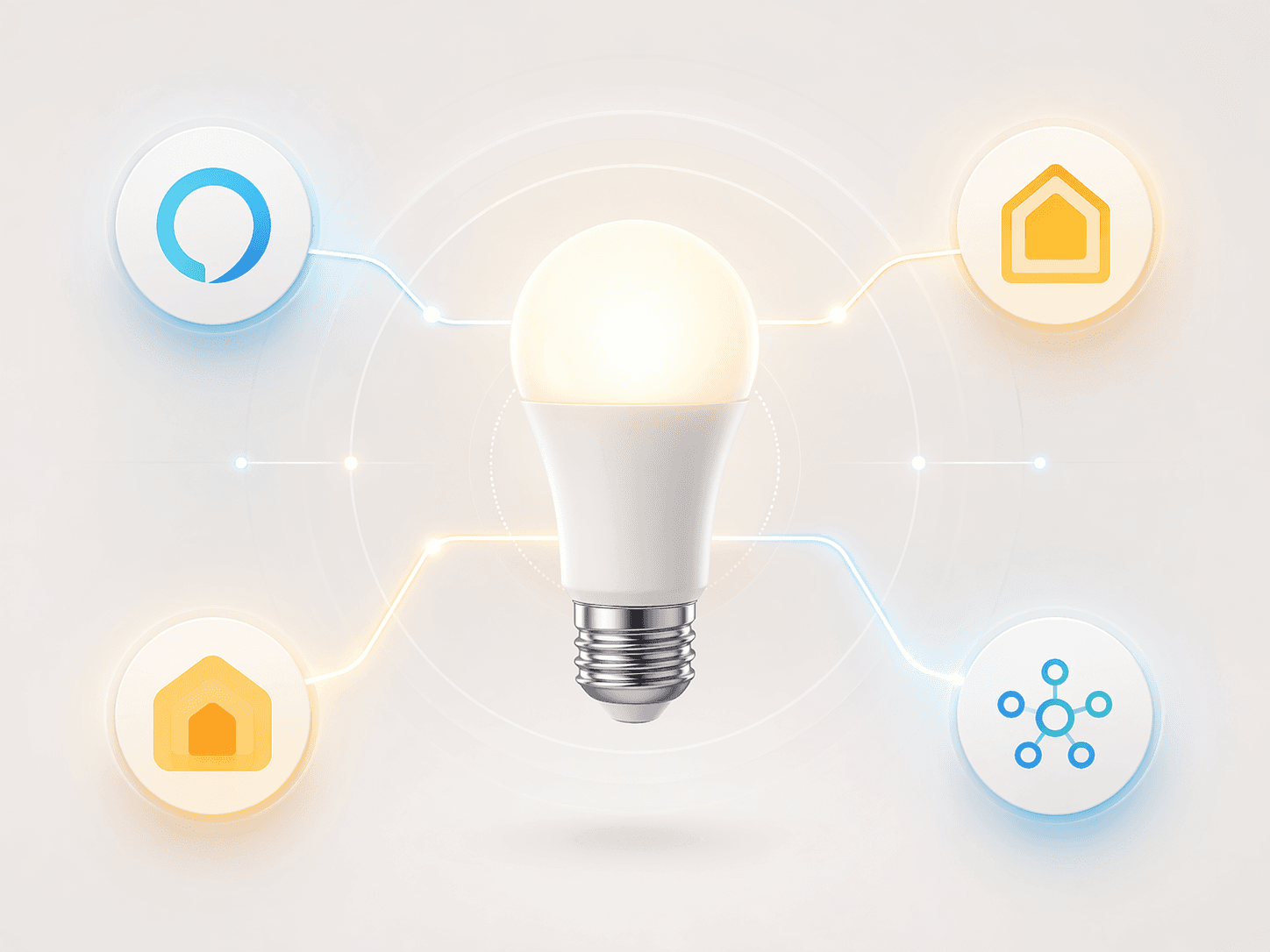
Here’s the concrete example that changed my mind. WIRED tested a Matter-certified smart bulb. You can set it up in the Apple Home app, control it by saying “Hey Google, turn off the light,” and add it to an Alexa routine—all without re-pairing the device. The device pairs once with any Matter-compatible controller on your network, and the controller shares its presence with all others automatically. You can start in Apple Home, decide you prefer Google’s voice accuracy, and move your daily control without unscrewing anything.
I wrote about the old lock-in dynamic in Smart Home Hub Ecosystem Lock-In 2026 and it was true then. Matter changes the fundamental question. You no longer need to pick your ecosystem before you pick your devices. In 2026, the smartest buying strategy is to prioritize Matter + Thread devices and choose your primary app based on voice assistant preference, knowing you can switch later without replacing a single piece of hardware.
How Matter and Thread Actually Work (No Cloud Required)
Matter is not a platform. It is a communication standard that defines how a device speaks to any compatible controller, regardless of brand. Over 850 devices now carry Matter certification (approximate count; the number grows weekly), and every major ecosystem supports it. Because Matter runs locally by default, commands travel over your home network rather than through a cloud server, which cuts latency and keeps the system working even when your internet is down.
Thread is Matter’s preferred transport protocol. It is a low-power mesh network that routes commands between devices directly, without needing a central hub or a Wi-Fi router. If one device goes offline, the mesh self-heals by finding an alternative path. As you add more Thread devices, the network actually gets stronger.
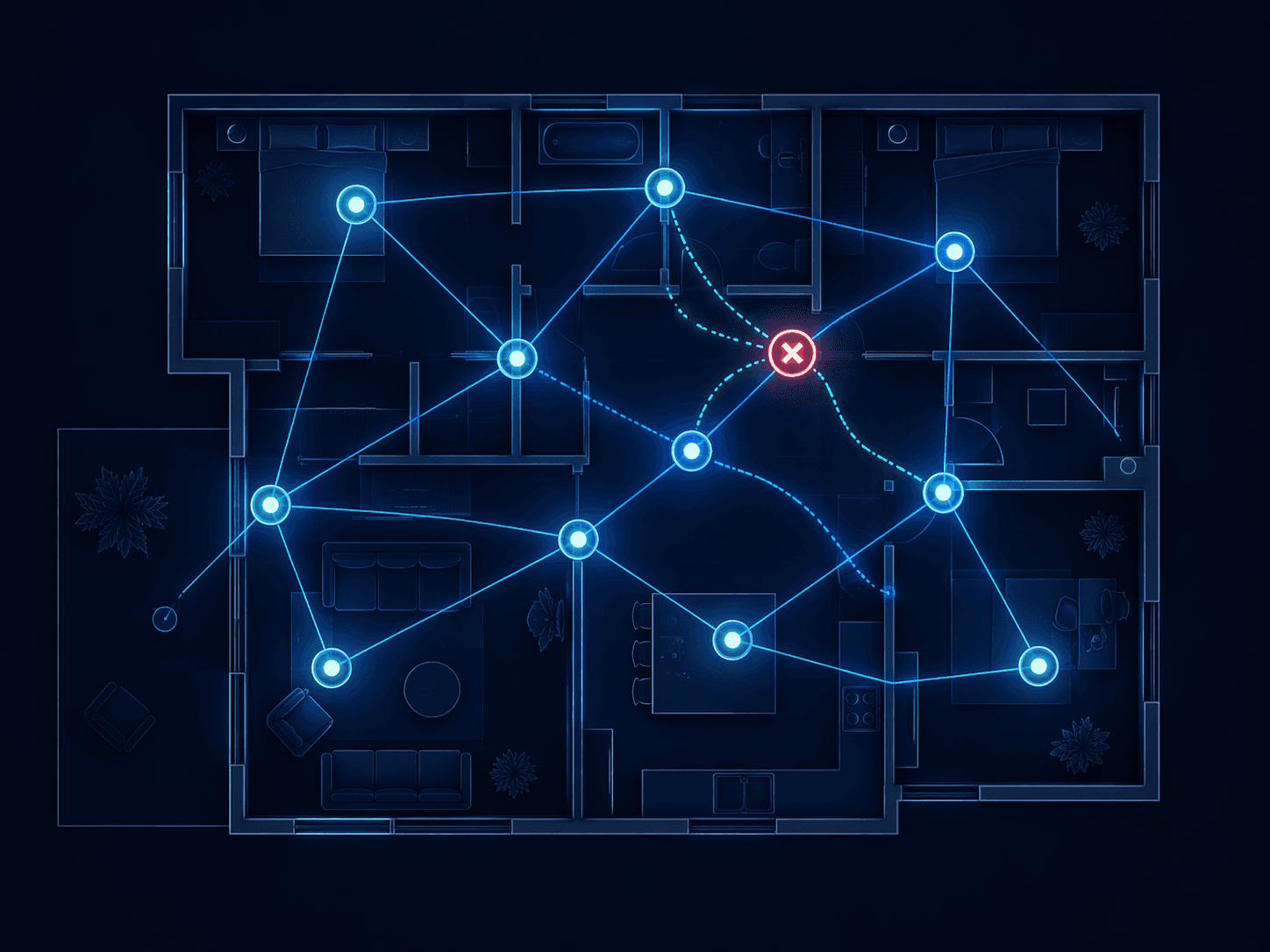
The combination matters: Matter guarantees compatibility, Thread guarantees reliable local connectivity. Together, they decouple the device from the platform in a way that Zigbee and Z-Wave never fully did.
Where Matter Still Falls Short
I want to be clear about the limits, because overselling Matter would be a disservice. As of mid-2026, Matter covers lighting, locks, thermostats, sensors, plugs, blinds, and media devices. It does
not cover security cameras. That gap is real. If your primary need is a camera system, you still need native cloud integrations or a separate Zigbee/Z-Wave bridge, which introduces partial lock-in.
There is another catch that the bulb example glosses over. Yes, the bulb works across platforms without re-pairing. But the automations and routines you build in Apple Home—say, “turn on the bulb at sunset only when I’m home”—do not transfer to Google Home. The hardware freedom is real. The automation freedom is not. If you later decide to switch your primary ecosystem, you will have to rebuild your routines from scratch.
For a deeper look at current reliability issues and version-by-version progress, see Matter in 2026: An Honest Status Review. The short version: the foundation is solid, but the full vision is still being built.
So Which App Should You Pick Now?
Because Matter handles device compatibility, you can now pick your primary app based on voice assistant preference and platform strengths rather than device support. Here is how the three big platforms compare on the dimensions that actually affect daily use.
| Dimension | Amazon Alexa | Google Assistant | Apple Home |
|---|---|---|---|
| Voice accuracy | Good, but not best-in-class (93% for Google) | 93% correct answers in head-to-head tests (Security.org) | Limited to Siri; accuracy lower than Google |
| Device support | Over 140,000 compatible devices (Security.org) | Broad, but fewer than Alexa | Roughly 1,000 certified devices, local processing, end-to-end encryption |
| Subscription cost | Alexa+ $20/mo or included with Prime; not all features valued | Premium $10–$20/mo; basic features free | No subscription required for core smart home |
| Thread border router | Echo 4th Gen+, Echo Hub; protocol-diverse | Nest Hub series; some hardware scaling back | Every HomePod and Apple TV 4K (2nd gen) has Thread |
| Privacy posture | Cloud-dependent; data used for ad targeting | Cloud-dependent; some local processing | All local processing; encrypted end-to-end |
My take: buy Matter+Thread for lights, locks, sensors, plugs, and blinds. For cameras, you are still in lock-in land. But for most of the smart home, the era of picking a team and sticking with it is over.
Corrections & Community Notes
Spotted an outdated spec, changed compatibility, or new firmware behavior? Submit a correction below to help keep this profile current. For formal editorial updates, use the contact page.
Comments
Join the discussion with an anonymous comment.