
The Best Smart Thermostats in 2026 for Every Home and Budget
Looking for the best smart thermostat in 2026? We compare the top tested models — from the consensus overall pick (Ecobee Premium) to budget-friendly and ecosystem-specific options — to help you choose the right thermostat for your home, HVAC system, and budget.
Last updated
The best smart thermostat for most homes in 2026 is the Ecobee Smart Thermostat Premium. It is the rare pick where the consensus is actually useful: Wirecutter names it a top pick, PCMag gives it an Editor’s Choice, Consumer Reports rates it highly, and CNET calls it the best overall smart thermostat for 2026.[1][2][3][4] That does not mean it is the right thermostat for every wall. If you use Alexa and want to spend closer to $60, the Amazon Smart Thermostat is the better value play. If you want a thermostat that learns your schedule with less programming, the Google Nest Learning Thermostat 4th Gen belongs on the shortlist. If your home uses electric baseboard heat, skip the forced-air models and look at Mysa.
| Pick | Best for | Approx. mid-2026 price | C-wire note | Platform support | Sensor support | Main caveat |
|---|---|---|---|---|---|---|
| Ecobee Smart Thermostat Premium | Best overall for most forced-air homes | ~$250 | Generally expects a C-wire; power extender kit may help some systems | Alexa, Siri/HomeKit, Google Assistant, SmartThings | Includes one remote sensor | Costs much more than basic smart thermostats |
| Amazon Smart Thermostat | Best budget pick for Alexa households | ~$58–$80 | C-wire or compatible power setup required | Alexa | No dedicated remote room sensor system | Weak fit if you do not use Alexa |
| Google Nest Learning Thermostat 4th Gen | Best learning thermostat and design-forward pick | ~$280 | Only top pick here that does not require a C-wire | Google Home, Matter-oriented smart home setups | Works with Nest temperature sensors | Less broadly native across major voice ecosystems than Ecobee |
| Mysa Smart Thermostat v2 | Best for electric baseboard heat | ~$120–$150 | Designed for high-voltage electric heat, not standard low-voltage HVAC | Major smart home platforms vary by setup | Room-by-room control by installing units where needed | Not a replacement for a standard central HVAC thermostat |
| Sensi Touch 2 | Strong satisfaction-focused alternative | ~$150 | C-wire required | Major smart home integrations vary by setup | Sensor support available | Less compelling if you want Ecobee’s included sensor and broader native platform spread |
| Honeywell Home T9 | Existing Honeywell users who specifically want its room-sensor approach | ~$170 when available | C-wire required | Common smart home integrations | Remote room sensors supported | Honeywell’s own status is muddy: discontinued listing plus backorder language with a July 2026 ETA |
| Ecobee Essential | Lower-cost Ecobee entry point | ~$140 | Generally expects a C-wire or compatible power setup | Ecobee ecosystem integrations | Not the same included-sensor package as Premium | Saves money by giving up some Premium features |
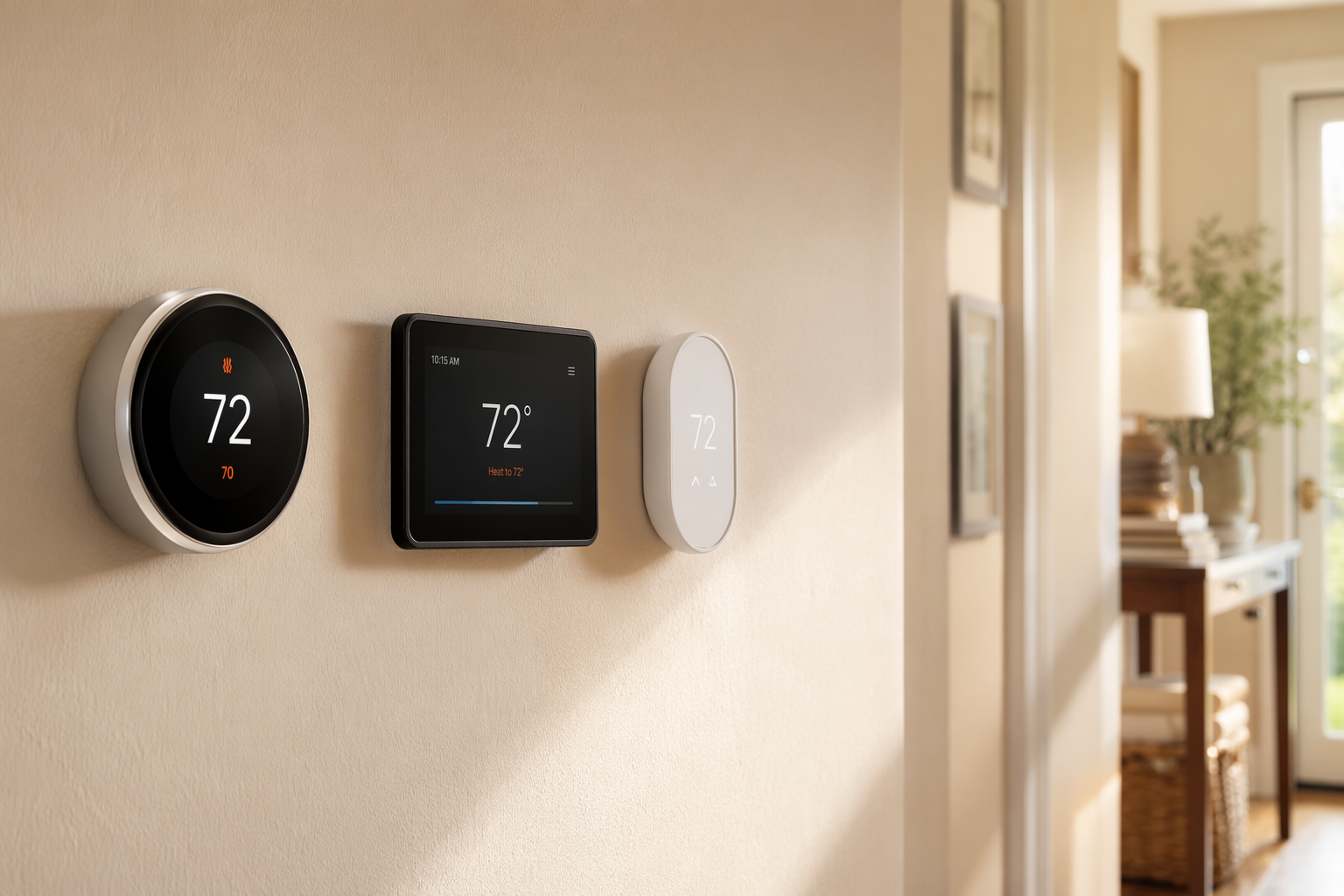
Start With the Wall, Not the App
A smart thermostat buying decision gets much easier once the phone screenshots move to the second row. The first question is whether the thermostat can safely control the equipment already in the house. Standard forced-air systems, heat pumps, dual-fuel setups, boilers, and electric baseboard heat do not all want the same device. A thermostat can have a beautiful interface and still be the wrong purchase if the wiring behind the old wall plate cannot power it or the voltage is wrong.
For most central HVAC systems, the practical filter is: confirm HVAC type, check whether a C-wire is present, decide whether remote room sensors matter, then choose the smart home platform. If that order sounds unglamorous, it is also the order that prevents returns. A reader who is unsure about wiring should pause on the model comparison and use a compatibility guide such as Which Smart Thermostat Fits Your HVAC System? A Guide by Home Type before buying.
Energy savings are part of the case, but they should not be treated as a guaranteed rebate printed on the box. ENERGY STAR says certified smart thermostats must show at least an 8% reduction in heating runtime and at least a 10% reduction in cooling runtime, with an estimated average savings of about $50 per year, while some homes can save more depending on usage and conditions.[5] That is useful evidence for the category. It is not a promise that a specific household will recover a $250 thermostat on a fixed schedule.
How the Main Picks Separate
| Situation | Best first choice | Why this is the first stop | When to look elsewhere |
|---|---|---|---|
| Typical forced-air home, wants the strongest all-around thermostat | Ecobee Smart Thermostat Premium | Consensus top pick, included remote sensor, air quality monitoring, broad native platform support | If the price is too high or the home is all-in on Google learning features |
| Alexa household on a tight budget | Amazon Smart Thermostat | Gets the core smart thermostat job done at a much lower price | If you need remote sensors, Apple Home support, or a non-Alexa ecosystem |
| Buyer wants automated learning and a no-C-wire-friendly top pick | Google Nest Learning Thermostat 4th Gen | Best fit among these picks for learning behavior and design | If you want Ecobee’s included sensor or wider native voice-platform flexibility |
| Electric baseboard or other compatible high-voltage electric heat | Mysa Smart Thermostat v2 | Built for the type of heating system central HVAC thermostats are not meant to control | If you have low-voltage central HVAC |
| Multi-room comfort problems | Ecobee Premium first, then compare sensor systems | Included remote sensor helps the thermostat react beyond the hallway | If the home needs a different brand’s room-by-room control logic |
| Smart home platform is the deciding factor | Choose by ecosystem before choosing by review score | Native support matters when automations, voice control, and household habits are already settled | If the HVAC system rules out the preferred model |
Ecobee Smart Thermostat Premium: The Safest Overall Recommendation
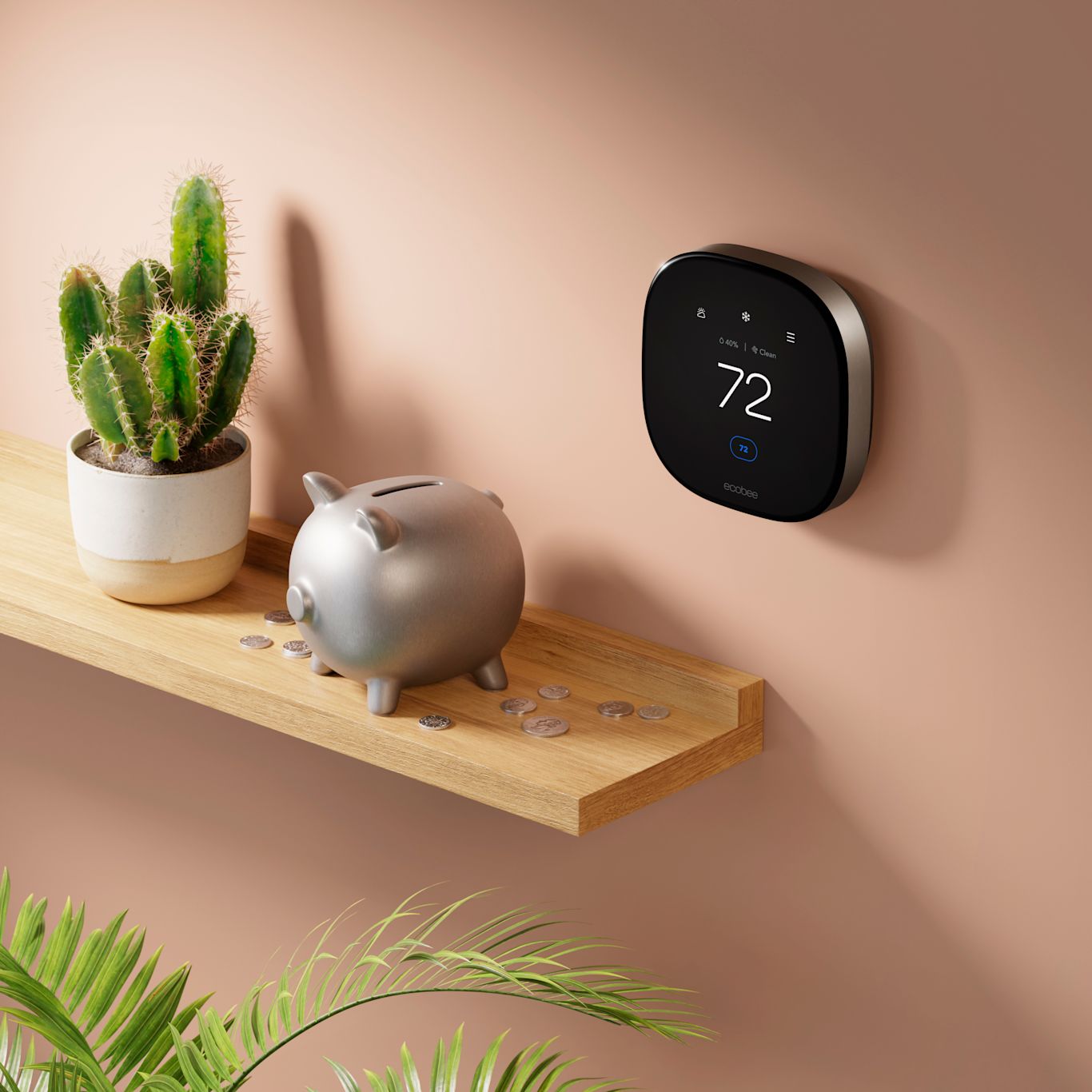
Ecobee Premium earns the top spot because it solves more real buying problems at once than the rest of the field. It supports Alexa, Siri/HomeKit, Google Assistant, and SmartThings natively, which matters in households where the thermostat may outlast the current speaker, phone, or hub. It also includes a remote sensor in the box, so the thermostat can pay attention to a room people actually occupy instead of blindly obeying the hallway temperature. PCMag’s 2026 testing names it an Editor’s Choice, and CNET also puts it at the top of its 2026 list.[2][4]
That remote sensor is not a decorative extra. In many homes, the thermostat is mounted where the builder or previous installer found convenient: near a return, in a hall, or beside a drafty opening. A sensor in the bedroom, nursery, home office, or main living area can make the system’s decisions line up better with the rooms people complain about. If that is the problem you are trying to solve, also compare sensor behavior directly in How Smart Thermostat Remote Sensor Systems Compare.
The Premium model also has built-in air quality monitoring. That feature should not be confused with a dedicated indoor air quality instrument, but it is useful as part of a thermostat that already sits in a central location and can nudge the household toward ventilation or filter awareness. The real value is the bundle: competent HVAC control, broad platform flexibility, an included sensor, and a feature set that does not immediately push many buyers into add-ons.
The objection is obvious: roughly $250 is a lot for a thermostat. That price makes sense if the home will use the remote sensor, platform flexibility, and air quality features. It makes less sense if the goal is simply to schedule heating and cooling from an Alexa app. For a closer model-by-model Ecobee breakdown, see Ecobee Smart Thermostat Lineup: Comparing the Premium, Enhanced, and Essential and Ecobee Smart Thermostat Premium Worth $250? A Practical Value Analysis.
Amazon Smart Thermostat: The Budget Pick That Deserves Respect
The Amazon Smart Thermostat is the pick for someone who wants the basic smart thermostat upgrade without turning the wall into a $250 project. Wirecutter names it a budget pick, and CNET calls it the best value smart thermostat for 2026.[1][4] At roughly $58 to $80, it is cheap enough that the buying question changes: not “does this beat Ecobee feature-for-feature?” but “does this household actually need Ecobee’s extras?”
For an Alexa household with a compatible central HVAC system, the Amazon model makes a clean kind of sense. It can handle app and voice control at a price that leaves room for professional installation if the wiring is questionable. That matters because the cheapest thermostat is not cheap if the buyer opens the wall, discovers no C-wire, and spends the weekend guessing.
The trade-off is ecosystem lock-in and fewer comfort tools. This is not the thermostat to buy for native Apple Home support, broad cross-platform flexibility, or an included room sensor. It is also not the right place to chase every possible automation. It is a value pick for Alexa-first homes, not a universal bargain.
Nest Learning Thermostat 4th Gen: Best When Learning Behavior Matters Most
The Google Nest Learning Thermostat 4th Gen is the main alternative to Ecobee Premium for buyers who care more about automated learning and design than remote-sensor-in-the-box value. PCMag identifies it as a strong learning/design pick, and CNET places it as a runner-up in its 2026 smart thermostat coverage.[2][4]
Its other practical advantage is wiring: among the top picks in this roundup, Nest is the one called out as not requiring a C-wire. That does not mean every installation will be effortless, and older or unusual HVAC systems still need checking, but it does make Nest especially attractive for buyers staring at an old thermostat without a clear common wire.
The Ecobee-versus-Nest decision usually comes down to temperament and platform. Ecobee is the safer broad-platform, remote-sensor-first recommendation. Nest is the cleaner fit for someone already deep in Google Home who wants the thermostat to learn patterns with less manual setup. If those two are the real finalists, use a direct comparison rather than a generic ranking: Ecobee Premium vs. Nest Learning Thermostat (4th Gen): Which Flagship Fits Your Home in 2026?
Mysa: The Right Answer for Electric Baseboard Heat
Electric baseboard heat is where many smart thermostat roundups become actively unhelpful. Most central HVAC thermostats are low-voltage devices. Electric baseboard systems often use high-voltage line-voltage control. Those are not interchangeable categories, and the wrong purchase can be more than annoying.
Mysa v2 is the pick here because it is built for electric baseboard and similar compatible electric heating setups, and CNET identifies Mysa as its 2026 choice for electric baseboard heat.[4] The price, roughly $120 to $150 per thermostat, also needs to be read differently. A baseboard home may need multiple units for multiple rooms or zones, so the project cost can climb faster than a single central HVAC thermostat swap.
Mysa claims up to 26% savings on electric baseboard heating, but that is manufacturer-provided data rather than an independent cross-brand finding. It is fair to treat the claim as a reason to investigate; it is not fair to treat it as a guaranteed household outcome.
Sensi Touch 2 and Honeywell T9: Good Reasons, Narrower Cases
Sensi Touch 2 is worth considering if satisfaction ratings and a more traditional thermostat feel matter more than having the most feature-packed flagship. Consumer Reports places Ecobee Premium and Sensi Touch 2 among its top-rated 2026 smart thermostats, which keeps Sensi in the conversation even when it is not the consensus overall winner.[3]
The Honeywell Home T9 is harder to recommend cleanly in 2026. Its room-sensor concept remains appealing, and some buyers already know Honeywell’s thermostat language from older homes. The problem is availability and product status: Honeywell’s own product page has listed the T9 as discontinued while also showing backorder language with a July 2026 ETA. That is exactly the kind of ambiguity that should push a buyer to verify the current status before treating it as a primary pick. If the T9 is still on your list, start with the Honeywell Home T9 Smart Thermostat: Specs, Compatibility, and 2026 Status profile rather than assuming every older recommendation is still current.
What to Check Before You Buy
- HVAC type: Confirm whether the home has standard low-voltage central HVAC, a heat pump, boiler, dual-fuel system, or high-voltage electric heat.
- C-wire: Do not assume the old thermostat’s age tells the whole story; remove the wall plate safely and verify wiring before ordering.
- Platform: Choose Ecobee for the broadest native platform flexibility, Amazon for Alexa value, and Nest for Google-leaning learning behavior.
- Sensors: Pay extra attention if the thermostat is in a hallway but the comfort complaints come from bedrooms, offices, or upstairs rooms.
- Total cost: Include adapters, extra room sensors, multiple line-voltage thermostats, or professional installation when comparing prices.
- Availability: Be cautious with models that are discontinued, backordered, or still recommended mainly because older reviews remain online.
Smart thermostat adoption is still not universal. S&P Global, cited by Utility Dive, projected 38.3 million smart thermostats installed in the U.S. by the end of 2026 and estimated 15.5 TWh in national electricity savings tied to smart thermostat deployment.[6] That kind of number explains why utilities and manufacturers care about the category. At the household level, the better question is still smaller: does this thermostat fit this HVAC system, and will the people in this home actually use the features that raise the price?
For deeper savings math, use Which Smart Thermostat Saves the Most Energy? A Data-Driven Comparison. For ecosystem-first buyers, use Best Smart Thermostat for Your Smart Home Platform. Home Assistant users should also read Best Thermostats for Home Assistant: Local Control Matters Most before prioritizing a mainstream cloud-first pick.
The Practical Buying Rule
Choose Ecobee Smart Thermostat Premium if you want the strongest all-around smart thermostat and the broadest platform flexibility. Choose Amazon Smart Thermostat if price and Alexa matter most. Choose Nest Learning Thermostat 4th Gen if learning behavior, design, and no-C-wire-friendly installation are the priority. Choose Mysa for compatible electric baseboard heat. Investigate Sensi Touch 2 or Honeywell T9 only when their specific strengths match the home and the current product status checks out.
If the choice still feels uncertain, the next step is not another ranked list. It is a compatibility check. Start with Smart Thermostat Buyer’s Guide 2026 or the more direct Best Smart Thermostat Buyer Guide 2026, then come back to the shortlist with the wiring and HVAC type settled.
References
- The 4 Best Smart Thermostats of 2026, Wirecutter
- The Best Smart Thermostats We've Tested for 2026, PCMag
- 8 Best Smart Thermostats of 2026, Lab-Tested and Reviewed, Consumer Reports
- The Best Smart Thermostats of 2026, CNET
- Smart Thermostat FAQs, ENERGY STAR
- Slow adoption of smart thermostats in the US misses big potential energy savings, Utility Dive
Known issues with this device / protocol
Spec-version history
For active regressions on this protocol, see Update Watch.
No linked Update Watch entries yet.