
Amazon Smart Thermostat: A Budget-Friendly Choice for Alexa Households
Decide if the Amazon Smart Thermostat is right for your home with specs, C-wire and Alexa requirements, energy savings estimates, and total cost analysis—including how it compares to premium models and what the Echo sensor workaround really delivers.
Last updated
The Amazon Smart Thermostat is a strong buy only under fairly specific conditions: your home already runs on Alexa, your HVAC wiring is compatible, and you want the cheapest credible smart thermostat rather than the most flexible one. At its usual $60–$80 range, it costs far less than premium models while still covering the basics that matter day to day: app control, scheduling, voice control, energy tracking, and ENERGY STAR certification.[1][2] The catch is that the low sticker price is not the whole purchase decision. If you need a C-wire adapter, Google Home, Apple Home, Matter, or dedicated room sensors, this stops being the simple bargain it looks like on the product page.

Quick Specs
| Item | Amazon Smart Thermostat |
|---|---|
| Device category | Smart thermostat |
| Typical retail price | $60–$80 |
| Model | S6ED3R |
| Manufacturer relationship | Made with Resideo/Honeywell Home technology |
| Supported smart-home platform | Amazon Alexa |
| Unsupported platforms | Google Home, Apple Home/HomeKit, Matter |
| Wi-Fi | 2.4 GHz Wi-Fi only; no 5 GHz |
| Hub requirement | No separate hub required; Alexa app required for setup and control |
| Subscription requirement | No required subscription |
| Power source | 24V HVAC system power; C-wire required |
| Installation type | DIY for compatible low-voltage HVAC systems; C-wire adapter may be needed |
| ENERGY STAR status | ENERGY STAR certified |
| Standby power | 0.89W in ENERGY STAR listing |
| Estimated savings basis | EPA average estimate for ENERGY STAR certified smart thermostats: about $50 per year |
| Last verified | July 1, 2026 |
Those specs explain the thermostat better than a long feature list would. It is not trying to be an Ecobee Premium or a Nest Learning Thermostat. It is a low-cost Alexa thermostat with Honeywell/Resideo HVAC roots, a clean faceplate, and enough automation to lower the barrier for households that have never wanted to spend premium money on the wall control in the hallway.[1]
The Real Price Is the Installed Price
The Amazon Smart Thermostat looks almost suspiciously inexpensive because the thermostat itself often sits around $60–$80, while many premium smart thermostats land well above that. CNET’s review called out the same core appeal: a low price paired with features that cover most everyday smart thermostat needs, including scheduling, app access, and Alexa voice control.[1]
But the installed price depends on the wire bundle behind your current thermostat. The Amazon Smart Thermostat requires a C-wire, and the C-wire power adapter is a separate accessory unless you buy a bundle that includes it.[3] If your wall already has a working C-wire, the purchase can stay close to the advertised price. If it does not, the adapter adds roughly another $21, bringing the practical hardware cost closer to about $100 before any rebate, professional help, or time spent at the furnace board.
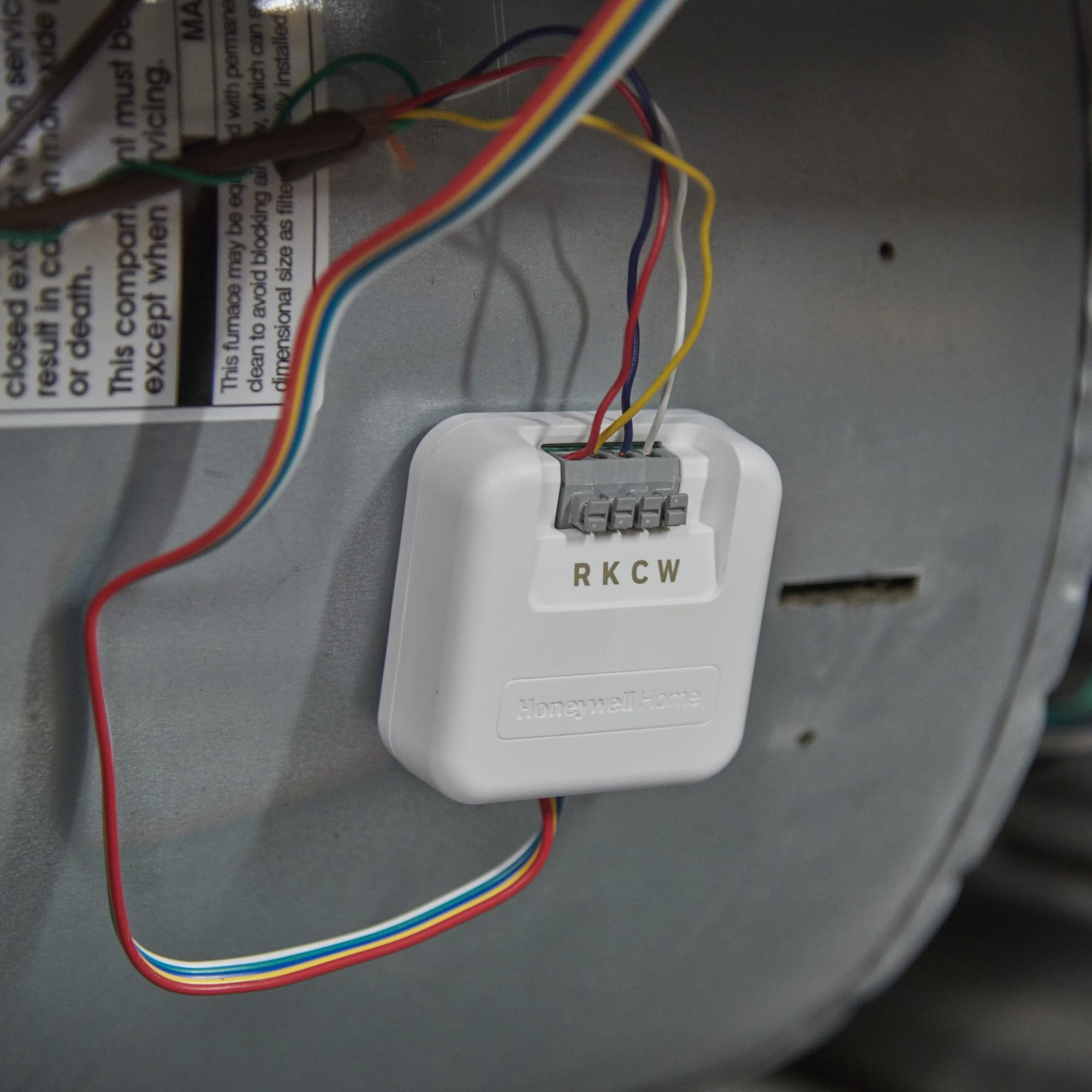
That difference matters because this thermostat’s main argument is value. A $60 thermostat that works with existing wiring is a very different buy from a $100 thermostat that requires a trip to the HVAC closet, an adapter install, and a longer setup window. It can still be a good deal; it just should not be sold to yourself as a $60 weekend project until you have checked the wiring.
The payback math is also better when it starts from the installed price, not the shelf price. The EPA says ENERGY STAR certified smart thermostats save users an average of about $50 per year on heating and cooling.[2] At a $60–$80 thermostat-only price, that implies a rough payback window of a little over one heating-and-cooling season for many households. Add the adapter and the math moves closer to two years, still reasonable, but less dramatic.
Amazon markets a higher savings figure of about $90 per year based on an internal study using EPA methodology, but that is not the same thing as an independently verified guarantee for your house.[4] Treat it as a possible upside, not the number to use when deciding whether the product pays for itself. Heating fuel, climate, existing thermostat habits, occupancy patterns, and how aggressively you allow setbacks all change the result.
Compatibility Comes Before Features
The least glamorous part of this purchase is the part most likely to decide whether you like it: HVAC compatibility. Amazon’s thermostat is designed for many 24V HVAC systems, but it is not a universal replacement for every heating and cooling setup. PCMag’s review notes that it does not support every HVAC configuration, and its testing also encountered a setup provisioning issue before installation was completed.[5] That does not make the thermostat unreliable by default, but it is a reminder that a smart thermostat purchase starts behind the wall, not in the app store.
Before buying, remove the old thermostat faceplate and photograph the terminal labels. Look for a wire connected to C. If there is one, continue checking the rest of the system type. If there is not, decide whether you are comfortable installing a C-wire adapter at the HVAC equipment or paying someone to do it. Some homes have an unused wire in the bundle that can be repurposed as common power, and some installations can use a G-wire workaround, but those are wiring decisions, not app settings.
- Good signs: a clearly labeled C terminal, a conventional 24V system, and an existing Alexa household.
- Slow down: no C-wire, unclear terminal labels, heat pump auxiliary heat questions, or a furnace board you do not feel safe opening.
- Skip the DIY route: line-voltage thermostats, proprietary communicating systems, or any wiring that does not match the compatibility checker.
This is where the Amazon model is less forgiving than some more expensive competitors. Certain thermostats are designed to handle no-C-wire situations more gracefully, or at least ship with more installation accessories and broader support. Amazon keeps the thermostat cheap by keeping the hardware package simple. That is fair, as long as the buyer checks before the return window becomes the backup plan.
Alexa Is the Feature, and the Boundary
In an Alexa home, the Amazon Smart Thermostat makes immediate sense. You use the Alexa app to set it up, adjust the temperature from the app, include it in routines, and control it by voice through Echo speakers. If the house already has Echo devices in the kitchen, bedroom, or living room, this thermostat drops into habits the household already understands.
Outside Alexa, the appeal falls quickly. The thermostat does not support Google Home, Apple Home/HomeKit, or Matter.[1] That means a mixed-platform household cannot treat it as a neutral device that will follow whatever ecosystem wins later. If your lights are in Apple Home, your speakers are Google Nest, and your automations are being consolidated around Matter, this thermostat asks the rest of the home to make an exception for one cheap device on the wall.
There is also the Wi-Fi detail that can turn a simple setup into a hallway troubleshooting session: the Amazon Smart Thermostat uses 2.4 GHz Wi-Fi, not 5 GHz.[5] That is normal for many smart-home devices, but it can annoy homes with mesh networks that use a single network name and imperfect band steering. If your router makes it hard to force a device onto 2.4 GHz during setup, solve that before blaming the thermostat.
Amazon’s automatic home and away behavior also needs a current note. The older Hunches branding for automatic Home/Away behavior was deprecated as of June 9, 2026, with Amazon moving the experience under replacement automatic-control language and changing some notification behavior. The underlying idea remains familiar—Alexa can help adjust temperature when the home appears occupied or empty—but older reviews and setup guides may use names the app no longer uses.
What You Give Up Compared With Premium Thermostats
The Amazon Smart Thermostat covers the basics, but it does not pretend to be the most advanced comfort system in the category. The biggest missing piece for larger or uneven homes is dedicated remote sensing. Ecobee SmartSensors and Nest Temperature Sensors are built around the idea that the hallway thermostat may not represent the bedroom, nursery, office, or finished basement. Amazon does not offer an equivalent dedicated sensor system for this thermostat.
There is a workaround, and it is useful in the right home. Wirecutter notes that certain Echo devices, including the Echo Dot 5th gen, Echo 4th gen, and Amazon Smart Air Quality Monitor, can serve as temperature sources for Alexa routines.[6] That can help an Alexa household say, in effect, “pay attention to the bedroom temperature at night.” It is not the same as a thermostat-native remote-sensor ecosystem with dedicated occupancy and comfort logic.
The difference is not academic. A dedicated thermostat sensor is designed to be part of the climate-control system. An Echo device with a temperature sensor is a useful multi-purpose device that can feed Alexa routines. If you already own compatible Echo speakers, the workaround may be good enough. If you are buying sensors specifically because one room is always too hot or too cold, a thermostat designed around remote sensors is the cleaner choice.
Premium models also tend to offer broader ecosystem support, richer on-device interfaces, more detailed comfort controls, and, in some cases, more sophisticated learning or occupancy behavior. Those extras are not automatically worth paying for. In a small home with a regular schedule, the Amazon thermostat may deliver the part that matters—lower heating and cooling waste—without the expensive finish. In a larger home with uneven rooms, platform mixing, or a household that wants local or cross-platform control, the savings at checkout can buy the wrong compromise.
Energy Savings: Use the Conservative Number First
For savings, the EPA’s roughly $50-per-year average is the safest anchor.[2] It is modest enough to be useful because it does not assume every household is replacing a badly programmed thermostat, living in an extreme climate, or accepting aggressive temperature setbacks.
Amazon’s roughly $90-per-year claim may be achievable for some users, but it belongs behind the EPA estimate because it comes from Amazon’s own internal study using EPA methodology rather than a publicly audited independent measurement for this exact installation in your home.[4] A thermostat can only save money when the household lets it change runtime: lowering heat when people are away, easing cooling during empty hours, and avoiding manual overrides that erase the schedule.
ENERGY STAR also lists the Amazon Smart Thermostat with standby power of 0.89W, which is reassuring mostly because it confirms the device is not spending meaningful electricity to save electricity elsewhere.[2] The larger savings question still lives in HVAC runtime, not the thermostat’s own power draw.
Sustainability and Build Notes
Amazon also positions the thermostat as a lower-impact device, with 36% recycled plastic content and ECOLOGO certification by UL Environment.[4] Those details do not change whether it works with your furnace or heat pump, but they are relevant if you are choosing between budget thermostats that otherwise look similar.
The physical design is intentionally plain: a white face, simple temperature display, and no large color touchscreen. That restraint is part of the bargain. If you want the thermostat to look like a small wall-mounted tablet, this is not that product. If you want it to disappear into a hallway and respond from the Alexa app, the design is doing its job.
Who Should Buy It
Buy the Amazon Smart Thermostat if you already use Alexa, have a compatible 24V HVAC system, and either have a C-wire or are comfortable adding the adapter. In that situation, it is one of the cleanest budget buys in smart-home hardware: inexpensive, ENERGY STAR certified, connected to a known HVAC lineage through Resideo/Honeywell Home, and capable of paying back its hardware cost over a reasonable period.[1][2]
It is especially compelling for smaller homes, apartments with compatible low-voltage systems, and households that mostly want remote control, voice control, scheduling, and basic automation. Those buyers do not need to spend premium thermostat money just to stop heating or cooling an empty house.
Skip it if your smart home depends on Google Home, Apple Home, HomeKit, or Matter; if you want dedicated room sensors; if your HVAC setup is complicated; or if the C-wire work turns the low price into an installation project you do not want. The Amazon Smart Thermostat is a very good Alexa thermostat. It is not a flexible thermostat that happens to work with Alexa.
References
- Amazon Smart Thermostat Review: Great Features at an Unbeatable Price — CNET
- ENERGY STAR certified product listing — ENERGY STAR
- Amazon Help: C-wire adapter — Amazon Help
- Amazon Smart Thermostat official product page — Amazon
- Amazon Smart Thermostat - Review 2025 — PCMag
- The 4 Best Smart Thermostats of 2026 — Wirecutter/NYT
Known issues with this device / protocol
Spec-version history
For active regressions on this protocol, see Update Watch.
No linked Update Watch entries yet.