
Best Smart Plugs for Alexa: Buyer's Guide and Comparison
This buyer's guide compares the best Alexa-compatible smart plugs, explaining why third-party options often offer better value than the first-party Amazon Smart Plug, and helps you choose the right plug for your budget and needs.
Last updated
If you use Alexa, the easiest answer is to buy Amazon’s own plug. The better answer is usually to buy a different Alexa smart plug. Amazon’s Smart Plug is still the cleanest convenience pick for an Alexa-only home: it is compact, simple to pair, and built for people who do not want another device app. But at a $25 MSRP, with no power-consumption reporting and no real life outside Alexa, it is not the best value for most homes in 2026.[1][2]
That matters because smart plugs multiply. One lamp becomes two lamps, then a fan, then a coffee maker, then a holiday light timer. A plug that looked cheap and harmless as a one-off can become a small ecosystem decision. TP-Link’s Kasa EP25, Emporia’s Smart Plug, Tapo’s Matter plugs, and Leviton’s D215P all work with Alexa while giving you some combination of lower per-unit pricing, energy data, Matter support, or compatibility beyond Amazon’s platform.[1][2][3][4]
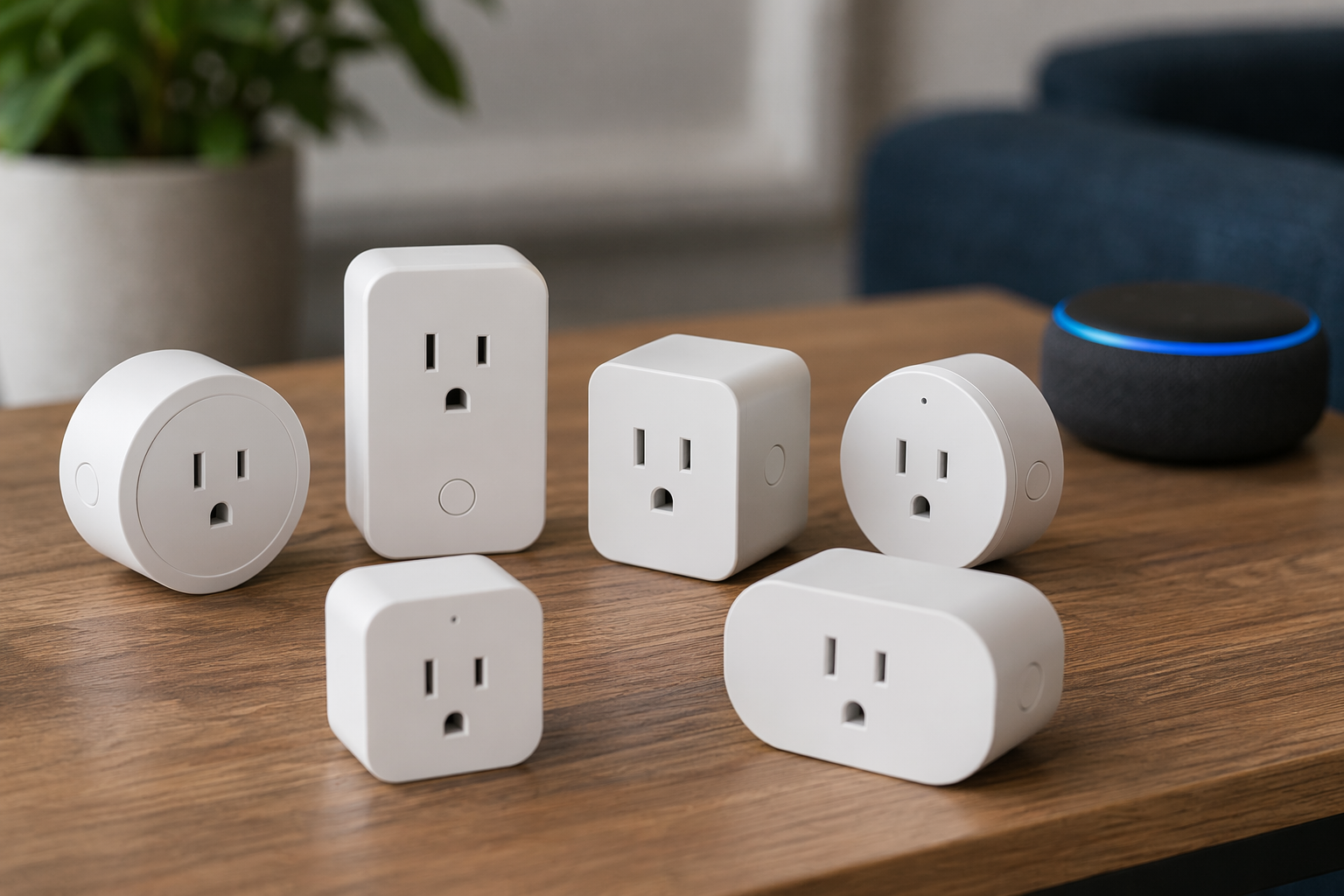
The Shortlist: Alexa Smart Plugs Worth Comparing
Prices here are Q2 2026 spot prices from current smart-plug roundups and reviews, not promises about Prime Day, holiday sales, or inventory swings. All plugs in this comparison are described as 15A / 1800W models for the U.S. market unless otherwise noted.[1][2][3]
| Plug | Typical Q2 2026 price | Alexa support | Other platform support | Energy monitoring | Matter support | Best fit |
|---|---|---|---|---|---|---|
| Amazon Smart Plug | $25 MSRP; often seen on sale around $13 | Yes, first-party Alexa setup | Alexa only | No | No | Simplest Alexa-only setup |
| TP-Link Kasa EP25 | About $8.75 per plug in a 4-pack | Yes | Google Home, Apple Home, SmartThings, IFTTT support reported across reviews | Yes | No; Apple Home support reported separately | Best overall value |
| Emporia Smart Plug | About $12 | Yes | Google Home and broader smart-home integrations reported in reviews | Yes; usable with Alexa Energy Dashboard | No Matter emphasis in cited roundups | Low-cost energy monitoring |
| TP-Link Tapo P110M | About $10 | Yes | Google Home, Apple Home via Matter, and other Matter ecosystems | Yes; usable with Alexa Energy Dashboard | Yes | Energy tracking plus Matter |
| TP-Link Tapo P125M | About $8 | Yes | Google Home, Apple Home via Matter, and other Matter ecosystems | Not the energy-monitoring pick in cited roundups | Yes | Cheap Matter plug |
| Leviton D215P | About $23 | Yes, including Matter-based setup paths | Google Home, Apple Home via Matter, SmartThings, and Leviton ecosystem support | Not the value energy-monitoring pick here | Yes | Premium, reliable, ecosystem-agnostic choice |
Best Overall: TP-Link Kasa EP25
The Kasa EP25 is the plug I would hand to most Alexa households because it solves the usual second-week problem: after the first lamp works, you start noticing all the other outlets you want to automate. A 4-pack price around $8.75 per unit changes the math immediately. Four Amazon Smart Plugs at MSRP would be a very different purchase, and even Amazon sale pricing does not consistently erase the advantage of a discounted multi-pack.[1][2][3][4]
The EP25 also avoids the most annoying kind of cheapness. Review roundups consistently put it near the top because it combines reliable performance, energy monitoring, and support across Alexa, Google, Apple Home, SmartThings, and IFTTT rather than making Alexa the only door in.[1][2][3][4]
That does not mean every buyer needs its app, every feature, or every platform. It means you are not paying extra to keep those options closed. If a roommate uses Google Home later, or you add Apple Home devices, or you decide you actually do care how much power a window AC or dehumidifier is using, the plug is less likely to become the weak link.
Best For Energy Monitoring: Emporia Smart Plug Or Tapo P110M
Energy monitoring is easy to oversell. A smart plug does not magically make a coffee maker efficient, and tiny standby loads are not usually where a household budget is hiding. The useful cases are more specific: checking what a fan, space heater, dehumidifier, aquarium setup, or older appliance actually draws; spotting a device that runs longer than expected; or using Alexa’s Energy Dashboard to keep usage visible instead of guessing.[6]
That is where Amazon’s own plug has a clear hole. The Amazon Smart Plug does not report power consumption, while Emporia’s plug at roughly $12 and the Tapo P110M at roughly $10 are both described as energy-monitoring options that can feed useful information into Alexa’s Energy Dashboard.[2][6]
Between the two, Emporia is the straightforward budget energy pick. Tapo P110M is more interesting if you want energy tracking and Matter in the same small purchase. The difference is not about whether either one makes Alexa work; both do. It is about whether the plug remains useful after the novelty of saying “Alexa, turn on the lamp” wears off.
Best Matter Options: Tapo P125M, Tapo P110M, And Leviton D215P
Matter support is not a magic badge, but it is one of the cleanest ways to avoid buying a plug that only makes sense inside one company’s app. In the cited 2026 roundups, Tapo P125M is the low-cost Matter option at about $8, Tapo P110M adds energy monitoring at about $10, and Leviton D215P sits closer to $23 as the more premium ecosystem-agnostic choice.[2][3]
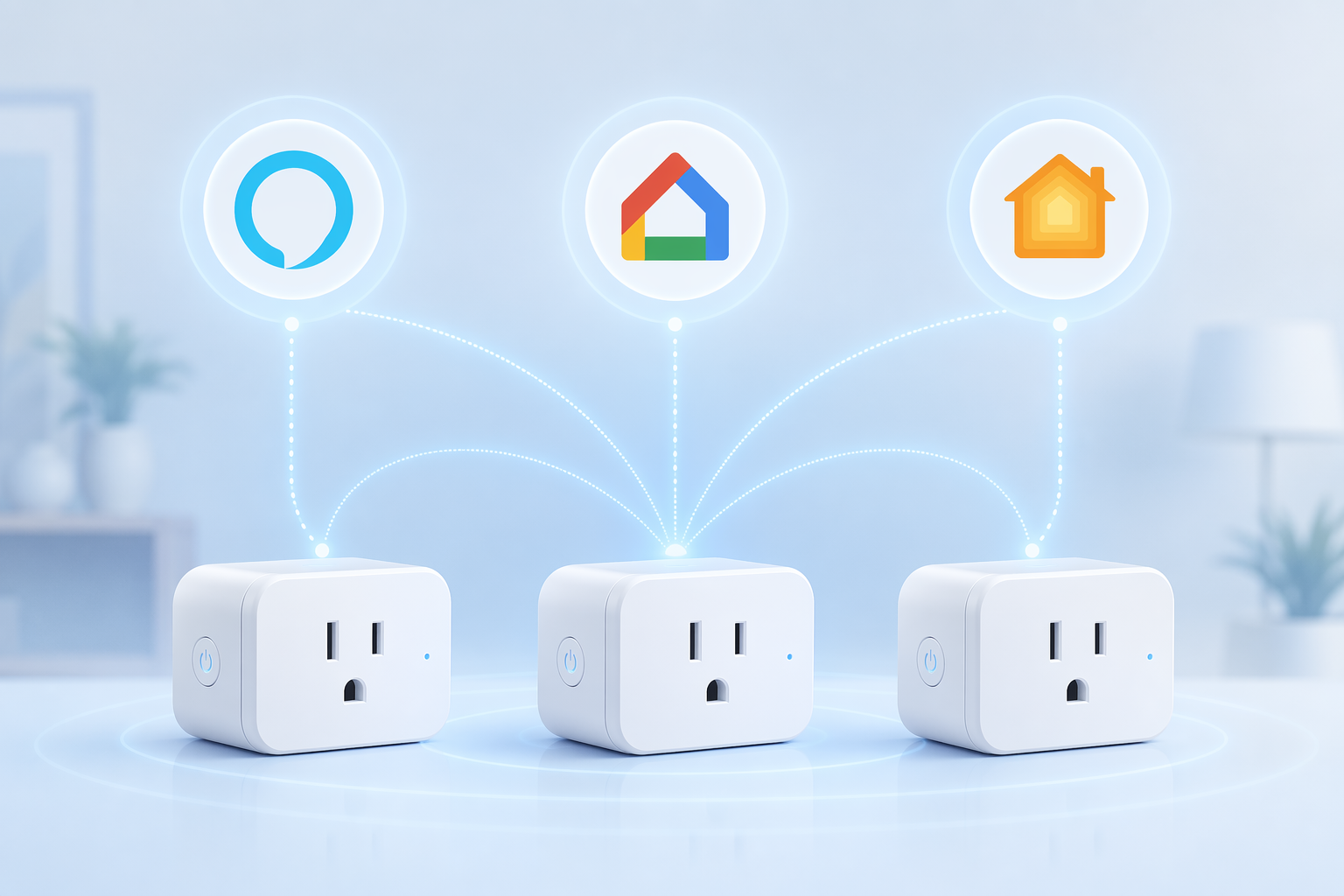
The practical benefit is setup flexibility. In some Matter configurations, a plug can be added to Alexa without relying on the manufacturer’s app as the central control point.[2][3] That is not always the same as saying every advanced feature appears everywhere, and buyers who want the smoothest access to firmware updates or energy graphs may still need the maker’s app. Still, Matter support gives the plug a better chance of surviving a future switch from Echo speakers to a mixed Alexa, Apple Home, or Google Home household.
When The Amazon Smart Plug Still Makes Sense
There is a perfectly reasonable buyer for the Amazon Smart Plug: someone who uses Alexa, intends to keep using Alexa, wants one or two plugs, and values the least fussy setup more than feature depth. Its compact 1.5 by 3.2 by 2.2-inch body is designed not to block the second outlet, and that still matters behind a couch or beside a nightstand.[5]
The mistake is treating “works with Alexa” as if it means “best for Alexa.” A third-party plug can work perfectly well with Alexa and still be cheaper, more measurable, and more portable across smart-home systems. Amazon’s plug wins on first-party simplicity, not on breadth.
For basic routines, any of these plugs can handle the ordinary jobs: turn on a lamp at sunset, start a fan before bedtime, shut off holiday lights, or trigger a coffee maker that has a physical on/off switch. If you already know you want to build scenes around mornings rather than just switch one outlet, the next step is hardware plus routine design; this guide to an Alexa morning routine is the more useful place to think through lights, thermostat changes, and coffee timing.
How To Choose Without Overbuying
- Choose Amazon Smart Plug if you want the simplest Alexa-only setup, need just one or two plugs, and do not care about energy monitoring, Matter, Google Home, or Apple Home.
- Choose TP-Link Kasa EP25 if you want the best overall value, especially for multiple rooms, because the 4-pack pricing and broad platform support make it harder to outgrow.
- Choose Emporia if your main reason for buying a plug is seeing power consumption at a low price.
- Choose Tapo P110M if you want both energy monitoring and Matter support in one inexpensive plug.
- Choose Tapo P125M if Matter matters more than energy data and you want to keep the unit price low.
- Choose Leviton D215P if you are willing to pay more for a mature electrical brand and a platform-flexible Matter plug.
A small caution about appliances: a 15A / 1800W plug rating is not permission to automate anything with a cord. Smart plugs are generally best for devices that safely resume operation when power is restored and do not create heat, motion, or water risks without supervision. Lamps, fans, and some simple coffee makers are the normal territory; heaters and other high-risk loads deserve more care than a bargain plug can provide.[7]
The clean buying rule is simple: buy the Amazon Smart Plug only when frictionless Alexa setup is worth paying more and you are sure you do not need other platforms or energy data. For most people buying more than one Alexa smart plug, TP-Link, Emporia, Tapo, or Leviton is the better long-term purchase.
One caveat sits under the whole comparison: Amazon’s official product page was not fully crawlable during research, so Amazon Smart Plug specs here rely on review pages and search-result snippets rather than a fully accessible official listing. No newer Amazon Smart Plug hardware revision was found in the crawled sources; the reviewed model across sources is the 2020 SKU B089DR29T6.[5]
References
- The 5 Best Smart Plugs of 2026 | Reviews by Wirecutter
- The Best Smart Plugs and Power Strips for 2026 | PCMag
- Best Smart Plugs for 2026: Effortless Appliance Upgrades | CNET
- The best smart plugs in 2026 | Engadget
- Amazon Smart Plug Review | PCMag
- How to See Power Consumption with the Alexa Energy Dashboard | How-To Geek
- Smart Plug Guide (2026): When You Should and Shouldn't Use One | WIRED
Known issues with this device / protocol
Spec-version history
For active regressions on this protocol, see Update Watch.
No linked Update Watch entries yet.