
Best Smart Air Quality Monitors for Wildfire Smoke, Tested
Which smart air quality monitors actually stay accurate during wildfire smoke? This tested comparison ranks the leading models by independent field-measured PM2.5 accuracy — not price or feature count — with evidence-based picks for indoor, outdoor, and portable use.
Last updated
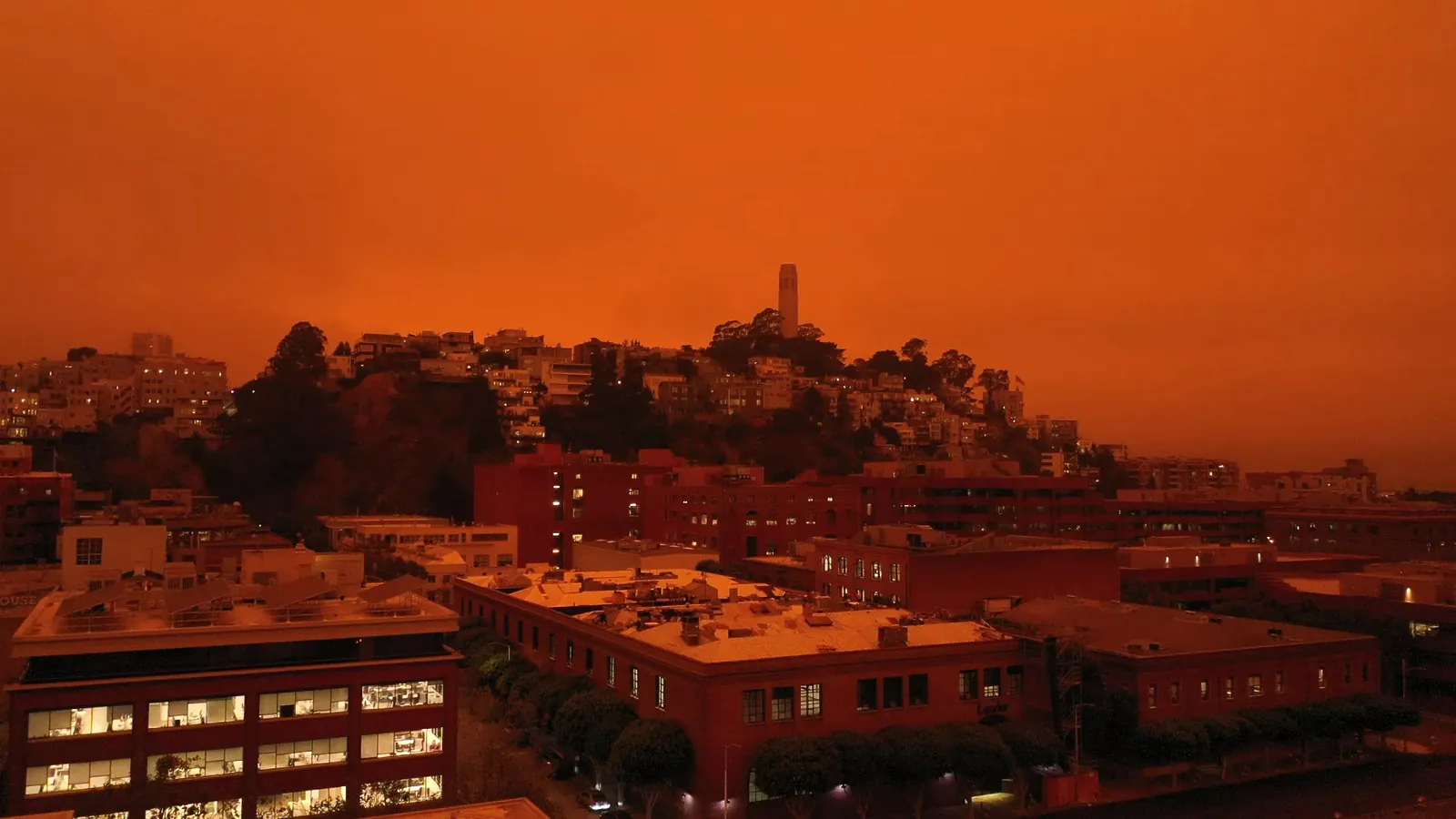
Wildfire smoke breaks the usual smart-monitor ranking. A sensor can react quickly, look “sensitive,” and still be giving you the wrong number because raw low-cost optical PM2.5 readings tend to overreport wood-smoke particles. In a Berkeley Lab/EPA study of home air monitors during smoke, the raw optical readings were roughly 1.6–2.4 times higher than reference PM2.5 until corrected [1]. That is why the best smart air quality monitor for wildfire smoke is not the one with the nicest app, the most gases on the dashboard, or the loudest marketing around “real-time AQI.” It is the one whose PM2.5 stays closest after the right correction, under conditions similar to the tests.
The short version, as of Q3 2026: for outdoor or property-level smoke monitoring, the PurpleAir PA-II / PA-II-SD / Zen class has the strongest evidence because it combines independent field performance with a mature correction ecosystem. For indoor mid-range use, Temtop LKC-1000S+ and Qingping Air Monitor are the better buys on the field numbers. For portable use, Atmotube Pro is the credible pocketable option. IQAir AirVisual Pro and Plume Flow 2 are the awkward part of the comparison: both have name recognition, but their independent PM2.5 field results do not justify treating them as the smoke-season accuracy picks.
The field numbers that matter before smoke correction
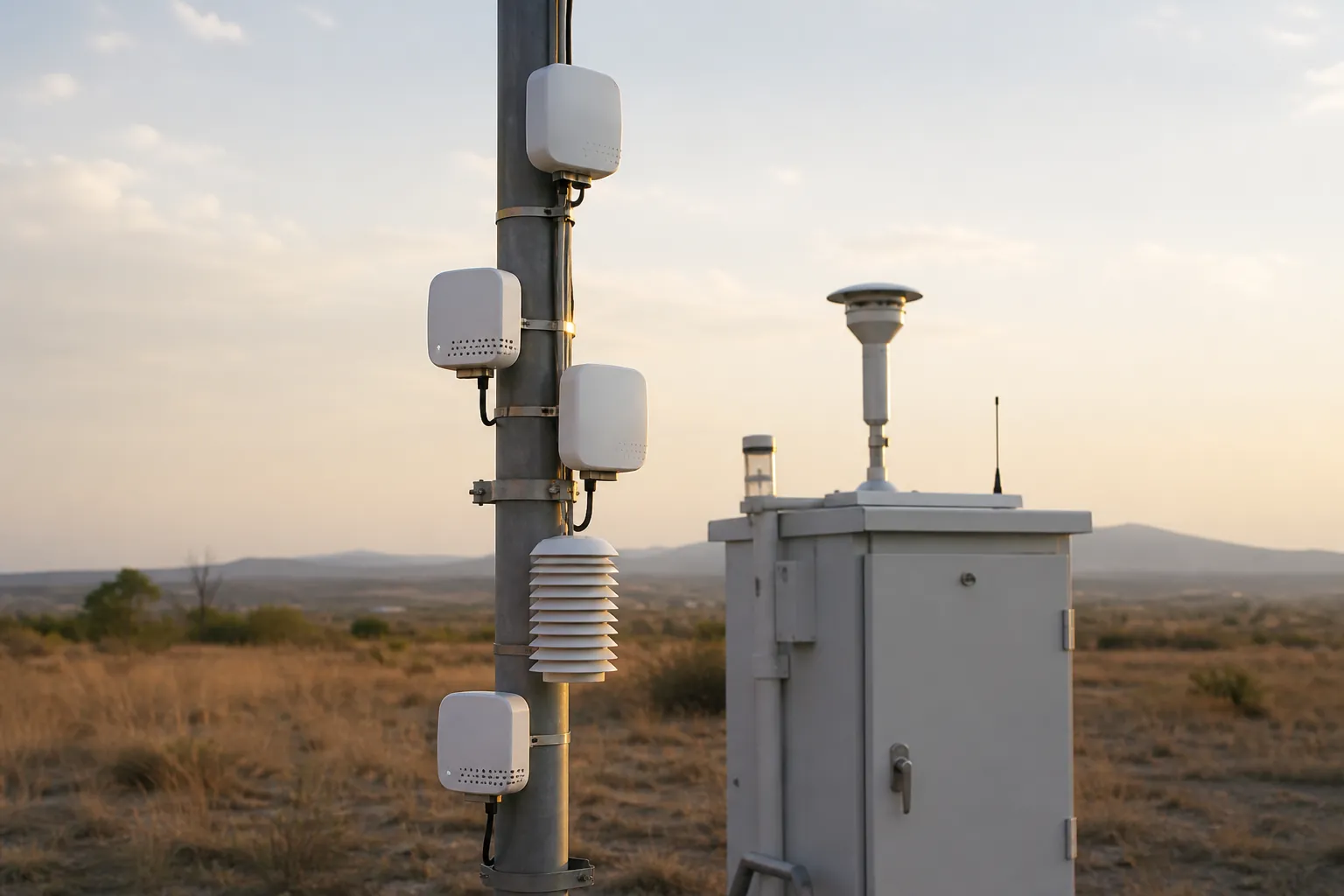
South Coast AQMD’s AQ-SPEC program is the cleanest starting point because it publishes model-by-model field collocations instead of asking readers to trust a reviewer’s living room. In AQ-SPEC field evaluations, low-cost monitors are typically run for 30–60 days at fixed sites beside Federal Equivalent Method reference instruments such as BAM-1020, T640, or GRIMM EDM-180 units, with PM2.5 performance reported as R² and mean absolute error on short or hourly averages [2]. R² tells you how well the monitor tracks the reference pattern. MAE tells you, in micrograms per cubic meter, how far off the readings are on average. Neither number makes the test a wildfire-smoke test. It is ambient field evidence, and that distinction matters.
| Monitor | Approx. price context | AQ-SPEC PM2.5 field result | What it means for this ranking |
|---|---|---|---|
| PurpleAir PA-II class | About $229 in the 2026 AQ-SPEC context | Original PA-II field R² reported around 0.93–0.97; 2026 field evaluation around R² 0.86–0.87 with MAE 3.3–3.6 µg/m³ [2] | Strong outdoor/property candidate once smoke correction is handled correctly |
| Temtop LKC-1000S+ | About $140 | R² 0.91–0.92, MAE 3.1–3.6 µg/m³ [2] | Best-supported mid-range indoor pick on field accuracy per dollar |
| Qingping Air Monitor | About $135 | R² 0.86–0.90 [2] | Another strong indoor pick, especially if display-first use matters |
| Atmotube Pro | Portable monitor class | R² about 0.88, MAE 4.9–5.9 µg/m³ [2] | The portable option with enough field support to stay in the conversation |
| Temtop M2000 2nd Gen | About $100 | R² 0.77–0.82, MAE 2.1–3.2 µg/m³ [2] | Cheap and not useless, but weaker tracking than LKC-1000S+ |
| IQAir AirVisual Pro | About $270 | R² around 0.69–0.73 in the field; one firmware run reported 0.63–0.81 [2] | Too expensive to excuse this PM2.5 field performance |
| Plume Flow 2 | About $199 | R² 0.01–0.13 [2] | Not a serious PM2.5 accuracy pick for smoke buying |
| Aeroqual S500 | About $1,490 | R² 0.46–0.67 [2] | Proof that price alone does not buy field PM2.5 accuracy |
That table does most of the damage to ordinary buying advice. The IQAir AirVisual Pro is not being punished for having a screen or an app; it is being punished because a monitor around the $270 class should not be leaning on reputation while a roughly $140 Temtop LKC-1000S+ posts stronger field PM2.5 tracking in the same independent program [2]. The Aeroqual S500 is the even cleaner warning. At around $1,490, it belongs to a more expensive instrument category, yet its AQ-SPEC PM2.5 field R² range sits below cheaper consumer units in this comparison [2].
What AQ-SPEC proves, and what it does not
AQ-SPEC is valuable because it separates real field tracking from brochure language. It also keeps lab and field performance from being quietly blended together. Several low-cost sensors can look excellent in controlled laboratory particle tests, with lab R² values near 0.99, while dropping into much weaker field performance once humidity, changing aerosol mixtures, weather, aging, and site conditions enter the picture [2]. A lab-only claim may be useful for engineering, but it is not enough for a person deciding whether to turn an HVAC fan to circulate, move a portable purifier, or tell whether a child’s bedroom is getting worse.
The other limit is smoke specificity. AQ-SPEC’s field collocations are ambient station tests. They tell us which monitors tend to follow reference PM2.5 in the real world, but they do not by themselves prove how a device behaves when wildfire smoke dominates the particle mix. That second question needs smoke studies. This is where PurpleAir pulls ahead: its raw readings are not magically correct, but its behavior during smoke has been studied enough that correction is not hand-waving.
Why PurpleAir wins outdoors even though its raw smoke readings run high
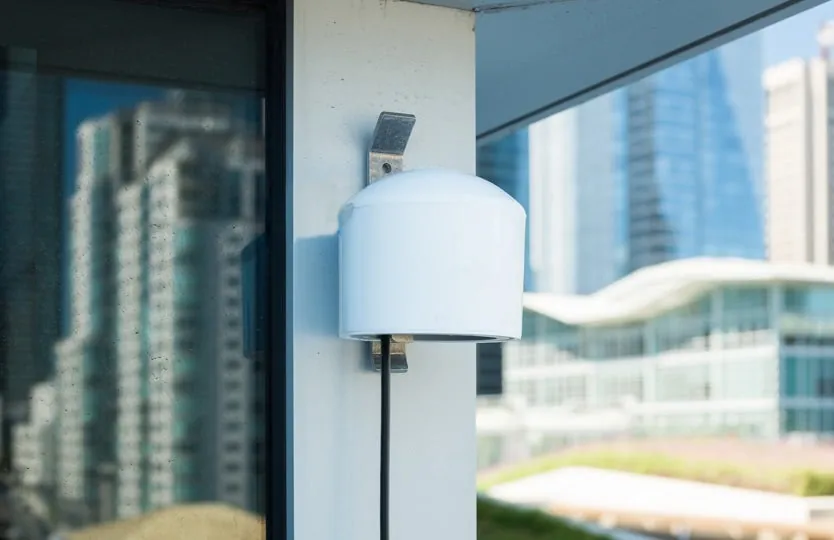
The lazy version of the PurpleAir argument is either “everyone uses it, so it must be right” or “it overreports smoke, so it is wrong.” Both miss the useful part. In EPA wildfire field work, PurpleAir had the highest correlation among the sensors tested, with r² above 0.95 at most sites, and it responded linearly up to about 200 µg/m³. The same study found saturation or nonlinearity above roughly 300 µg/m³, which is exactly the kind of caveat a smoke-season buyer needs to hear before trusting a single extreme reading [3].
More important, the EPA smoke-specific correction cut error to MAE below 10 µg/m³ and normalized RMSE below 27% in that wildfire evaluation [3]. That is not perfect. It is still a practical win because it moves PurpleAir from “responsive but inflated” toward “usable for decisions,” especially when the decision is about trend and category rather than pretending a $200-class optical box is a regulatory monitor.
The later EPA/Berkeley Lab correction work made the case broader. Barkjohn and coauthors developed a United States-wide PurpleAir correction: PM2.5 = 0.524×PA − 0.0862×RH + 5.75, with a quadratic form above 300 µg/m³. Using corrected PurpleAir data, the study found a 94% match with the reference NowCast AQI category [4]. That category match is the number I would rather have during smoke than an uncorrected device reading that looks impressively precise to one decimal place.
The broader sensor-challenge evidence points in the same direction. In the EPA wildland fire sensor challenge, raw sensor accuracies around 22–32% rose to about 75–83% after smoke-specific regression calibration [5]. Correction is not a cosmetic post-processing step in wildfire smoke. It is the difference between a gadget that alarms you and an instrument that can help you decide what to do next.
There are still PurpleAir annoyances worth keeping in the buying decision. Berkeley Lab EHS notes that pre-2019 PurpleAir firmware swapped the cf=1 and cf=atm channel labels, and it also documents a known U.S. EPA conversion bug on the PurpleAir map, so anyone using map-displayed corrected data should verify the current map behavior rather than assuming every label means what it appears to mean [6]. If you want the pre-buy correction-factor checklist rather than a model ranking, use the companion wildfire-smoke monitor trust filter.
Indoor picks: Temtop LKC-1000S+ first, Qingping close behind
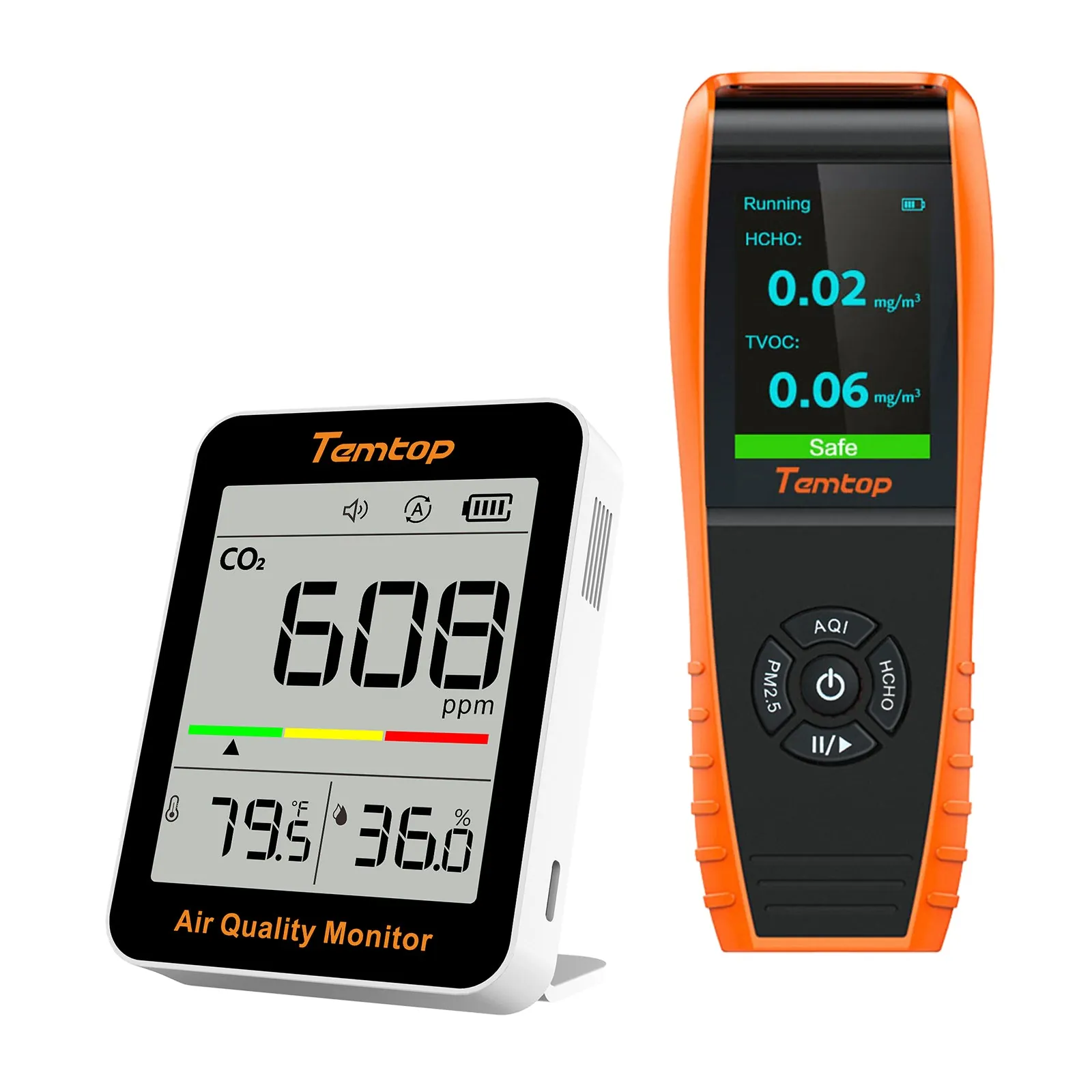
For indoor wildfire-smoke use, the job is slightly different from outdoor neighborhood monitoring. You are not trying to contribute to a public map. You are watching whether PM2.5 is rising indoors after a wind shift, whether a filter change helped, whether a bedroom is lagging behind the living room, and whether your purifier placement is doing anything. For that work, the Temtop LKC-1000S+ is the cleanest mid-range pick in this dataset: AQ-SPEC reports PM2.5 field R² of 0.91–0.92 and MAE of 3.1–3.6 µg/m³ at roughly the $140 class [2].
Qingping Air Monitor is the other indoor model I would keep on the shortlist. Its AQ-SPEC PM2.5 field R² range of 0.86–0.90 is not quite the Temtop LKC-1000S+ result, but it is strong enough to beat several more famous or more expensive devices in this comparison [2]. If you care about a display-first monitor on a desk or shelf, Qingping makes more sense than stretching for a better-known name with weaker PM2.5 field tracking.
The Temtop M2000 2nd Gen is the tempting cheaper detour. AQ-SPEC reports R² of 0.77–0.82 and MAE of 2.1–3.2 µg/m³ [2]. That is not a disaster, and for some buyers it may be acceptable as a budget spot-check meter. But if the purchase is specifically for smoke season and you are choosing between Temtop models, the LKC-1000S+ has the better tracking case.
The indoor recommendation is also where feature drift becomes most expensive. VOC readings, CO2 estimates, temperature, humidity, app graphs, and smart-home hooks can all be useful. They do not rescue a weak PM2.5 result when the pollutant you are buying for is smoke. If the bigger project is pairing a monitor with purifier choices, the separate wildfire-smoke purifier comparison is the better place for fan speeds, CADR, and automation behavior.
Portable pick: Atmotube Pro, with realistic expectations
Atmotube Pro is the portable pick because it has enough independent PM2.5 field support to recommend for personal exposure checks without pretending it replaces a fixed indoor or outdoor station. AQ-SPEC reports PM2.5 field R² around 0.88 and MAE of 4.9–5.9 µg/m³ [2]. For a pocketable monitor, that is respectable.
The use case should stay narrow. A portable monitor is good for comparing a car cabin, office, classroom, hotel room, or one corner of a house against another. It is weaker as your only smoke-season instrument because its readings move with your body, charging habits, local plumes, and handling. If you need a monitor to sit outside and watch a property through a multi-day smoke event, this is PurpleAir territory. If you need a stable indoor number to judge filtration, Temtop LKC-1000S+ or Qingping is the more sensible format.
The expensive disappointments: IQAir, Plume, and Aeroqual
IQAir AirVisual Pro is the one that will bother people who have already read general air-quality-monitor roundups. It has a polished consumer presence and a recognizable name, but AQ-SPEC’s PM2.5 field results put it around R² 0.69–0.73, with one firmware run spanning 0.63–0.81 [2]. For smoke buying, that is too weak for a device in roughly the $270 range when the Temtop LKC-1000S+ and Qingping Air Monitor field results are stronger at lower prices [2].
Plume Flow 2 is easier to dismiss for this specific job. Its AQ-SPEC PM2.5 field R² range of 0.01–0.13 is not a “maybe the app makes up for it” result [2]. It may have appeal as a lifestyle air-quality device, but this article is about wildfire-smoke PM2.5 accuracy, and those numbers do not carry a recommendation.
Aeroqual S500 is useful mainly as a price warning. AQ-SPEC reports PM2.5 field R² of 0.46–0.67 for a monitor in roughly the $1,490 class [2]. That does not mean every expensive instrument is bad, and it does not erase Aeroqual’s other possible uses. It does mean a smoke-season buyer with a $100–300 budget should not assume moving upmarket automatically improves PM2.5 field tracking.
Amazon Smart Air Quality Monitor is interesting, not a main pick
Amazon’s Smart Air Quality Monitor deserves a footnote because it is cheap, visible, and easy to add to a house already using Alexa. BreatheSafeAir’s smoke-period test of the Amazon monitor, which uses a Sensirion SEN44 sensor, found that it tracked EPA-corrected PurpleAir once corrected [7]. That is a useful result, and it also shows why apparent “underreporting” against raw PurpleAir can be a misunderstanding: if PurpleAir’s raw smoke values are inflated, a corrected lower number may be closer, not worse.
The reason it does not become a main recommendation is data handling. The same review notes that the app displays peak rather than average values and offers no data export [7]. For a casual glance, that may be fine. For a smoke-season buyer trying to compare indoor rooms, validate a purifier change, or keep a record across several bad days, no export is a real limitation.
How to choose by use case, not by feature list
| If your main smoke-season job is… | Buy first | Why |
|---|---|---|
| Outdoor/property monitoring | PurpleAir PA-II / PA-II-SD / Zen class | Best combination of AQ-SPEC field tracking, wildfire-specific evaluation, and published correction behavior [2][3][4] |
| Indoor room monitoring on a $100–300 budget | Temtop LKC-1000S+ | Strong AQ-SPEC PM2.5 field R² and low MAE for the price class [2] |
| Indoor display-first monitoring | Qingping Air Monitor | Good AQ-SPEC PM2.5 field tracking and a practical indoor format [2] |
| Portable checks between rooms, cars, offices, or travel spaces | Atmotube Pro | Respectable portable PM2.5 field result, but not a substitute for a fixed station [2] |
| Alexa-adjacent casual awareness | Amazon Smart Air Quality Monitor as a secondary device | Promising corrected smoke tracking in one smoke-period review, limited by peak-value display and no export [7] |
| Buying by brand reputation | Avoid using that as the deciding metric | IQAir AirVisual Pro, Plume Flow 2, and Aeroqual S500 do not win the AQ-SPEC PM2.5 field comparison [2] |
Outdoor and indoor monitoring also answer different questions. An outdoor PurpleAir tells you what is arriving at the property or neighborhood level. An indoor Temtop or Qingping tells you whether your building envelope and filtration are keeping up. In an active event, the useful loop is usually outside trend, inside response, purifier or HVAC adjustment, then inside confirmation. The practical operating sequence is covered separately in the home wildfire-smoke air-quality check; this comparison is only ranking which devices deserve to be in that loop.
If hub compatibility is the deciding tiebreaker after the accuracy choice, use the smart air quality monitor compatibility guide. Just do not let compatibility choose the monitor before PM2.5 evidence does.
Bottom line for wildfire-smoke buying in 2026
Within the field and smoke regimes covered by the independent evaluations, the evidence-backed ranking is clear enough to buy from. Choose a PurpleAir PA-II / PA-II-SD / Zen class monitor for outdoor or property-level smoke tracking, with corrected PM2.5 enabled and map behavior verified. Choose Temtop LKC-1000S+ or Qingping Air Monitor for indoor smoke decisions. Choose Atmotube Pro only when portability is the point. Treat IQAir AirVisual Pro, Plume Flow 2, and Aeroqual S500 as examples of why price, polish, and brand recognition are not PM2.5 accuracy tests.
References
- Wildfire Smoke Adjustment Factors for Low-Cost and Professional PM2.5 Monitors with Optical Sensors, Sensors, 2020
- Summary of PM Sensor Evaluations, South Coast AQMD AQ-SPEC
- Field Evaluation of Low-Cost Particulate Matter Sensors for Measuring Wildfire Smoke, Sensors, 2020
- Development and Application of a United States-wide Correction for PM2.5 Data Collected with the PurpleAir Sensor, Sensors, 2022
- Wildland Fire Sensor Challenge, USDA Forest Service
- Wildfire Smoke and Air Quality Resources: Data Limitations and Frequently Asked Questions, Berkeley Lab EHS
- Amazon Smart Air Quality Monitor Review, BreatheSafeAir
Known issues with this device / protocol
Spec-version history
For active regressions on this protocol, see Update Watch.
No linked Update Watch entries yet.