
Can OpenAI Astra Control Home Assistant Yet?
As of August 2, 2026, OpenAI has confirmed only Astra's math results — no release date, API, or Home Assistant integration exists, so every smart-home feature attributed to Astra is unverified. This compatibility brief separates confirmed facts from unconfirmed reporting and shows which OpenAI features actually work in Home Assistant today.
Last updated
Verified August 2, 2026: OpenAI Astra is Investigating for Home Assistant. OpenAI has confirmed an internal Astra system associated with ten solved open problems in mathematics and theoretical computer science, but there is no public Astra release date, no API, no model card, no pricing page, and no Home Assistant integration to install. That is impressive research evidence, not a smart-home control surface.[1][2][3]
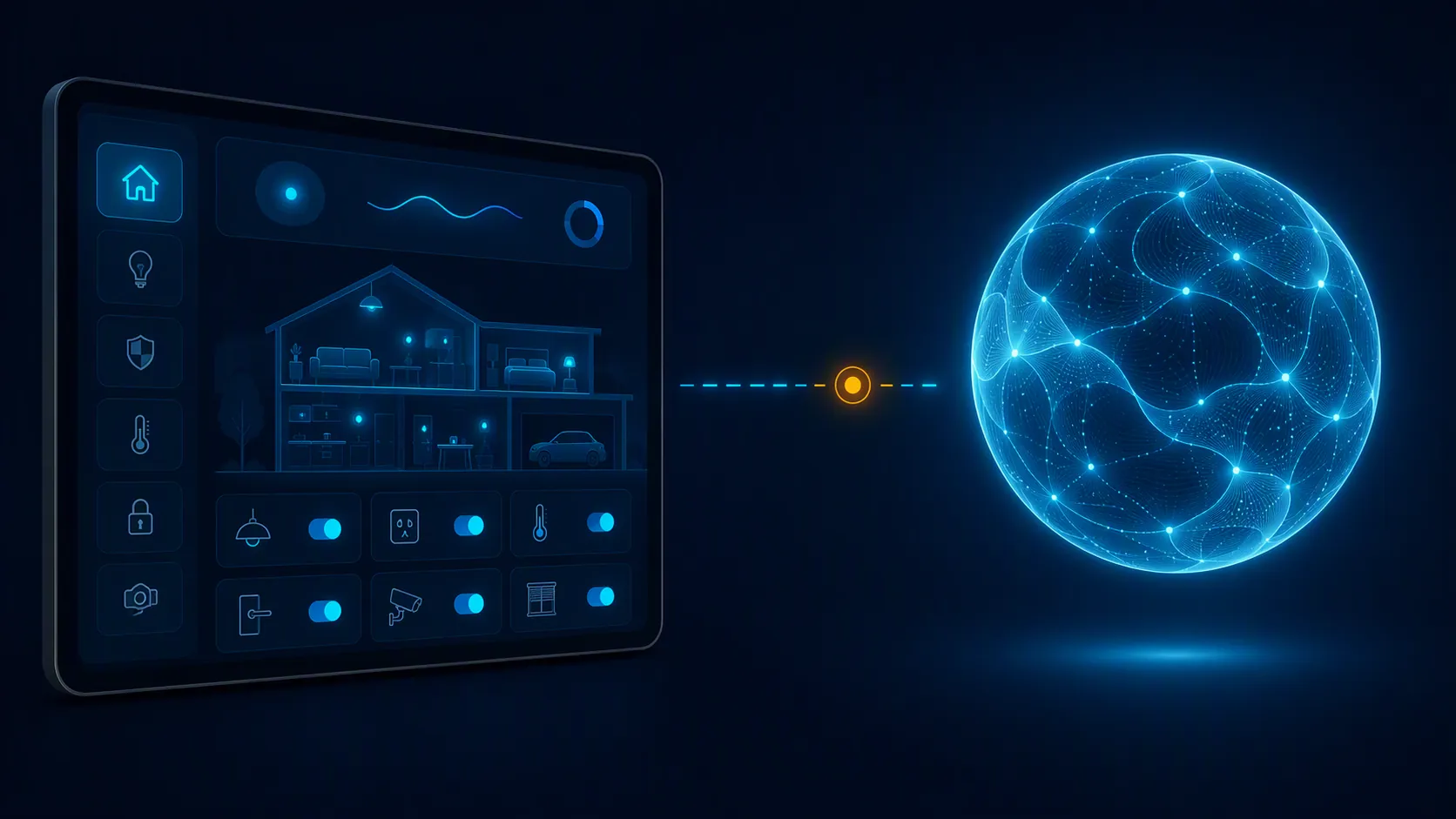
One name cleanup matters before touching any entities: this article is about OpenAI Astra, the model name attached to OpenAI’s August 2026 math announcement and related reporting. It is not Google DeepMind’s Project Astra, and it is not DataStax Astra DB. Search results are noisy enough here that landing on the wrong “Astra” can make a non-existent Home Assistant feature look much more real than it is.
The dated compatibility verdict
| Question | Status on August 2, 2026 | What that means for Home Assistant |
|---|---|---|
| Can OpenAI Astra control Home Assistant? | Investigating | No. There is no Astra integration, API, or released model that Home Assistant can call. |
| Has OpenAI confirmed Astra exists? | Confirmed, narrowly | OpenAI has confirmed an internal Astra system associated with ten solved open math problems, not a consumer or developer smart-home product.[1] |
| Is there an Astra model card or supported-model listing? | Not available | There is no supported Astra model identifier to select in Home Assistant. |
| Is there Astra pricing? | Not available | There is no Astra billing model to budget around. Do not treat token-cost reporting around the math work as user-facing pricing. |
| Is there an official Home Assistant Astra page? | Not available | The official OpenAI route in Home Assistant today is the existing openai_conversation integration, not Astra.[7] |
| Should Astra smart-home claims be used in compatibility planning? | Investigating | Label them as unverified until OpenAI and Home Assistant expose a real control surface. |
That last column is the practical one. A Home Assistant feature is not established by a model name, a private demo, or a device rumor. It needs somewhere to connect: an integration, an API, a supported model identifier, an authentication path, and clear rules for which entities the model may touch.
Claim ledger: what is confirmed, what is reported, and what works now
| Claim | Status | Compatibility weight |
|---|---|---|
| OpenAI says an internal Astra version solved ten open problems in mathematics and theoretical computer science. | Confirmed | High research significance, but no direct Home Assistant feature.[1][2][3] |
| Coverage around the math announcement described Lean certificates and a roughly $2,000 token-cost figure. | Reported around the research result | Interesting for evaluating computation and verification, but not official Astra API pricing.[2][3] |
| Astra can coordinate multiple agents on long-running tasks over hours or days. | Investigating | Potentially relevant to future home routines, but currently based on reporting rather than a released integration.[3][4][5] |
| OpenAI showed Astra privately to U.S. senators and Treasury and Commerce officials, and Astra may pass through a new federal pre-release review framework. | Investigating | Relevant to release uncertainty; it does not create user availability or Home Assistant compatibility.[3] |
| OpenAI’s first consumer device may be a movable, screen-free smart speaker for smart-home control, targeted for a 2026 unveiling and 2027 release. | Investigating | Device reporting rests on unnamed people familiar with the matter and should not be treated as an Astra feature list.[6] |
| Home Assistant can already use OpenAI through openai_conversation. | Confirmed today | This is the usable path: a conversation agent, exposed entities, AI Task, speech, TTS, web search, and supported model options documented by Home Assistant.[7] |
This is the split that prevents a bad weekend. OpenAI-confirmed Astra facts can be true while Astra smart-home features remain absent. A model can be powerful in a controlled internal research setting and still give you nothing installable, no entity registry access, no permission model, and no way to tell your family which assistant is responsible for the kitchen lights.
What OpenAI has actually confirmed about Astra
The official confirmation is narrow: OpenAI published ten advances in mathematics, connected those advances to an internal version of Astra, and framed the result around solving open problems in mathematics and theoretical computer science.[1] RuntimeWire and The Decoder covered the same announcement as Astra solving ten previously open math problems, with additional attention to verification and cost details around the run.[2][3]
For compatibility work, the missing pieces matter more than the headline. The announcement does not provide a public Astra API endpoint, a downloadable or selectable model identifier, a Home Assistant integration, a model card, or a pricing page.[1] A math result can justify watching Astra closely; it cannot justify exposing locks, thermostats, garage doors, or “all lights” to a model that Home Assistant cannot even call.
The reported token-cost figure should stay in that same box. It may be useful for understanding the scale of a research run, but it is not a consumer billing promise, an API price sheet, or a signal that an Astra-powered Home Assistant agent will be affordable. Until OpenAI publishes developer access and pricing, Astra cost planning is just guesswork with a model name attached.
The unconfirmed Astra reporting is interesting, but it is not a feature list
The most smart-home-relevant Astra reporting is the claim that it can coordinate multiple agents on longer-running work over hours or days. That is exactly the kind of capability that could eventually matter in a home: diagnose why the upstairs climate routine failed, compare calendar events with occupancy, wait for solar production to rise, then adjust loads without turning the house into a pile of one-shot automations. But those capabilities are still reporting-based, not a released Home Assistant function.[3][4][5]
The federal-review thread also belongs in the uncertainty column. The Decoder reported a late-July 2026 private demo to U.S. senators and Treasury and Commerce officials and described Astra as expected to pass through a new U.S. federal pre-release review framework.[3] That context may explain why a public release date is not simply a product-marketing decision. It does not give Home Assistant users an integration, and it does not mean the model will be available in every account, region, or API tier on day one if it ships.
The device reporting should be handled even more carefully. Bloomberg, via Yahoo Finance, reported that OpenAI’s first consumer device would be a movable, screen-free smart speaker built as an AI companion, with a 2026 unveiling target and a 2027 release target.[6] That sounds adjacent to smart-home control, but it rests on unnamed people familiar with the matter. It also does not answer the Home Assistant question: what API, what local control boundary, what exposed-entity rules, what fallbacks, what audit trail?
What OpenAI can do in Home Assistant today
If the actual goal is “use OpenAI with Home Assistant,” the path today is the official openai_conversation integration. Home Assistant documents it as available since 2023.2 and reports it in roughly 4.5% of active installations through its analytics.[7] This is not Astra, but it is real, installable, and governed by Home Assistant’s existing Assist and entity-exposure model.
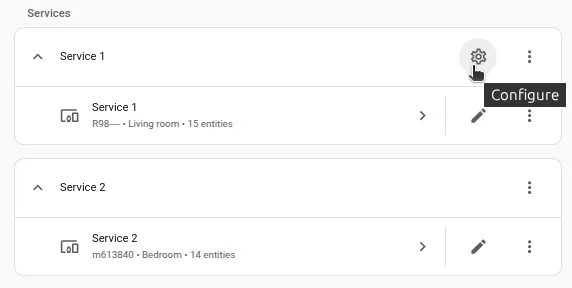
The integration can act as a conversation agent. It can control only the entities explicitly exposed to it, which is the right default boundary for an LLM in a house.[7] If “hallway lights” are exposed, the model may be able to act on them through Home Assistant. If the front door lock is not exposed, the model should not get to improvise its way into that device.
Home Assistant’s current OpenAI surface also includes AI Task, Whisper speech-to-text, text-to-speech, and OpenAI web search on gpt-4o and newer models.[7] Camera and file attachments were added in Home Assistant 2025.8, which matters for use cases like asking about an image from a camera or passing a file into an AI task.[8] Home Assistant also documents how to create an OpenAI-powered voice personality for Assist, which is useful if the household experience matters as much as the raw model output.[9]
The payment boundary is also real. The official integration requires an OpenAI API key from platform.openai.com.[7] A third-party SmartHomeScene guide estimates roughly 500 to 1,500 tokens per home-control interaction and says 20 to 30 daily voice commands can land under a few dollars a month, but those are guide-author estimates, not official OpenAI or Home Assistant pricing guarantees.[10]
For model-by-model comparison inside the current Home Assistant plumbing, the useful question is not “Does Astra exist?” but “Which supported model behaves well as a Home Assistant conversation agent?” That is the same lane covered in the site’s GPT-5.5 and DeepSeek V4 Home Assistant compatibility map and the Claude vs ChatGPT Home Assistant task verdicts. Astra is not in that comparison until there is a released model to test.
Where Matter, Zigbee, Z-Wave, and Thread fit

OpenAI models do not directly control Matter, Zigbee, Z-Wave, or Thread devices in a Home Assistant setup. Home Assistant controls those devices through its own integrations, coordinators, radios, bridges, and entity model. The OpenAI side sees a conversation interface and the entities Home Assistant exposes to it.
That architectural boundary is the part to keep in your notes file. If Astra eventually becomes available through Home Assistant, the likely safe path would still be: model receives a request, Home Assistant interprets allowed actions, exposed entities are acted on, and the underlying integration handles the protocol. Unless OpenAI and Home Assistant ship something materially different, Matter support would remain a Home Assistant/device issue, not an Astra feature.
This is why “Astra smart-home control” is too broad as a compatibility claim. A model may be better at reasoning, planning, or language. It still needs Home Assistant to decide which switch, light, lock, script, scene, or automation is reachable.
Why Home Assistant’s own caution still applies
Home Assistant’s June 2024 position was unusually blunt for a project that also experiments aggressively: it said no AI-powered home solution was “worth it” yet, pointing to hallucination risk and voice-response latency, and it published reproducible LLM benchmarks for home control.[11] That does not mean LLMs are useless in Home Assistant. It means the failure modes are household-visible.
A hallucinated calendar answer is annoying. A hallucinated device command can wake people, disable a comfort routine, or make someone stop trusting the voice assistant altogether. Latency has the same practical shape: a two-second pause may be tolerable for “summarize the garage camera,” while a slow response to “turn off the alarm sound” feels broken even if the model eventually gets the command right.
Long-running agents could eventually reduce some of that brittleness by checking state, waiting, retrying, and reasoning across multiple steps. That is the future worth watching. But the permission boundary has to arrive with it, not after it. A home agent that can plan for hours also needs strict scope, logs, reversibility, and a clear answer to who approved which action.
How to treat Astra claims in your own setup notes
- Mark OpenAI Astra for Home Assistant as Investigating, verified August 2, 2026.
- Do not buy microphones, speakers, hubs, or displays on the assumption that Astra will control Home Assistant.
- Do not expose additional Home Assistant entities for Astra; there is no Astra agent to expose them to.
- Do not build automations that depend on Astra multi-agent behavior, private-demo claims, or the reported OpenAI smart speaker.
- If you want OpenAI-controlled Home Assistant today, use openai_conversation and expose only the entities you are comfortable letting a conversation agent control.
- Keep protocol compatibility separate: Matter, Zigbee, Z-Wave, and Thread support belongs to Home Assistant and the device integration, not to Astra.
If you are setting this up now rather than waiting on Astra, start with the existing Assist-agent plumbing and the API-key billing reality. The site’s Assist-agent setup recipe covers the same kind of conversation-agent wiring an eventual Astra integration would probably need to respect, and the dated LLM-in-Home-Assistant cost check is the better place to think about ongoing API usage than any unreleased Astra pricing rumor.
The clean operational answer is simple: do not plan a Home Assistant system around OpenAI Astra yet. Keep Astra-specific smart-home claims in Investigating status. Use the official OpenAI Conversation integration if you need OpenAI in Home Assistant today, and treat device protocol support as a Home Assistant compatibility question.
References
- Ten advances in mathematics, OpenAI, 2026-08-01
- OpenAI Astra Ten Open Math Problems, RuntimeWire
- OpenAI announces its next major model Astra by dropping ten previously unsolved math solutions, The Decoder
- OpenAI Showcases Astra Multi-Agent AI System, Technology Express
- OpenAI's Astra reportedly emerges: multi-agent AI for longer work, Softonic
- OpenAI's first device will be movable, screenless speaker built as AI companion, Yahoo Finance
- OpenAI Conversation, Home Assistant
- 2025.8 release notes, Home Assistant, 2025-08-06
- Assist - Create an AI personality with OpenAI, Home Assistant
- Home Assistant ChatGPT Integration, SmartHomeScene
- AI agents for the smart home, Home Assistant, 2024-06-07
Known issues with this device / protocol
Spec-version history
For active regressions on this protocol, see Update Watch.
No linked Update Watch entries yet.