
Can the OnePlus N6x replace your smart home hub?
The OnePlus N6x can be a smart home control panel and voice satellite, but it cannot replace a dedicated hub for Zigbee, Z-Wave, or Thread. This status-labeled verdict maps each hub role to what the hardware actually supports, so you can buy it as a panel rather than a hub.
Last updated
Verdict first: buy the N6x as a satellite, not the hub
If the question is whether to buy the OnePlus N6x as a smart home hub alternative, the answer depends on which job you mean by “hub.” As a cheap Android control screen, voice satellite, or Home Assistant Companion-style sensor node, it makes sense. As the box that coordinates Zigbee, Z-Wave, Thread, or a Google Home Matter fabric, it runs into hard hardware and platform boundaries.
| Expected smart-home role | Status on OnePlus N6x | One-line reason |
|---|---|---|
| Matter controller | Confirmed, as a phone/control surface | It can run control apps, but Google separates phone setup/control from the listed Matter hub device classes [1]. |
| Matter hub | Not possible as a Google Home Matter hub | Google lists Matter hub devices such as speakers, displays, routers, streamers, and TVs; phones are not on that hub list [1]. |
| Thread border router | Not possible | The N6x official specs do not list an 802.15.4 radio, and Home Assistant’s Thread docs require an 802.15.4-capable border router [2][3]. |
| Zigbee/Z-Wave coordinator | Not possible directly | The phone has no Zigbee or Z-Wave radio; Home Assistant ZHA expects a coordinator attached to the Home Assistant host, commonly a USB dongle [2][4]. |
| Home Assistant server | Workaround / Investigating | There is an unofficial aarch64-only Termux installer for Home Assistant Core, but it explicitly says the route is not officially supported [5]. |
| Voice satellite | Confirmed, within app/platform limits | Android can be used for Home Assistant Assist voice control on supported setups [6]. |
| Wall dashboard | Confirmed | This is the cleanest use: a large-battery Android screen running Google Home, Home Assistant, or other dashboard apps. |
| Companion-app sensor node | Confirmed, within app limits | The phone can act as an app-connected endpoint for voice/control and mobile-device-style sensor exposure rather than as a radio coordinator. |
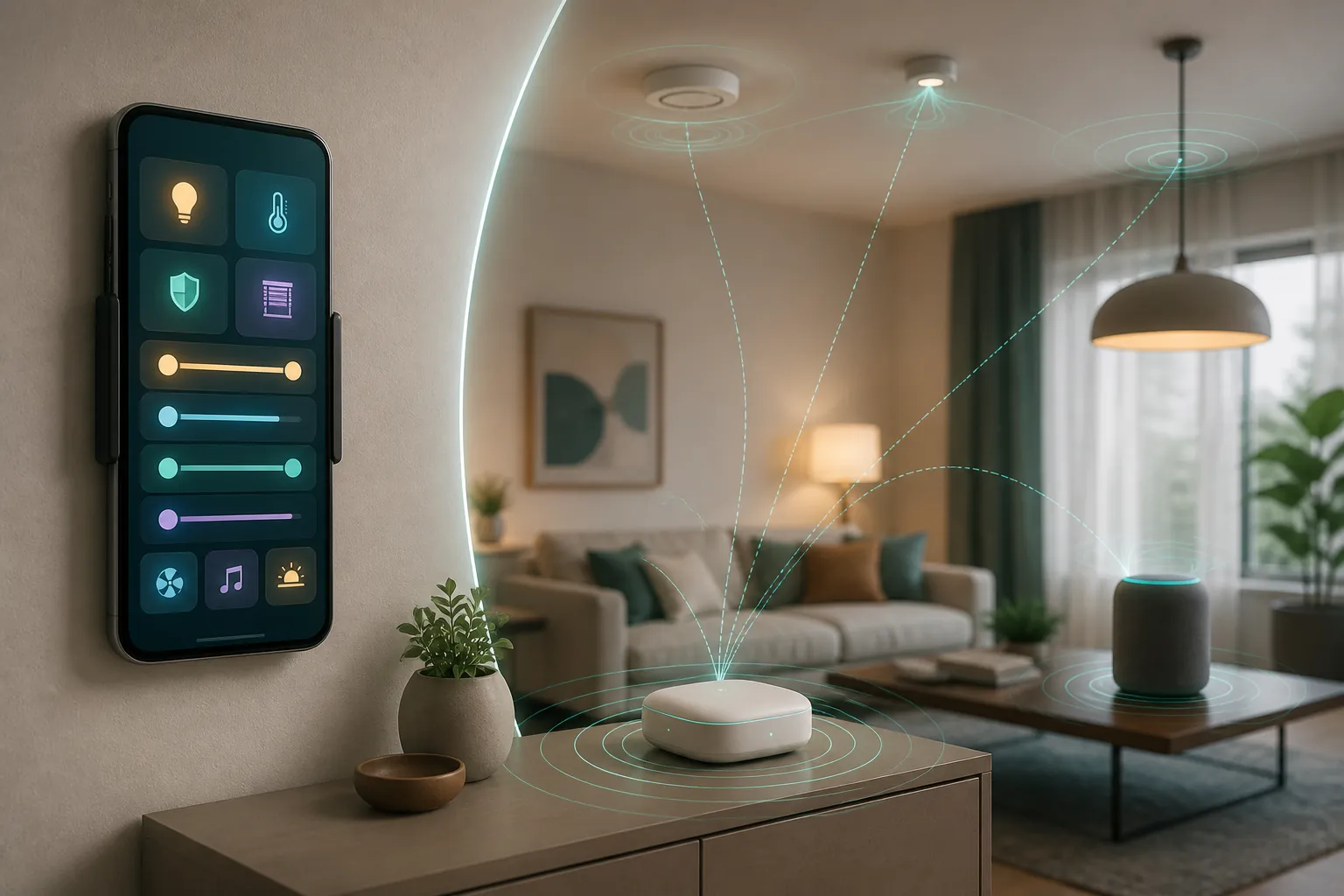
Why the N6x is tempting in the first place
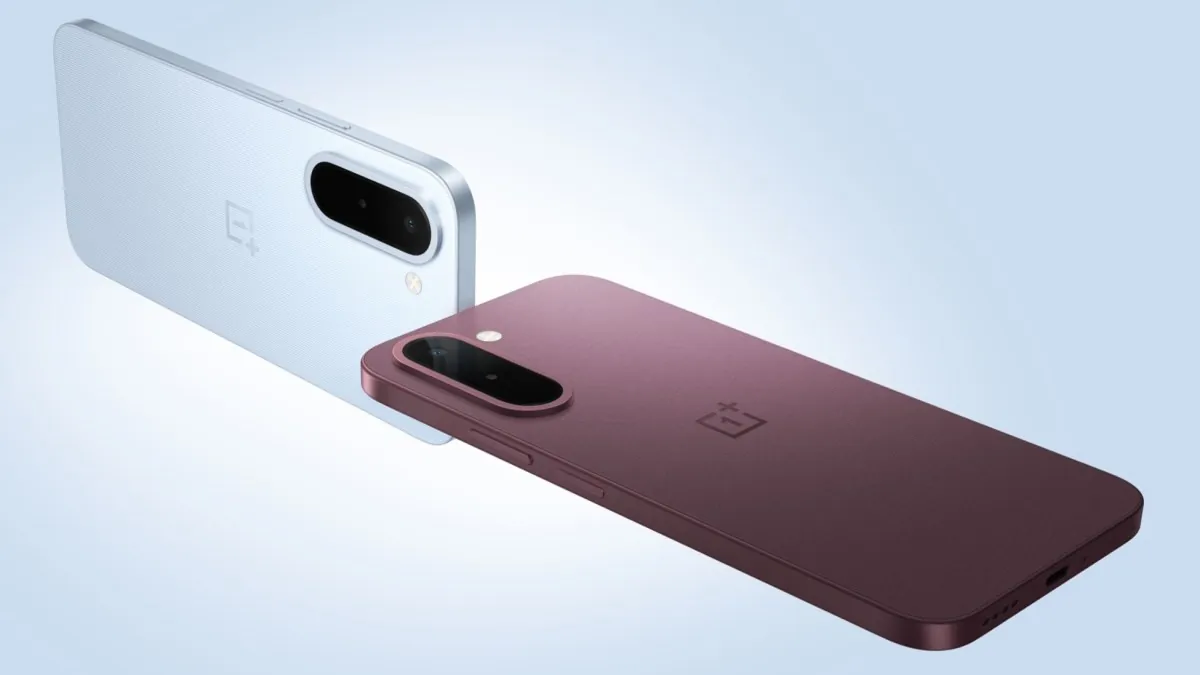
The N6x is exactly the sort of phone that makes smart-home tinkerers pause before buying another small plastic hub. OnePlus launched it in India on July 31, 2026, at ₹18,999 for the 4GB/64GB model and ₹20,999 for the 4GB/128GB model, with sales starting August 4 through Amazon India and OnePlus.in [7][8]. In launch coverage, that was roughly a $199-to-$220 phone, which puts it in “maybe I can tape this to a cabinet and call it a panel” territory rather than luxury-tablet territory [7].
The official spec sheet also gives panel-minded buyers a few useful hooks: a Dimensity 6360 Apex chip, 4GB of RAM, a 7,000mAh battery, bypass charging, and a 120Hz display [2]. Those are not hub credentials. They are dashboard credentials. A phone that can sit powered on without constantly cycling its battery is much more interesting as a kitchen controller, hallway status board, or bedside voice screen than a generic bargain handset.
There is one spec annoyance worth flagging because it is the kind of thing that gets copied into buying threads: GSMArena’s launch article lists Wi-Fi 6, while OnePlus’s official India spec page lists Wi-Fi 5, 802.11ac [7][2]. For a buying decision, the safer source is the official OnePlus page. Either way, Wi-Fi generation does not turn the phone into a Zigbee, Z-Wave, or Thread coordinator.
Availability also matters, just not in the melodramatic way. The N6x is an India-focused launch, and BGR describes it as exclusive to India while noting OnePlus’s changed posture in the U.S. and Europe [9]. For U.S. and European buyers, that means import pricing, warranty coverage, repairs, and software-support expectations are part of the decision. It does not change the protocol verdict, but it does make “cheap hub alternative” a less clean bargain once something goes wrong.
Matter: a controller is not the same thing as a hub
Matter is where the wording gets slippery. A phone can open Google Home, Home Assistant, SmartThings, Alexa, or a vendor app. It can display devices, send commands, receive notifications, and help with setup flows. That makes it a control surface. It does not automatically make it the always-available Matter hub that an ecosystem uses to keep devices reachable.
Google’s own Matter preparation page is useful because it draws that line in a buyer-visible way. Its Matter hub section points to device classes such as Google speakers, displays, Wi-Fi routers, streaming devices, and TVs; it does not list Android phones as Matter hub devices [1]. That is the clean boundary: the N6x can be the screen you tap, not the Google Home hub device your Matter setup depends on.
This distinction shows up constantly in device shopping. A flood sensor, leak detector, or smoke alarm may advertise Google Home, Matter, Thread, Zigbee, or Z-Wave, but the requirement usually lives one layer below the control screen. That is why hub-first compatibility guides, such as smart flood sensors by hub, are more reliable than asking whether a random phone can “run smart home.” The phone may control the system beautifully after the real hub has done the radio work.
Thread, Zigbee, and Z-Wave hit the radio wall
Thread is not just Wi-Fi with a newer badge. Home Assistant’s Thread integration documentation says Thread needs an 802.15.4 radio through a border router, and it describes phones as useful for onboarding through Bluetooth Low Energy and credential sync rather than as the border-router radio itself [3]. The OnePlus N6x official specs list normal phone connectivity, but they do not list an 802.15.4 radio, Thread, Zigbee, or Z-Wave hardware [2].
So the Thread verdict is not “limited.” It is not possible for the N6x to be a Thread border router on its documented hardware. It may help you open an app, scan a code, or manage a Matter-over-Wi-Fi device through an existing ecosystem. It cannot become the border router that your Thread leak sensor, button, lock, or smoke detector needs.
The same logic applies to Zigbee and Z-Wave, with different radios. A Zigbee device does not pair to an Android phone just because the phone is nearby. Home Assistant’s ZHA documentation expects a Zigbee coordinator attached to the Home Assistant host, typically a USB coordinator, and that coordinator is the device doing the Zigbee network work [4]. Z-Wave has the same practical shape for this buying decision: without Z-Wave radio hardware, the phone is not a Z-Wave controller.
This is the spot where optimistic forum language usually costs someone an evening. If the device you want to buy depends on Zigbee, Z-Wave, or Thread, the important question is not whether the N6x has a big battery or a nice display. It is whether the system already has the coordinator or border router those devices require. The same pattern comes up in Matter and Thread leak detector buying and in smart smoke detector compatibility: “works with Google Home” can still mean “works after you own the required hub.”
Home Assistant on Android: interesting, unofficial, device-sensitive
The most generous reading of the N6x-as-hub idea is not Google Home. It is Home Assistant Core on Android through Termux. There is a community guide that describes installing Home Assistant Core and a Matter server on Android without root or QEMU, with a claimed roughly 10-minute process and access through port 8123 [10]. The linked installer project also says it targets aarch64 and is “not officially supported” [5].
That makes it a workaround, not a confirmed product feature of the OnePlus N6x. There is no first-party evidence in the current material that this specific phone has been tested successfully. Android builds differ, vendor restrictions differ, and Home Assistant dependencies move. A cheap phone that looks perfect on paper can still fail at the one Linux-ish behavior the workaround needs.
The mixed community reports are exactly why this should not be treated as a safe pre-purchase plan. In another Home Assistant community thread, users discuss Android-specific failures such as PermissionError problems around /proc/net/dev affecting HTTP, networking, or zeroconf behavior on Android 10+, alongside device-specific successes and workarounds such as patching IPv6 handling or pinning older Home Assistant versions [11]. That is fine for a weekend experiment with a spare handset. It is shaky as the reason to import a phone that is supposed to replace a real hub.
The USB-dongle idea needs the same restraint. It is easy to imagine an Android phone, a USB-C OTG adapter, and a Zigbee stick becoming a miniature Home Assistant hub. The supported Home Assistant model, though, is still a coordinator attached to the Home Assistant host, and community Android reports include USB and permission limitations rather than a clean, phone-specific confirmation path for the N6x [4][11]. For this phone, Zigbee-dongle-through-Android belongs in “investigating,” not “buy this and it will work.”
What the N6x can do well
The useful version of this project is simpler and much more believable: use the N6x as a smart-home satellite inside a setup that already has the required hub layer. Put Home Assistant, Google Home, Alexa, SmartThings, camera apps, alarm apps, and energy dashboards on it. Mount it where a household actually makes decisions. Let the real hub, border router, or coordinator live elsewhere.
Home Assistant’s Android voice documentation supports the idea of an Android device participating in Assist voice control, which makes the N6x plausible as a low-cost voice satellite if your Home Assistant setup is already built for it [6]. Its screen and battery make it plausible as a wall dashboard. Its camera, microphone, motion state, charging state, and app sensors make it plausible as a Companion-app-style endpoint, depending on which app features you enable and what you are comfortable leaving on an always-powered phone.
There is also precedent for repurposed Android phones being genuinely useful around the home. MakeUseOf describes replacing a smart speaker display with an old Pixel 5, and XDA argues that an old Android phone can act as a richer smart-home sensor than many dedicated single-purpose devices [12][13]. Those examples are not proof that the N6x is a hub. They are proof of the better idea: phones are excellent satellites because they already have screens, microphones, speakers, batteries, cameras, and sensors.
That satellite role also fits how smart homes actually survive outages and network quirks. Matter, Zigbee, Z-Wave, and Thread behavior belongs in the hub and LAN layer, not in whichever screen happens to be mounted near the door. The same separation matters in broader network setups, including Starlink smart-home compatibility, where the internet connection, LAN, and hub roles need to be kept mentally separate.
Import it only for the panel job
For a buyer in India who wants an inexpensive Android wall panel, the OnePlus N6x is easy to understand: big battery, bypass charging, modern-enough specs, and a low launch price. For a U.S. or European buyer, the import-only reality adds support and warranty risk, so the reason to buy has to be specific.
Buy the N6x if you want a cheap smart-home dashboard, voice/control satellite, or app-based sensor node for a system that already has its hub hardware. Do not buy it expecting it to replace a dedicated Zigbee coordinator, Z-Wave controller, Thread border router, or Google Home Matter hub.
References
- Prepare your smart home for Matter, Google Home and Nest Help, link
- OnePlus N6x Specs, OnePlus India, link
- Thread, Home Assistant, link
- Zigbee Home Automation, Home Assistant, link
- termux-home-assistant-installer, GitHub, link
- Assist on Android, Home Assistant, link
- OnePlus N6x debuts with a Dimensity 6360 Apex chipset, a 7,000mAh battery, GSMArena, link
- OnePlus launches N6x for mid-tier buyers in India, The Hindu, link
- OnePlus’ new phone is cheaper than you expected, but you probably can’t buy it, BGR, link
- Simple and fast installing Home Assistant Core and Matter server on Android (no root, no QEMU), Home Assistant Community, link
- HomeAssistant Core on Android, Home Assistant Community, link
- I Replaced My Smart Speaker With an Old Android Phone, and It Does Much More, MakeUseOf, link
- Your old Android phone is a better smart home sensor than most dedicated hardware, XDA, link
Known issues with this device / protocol
Spec-version history
For active regressions on this protocol, see Update Watch.
No linked Update Watch entries yet.