Search for the best smart lock and the first thing you usually get is a feature race: Wi-Fi, fingerprint readers, Apple Home support, guest codes, auto-lock, batteries, matte finishes. Those things matter after the deadbolt has done its basic job. For a primary exterior door, the more useful first question is simpler: when the door is locked and someone drives force into the door edge, what class of hardware is taking that hit?
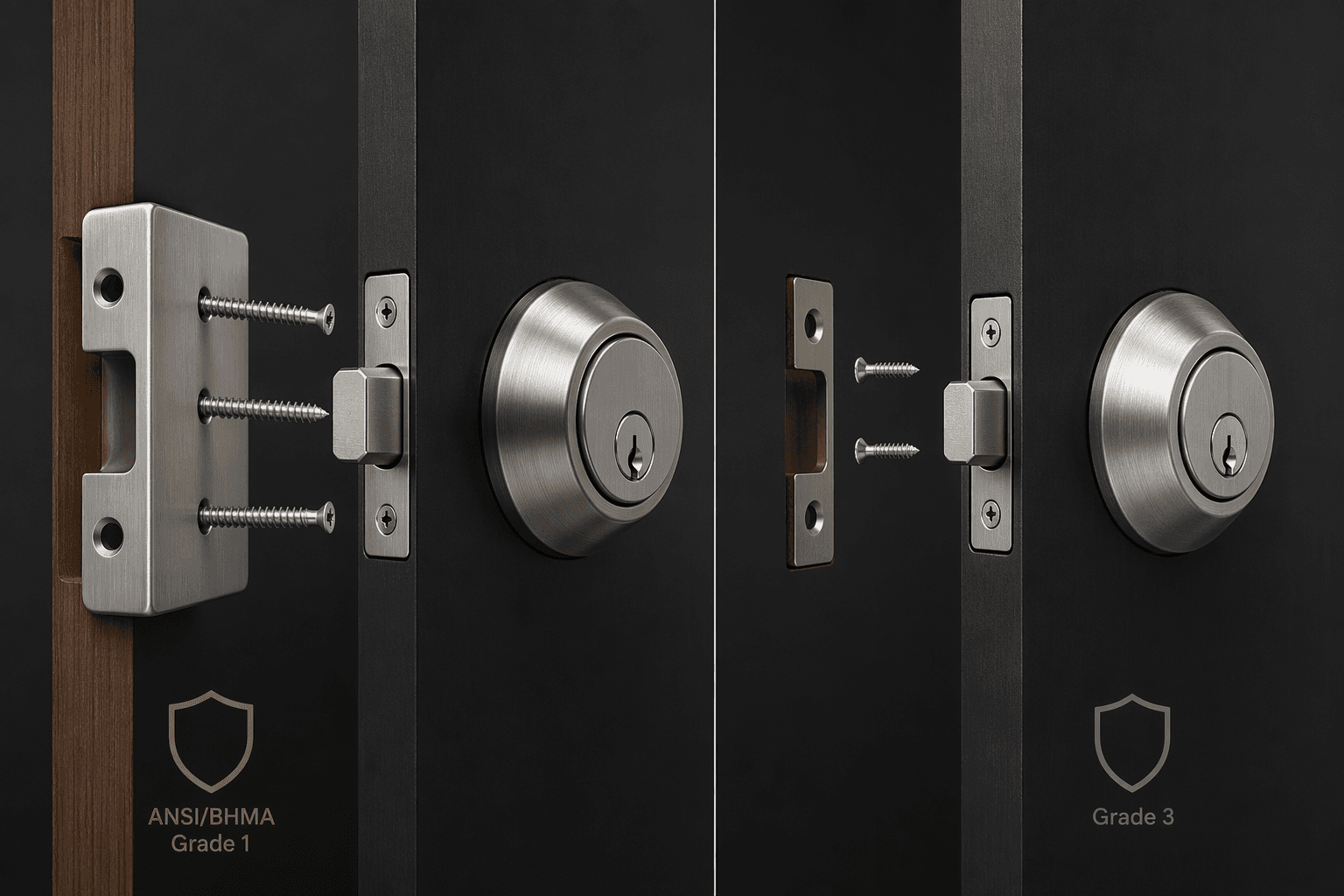
On that question, the field is not flat. Schlage Encode Plus and Schlage Arrive sit in the stronger bucket because they use ANSI/BHMA Grade 1 deadbolt hardware, while Yale Assure Lock 2 is a Grade 2 choice and Eufy C34 is a Grade 3 budget choice.[1][2] Those are not tiny footnotes. They are the difference between buying a smart device that happens to lock a door and buying a deadbolt with smart electronics attached.
| Smart lock | Security grade | Best fit |
|---|---|---|
| Schlage Encode Plus | ANSI Grade 1 / BHMA AAA | Primary exterior doors where physical resistance is the priority |
| Schlage Arrive | Grade 1 | Buyers who want Schlage's newer Grade 1 platform as Encode Plus availability changes |
| Yale Assure Lock 2 | Grade 2 | Lower-risk exterior doors, apartments, or homes where convenience and ecosystem fit carry more weight |
| Eufy C34 | Grade 3 | Budget-driven or lower-exposure doors where the buyer accepts lighter-duty hardware |
| August Smart Lock | Depends on existing deadbolt | Retrofit installs where the old deadbolt is already acceptable |
What ANSI/BHMA Grades Actually Tell You
ANSI/BHMA grades are not app ratings. They are hardware performance classes for the lockset or deadbolt. In this comparison, the important claim is attached to the deadbolt hardware, not to the whole installed door, the surrounding frame, the hinges, the glass beside the door, or the person who may leave the door unlocked.
Grade 1 is the heavy-duty residential class to care about if forced entry is the main concern. The Schlage Encode Plus is listed with full ANSI Grade 1 / BHMA AAA, and the Grade 1 test context cited for these locks includes 800,000 cycles and 10 battering-ram strikes.[1][2] That does not make a door invincible. It does mean the deadbolt hardware has cleared a higher bar than the Grade 2 and Grade 3 models in this set.
Grade 2 is not junk. Yale Assure Lock 2 belongs here: a legitimate smart lock for many homes, especially where the main risks are access control, forgotten keys, guest management, or making sure the door was locked after someone left.[1] It is simply not the same physical-security purchase as a Grade 1 Schlage deadbolt.
Grade 3 is the lighter-duty end of this comparison. Eufy C34 can still be a rational buy when price matters or the door is lower exposure, but treating it as interchangeable with Grade 1 hardware because both have keypads is how shoppers get misled.[1] A keypad does not upgrade the metal in the door edge.
Kick-In Resistance Is Mostly a Door-Edge Problem
Lock picking gets an outsized role in smart-lock discussions because it feels technical. For ordinary home burglary risk, the uglier mechanics matter more. FBI burglary data cited by multiple security sources shows that 30% of burglars enter through unlocked doors, and that most forced entries are kick-ins rather than lock-picking attacks.[2] That shifts attention away from the cylinder fantasy and toward the boring parts: whether the bolt is fully thrown, whether the strike plate is stout, and whether the screws bite into framing instead of trim.
This is where a lot of smart-lock buying advice gets too polished for its own good. A clean app cannot compensate for a strike plate held by short screws into soft, old jamb material. Wirecutter notes that Schlage includes 3-inch screws and thick steel strike plates, while many budget locks ship with 1-inch screws that can tear through door frames under kick-in force; it also points out that a roughly $10 screw-and-strike upgrade can materially improve a lock's security profile.[3]
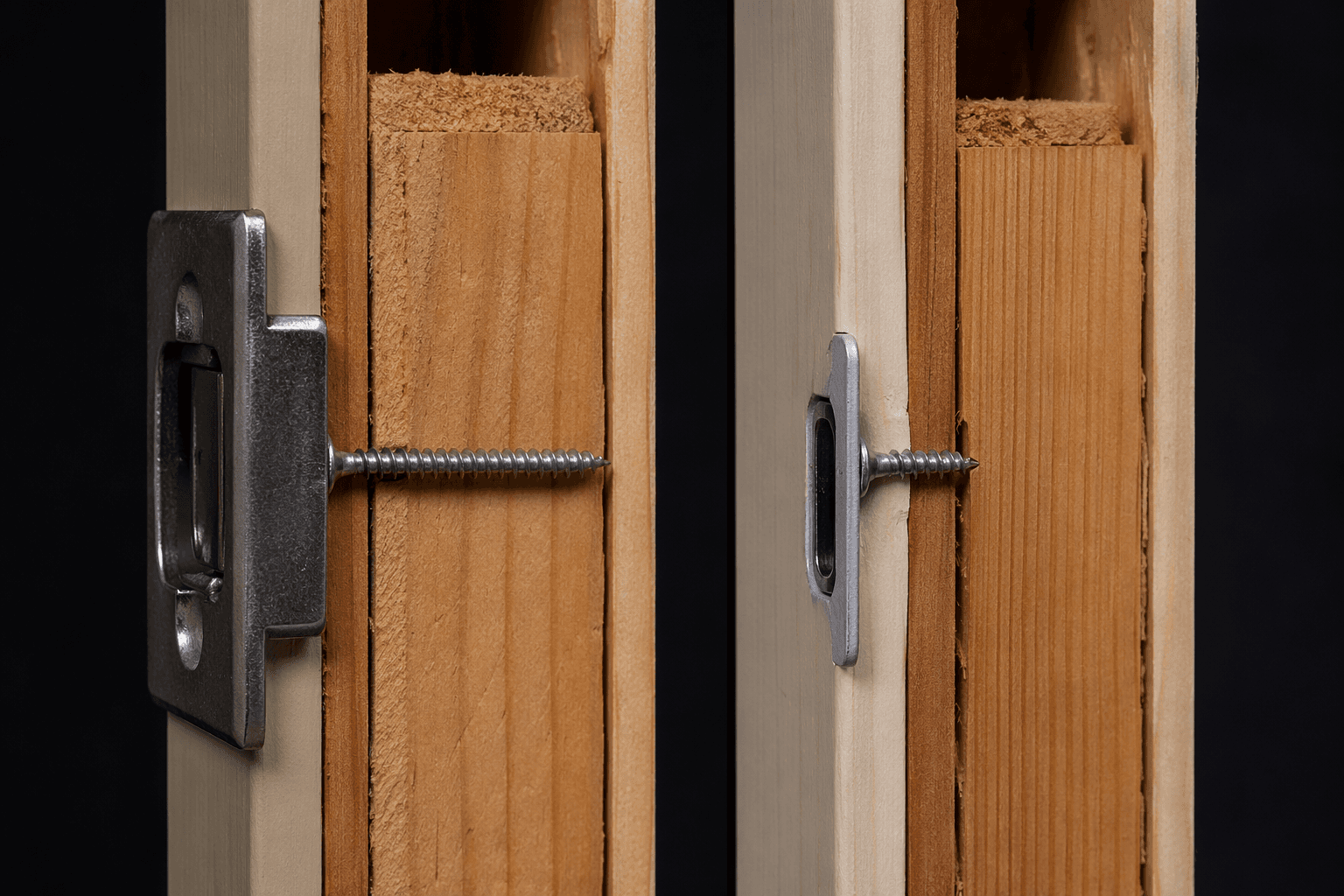
That hardware bag is not an accessory. Long screws tie the strike into deeper framing. A thicker strike plate spreads force better than a thin stamped plate. A properly aligned bolt throws into the strike instead of scraping halfway across the opening. Any Grade 1 claim should be read with that installation reality attached: the grade belongs to the deadbolt hardware, and the installed door system can still be weaker than the label suggests.
Schlage Encode Plus: The Strongest All-Around Pick
Schlage Encode Plus is the cleanest answer for a buyer who wants a smart lock without stepping down from serious deadbolt hardware. Its Grade 1 / BHMA AAA rating puts it above the Yale and Eufy models on physical-security classification, and Wirecutter's installation details matter because Schlage is not leaving the strike hardware as an afterthought.[1][3]
It is also not a punishment to live with. TechGearLab rated Schlage Encode Plus highest across security, features, and ergonomics, which is the kind of result that matters because it keeps the security recommendation from becoming a daily annoyance.[4] A lock that people hate using becomes a lock they prop open, bypass, or fail to maintain.
The Apple Home support, keypad, and general smart-home convenience are worth having, but they are secondary. The reason Encode Plus stays at the top for a security-first smart-lock buyer is that its electronics sit on a stronger deadbolt platform than the lower-grade alternatives in this comparison.
Schlage Arrive and the 2026 Availability Question
Schlage Arrive deserves attention in 2026 because it is the newer Grade 1 Schlage model and may affect Encode Plus availability.[2] The buying logic is the same: if the door is a primary exterior entry and forced-entry resistance is a serious concern, stay in the Grade 1 lane before comparing app features.
The practical advice is to check the exact model and listing before buying. Smart-lock names are easy to blur across generations, finishes, bundles, and retailer pages. The relevant security question is not whether the lock says Schlage on the front; it is whether the deadbolt hardware in the box carries the Grade 1 claim and includes the strike hardware needed to make that claim meaningful on your door.
Where Yale Assure Lock 2 Still Makes Sense
Yale Assure Lock 2 is a reasonable Grade 2 smart lock, especially for buyers who care about a slimmer interior unit, platform fit, and everyday access control.[1] On a lower-risk door, in a building with controlled entry, or in a household where the main failure mode is people forgetting to lock up, that may be enough.
The mistake is buying it as though Grade 2 were just a cheaper label for the same physical resistance. It is not. If the door faces a quiet side yard, has weak framing, or is the entry most likely to take a shoulder or boot, the savings deserve a hard look. Upgrade the strike screws either way, because lower-grade hardware installed carefully is still better than lower-grade hardware installed casually.
Eufy C34 Is a Budget Choice, Not a Security Peer
Eufy C34 belongs in the Grade 3 category in this comparison.[1] That does not make it useless. It means its role should be chosen honestly: budget-sensitive installs, secondary doors, or situations where smart access is the main benefit and physical attack resistance is not the deciding factor.
For a front door on a detached home, Grade 3 is where the tradeoff becomes most visible. The app may be pleasant, the keypad may be convenient, and the price may be right, but those qualities do not erase the lighter-duty hardware class.
August Is Different Because It Reuses Your Deadbolt
August smart locks need a separate read because they are retrofit devices. They generally sit on the interior side and operate the deadbolt already in your door. That means the physical-security grade is not really an August-only question; it depends on the existing deadbolt, strike plate, screws, bolt alignment, and frame condition.
If the existing deadbolt is a strong, well-installed Grade 1 unit, a retrofit lock can add smart access without replacing the security core. If the existing deadbolt is unknown, loose, shallowly anchored, or paired with short screws, the retrofit device automates a weak setup. Before treating August as a security upgrade, identify the deadbolt it is actually turning.
Installation Details That Can Change the Result
A good smart lock can be weakened in under an hour by a rushed install. The highest-value checks are not glamorous, but they are the checks that decide whether the bolt and frame work together when force hits the door.
- Use long strike-plate screws, preferably the 3-inch screws included with stronger kits or a comparable upgrade where appropriate.
- Make sure the strike plate is thick enough and seated cleanly, not perched on paint, splintered trim, or a loose old mortise.
- Confirm that the deadbolt fully extends into the strike without dragging, binding, or stopping short.
- Check the door frame condition before trusting the grade label; cracked jambs and soft wood reduce the value of stronger hardware.
- Replace tiny included screws on budget locks instead of assuming the factory hardware is good enough for an exterior door.
The point is not that every homeowner needs to turn a door into a commercial entry. It is that the deadbolt, strike, screws, and frame form one load path. A Grade 1 deadbolt installed into a weak or poorly anchored frame is still vulnerable because the ANSI/BHMA grade does not certify the whole doorway.
Where App Features Fit After the Hardware Decision
Once the hardware class is acceptable for the door, then the smart features can break ties. Apple Home support may push a buyer toward Encode Plus. A cleaner app or better guest-code workflow may matter for a rental unit or a household with frequent visitors. Battery access, keypad feel, and manual key backup are not luxuries; they affect whether the lock gets used correctly every day.
Remote unlock deserves a little discipline. It is useful for letting in a contractor, checking whether the door was locked, or giving temporary access. It should not distract from the simpler security wins: the door is actually locked, the bolt is fully extended, and the strike is anchored into something stronger than trim.
A smart lock also should not be asked to carry the whole home-security job by itself. Cameras, sensors, alarms, lighting, and monitoring change what happens before and after someone reaches the door. For that broader decision, see the Smart Home Security Systems in 2026: A Buyer's Comparison.
The Security-First Buying Framework
For a primary exterior door where forced entry is a serious concern, choose Grade 1 hardware first. In this comparison, that points to Schlage Encode Plus or Schlage Arrive, with Encode Plus having the stronger current record across physical security, features, and ergonomics in independent testing.[4]
For a lower-risk door, a controlled-access building, or a budget-limited install, Yale Assure Lock 2 at Grade 2 can be a sensible compromise. Eufy C34 at Grade 3 is better treated as a convenience-first budget lock than as a front-door security peer to Grade 1 Schlage hardware. August can be excellent or weak depending on the deadbolt it inherits.
Whatever you buy, upgrade or verify the strike hardware. Long screws, a solid strike plate, correct bolt throw, and a sound frame are not finishing touches. They are the parts that decide whether the grade on the box survives contact with the door.
References
- Kwikset vs Schlage Locks, Doors For Pros
- Best Smart Locks of 2026: Expert Testing and Reviews, Smart Lock MFG
- The Best Smart Lock, Wirecutter
- Best Smart Lock, TechGearLab
Discussion
Share your experience with the compared products, flag outdated pricing or specs, or ask clarifying questions about the comparison verdict.
Comments
Join the discussion with an anonymous comment.