Start with the phone already in your hand. That sounds too simple for a decision about smart home platforms, but it prevents the most common mistake: shopping as if you are building a control room instead of a home with a few useful devices.
Smart homes are no longer a niche hobby. Global smart home household penetration is reported at 82.1% in 2026, yet the average U.S. smart home household has only 6.2 connected devices, a Parks Associates figure from Q2 2025 that includes things like smart speakers and smart TVs that some people may not mentally count as “smart home devices.”[1] That matters. Most households are not choosing between five fully built systems. They are trying to make a doorbell, a few lights, a thermostat, and a speaker behave without turning Saturday morning into tech support.
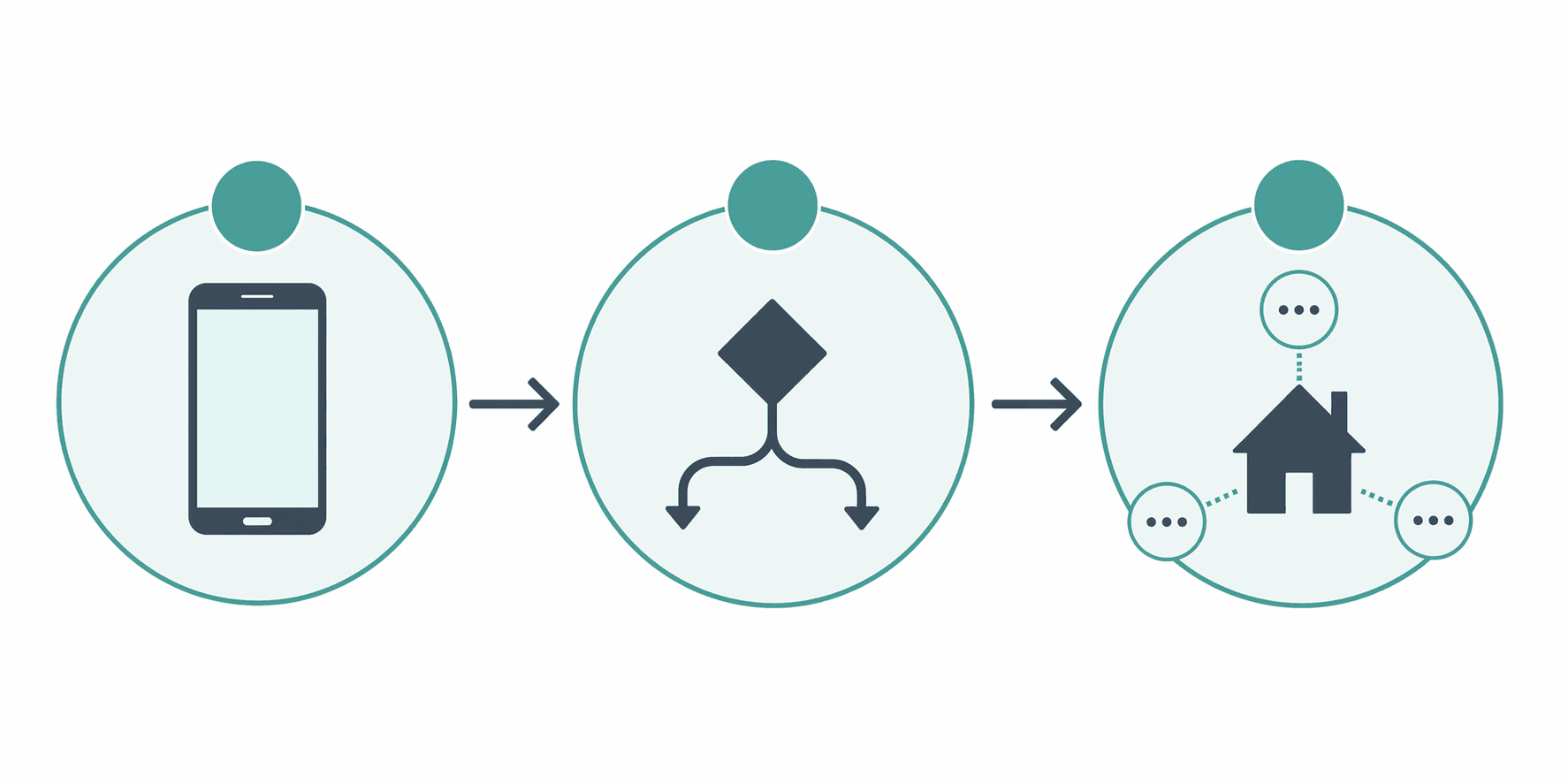
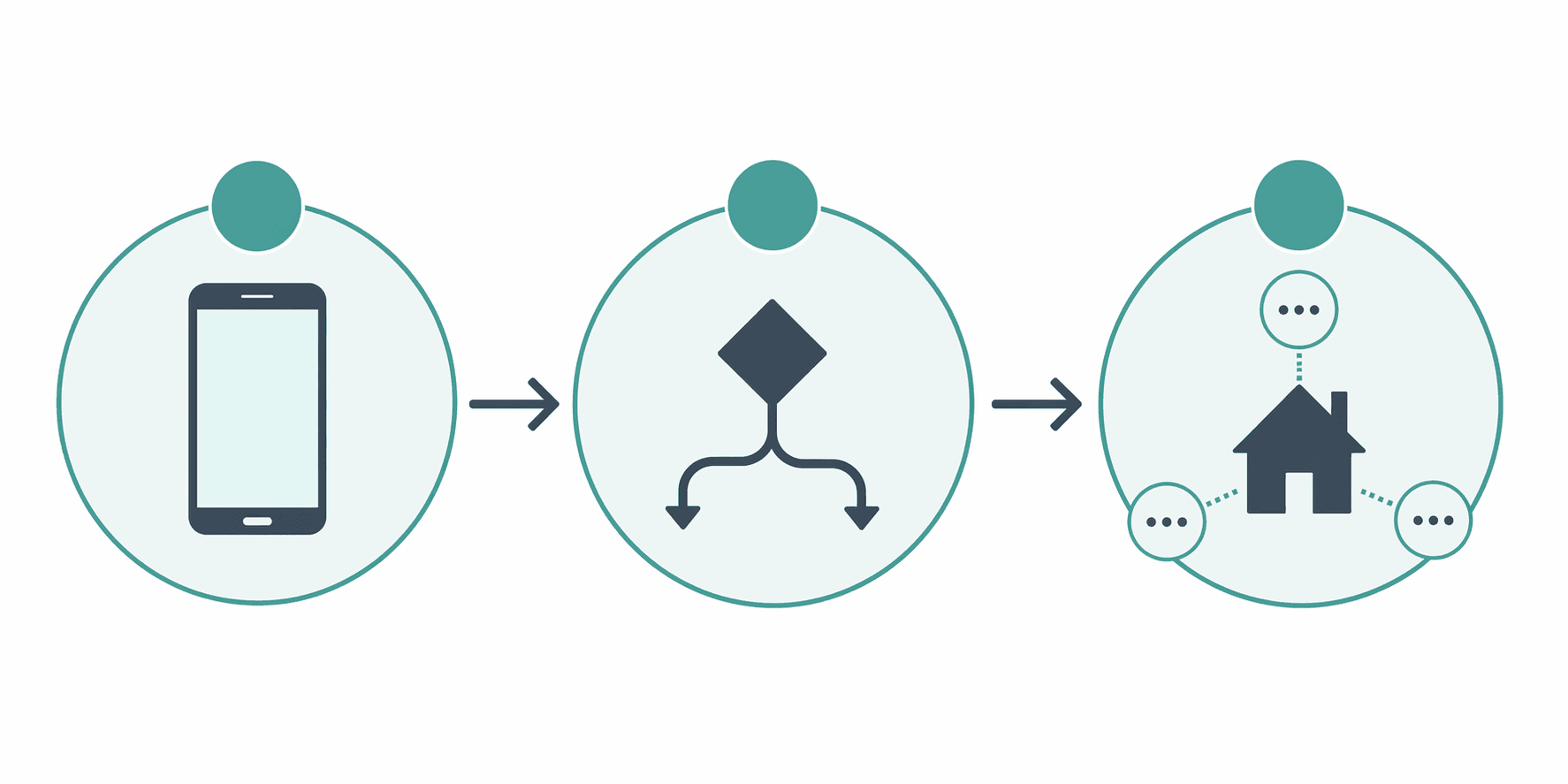
The workable decision flow is short:
- Let your smartphone ecosystem narrow the realistic choices.
- Pick the one priority you will notice every day: voice quality, device selection, privacy, automation power, or cost.
- Use Matter multi-admin, and sometimes a secondary speaker or app, to cover the gaps instead of restarting the whole decision.
Step 1: Let your phone cut the list down
A smart home platform is not just the app where you add devices. It becomes the place where household members issue voice commands, receive doorbell alerts, approve automations, and troubleshoot devices when they stop responding. The phone ecosystem matters because that is where permissions, notifications, location triggers, and daily habits already live.
For most buyers, the first fork looks like this:
| Your phone | Start by comparing | Why these are the realistic first choices |
|---|---|---|
| iPhone | Apple Home vs. Google Home | Apple Home fits the iPhone and Apple household best; Google Home is often the better voice and search experience. |
| Android | Google Home vs. Alexa | Google Home has the native phone fit; Alexa has broad device support and inexpensive entry hardware. |
That phone-first split is a practical starting point reflected in mainstream platform selection guidance: iPhone users usually gravitate toward Apple Home for integration or Google Home for voice strength, while Android users usually weigh Google Home’s native fit against Alexa’s device breadth.[2] It is not a law. It is triage.
If you use an iPhone
Apple Home is the cleanest starting point when your household already uses iPhones, Apple Watches, Apple TVs, HomePods, iCloud accounts, and shared Apple family settings. The less you want to think about which app owns which notification, the more that integration counts.
Apple also has the stronger privacy posture among the mainstream consumer platforms, and for some households that settles the question quickly. If the main devices are door locks, cameras, presence sensors, and anything that touches personal routines, choosing the platform you trust most with household data is not being fussy. It is choosing the failure mode you can live with.
Google Home becomes the more tempting iPhone alternative when voice answers, search-style requests, casting, and mixed-device households matter more than Apple integration. Security.org reported Google Assistant at 93% question accuracy in its testing, though that figure belongs to its methodology and should not be treated as a universal score across every home, accent, room, or query type.[3]
The kitchen test is useful here. If you picture yourself saying, “Turn on the island lights,” “Show me the front door,” and “Set the thermostat to 70,” Apple Home can feel tidy in an Apple household. If you picture asking a lot of general questions, media requests, and messy voice commands while cooking, Google deserves a closer look.
If you use Android
Google Home is the obvious first stop for many Android users because the phone, Google account, notifications, Assistant, Nest devices, and Android routines already sit in the same neighborhood. If you are not trying to optimize every last automation, that native fit saves little moments of friction.
Alexa is the serious alternative when low-cost speakers, many third-party gadgets, and simple voice control are the priority. The device-count story is messy, though. Security.org reports Alexa support for 140,000-plus devices, while Amazon has claimed 400,000-plus compatible smart home products.[3] Those are not clean scoreboard numbers. They come from different sources and likely different counting methods, and neither tells you whether the exact dimmer, lock, vacuum, or camera you want will work well in your home.
Still, broad compatibility has practical value. If you buy smart plugs on sale, add holiday lights, swap bulbs, or choose devices by price more than brand loyalty, Alexa often gives you more room to improvise.
Step 2: Choose the priority that will annoy you if it is wrong
Once your phone has narrowed the field, stop comparing everything at once. A platform that wins on privacy may not win on device breadth. A platform that is wonderful for automation tinkering may be a poor gift for a parent who only wants the porch light to turn on. The right question is not “Which platform is best?” It is “Which weakness would I actually resent?”

| If your top priority is… | Lean toward… | Watch out for… |
|---|---|---|
| Voice quality | Google Home, with Alexa also worth considering for simple commands | Voice tests vary, and premium voice features may carry subscriptions. |
| Device breadth | Alexa | Compatibility counts are not the same as smooth setup or full feature support. |
| Privacy and Apple integration | Apple Home | You will likely want Apple hardware acting as a home hub. |
| Automation power and local control | Home Assistant | The learning curve is real, especially during the first setup. |
| Lowest entry cost | Alexa | Cheap entry hardware does not mean every advanced feature stays free. |
If voice quality matters most
Choose for the room where voice will actually be used. In many homes, that is the kitchen, bedroom, or entryway. A voice assistant that understands natural phrasing saves more frustration than an app with a prettier dashboard.
Google Home has the strongest argument here if you ask broad questions, use Google services, and want voice search to feel forgiving. The reported 93% Google Assistant question-accuracy result is useful as a directional signal, with the caveat that it comes from one testing source rather than a universal industry measurement.[3]
Alexa remains very comfortable for basic smart home commands: lights, plugs, timers, routines, and simple household control. If your voice use is mostly “turn this on” and “turn that off,” the practical difference may be smaller than the platform arguments make it sound.
Cost now enters the voice decision, too. Premium voice features include Alexa+ at $20 per month unless included with Prime, and Google Home Premium at $10–$20 per month; those prices were verified as of June 2026 and may change.[4] Do not choose a platform assuming every advertised assistant upgrade will remain part of the free baseline.
If device selection matters most
Device breadth matters when you want the freedom to buy whatever works with your budget, your rental, your old wiring, or your favorite brand. This is where Alexa usually earns its place in the conversation. The support numbers are large even if they are not perfectly comparable: Security.org reports 140,000-plus compatible devices, while Amazon’s own claim is 400,000-plus.[3]
The trap is treating a compatibility badge as a promise of a good experience. A light may turn on and off but not expose every color scene. A camera may show live video but not all alert types. A lock may pair but require its own app for important settings. Before buying the oddball device, check whether the feature you care about works in your chosen platform, not just whether the logo appears on the box.
If privacy matters most
For privacy-conscious mainstream buyers, Apple Home is usually the first platform to examine. The benefit is not only a privacy message; it is the way the smart home sits inside an Apple household where account sharing, device approval, and presence detection can be kept relatively contained.
That choice comes with a hardware expectation. Available cost data lists Apple Home as requiring a $99–$129 hub, typically a HomePod mini or Apple TV, for the home hub role.[4] If you already own one, the cost may be invisible. If you do not, add it to the real platform price before comparing Apple with a cheaper speaker-based setup.
If automation power matters most
Home Assistant deserves respect here. It is the platform for people who care about local control, deep automations, dashboards, unusual device combinations, and keeping more of the system out of cloud-only dependencies. Open-source smart home platform demand is growing, with Mordor Intelligence reporting an 18.05% CAGR as users seek more local control.[5]
That does not make Home Assistant the default answer for a beginner. Its software may be $0 per month, and the cited hardware range is $80–$159, but the real cost can be time, patience, and a willingness to learn why something did not pair the first time.[4] Nabu Casa is also listed at $6.50 per month as an optional service, with pricing current as of June 2026.[4]
Setup friction should not be brushed aside as a rite of passage. Parks Associates data cited by SQ Magazine says 52% of DIY smart home installers report setup or connectivity issues.[1] That is the number to keep in mind before recommending a power-user platform to someone whose whole goal is to stop walking across the room to turn off a lamp.
A fair split is this: choose Home Assistant first if you already know you want automation power and local control enough to tolerate configuration work. If you mostly want a smooth first setup, choose Apple Home, Google Home, or Alexa as the primary platform and let Home Assistant remain a later upgrade instead of a first-week obligation.
If cost matters most
Cost is not just the price of the first speaker. It is the hub, the subscriptions, the replacement devices, and the chance that you buy something twice because the first version did not fit your platform.
| Platform path | Cost signal | What it means in practice |
|---|---|---|
| Alexa | $49 Echo Dot entry point that can double as a hub | Lowest simple starting point for many voice-first homes. |
| Apple Home | $99–$129 hub range for HomePod mini or Apple TV | Often reasonable if you already own Apple hub hardware; less cheap if you do not. |
| Home Assistant | $80–$159 hardware range; $0/month software | Good long-term control value, but not necessarily the lowest-effort start. |
| Premium voice services | Alexa+ at $20/month unless Prime; Google Home Premium at $10–$20/month | Check which features are free before treating voice upgrades as included. |
| Home Assistant cloud option | Nabu Casa at $6.50/month | Optional convenience cost for remote access and related services. |
If the goal is the cheapest dependable start, Alexa is hard to ignore because the entry hardware is low. If the goal is the lowest regret inside an Apple household, the Apple hub cost may still be justified. If the goal is long-term independence and you are willing to learn, Home Assistant’s hardware-plus-free-software model becomes more attractive.[4]
Step 3: Use Matter to make the choice less brittle
Matter is most useful after you have picked a primary platform. If you start with Matter as the answer to everything, you can still end up standing in the kitchen with three apps open and one bulb blinking at you. If you start with a primary platform, Matter becomes a safety net.
The key feature for platform choice is multi-admin. A Matter device can be controlled by up to five ecosystems at the same time, which means a supported device can live in your main platform and also appear in another ecosystem when that helps.[6]
That changes the emotional stakes of choosing. An iPhone household can use Apple Home as the primary platform and still add a Google speaker where voice search matters. An Android household can run Google Home as the main platform and add an Echo Dot in the room where Alexa’s device support or routines are useful. A Home Assistant user can keep local-control ambitions while still letting a simpler voice assistant handle casual household commands.
This is not the same as saying every Matter device behaves identically everywhere. Platform support, device categories, app design, and manufacturer implementation still matter. Matter 1.6 was released very recently, on June 17, 2026, so newer capabilities should be treated as spec-level or early-implementation context rather than settled proof of what ordinary buyers will experience across all platforms.[6]
The practical rule is simple: buy Matter-compatible devices when you can, but still choose the main platform based on the thing you will use daily. Matter reduces the penalty for an imperfect choice. It does not remove the need to choose.
A few common household decisions
If your home is mostly iPhones and your first devices are a lock, a doorbell, and a few lights, Apple Home is the sensible first platform to test. Add Google Home later only if voice answers or a specific device gap becomes irritating enough to justify it.
If your home is Android-heavy and you already use Google services, start with Google Home. Add Alexa if you want inexpensive speakers in extra rooms or if a device you want works better there.
If your household buys devices mainly by sale price and wants voice control more than polished phone integration, Alexa can be the primary platform. Check individual device features before assuming a compatibility number tells the whole story.
If you already know you want local dashboards, custom automations, and fewer cloud dependencies, Home Assistant can be the primary platform. Just do not pretend that a more powerful platform automatically creates an easier first week.
The decision you actually need to make
Choose one primary platform, not a personality test. Your phone narrows the field. Your top priority picks the leader. Matter and a secondary assistant can patch the parts that remain annoying.
For most homes, that is enough. Pick the platform that best serves the thing you will notice every day: the voice command that works, the device that pairs cleanly, the privacy boundary you trust, the automation you truly need, or the cost you can live with. The longest spec sheet is only useful if it improves that daily moment.
References
- Smart Home Statistics 2026: Adoption & Devices, SQ Magazine
- A Comprehensive Comparison and Selection Guide…, AmpVortex
- The Best Smart Home Devices of 2026, Security.org
- 10 Best Smart Home Platforms for 2026: Matter-Ready Picks, WholeHouseFan
- Smart Home Platforms Market Size, Growth, Share & Research Report 2031, Mordor Intelligence
- Matter and Thread Explained: What Works in 2026, Data Wire Solutions
Discussion
Share your experience with the compared products, flag outdated pricing or specs, or ask clarifying questions about the comparison verdict.
Comments
Join the discussion with an anonymous comment.