
No, EchoLeak Isn't an Amazon Echo Exploit
EchoLeak search yields no applicable Echo patch
Last updated
As of August 3, 2026, EchoLeak does not require an Amazon Echo firmware patch. EchoLeak is CVE-2025-32711, an indirect prompt-injection vulnerability in Microsoft 365 Copilot, not an Amazon Echo or Alexa device vulnerability. Microsoft fixed it server-side in May 2025 and stated that no customer action was required; no in-the-wild exploitation was known at disclosure.[1][2]
| Question | Current answer |
|---|---|
| Affected product | Microsoft 365 Copilot, not Amazon Echo hardware[1] |
| Vulnerability name | EchoLeak, tracked as CVE-2025-32711[1][2] |
| Vulnerability class | CWE-74 improper neutralization in output used by a downstream component; described in coverage as a zero-click Copilot exploit using indirect prompt injection[1][2] |
| Fix status | Microsoft server-side fix deployed in May 2025[2] |
| Action for Echo owners | No EchoLeak patch to install; do not search for an Echo firmware update under this name |
| Verification date | Checked against available NVD, OpenCVE, Amazon, and disclosure records as of early August 2026 |
| NestGrid status | Not an Echo issue |
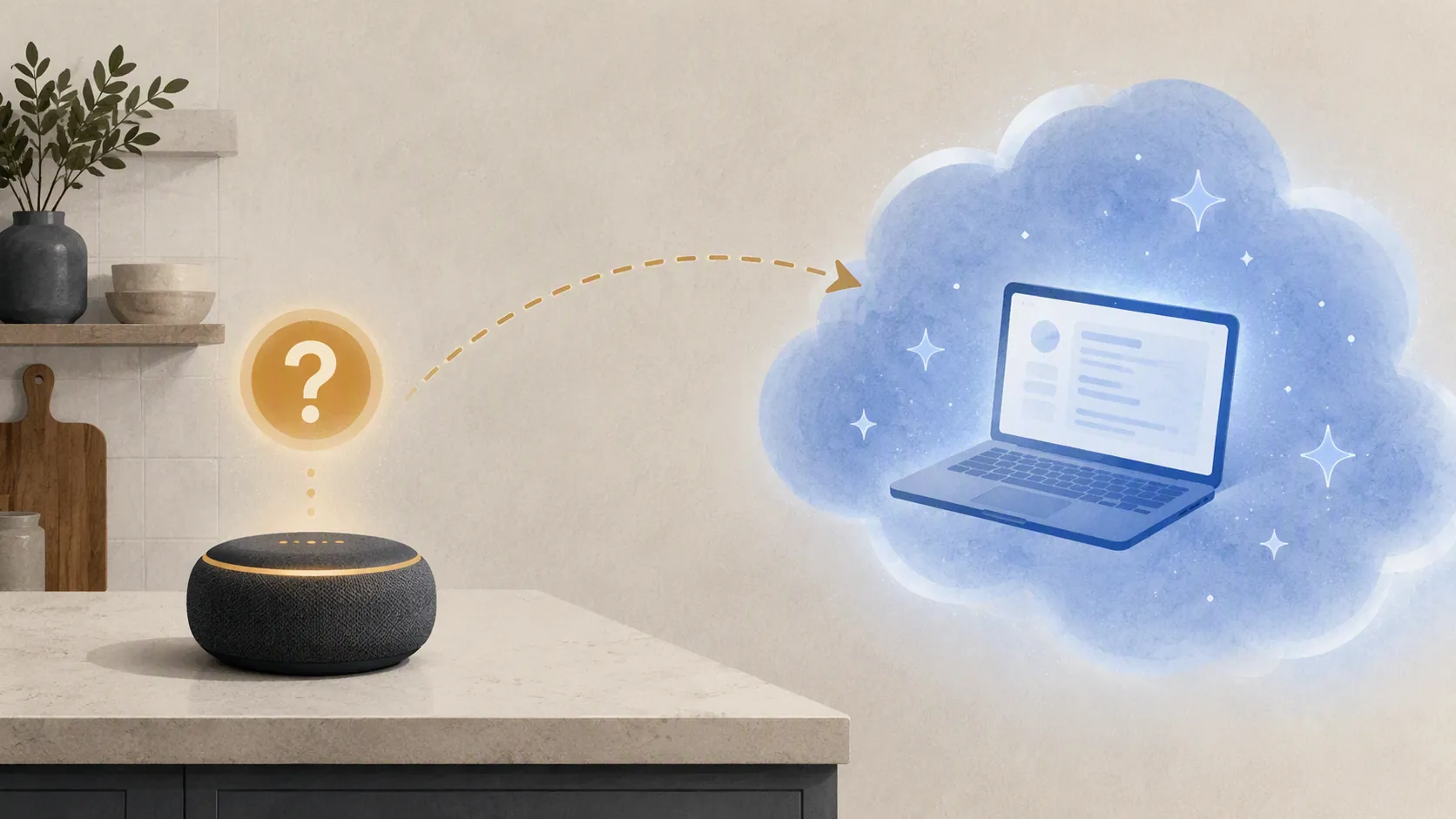
Where the EchoLeak name actually belongs
The confusing part is the name. “EchoLeak” sounds like a smart-speaker problem, so an Echo owner searching for “echoleak amazon echo prompt injection exploit fix” is making a reasonable connection. The record does not support that connection.
NVD’s entry for CVE-2025-32711 identifies the affected product as Microsoft 365 Copilot. The weakness is listed as CWE-74, and the NVD page shows the CVE was published on June 11, 2025. The same entry also shows a severity split: Microsoft, acting as the CNA, scored it 9.3 Critical, while NIST’s assessment is 7.5 High.[1] That difference matters only because it keeps the record straight; neither score turns it into an Echo device bug.
Disclosure coverage described EchoLeak as a zero-click Copilot exploit in which an attacker could place malicious instructions where Copilot might later process them, rather than needing the victim to type the malicious instruction directly. Microsoft’s fix was server-side, deployed in May 2025, and the company said customers did not need to take action. The same disclosure coverage reported no known exploitation in the wild at the time.[2]
That is enough to answer the household-device question. An Echo speaker does not receive a Microsoft 365 Copilot server-side mitigation. There is no EchoLeak firmware version to look for in the Alexa app, no EchoLeak advisory to match against an Echo Dot model, and no EchoLeak patch that a speaker owner is expected to install.
Why “prompt injection” still appears in both conversations
Prompt injection is the shared phrase, not the shared product. In Copilot, the concern is that an AI system may act on instructions embedded in content it reads. In Alexa and Echo research, the closest family of concerns involves voice-assistant command paths: audio commands, self-issued commands, reprompts, malicious skills, or physical-access tricks that cause a device or service to behave in ways the owner did not intend.
Those are worth checking, but they are not EchoLeak. Mixing them together creates the worst kind of security errand: the owner spends time hunting for a patch that cannot exist under that name, while the real per-device records sit elsewhere.
The Echo and Alexa records worth checking instead
No Echo CVE or Amazon advisory named “EchoLeak” was found in the checked NVD, OpenCVE, or Amazon security-update records as of early August 2026. The Echo-relevant items below are separate records with separate affected models, vectors, and fix evidence. They should not be rolled into the EchoLeak label.
| Item | Affected area | What the record supports | Fix status |
|---|---|---|---|
| CVE-2022-25809, “Alexa versus Alexa” | Echo Dot 3rd and 4th generation | NVD lists a 9.8 CVSS score for an attack involving self-issued commands; reporting described variants involving radio-station content and skill self-wake behavior.[3][4] | Amazon vendor-stated fixes were reported for the radio-station and skill self-wake variants; Amazon rated the issue medium in that reporting.[4] |
| CVE-2023-33248 | Echo Dot 2nd and 3rd generation running Alexa software 8960323972 | OpenCVE records a 7.6 CVSS issue involving 16–22 kHz audio commands.[5] | Later fix not documented in the checked record; do not invent a patched status from the CVE entry alone.[5] |
| CVE-2018-11567 | Echo Dot record set | OpenCVE lists the issue in the Echo Dot CVE set; the relevant vector is a reprompt-related Alexa/Echo issue.[5] | Use the record-specific status; not an EchoLeak fix.[5] |
| CVE-2021-37436 | Echo Dot record set | OpenCVE lists a 4.2 CVSS issue involving physical access.[5] | Use the record-specific status; not an EchoLeak fix.[5] |
| 2020 Check Point Alexa skill chain | Alexa skill/account interaction | Check Point described a chain that could install or remove Alexa skills and access voice history; Amazon fixed it after a June 2020 report.[6] | Vendor-stated fixed after report; not an Echo firmware patch named EchoLeak.[6] |
CVE-2022-25809 is the one most likely to feel like the fear behind the EchoLeak search, because it involves an Echo being made to act on commands. NVD’s score is severe, but the fix evidence comes through Amazon’s vendor statements as reported at the time, not from a new EchoLeak patch path. That distinction is not paperwork; it tells an owner where to stop looking.
CVE-2023-33248 needs the opposite caution. The checked record documents the affected Echo Dot generations, the Alexa software version, the 16–22 kHz command vector, and the CVSS score. It does not document a later fix in the record checked here.[5] A careful status label is “not documented in the record,” not “unfixed,” and not “patched.”
What an Echo owner should actually do
Do not try to install an EchoLeak fix on an Echo device. There is no supported action under that name. If your concern is general Echo security rather than the name collision, check the device’s normal software-update support window and compare any concern to the specific CVE or advisory that names your model.
- Open the Alexa app and confirm the device is online long enough to receive normal updates.
- Identify the exact model generation, especially for older Echo Dot devices named in CVE records.
- Check the device against Amazon’s software-security-update window, not against the EchoLeak name.
- For prompt-injection-style concerns, compare against the older Alexa/Echo records individually: CVE-2022-25809, CVE-2023-33248, CVE-2018-11567, CVE-2021-37436, and the 2020 Check Point skill chain.
- If a record does not document a later fix, keep that uncertainty attached to that record instead of treating EchoLeak coverage as proof either way.
Amazon says Echo devices receive software security updates for at least four years after the device is last available for purchase through Amazon retail channels.[7] The model end dates in the checked mirror showed Echo Dot coverage through December 31, 2029, and Echo 4th generation coverage through December 31, 2030, but those dates were verified on an Amazon.se mirror rather than the U.S. page and should be re-checked against the U.S. support page before being treated as U.S.-market publication data.[7]
What remains uncertain, and what does not
The certain part is narrow and useful: EchoLeak, CVE-2025-32711, is a Microsoft 365 Copilot vulnerability. Microsoft fixed it server-side in May 2025, Microsoft stated that customers did not need to act, and no Echo owner needs an EchoLeak patch.[1][2]
The checked Echo/Alexa items are different records. CVE-2022-25809 has NVD severity data and Amazon vendor-stated fixes in contemporary reporting.[3][4] CVE-2023-33248 has a documented vector and affected firmware in the checked record, but not a documented later fix there.[5] The 2020 Check Point Alexa skill chain was reported to Amazon in June 2020 and fixed, according to Check Point’s account.[6] Amazon’s broader security-update promise is vendor-stated and market-sensitive.[7]
So the practical status is simple: EchoLeak itself is Not an Echo issue. If you own an Echo and are worried about prompt-injection-adjacent risks, check the specific Alexa/Echo CVE records and your device’s supported-update window. Searching for an EchoLeak Amazon Echo exploit fix is the false trail.
References
- NVD - CVE-2025-32711, National Vulnerability Database
- Researchers Detail Zero-Click Copilot Exploit 'EchoLeak', Dark Reading
- NVD - CVE-2022-25809, National Vulnerability Database
- Attackers can force Amazon Echos to hack themselves with self-issued commands, Ars Technica
- OpenCVE Echo Dot CVE records, OpenCVE
- Amazon's Alexa Hacked, Check Point Research
- Echo Software Security Updates, Amazon
Corroborating context
For protocol background on why this failure happens, see Compatibility & Protocols.
Not currently linked to a known regression. Background on the underlying protocol lives in Compatibility & Protocols.