
Will Smart Home Energy-Saving Devices Pay Back in October?
With Ofgem's October 2026 price cap raising electricity to 26.32p/kWh, only a narrow set of smart-home devices genuinely pays back: smart heating controls and energy-monitoring plugs that cut standby loads. Every saving figure here is tied to a named methodology and verification status, so UK households can tell which "energy-saving" devices are worth buying before the rise lands.
Ofgem’s 26 August announcement gives households five weeks to assess smart home energy-saving devices before the new price cap takes effect on 1 October 2026. For a typical dual-fuel household paying by Direct Debit, the annualized cap headline rises 4% to £1,723. Ofgem now bases that illustration on typical annual consumption of 2,500 kWh of electricity and 9,500 kWh of gas, so it should not be compared mechanically with cap headlines calculated under the previous methodology.[1]
The more useful numbers for a purchase decision are 26.32p per kWh of electricity and 7.97p per kWh of gas. Those rates apply in Great Britain; Ofgem’s cap does not cover Northern Ireland.[2] At these prices, a connected device earns its keep only if it changes an identifiable load or heating behavior by enough to recover its purchase and installation cost.
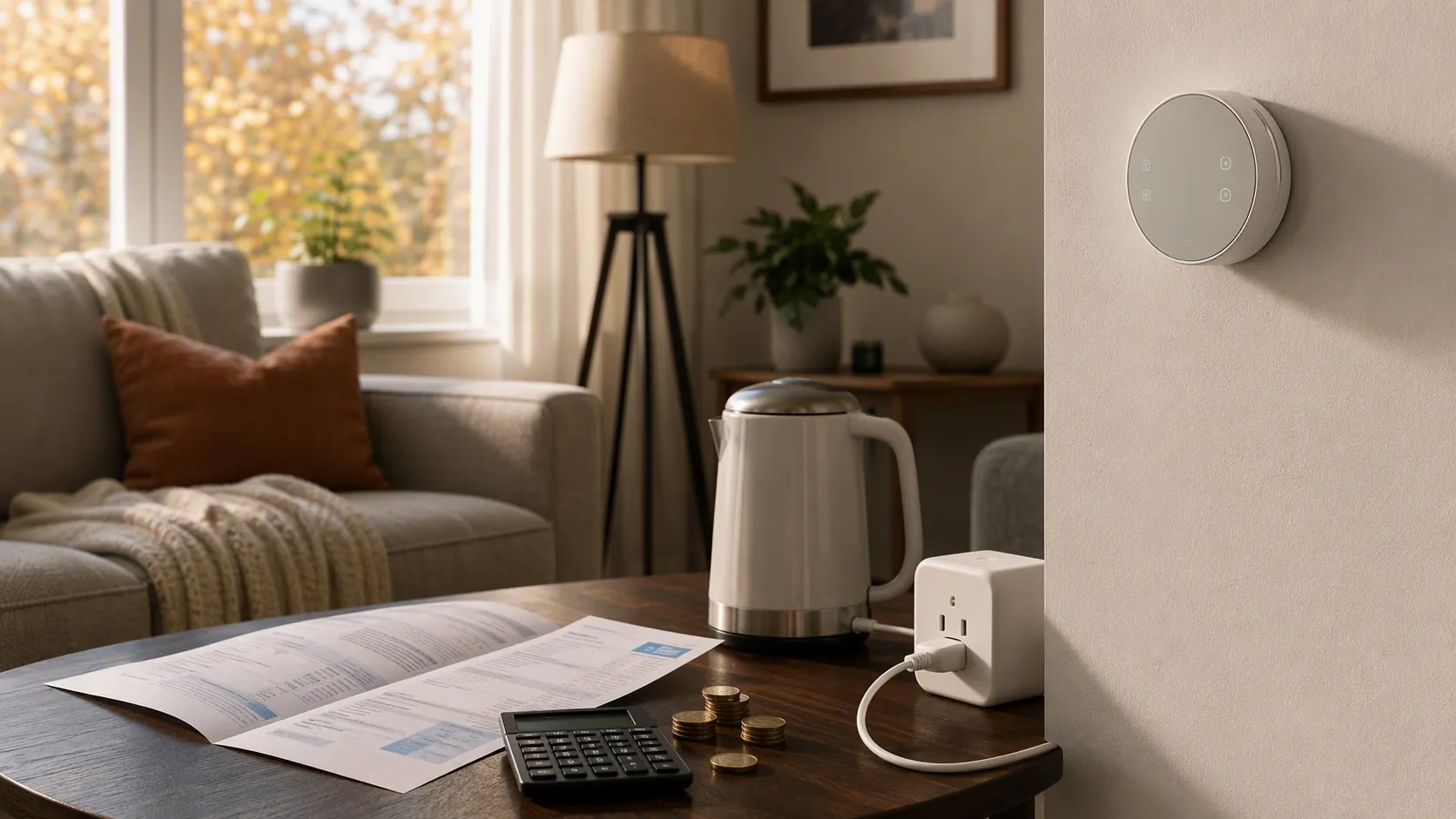
The October payback calculation
Start with energy that the proposed device can actually prevent, not a percentage on its packaging. A plug-in power meter or an energy-monitoring smart plug can provide watt-hours directly. For heating controls, use gas-meter consumption in kWh where possible and compare equivalent periods carefully.
| Calculation | Formula |
|---|---|
| Watts and daily runtime to annual energy | (watts × hours per day × days used per year) ÷ 1,000 = annual kWh |
| Measured watt-hours per day to annual energy | (Wh per day × days used per year) ÷ 1,000 = annual kWh |
| Electricity saving from 1 October 2026 | annual kWh avoided × 26.32p |
| Gas saving from 1 October 2026 | annual kWh avoided × 7.97p |
| Net annual saving | gross avoided energy cost − the control device’s own energy cost |
| Simple payback | (purchase price + required installation cost) ÷ net annual saving |
For a hypothetical appliance drawing W watts in standby for H hours on each of D days, the gross electricity saving is (W × H × D ÷ 1,000) × £0.2632. Then deduct the smart plug’s own consumption and any periods when the appliance must remain available.
Ofgem lists a 54.83p daily electricity standing charge and a 29.68p daily gas standing charge alongside the October unit rates.[2] Keep those charges visible when budgeting for the whole bill, but leave them out of a device-level saving unless the device genuinely changes whether the charge is incurred. Turning off a television overnight does not remove an electricity standing charge.
The published October electricity rate also reflects the temporary 0% electricity VAT period running from 1 October 2026 through 31 March 2027.[2] Use 26.32p directly during that window rather than deducting VAT again. For savings after 31 March, rerun the calculation using the rate then in force; do not extend the temporary tax treatment through a multiyear payback forecast.
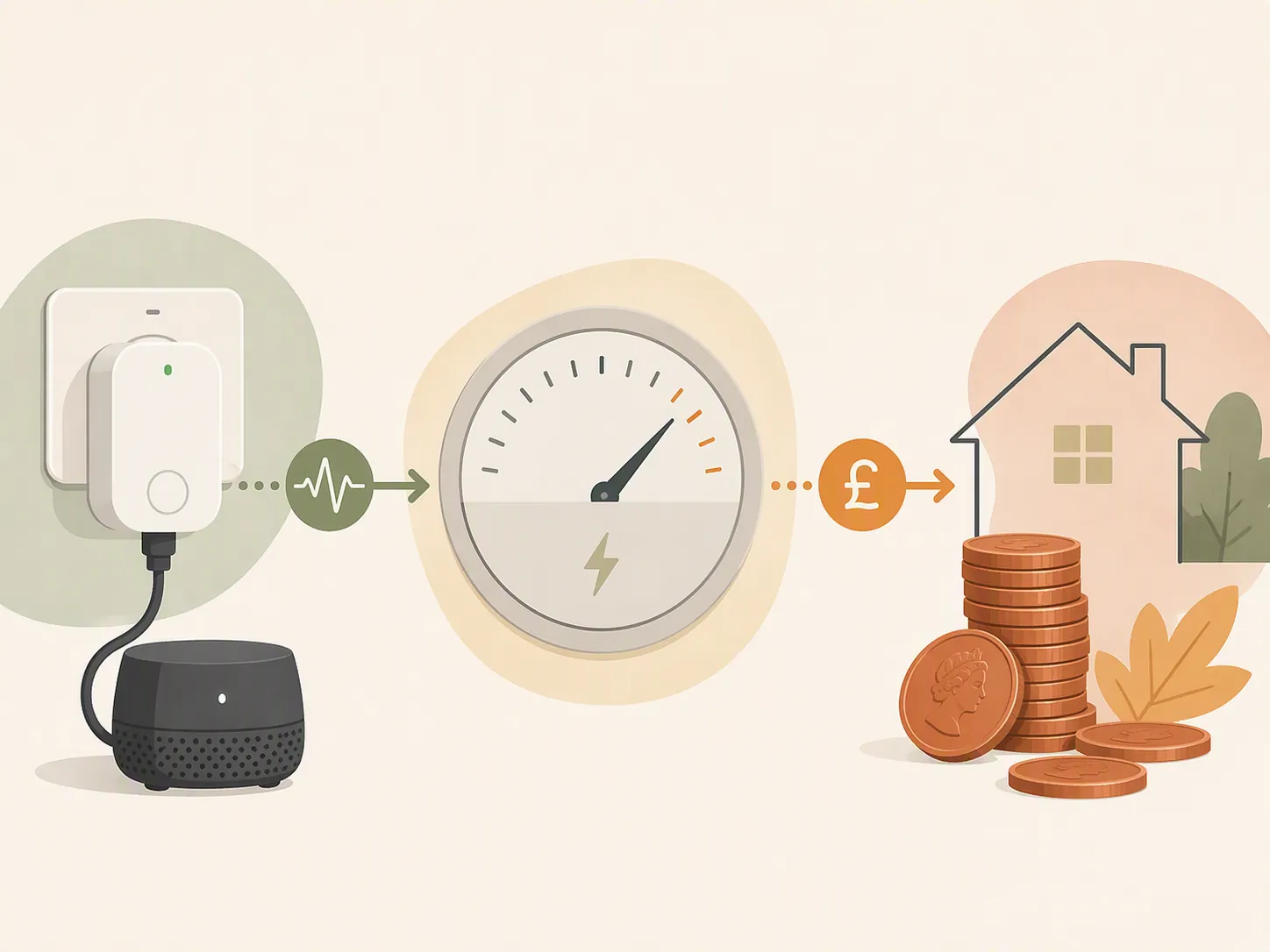
Smart heating controls can pay back—but identify the complete change
Heating controls have the strongest case when they stop the boiler heating an empty home, prevent unnecessary heating in individual rooms, or make a supported thermostat reduction practical. The purchase must be evaluated as a control system attached to a particular heating behavior, not merely as a connected thermostat.
Energy Saving Trust estimates that installing a programmer, room thermostat and thermostatic radiator valves could save about £100 a year in Great Britain. That figure belongs to the combined package; it is not an automatic £100 return from replacing an existing thermostat with a Wi-Fi model.[3]
The same guidance puts the potential saving from reducing the room thermostat from 22°C to 21°C at roughly £120 a year.[3] This is a separate behavioral change, not an extra smart-device dividend to add blindly to the controls estimate. If a household already maintains 21°C, buying a connected thermostat does not create that reduction again.
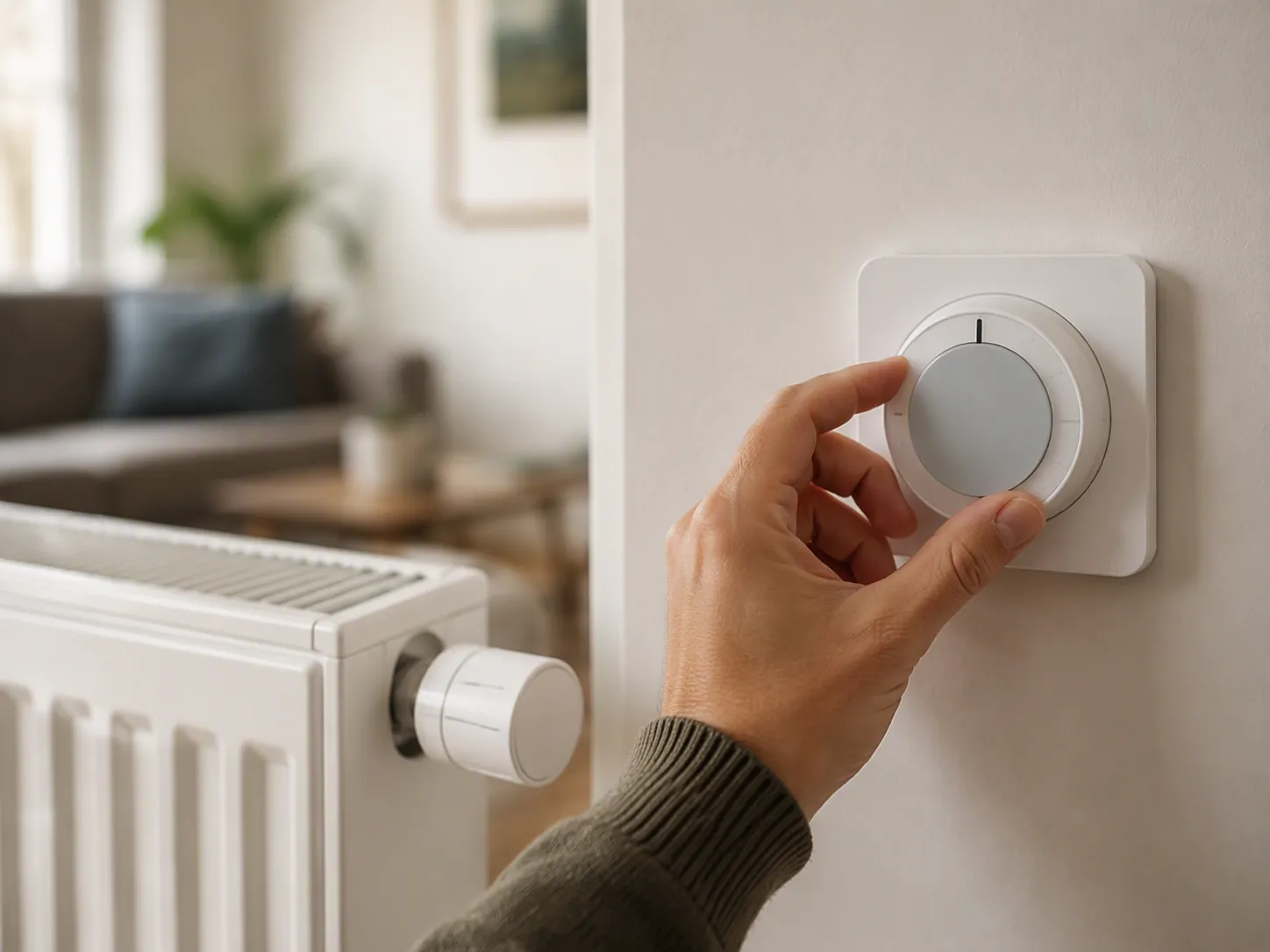
ENERGY STAR offers useful supporting evidence for the mechanism. Its US smart-thermostat certification uses field data and requires a product to demonstrate at least an 8% reduction in heating runtime; ENERGY STAR says certified models save users approximately 8% on heating and cooling bills on average.[4] This is stronger evidence than an unlabeled marketing percentage, but it remains US evidence shaped by different climates, heating systems, tariffs and cooling demand. It cannot be converted directly into UK pounds.
Before calculating payback, establish what the new controls will do that the current system cannot. Relevant changes include a reliable schedule, geofencing that does not leave other occupants cold, room-by-room radiator control, or occupancy automation that reduces heating in unused space. The saving should be attached to that change, with comfort and frost-protection constraints retained.
- Confirm boiler, valve, wiring and heating-zone compatibility. Use the smart thermostat HVAC compatibility guide before purchasing.
- Include professional installation, adapters, hubs and additional radiator controls in the upfront cost.
- Keep gas savings separate from any electricity used by the thermostat, receiver, hub or boiler.
- Compare gas consumption across reasonably similar weather periods; an unadjusted warm-week versus cold-week comparison proves little.
- Check whether remote sensors are needed to prevent the thermostat responding to an unrepresentative hallway or warm room. The remote-sensor guide explains that pre-purchase choice.
A thermostat may still be worth buying for comfort, remote access or easier scheduling even when the energy payback is slow. Those are legitimate benefits, but they should be recorded separately rather than smuggled into the bill-saving calculation.
An energy-monitoring plug is a test instrument first
A smart plug does not save energy merely by sitting between a socket and an appliance. Its useful functions are measuring consumption and switching a confirmed load off during hours when that load is unnecessary.
The practical sequence is short: measure the appliance for long enough to capture its normal cycle, separate active consumption from standby, identify the hours that can safely be removed, and apply the October electricity rate. If the plug will remain installed, deduct its own draw from the avoided load.
Smart Energy GB notes that a smart plug itself may consume around 1W in standby.[5] If it remained powered continuously, that would equal 8.76 kWh a year and cost about £2.31 at 26.32p per kWh. This derived figure is small, but it matters when the target appliance has an equally small modern standby load.[2][5]
Loop’s first-party phantom-load research estimated potential household savings of up to £250 a year, including about £97 for a forgotten old fridge and £152 for a set-top box, while putting modern TV standby at only about £1.26 a year.[9] Those figures were calculated on a 25p per kWh basis rather than the October rate, and the unusually costly legacy loads help explain the large headline. They are a reason to measure, not a guaranteed saving for every household.
That subtraction is where many proposed purchases fail. A plug that costs money, consumes power and adds another network dependency cannot recover its cost by controlling a load worth less than the plug’s own annual consumption. Large phantom-load headlines should therefore prompt measurement, not an assumption that every television, charger or kitchen appliance hides the same opportunity.
| Before buying | What must be known |
|---|---|
| Target load | Measured standby watts or watt-hours over a representative period |
| Controllable period | Hours when power can be removed without disrupting updates, recordings, safety functions or required availability |
| Plug overhead | The plug’s measured or documented consumption while connected |
| Net annual value | Avoided appliance kWh minus plug kWh, priced at 26.32p per kWh for the October calculation |
| Full cost | Plug price plus any required hub or subscription |
Choose a model that exposes usable energy data rather than one that provides only remote switching. The guide to Matter smart plugs with energy monitoring can narrow that check, but protocol support alone does not guarantee that a platform will display the measurements needed for a payback calculation.
Devices and percentages that do not pass the same test
“Energy-saving plugs”
A product marketed as an “energy-saving plug” deserves more suspicion than an ordinary certified smart plug that reports consumption. Smart Energy GB identifies warning signs including extraordinary percentage claims, vague technical explanations, assertions that a plug can stabilize household voltage or correct power factor to cut domestic bills, and a lack of recognized safety certification.[5]
A legitimate smart plug can save energy by switching a real load off. It does not reduce an appliance’s active energy demand through a mysterious box inserted at the socket. UK buyers should also verify the current rating and applicable safety markings, particularly before connecting heaters or other high-load appliances.
Unlabeled vendor percentages
A claim of 10%, 20% or 30% is unusable for payback until it identifies the baseline consumption, appliance or heating system, climate, tariff, household behavior, test period and whether the result was measured independently. EcoFlow’s 10–25% claim for Octopus Agile optimization is a vendor claim tied to tariff shifting, not a verified device-level reduction in energy use. Circulating Nest figures of 10–12% are also excluded because the available material does not establish a sufficiently traceable original methodology for a UK October-rate calculation.
Time-of-use automation may lower cost by moving consumption into cheaper periods without reducing kWh. That can be worthwhile, but the result depends on the household’s tariff and load schedule; it should not be blended with a claim that the device reduced energy consumption.
Smart meters
A Behavioural Insights Team meta-analysis of seven supplier studies, covering evaluations by four suppliers and commissioned by the UK energy department, found average reductions of 3.4% in electricity consumption and 3.0% in gas consumption after smart-meter installation.[6] Those findings concern feedback and household behavioral response. They do not establish that a thermostat or smart plug will deliver the same percentage.
A smart meter is nevertheless useful to the verification process. Its readings can show whether whole-home demand changed, while plug-level data or heating records help identify which intervention caused the change.
Do not build October payback on January forecasts
MoneySavingExpert’s average of supplier forecasts points to a January 2027 typical-use cap of about £1,932, while E.ON Next presents a projection around £1,941.[7][8] These are analyst and supplier projections, not Ofgem announcements. They may change before the January cap is set, and neither provides a sound substitute for the confirmed October unit rates.
For a purchase made before 1 October, calculate the first period at 26.32p per kWh of electricity or 7.97p per kWh of gas. When Ofgem publishes later rates, update the remaining payback rather than retrofitting today’s forecast as if it were guaranteed.
The purchasing rule
Buy smart heating controls when compatibility is confirmed and you can name the heating behavior they will change: scheduling, temperature reduction, zoning or avoiding heat in an empty home. Buy an energy-monitoring plug when measurements reveal a controllable standby load whose net annual value exceeds the plug’s own consumption and can plausibly recover the full purchase cost. If neither target is identifiable, measure first and withhold the purchase.
References
- The energy price cap — Ofgem, August 26, 2026
- Energy price cap unit rates and standing charges — Ofgem
- Take control of your heating at home — Energy Saving Trust
- Smart Thermostat FAQ — ENERGY STAR
- What are smart plugs and do energy-saving plugs work? — Smart Energy GB
- Do smart meters reduce households’ energy consumption? — Behavioural Insights Team
- What is the energy price cap? — MoneySavingExpert
- Energy price cap predictions — E.ON Next
- Phantom-load research — Loop (first-party research calculated on a 25p/kWh basis)