
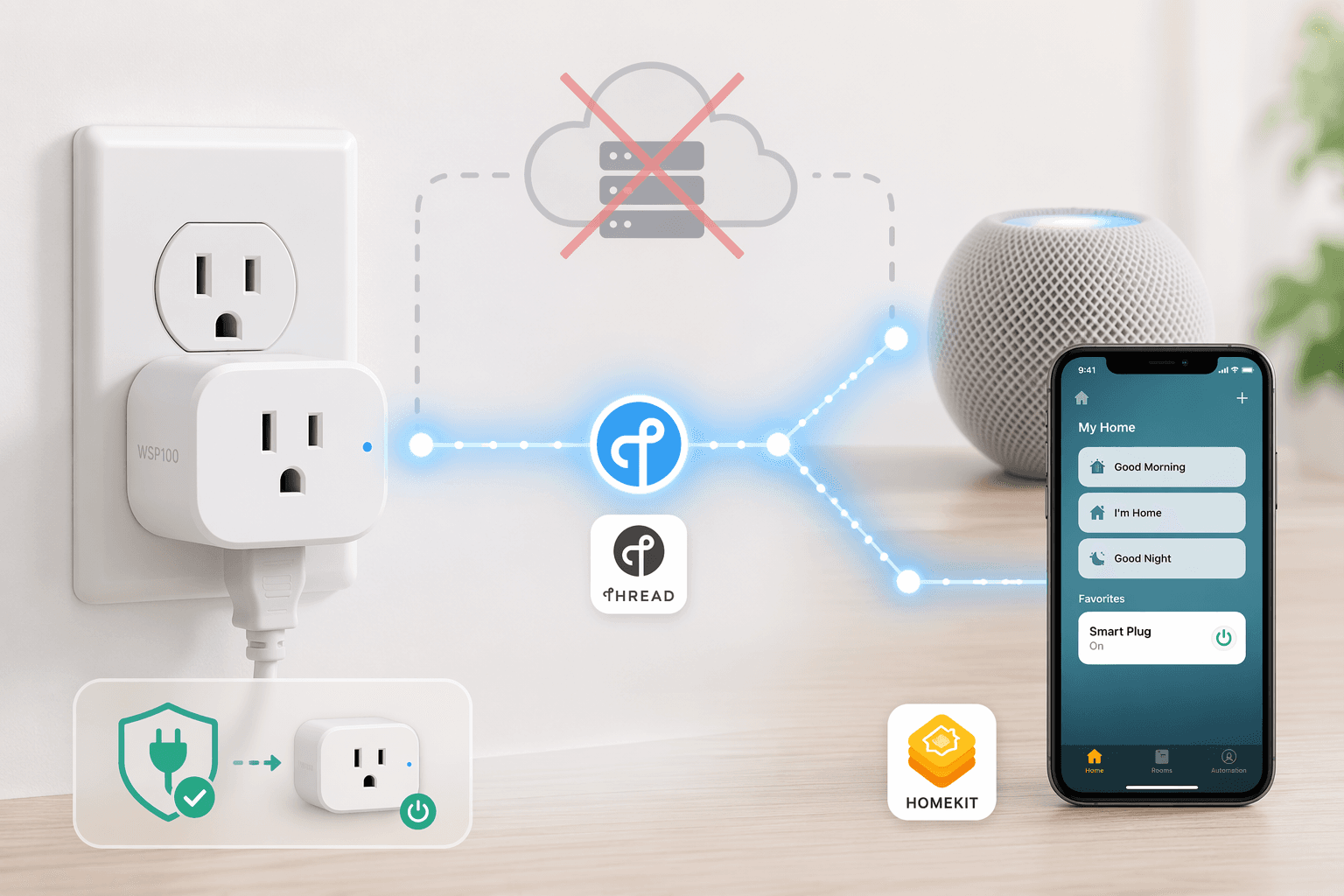
The Wemo Smart Plug with Thread, model WSP100, is still worth considering in mid-2026—but only for a very specific home: Apple HomeKit first, Siri-friendly, and already equipped with a Thread border router such as a HomePod mini or a recent Apple TV 4K. For everyone else, the answer is much easier: skip it.
That narrow verdict matters because Belkin ended Wemo support on January 31, 2026. Its shutdown page lists the affected Wemo models, and the WSP100 is not on that list.[1] That omission is not a clerical curiosity; it is the reason this plug still has a real use case while much of the Wemo ecosystem has become something buyers should approach with a flashlight and a support archive.
The WSP100 survived because it was never trying to be a normal Wemo Wi-Fi plug. It is a HomeKit-native smart plug that communicates over Thread, with Bluetooth Low Energy 5.0 used as part of its connectivity stack, rather than depending on the Wemo cloud for everyday control.[2] That does not make it future-proof. It does mean the January 2026 Wemo shutdown did not break the core HomeKit-and-Thread use case this plug was built around.
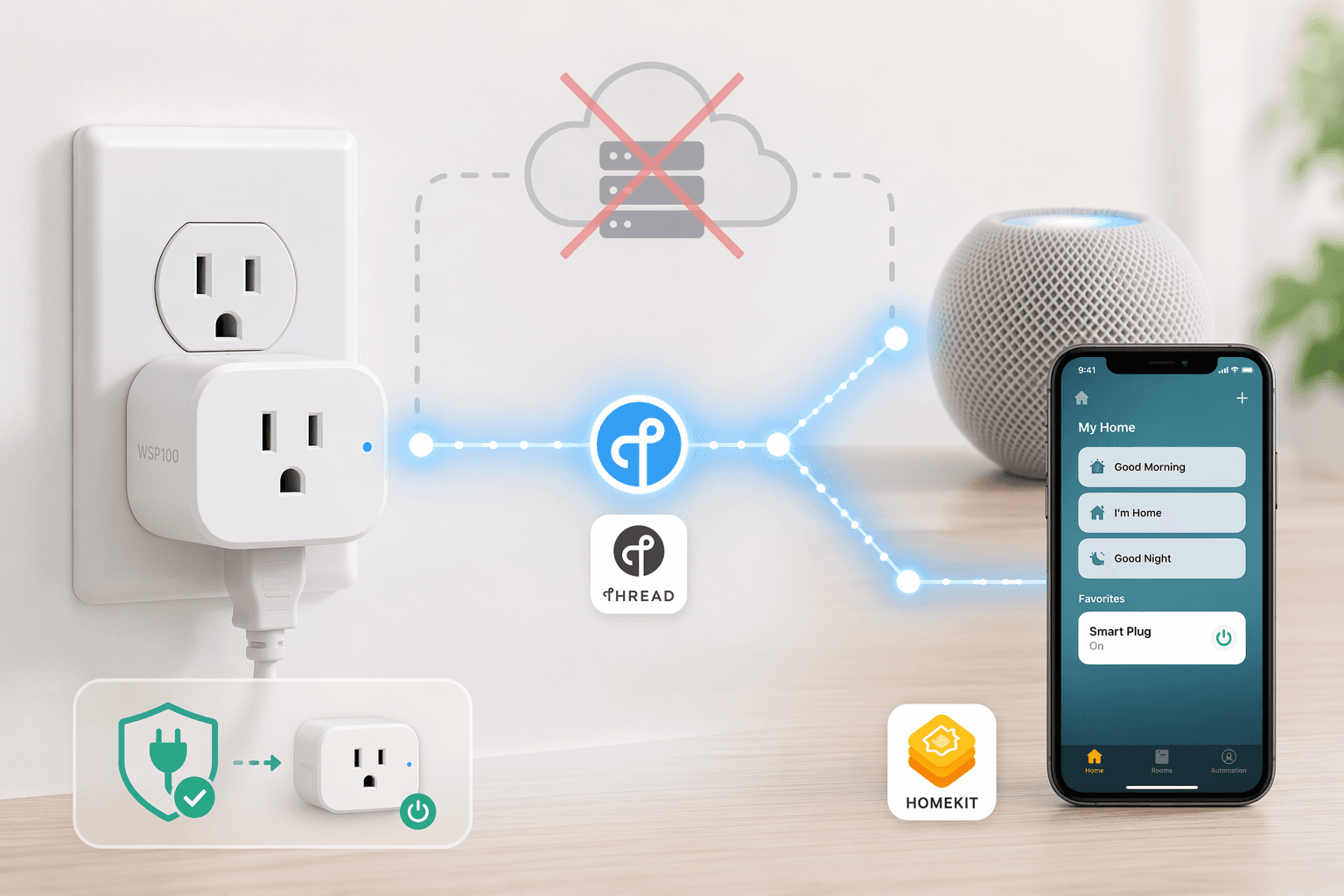
What still has to exist for this Wemo smart plug to work
The WSP100 is not a bargain-bin smart plug you can rescue with any phone and any voice assistant. It is an Apple smart home accessory. If that is your setup, the simplicity is part of the charm. If it is not, the plug is effectively a dead end before you even plug in a lamp.
| Requirement or feature | WSP100 reality in 2026 |
|---|---|
| Apple HomeKit | Required. This is the control layer that matters. |
| Thread border router | Required. A HomePod mini, Apple TV 4K 2021 or later, or another compatible Thread hub is needed. |
| Wemo app | No fallback worth planning around after the Wemo shutdown. |
| Alexa | Not supported. |
| Google Assistant | Not supported. |
| Energy monitoring | Not included. |
| Dimming | Not included. |
| Away Mode | Not included. |
The Thread border router requirement is the line many clearance shoppers will miss. Thread devices do not simply attach to your old 2.4GHz Wi-Fi network the way many cheap smart plugs do. They need a border router to bridge the Thread mesh into the rest of the home network. In an Apple home, that usually means a HomePod mini or an Apple TV 4K from 2021 or newer. Without that infrastructure, this is not a clever discounted purchase; it is a white plastic reminder that protocols matter.
The HomeKit-only limitation is just as important. There is no meaningful Alexa path to soften the purchase, no Google Assistant path for a mixed household, and no Wemo app escape hatch to keep using the plug outside Apple’s smart home stack. That is not a small compatibility footnote. It is the product.
For a committed HomeKit apartment, though, that same narrowness can be a relief. The plug is not asking you to maintain another account, wonder which cloud routine failed, or keep an abandoned app installed just in case. Once it is in HomeKit and reachable over Thread, the Wemo brand becomes less important than the accessory’s behavior inside Apple Home.
Setup is simple, assuming your Apple home is ready
PCWorld’s hands-on review found setup took less than one minute after a firmware update, and it specifically noted NFC pairing: tap an iPhone to the plug, then add it through the Apple Home flow.[3] That is exactly the kind of setup experience a HomeKit-only plug needs to justify its existence. There is no sprawling app tour, no account ceremony, and no reason to pretend the plug wants to be platform-neutral.
The caveat is that PCWorld tested the plug before Belkin’s Wemo support shutdown. Its setup observations are still useful for the HomeKit path, but the buying context has changed. In 2026, you should not buy the WSP100 expecting the Wemo app to provide any safety net. Treat Apple Home as the only control surface that matters.
The reason to still want it: Thread speed and a genuinely small body
The WSP100’s best argument is not nostalgia for Wemo. It is that, when the HomeKit and Thread pieces are already in place, the plug behaves like a small utility device should: quick, quiet, and physically unobtrusive.
CNN Underscored’s 2026 smart plug testing listed the WSP100 as its HomeKit pick and measured about a one-second response over Thread, compared with roughly three to five seconds for older Bluetooth plugs.[4] That kind of difference is easy to dismiss until the plug controls something you touch several times a day: a floor lamp by the couch, a fan near the bed, a coffee setup on a morning routine. A one-second response feels like a switch. A five-second response feels like the house is thinking about it.
That CNN result should not be stretched into a universal smart plug ranking. It is a benchmark in a specific testing context, and CNN’s guide still treating the WSP100 as a HomeKit option in 2026 should be read alongside the post-shutdown reality. The useful part is narrower: Thread can make this particular plug feel fast inside a prepared HomeKit home.
The physical design helps just as much. Belkin lists the WSP100 at 53.7mm wide, and PCWorld also emphasized its compact dimensions.[2][3] In normal outlet terms, that means the plug can leave the second receptacle accessible instead of turning a duplex outlet into a single smart outlet plus a blocked socket. That is not spec trivia if you live with crowded wall plates, furniture pushed close to outlets, or power strips that already look over-negotiated.
The specs that matter, and the ones that do not save it
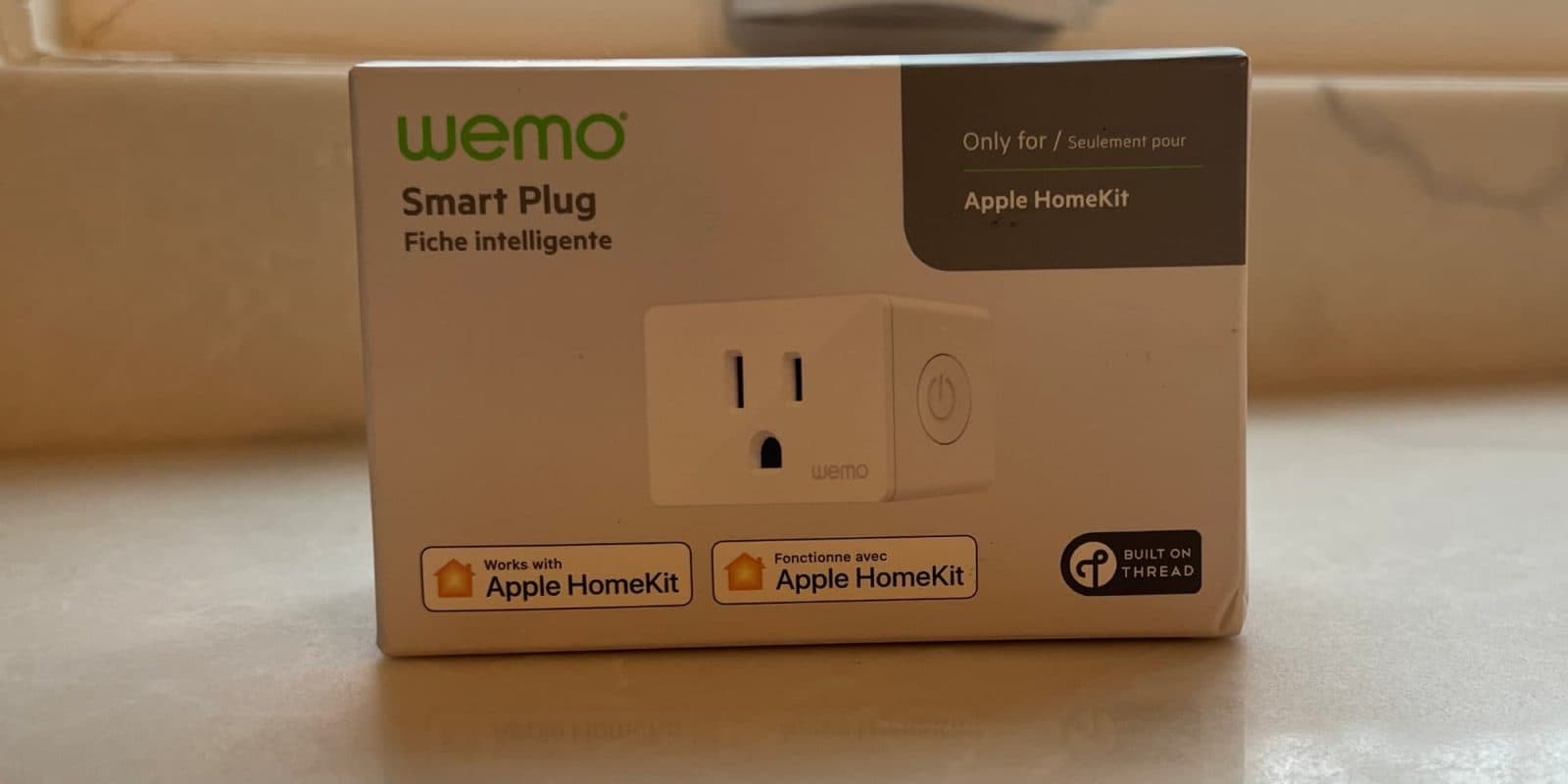
Belkin’s support page identifies the WSP100 as a Thread 802.15.4 smart plug with Bluetooth LE 5.0, rated for 15A and 1800W, with a two-year warranty.[2] Those are the practical electrical and connectivity basics. For typical plug-in lamps, fans, and small appliances within rating, the hardware is not the problem.
The missing features are where the plug’s appeal narrows. There is no energy monitoring, so it cannot tell you what a space heater, dehumidifier, or entertainment setup is consuming. There is no dimming, so it is not a lamp-control substitute for a dimmer module. There is no Away Mode, so it will not automatically mimic occupancy the way some broader smart plug systems try to do. If those features are why you are shopping, the WSP100’s speed and size will not compensate.
Do not confuse it with the Wemo WiFi Smart Plug
Part of the current confusion comes from the fact that “Wemo smart plug” can mean different products with different survival odds. The WSP100 is the Thread model. The WSP080 is the Wemo WiFi Smart Plug, a different device with different assumptions and a different dependency profile.[5]
That distinction matters because “some Wemo devices still work” is not the same as “this Wemo device is safe to buy and set up now.” A Wi-Fi Wemo plug that was already configured before the shutdown may not face the same immediate situation as a buyer opening a new old stock box in 2026. The WSP100’s case is cleaner because its meaningful path is HomeKit over Thread, not Wemo-cloud control.
Buying one now is mostly an availability question
When the WSP100 was easy to find around its original low smart-plug price range, it made a tidy kind of sense: small body, fast Thread response, clean HomeKit setup. In 2026, the harder part is finding one in a condition and at a price that still makes sense. Major retail availability is no longer something to assume; buying often means new old stock, clearance inventory, third-party listings, or secondhand units.
That changes the comparison. If the WSP100 is cheap and unopened, and your home already has the required Apple Thread infrastructure, it can still be a smart little pickup. If the price creeps upward, it starts competing with options like the Leviton Decora D215P, which offers broader ecosystem support, or Eve Energy, which pairs Thread with energy monitoring. At that point, the WSP100 has to win on the things it actually does better: HomeKit simplicity, Thread responsiveness, and outlet-friendly size.
There is also the secondhand caution nobody wants to deal with until the package arrives: make sure you are actually buying the WSP100 Thread model, not another Wemo plug with similar branding. The model number matters more than the logo.
Who should buy the WSP100 in 2026
Buy it if your home is already Apple/HomeKit/Thread-first, you own the required border router, and you want a compact on/off plug for simple loads. It is especially easy to justify for lamps, fans, holiday lights, or other devices where fast response and outlet fit matter more than power data.
Do not buy it for an Alexa home. Do not buy it for a Google Assistant home. Do not buy it if you want energy monitoring, dimming, occupancy simulation, or a manufacturer app to fall back on. And do not buy it just because it says Wemo and looks cheap; after the shutdown, the brand name is less useful than the dependency map.
The WSP100 is the rare discontinued-ecosystem device that still earns a qualified yes. It is not a Wemo revival and not a universal smart plug recommendation. It is a small, fast HomeKit Thread plug that happened to be built in a way that let it outlive the service layer around it. If that matches your home, buy carefully. If it does not, move on.
References
- Wemo Support Ending, Belkin
- Meet the Wemo Smart Plug with Thread, WSP100, Belkin
- Wemo Smart Plug with Thread review, PCWorld
- Best smart plugs of 2026, CNN Underscored
- Meet the Wemo WiFi Smart Plug, WSP080, Belkin
Corrections & Community Notes
Spotted an outdated spec, changed compatibility, or new firmware behavior? Submit a correction below to help keep this profile current. For formal editorial updates, use the contact page.
Comments
Join the discussion with an anonymous comment.