
Pixel Tag vs AirTag 2 Comes Down to Your Phone
AirTag 2 is on sale at $29, while the Pixel Tag is still unconfirmed ahead of Google's Aug 12 event. The choice is a compatibility fork, not a price call: AirTag 2 requires an iPhone on iOS 26+, and the Pixel Tag won't pair with iPhones, so Android and iPhone owners can match the tracker to their phone before purchasing.
Last updated
As of Aug. 1, 2026, the Pixel Tag vs AirTag 2 decision starts with the phone in your hand. If you use an iPhone, Apple’s AirTag 2 is the compatible tracker you can buy now: it is confirmed, on sale at $29, and built for Apple’s Find My network.[1] If you use Android, AirTag 2 is not the tracker to buy for your own phone because setup and use require an iPhone running iOS 26 or later.[2] If you use Android and want Google’s first-party tracker, waiting for Google’s Aug. 12 event only makes sense if the still-unannounced Pixel Tag is confirmed and its Ultra Wideband behavior matches your phone.
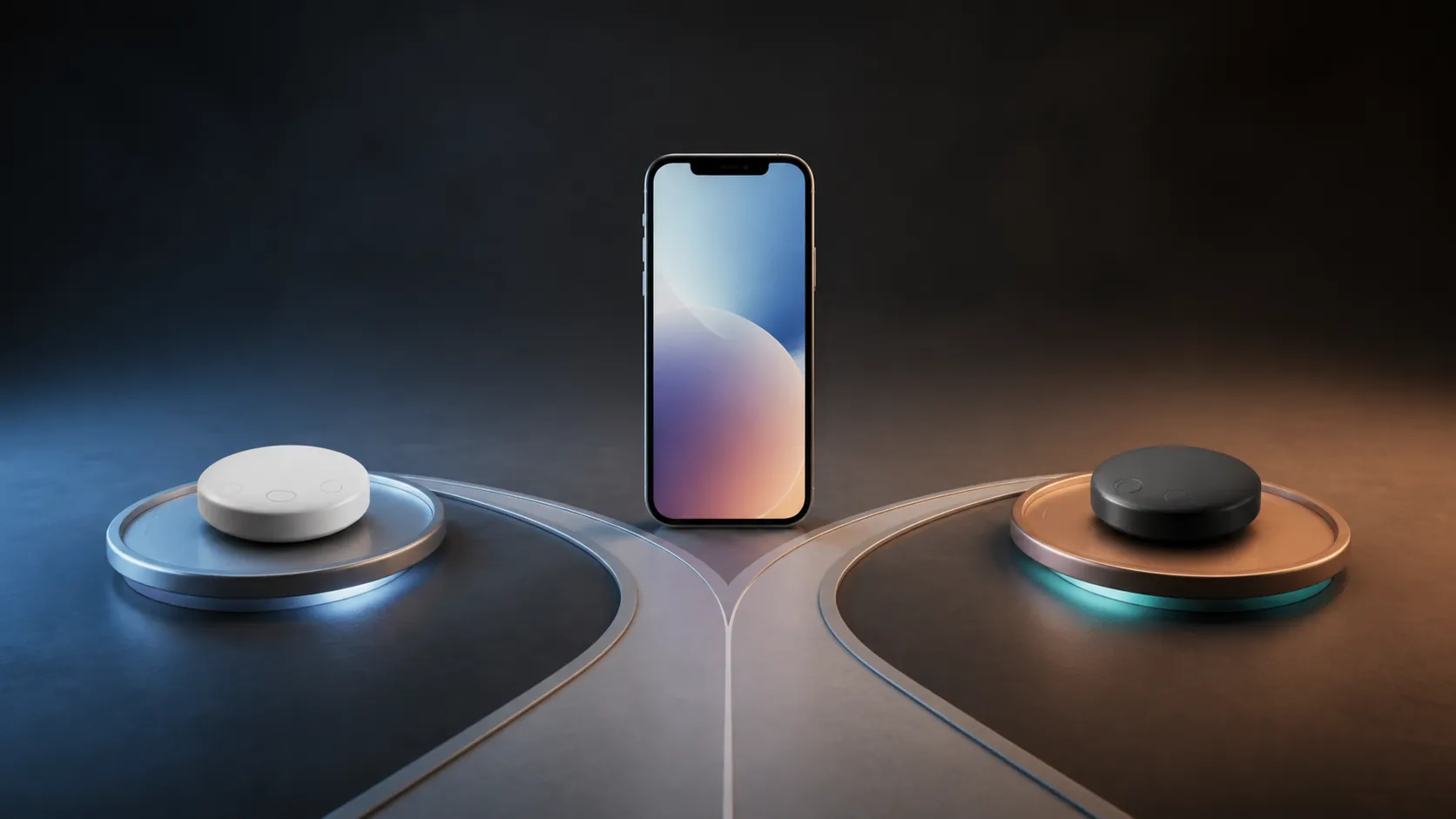
That is the useful answer behind the release-date and price question. The price gap is too small to rescue a bad ecosystem match. Apple has published AirTag 2’s price and requirements. Pixel Tag details are still leak-based. Cross-platform unknown-tracker alerts help with safety, but they do not mean an AirTag can be commissioned from Android or a Pixel Tag can be paired to an iPhone.
| Question | Status on Aug. 1, 2026 | Buying consequence |
|---|---|---|
| Can iPhone owners buy AirTag 2 now? | Confirmed: AirTag 2 is on sale at $29 and works through Apple Find My. | Yes, assuming the iPhone can run iOS 26 or later. |
| Can Android owners use AirTag 2 as their own tracker? | Confirmed requirement: AirTag 2 requires an iPhone with iOS 26+. | No. Android buyers should not buy it for their own setup. |
| Is Pixel Tag released? | Leaked, not announced by Google as of Aug. 1. | Wait until Aug. 12 if you want Google’s first-party tracker. |
| Is Pixel Tag pricing confirmed? | Leaked: roughly €30, with low-$30s U.S. pricing inferred by reports. | Price is not the deciding factor until Google confirms it. |
| Will Pixel Tag have UWB? | Unconfirmed. | This is the main reason some Android buyers should wait. |
Start with the setup screen, not the sticker price
AirTag 2 is the clean side of this comparison because Apple has already shipped it. Apple announced AirTag 2 on Jan. 26, 2026, with a $29 single-unit price and a $99 four-pack price.[1] Apple’s technical specifications list iOS 26 or later as the software requirement.[2] Those two facts do more work than the rest of the spec sheet for a pre-purchase buyer.
For an iPhone owner, that means the purchase question is ordinary: is your phone supported, are you already using Find My, and do you want Apple’s tracker? For an Android owner, the answer arrives earlier. AirTag 2 is an Apple Find My accessory. If you cannot set it up with the phone you actually carry, the $29 price is irrelevant.
Pixel Tag sits on the other side of the fork. 9to5Google reported a leaked Google tracker under model GA12506, with a “Fog Light” color, a roughly €30 price, and no confirmed UWB or battery details.[3] TechTimes separately described an inferred U.S. price around $34 and emphasized that UWB remains unconfirmed.[4] Android Headlines also covered the Pixel Tag leak, but the important point is still the same: this is not a Google product page yet.[5]
That status label matters. A confirmed $29 AirTag 2 and a leaked roughly €30 Pixel Tag are not equivalent evidence. Apple can be judged against its published requirements today. Google’s tracker has to be treated as a likely product candidate until Google confirms the name, price, release timing, network behavior, battery, and compatible-phone list.
What is confirmed for AirTag 2
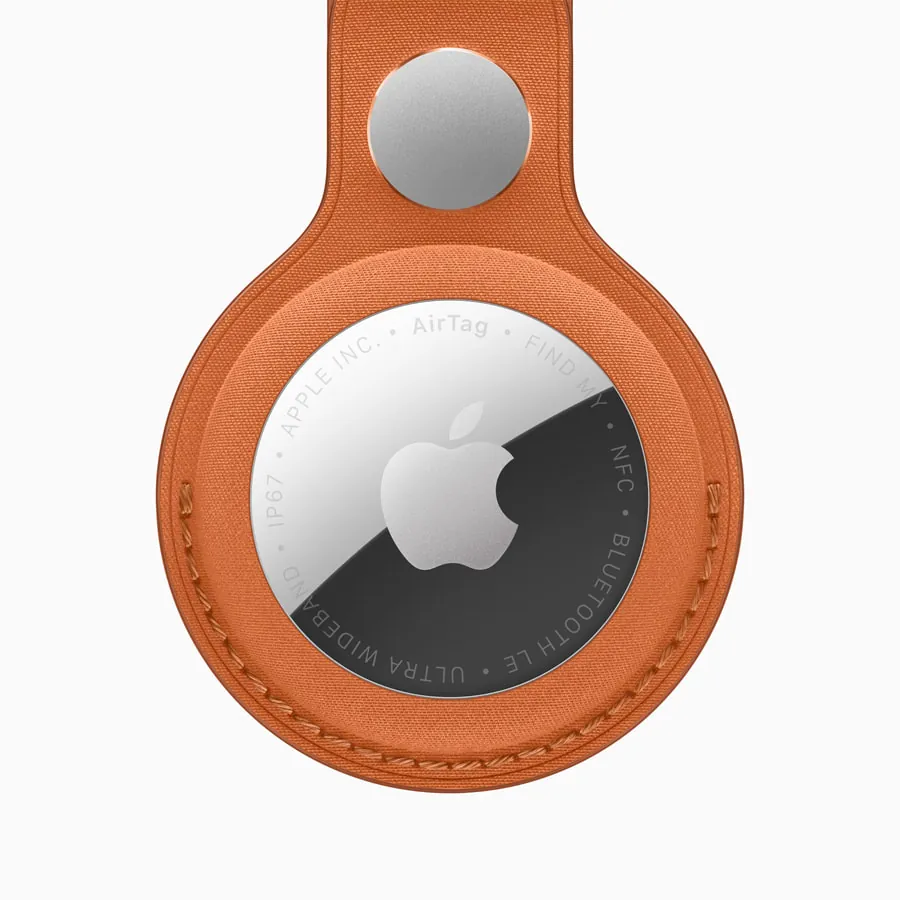
AirTag 2 is confirmed in the ways that matter before purchase. Apple says the second-generation tracker uses the U2 chip, has a speaker that is 50 percent louder, and supports Precision Finding with “up to 50 percent farther” range than the previous generation.[1] That last phrase is Apple’s own range language; it should not be blended with third-party distance estimates as if everyone measured the same thing in the same conditions.
Precision Finding also depends on compatible Apple hardware. Apple’s launch material ties the improved finding experience to devices such as iPhone 15 and later and Apple Watch Series 9 and later.[1] The tracker itself having UWB is not enough; the phone or watch doing the locating must support the feature too.
For this buying decision, AirTag 2’s weakness is not a subtle design complaint. The lack of Android setup is the wall. If the buyer’s phone is an iPhone on iOS 26 or later, AirTag 2 belongs in the live-buy column. If the buyer’s phone is Android, it does not.
What is still only leaked for Pixel Tag
The Pixel Tag case is interesting because Google has a natural reason to make it: Find Hub needs first-party hardware the way Apple Find My has AirTag. But as of this article’s Aug. 1, 2026 knowledge boundary, Pixel Tag has not been announced by Google. The current details come from reporting around a leaked tracker, not from a Google Store listing or official support page.
- Leaked: model GA12506, reported by 9to5Google.
- Leaked: “Fog Light” color name and roughly €30 European pricing.
- Inferred: low-$30s U.S. pricing, including an estimate around $34.
- Unconfirmed: UWB support.
- Unconfirmed: battery details.
- Unconfirmed: launch date, ship date, and whether it appears at the Aug. 12 event.
The Aug. 12 date is real for Google’s event, but the Pixel Tag’s appearance there is not confirmed. 9to5Google’s event-invite coverage named the Pixel 11 family and Pixel Watch 5 in the Made by Google context; Pixel Tag had not yet been confirmed for the stage.[6] That makes “wait until Aug. 12” a timing tactic, not a promise that a tracker will ship that day.
For Android buyers, though, the wait is short enough to be rational. Buying a third-party tracker today and returning it next week because Google announces a better-matched first-party option is exactly the kind of avoidable churn a compatibility check is supposed to prevent.
DULT alerts are not product compatibility
The cross-platform piece that causes the most confusion is unknown-tracker alerting. TechTimes describes DULT support as the safety bridge between platforms: iPhones can warn about unwanted Android-compatible trackers, and Android phones can warn about unwanted AirTags.[4] That is important, but it is not the same as pairing, setup, account ownership, or precision finding.
A safety alert tells a person that a tracker may be moving with them. It does not turn the tracker into an accessory for that person’s phone. An Android phone detecting an AirTag is not an Android phone managing an AirTag. An iPhone detecting a Find Hub tracker is not an iPhone adding that tracker to Find My.
This is the same compatibility discipline NestGrid applies in other phone-and-home checks: before buying a device, confirm the phone, hub, network, and setup path it actually uses. The same habit that keeps a buyer from assuming an iPhone works as the right HomeKit hub or that a Galaxy phone automatically fills every SmartThings role applies here too. Alerts are safety interoperability. Setup is product interoperability.
The only Android reason to wait is UWB — and only for some phones
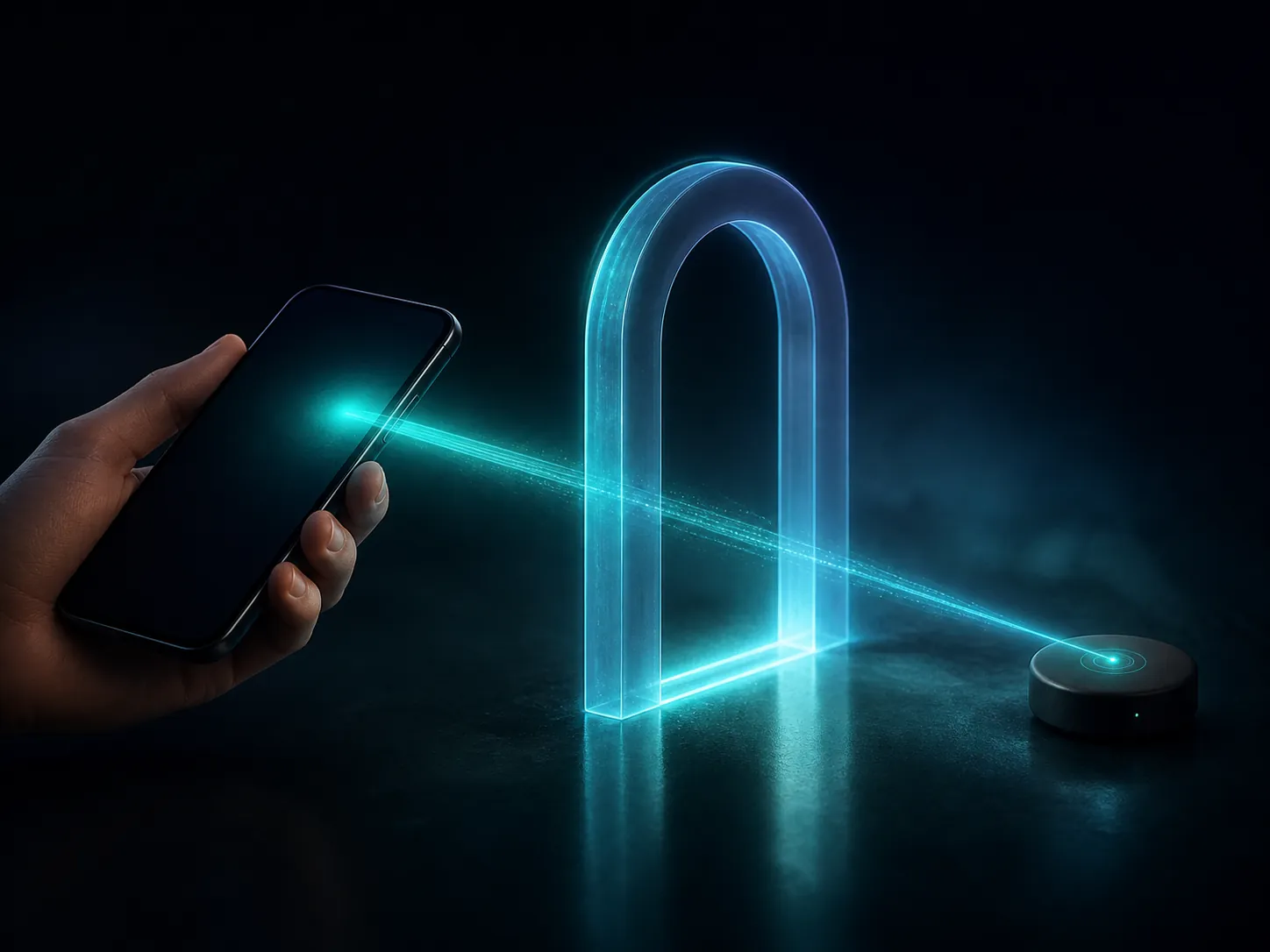
UWB is the part of Pixel Tag speculation worth taking seriously, because it changes what “find my keys” feels like at close range. Bluetooth can get you near a tracker. UWB can support directional, precision-style finding when the tracker, the phone, the OS, and the network all allow it.
AirTag 2 already clears that hardware claim on Apple’s side: Apple says it has the U2 chip and supports Precision Finding with compatible Apple devices.[1] Pixel Tag does not clear it yet. Reports have not confirmed UWB or battery details, and TechTimes explicitly keeps UWB in the unconfirmed column.[3][4]
Even a UWB-equipped Pixel Tag would not help every Android owner equally. HowToGeek’s Find Hub explainer says UWB precision finding is currently enabled only for Pixel 8 Pro and newer Pro models, plus Samsung Galaxy S Plus and Ultra models; it also notes that Moto Tag and Moto Tag 2 are currently the UWB-capable Find Hub trackers.[7] That makes the Aug. 12 wait valuable mainly for Android buyers whose phones are already in the eligible precision-finding lane.
Older Pro branding is not enough. 9to5Google reported in 2025 that Pixel 6 Pro and Pixel 7 Pro cannot use UWB for Find Hub trackers.[8] So the buyer with an older Pixel Pro should not read “Pixel Tag may have UWB” as “my phone will get AirTag-like close-range guidance.” Those are different claims.
| If Pixel Tag launches with... | What it means for Android buyers | Who benefits most |
|---|---|---|
| Confirmed UWB | It may support precision-style finding through Find Hub, but only where the phone and Google’s compatible-device rules allow it. | Owners of currently eligible phones such as Pixel 8 Pro+ and Galaxy S Plus/Ultra models. |
| Bluetooth only | It may still be useful as a first-party Google tracker, but the practical reason to wait becomes weaker for buyers expecting directional close-range finding. | Android owners who mainly want Find Hub pairing and basic item tracking. |
| No clear compatible-phone list at launch | Do not assume support from the tracker name or phone branding. | Anyone buying for UWB should pause until Google’s support page is explicit. |
The clean post-launch check is Google’s own Find Hub compatible-devices page.[9] A leak can tell buyers what may be coming. A compatibility page tells them whether their phone is allowed through the gate.
Price does not fix the wrong network
The reported prices are close enough that they should not lead the decision. AirTag 2 is confirmed at $29.[1] Pixel Tag is leaked at roughly €30, with U.S. pricing inferred around the low-$30s rather than confirmed by Google.[3][4] A few dollars one way or the other will not matter if the tracker cannot be set up from the buyer’s phone.
This is also why small hardware details should stay in proportion. A missing mounting hole, a particular color name, or a slightly nicer accessory ecosystem may matter after compatibility is solved. They should not be allowed to sit above the basic question: which account and phone will commission the tracker?
Network reliability comparisons deserve the same restraint. Older benchmarks can be useful context, but Android tracker behavior has been changing, including Find Hub’s later UWB rollout noted in the current compatibility discussion.[7] For a purchase being made in August 2026, the hard gates are more dependable than dated network-score arguments.
Status-labeled verdict for Aug. 1 buyers
| Buyer | Status | Verdict |
|---|---|---|
| iPhone owner on iOS 26 or later | Confirmed AirTag 2 compatibility path | Buy AirTag 2 now if you want Apple Find My tracking. |
| iPhone owner considering Pixel Tag | Leaked Pixel Tag is tied to Google Find Hub, not Apple Find My | Do not wait for Pixel Tag as an iPhone tracker. |
| Android owner considering AirTag 2 | Confirmed AirTag 2 requires iPhone with iOS 26+ | Do not buy AirTag 2 for your own Android phone. |
| Pixel or Android owner who wants Google’s first-party tracker | Pixel Tag still unannounced; Aug. 12 event is near but not a confirmed tracker launch | Wait for Aug. 12 before buying. |
| Android owner with Pixel 8 Pro+ or Galaxy S Plus/Ultra | Find Hub precision finding is currently gated to these eligible phone families | Wait specifically to see whether Pixel Tag confirms UWB. |
| Android owner with a non-UWB-eligible phone | Pixel Tag UWB would not automatically unlock precision finding for your phone | Wait only for basic Find Hub compatibility and price confirmation, not for promised precision finding. |
| Anyone buying Pixel Tag after launch | Official compatibility page should outrank leaks | Re-check Google’s Find Hub compatible-devices page before purchase. |
References
- Apple introduces new AirTag with expanded range and improved findability, Apple Newsroom, Jan. 26, 2026
- AirTag 2 - Technical Specifications, Apple Support
- This is the Google Pixel Tag, 9to5Google, Jul. 31, 2026
- Google Pixel Tag Is Real: First-Party Tracker Arrives at $34, UWB Still Unconfirmed, TechTimes
- Google Pixel Tag smart tracker leak details, Android Headlines, Jul. 2026
- Made by Google 2026 invite, 9to5Google, Jul. 7, 2026
- UWB Was Supposed to Fix Bluetooth Trackers, But Android Is Ignoring It on Purpose, HowToGeek
- Pixel 6 Pro and Pixel 7 Pro can’t use UWB for Find Hub trackers, 9to5Google, Oct. 28, 2025
- Find Hub compatible devices, Android.com
Known issues with this device / protocol
Spec-version history
For active regressions on this protocol, see Update Watch.
No linked Update Watch entries yet.