Pixel 11 Pro XL Release Date, Specs, and Smart-Home Verdict
The Pixel 11 Pro XL launches August 20 at $1,299 with a confirmed spec sheet that includes Thread, UWB, Wi-Fi 7, and Google Cast. This pre-purchase breakdown shows what it can do in a Google Home/Matter/Thread setup — Matter controller yes, Thread network join yes — and what it can't: it is not a Google Home hub or Thread border router, so it complements rather than replaces the hub hardware you already own.
Last updated
If you came for the Pixel 11 Pro XL release date, specs, and smart-home answer, the purchase facts are already settled: Google announced the Pixel 11 Pro XL at Made by Google on August 12, 2026, and sales began August 20, 2026. In the U.S., the Pro XL starts at $1,299 for 256GB, rises to $1,419 for 512GB, and reaches $1,649 for 1TB. [1][2]
The shorter smart-home verdict is also clear enough for a pre-purchase decision. The Pixel 11 Pro XL has the right radios for a serious Google Home household — Thread networking technology, UWB, Wi-Fi 7, Bluetooth 6.0, and Google Cast — and Google documents Android phones as Matter controllers that can work with Thread credentials. It does not become a Google Home hub, and it does not become a Thread border router. Those jobs still belong to hub-class hardware in Google’s own lists.
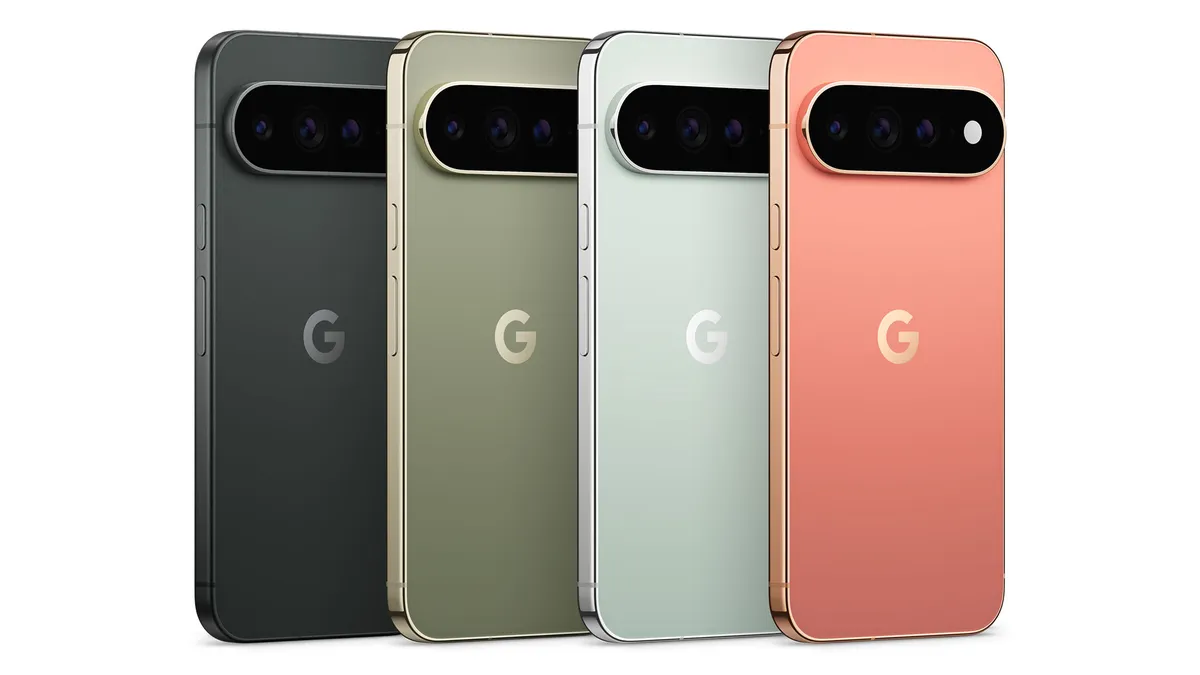
The confirmed spec surface that matters before buying
For this kind of purchase, the useful spec sheet is not only the camera row or storage ladder. It is the overlap between flagship-phone hardware and the home-control stack you already have. These are the confirmed details worth keeping in view.
| Pixel 11 Pro XL item | Confirmed detail | Pre-purchase note |
|---|---|---|
| Launch | Announced August 12, 2026; on sale August 20, 2026. [1][2] | This is shipping hardware, not a leaked roadmap item. |
| U.S. pricing | $1,299 for 256GB; $1,419 for 512GB; $1,649 for 1TB. [2] | The 1TB tier is one of the XL’s practical differences from the lower Pro tier. |
| Software | Android 17 with 7 years of updates. [3][4] | A long support window helps smart-home households that keep phones as controllers for years. |
| Processor | Tensor G6, documented as a 3nm chip. [1][3] | Treat 3nm as the supported spec; conflicting 2nm coverage should not drive a buying decision. |
| Memory | Post-launch listings conflict on at least one RAM configuration. | The 512GB RAM listing is a needs-verification item, not something to quietly round into certainty. |
| Rear cameras | 50MP main, 48MP ultrawide, and 48MP 5x periscope telephoto. [3][4] | Important for the phone review; secondary for the hub question. |
| Front camera | 42MP selfie camera. [3][4] | Again, useful context, not the reason a Google Home setup changes. |
| Battery | 5,115mAh battery. [3][4] | Relevant because a phone controller that dies early is still friction. |
| Charging | 45W wired and Qi2.2 25W wireless are manufacturer-stated specs. [3] | Do not treat launch charging claims as measured charging behavior. |
| Smart-home radios and casting | Thread networking technology, UWB, Wi-Fi 7, Bluetooth 6.0, and Google Cast. [3] | This is the part that makes the Pro XL materially more interesting than a generic Android controller. |
| Sensor change | The temperature sensor is removed compared with earlier Pro models. [3][4] | If you used the old temperature sensor for occasional household checks, it is not part of this phone’s role. |
For comparison against the smaller flagship, NestGrid’s Pixel 11 Pro price and hub verdict is the cleaner place to track the $1,099 Pro tier. The XL question is different: whether the extra money buys you a better phone that also reduces hardware clutter in the home. On the second half, it only goes so far.
Pixel 11 Pro XL smart-home capability matrix
Because the phone went on sale only days before this writing, the right status labels matter. Google’s documentation can confirm what the platform supports. It does not yet give the same confidence as weeks of independent, repeated Matter and Thread behavior in real mixed-device homes.
| Capability | Status | What it means in a Google Home / Matter / Thread setup |
|---|---|---|
| Matter controller | Documented; independent reliability still investigating | Phones can act as Matter controllers through Google Play services Matter APIs, so the Pro XL belongs in the controller layer. [5] |
| Join an existing Thread network | Documented; independent Pixel 11 Pro XL behavior still investigating | Android exposes a Thread setting under Settings > Connected devices > Connection preferences > Thread, and Android can join an existing Thread network even without a dedicated border router. [6] |
| Add Matter devices in Google Home | Requires hub hardware | Google’s Matter help says a Matter-enabled hub is required to add Matter devices and control them remotely in Google Home. [7][8] |
| Remote control of Matter devices | Requires hub hardware | The phone can initiate control, but Google’s documented remote-control path depends on a Matter-enabled hub staying available. [7][8] |
| Google Home hub role | No | Google’s hub list includes devices such as Nest Hub, Nest Wifi Pro, Google TV Streamer, select TVs, and Google Home Speaker 2026; it does not include Pixel phones. [7][8] |
| Thread border-router role | No | Google’s Thread border-router list includes Nest Hub 2nd gen, Nest Hub Max, Nest Wifi Pro, Google TV Streamer 4K, and Google Home Speaker 2026; it does not include phones. [5] |
| UWB with Pixel Tag | Announced; not yet on sale | The Pixel Tag is designed to pair with the Pro XL’s UWB and Bluetooth 6.0 Channel Sounding for more precise finding than ordinary Bluetooth proximity; sales are slated to begin November 11, 2026. [9] |
| Wi-Fi 7 | Confirmed hardware | Useful for the phone’s own connectivity on modern networks; it does not replace a mesh router, hub, or Thread border router. [3] |
| Bluetooth 6.0 | Confirmed hardware | Relevant for accessories and Pixel Tag behavior; not a substitute for Matter hub duties. [3][9] |
| Google Cast | Confirmed feature | The phone can participate in casting workflows, but Cast support is separate from Matter hub and Thread border-router responsibilities. [3] |
| Works with Google Home ecosystem breadth | Google claim | Google says there are 80,000+ Works with Google Home devices; that ecosystem claim does not mean a Pixel phone becomes the always-on hub for all of them. [10] |
Controller, hub, and border router are not interchangeable roles

The Pixel 11 Pro XL makes the most sense when the home is separated into three jobs. The controller is the interface you touch: the phone app, automation setup screen, voice trigger, or quick control. The hub is the always-available Google Home device that keeps Matter setup and remote control available. The Thread border router is the bridge between low-power Thread devices and the rest of the IP network.
The Pro XL improves the first job. It is a powerful, well-equipped controller with a Thread-capable Android stack, UWB, modern Bluetooth, Wi-Fi 7, and Google Cast. It can participate in Matter control through Google’s phone-side APIs and use Thread credentials. That is useful, especially if your daily routine involves walking up to devices, casting media, unlocking scenes from the phone, or pairing item trackers.
The official lists stop it from taking over the other two jobs. Google’s Matter help names Matter-enabled hubs for adding devices and remote control; Google’s Thread developer documentation names the border routers. Phones are absent from both categories. [5][7][8]
That distinction is the same one behind NestGrid’s broader Pixel 11 smart-home hub verdict. A phone can be excellent at control without being the device that keeps the house reachable when the phone is asleep, outside the home, powered down, or replaced.
There is also one availability wrinkle worth keeping honest. Google Home Speaker 2026 appears in Google’s hub and border-router documentation, but a Google Store magazine page also described it as “coming in spring 2026.” Before treating that speaker as hardware you can buy or rely on in a specific home, check current retail availability rather than assuming a documentation listing equals a device already sitting on shelves. [5][10]
What changes if you already own Google Home hardware
If your home already has a Nest Hub 2nd gen, Nest Hub Max, Nest Wifi Pro, Google TV Streamer 4K, or another documented Matter-enabled hub and Thread border router, the Pro XL can slot in cleanly. You keep the hub and border-router hardware in place. The phone becomes the better handheld surface: faster, longer-supported, radio-rich, and ready for Pro-family features that the base Pixel 11 line does not all share. NestGrid’s Pixel 11 smart-home features breakdown is the adjacent place for that family-level radio split.
If your home has only Wi-Fi, a phone, and a few app-controlled accessories, the Pro XL does not magically create the same Matter/Thread foundation. It may be able to join an existing Thread network, but joining is not the same as being the always-on bridge that Thread endpoint devices need. If you plan to add Thread sensors, buttons, locks, or other low-power devices through Google Home, keep the border-router list open while budgeting.
If you are trying to reduce duplicate hardware, remove the redundant piece only after naming its role. A spare speaker that is just a voice endpoint may be optional. A Nest Hub or Nest Wifi Pro that is serving as the Matter-enabled hub or Thread border router is not replaced by buying the Pro XL. That is the practical consequence of Google’s own compatibility documents.
The Apple comparison reaches the same kind of boundary from the other side: premium phones can carry excellent radios and still leave hub duties to home infrastructure. If that is your cross-shopping frame, use the iPhone 17 Pro Max vs Pixel 11 Pro XL hub comparison rather than turning this into a platform war.
Pixel Tag is the clearest everyday UWB payoff
The Pixel Tag is the cleanest example of the Pro XL’s radios turning into something a household will actually notice. Google’s launch coverage put the tracker at $29, or $99 for a 4-pack, with sales beginning November 11, 2026. The Pro XL’s UWB and Bluetooth 6.0 Channel Sounding give that accessory a more tangible reason to exist than a generic “supports Bluetooth” badge. [9]
That does not make the phone a hub. It means the phone is better at nearby-device interactions: finding a tagged key pouch, locating a bag in the house, or pairing into Google’s item-tracking ecosystem. For the tracker-specific purchase call, the more direct comparison is NestGrid’s Pixel Tag vs AirTag 2 guide.
A few spec caveats that should not be blurred into the hub verdict
Charging is the first caveat. Google’s listed charging hardware for the Pro XL is one thing; independently measured charging behavior is another. In Android Central’s Pixel 11 Pro testing, Google’s “75% in 30 minutes” claim did not match the measured result for that Pro sample: Future Labs recorded 27% in 15 minutes and 54% in 30 minutes. That is not a Pro XL hub issue, but it is a reminder not to treat every launch number as reproduced performance. [11]
The Tensor process-node conflict belongs in the same bucket. Google’s supported materials point to Tensor G6 on 3nm. If you see a 2nm listing, treat it as conflicting coverage unless Google’s own specs change. The same caution applies to inconsistent RAM listings after launch: the phone can be worth buying without pretending every post-launch spec table agrees.
Thread and Matter reliability deserve a slightly different label. The capability is documented. The Pro XL-specific behavior in messy homes — multiple controllers, old hubs, mixed brands, apartment Wi-Fi, sleepy Thread sensors — is still investigating because the phone has only just reached buyers. That is not a reason to dismiss the hardware; it is a reason to avoid upgrading a documented platform claim into a field-tested guarantee.
This is also why NestGrid keeps a separate Pixel 11 Pro smart-home controller role check and applies the same verification discipline to adjacent Made by Google hardware, including the Pixel Watch 5 smart-home coverage. Launch documents are useful. They are not the same thing as months of household behavior.
Pre-purchase verdict
Buy the Pixel 11 Pro XL if you want Google’s largest 2026 flagship, the 1TB storage option, the Pro camera system, Android 17 with a long update window, and a genuinely strong smart-home radio set. It is a better controller-layer device than an ordinary phone, and UWB plus Pixel Tag support gives the hardware a visible household use beyond tapping light toggles.
Do not buy it expecting to retire the Google Home hub or Thread border-router hardware your setup depends on. In Google’s documented Matter and Thread architecture, the Pixel 11 Pro XL complements that hardware. It does not replace it.
References
- Google Pixel 11 Pro XL, Google Blog, August 12, 2026
- Made by Google 2026: Pixel 11 news, The Verge, August 12, 2026
- Pixel 11 Pro and Pixel 11 Pro XL specs, Google Store
- Google Pixel 11 Pro XL 5G, GSMArena
- Thread, Google Home Developers
- Use Thread on Android, Google Android Help
- Matter-enabled devices and Google Home, Google Home Help
- Set up and manage Matter-enabled devices in the Google Home app, Google Home Help
- Google unveils Pixel 11 lineup, new AirTag rival, and Gemini features at Made by Google 2026, TechCrunch, August 12, 2026
- Matter and Thread for your smart home, Google Store
- Google Pixel 11 Pro review, Android Central
Known issues with this device / protocol
Spec-version history
For active regressions on this protocol, see Update Watch.
No linked Update Watch entries yet.