
Oppo Enco Clip2 Specs: LHDC 5.0 and Dual Driver, Verified
Verified OPPO Enco Clip2 (ETEN1) specs: the dual-driver and Bluetooth 6.1 claims check out, but LHDC 5.0 hi-res is conditional — ColorOS 12.0+ or HeyMelody on Android 8.0+, never iOS — and shortens playtime versus AAC.
Last updated
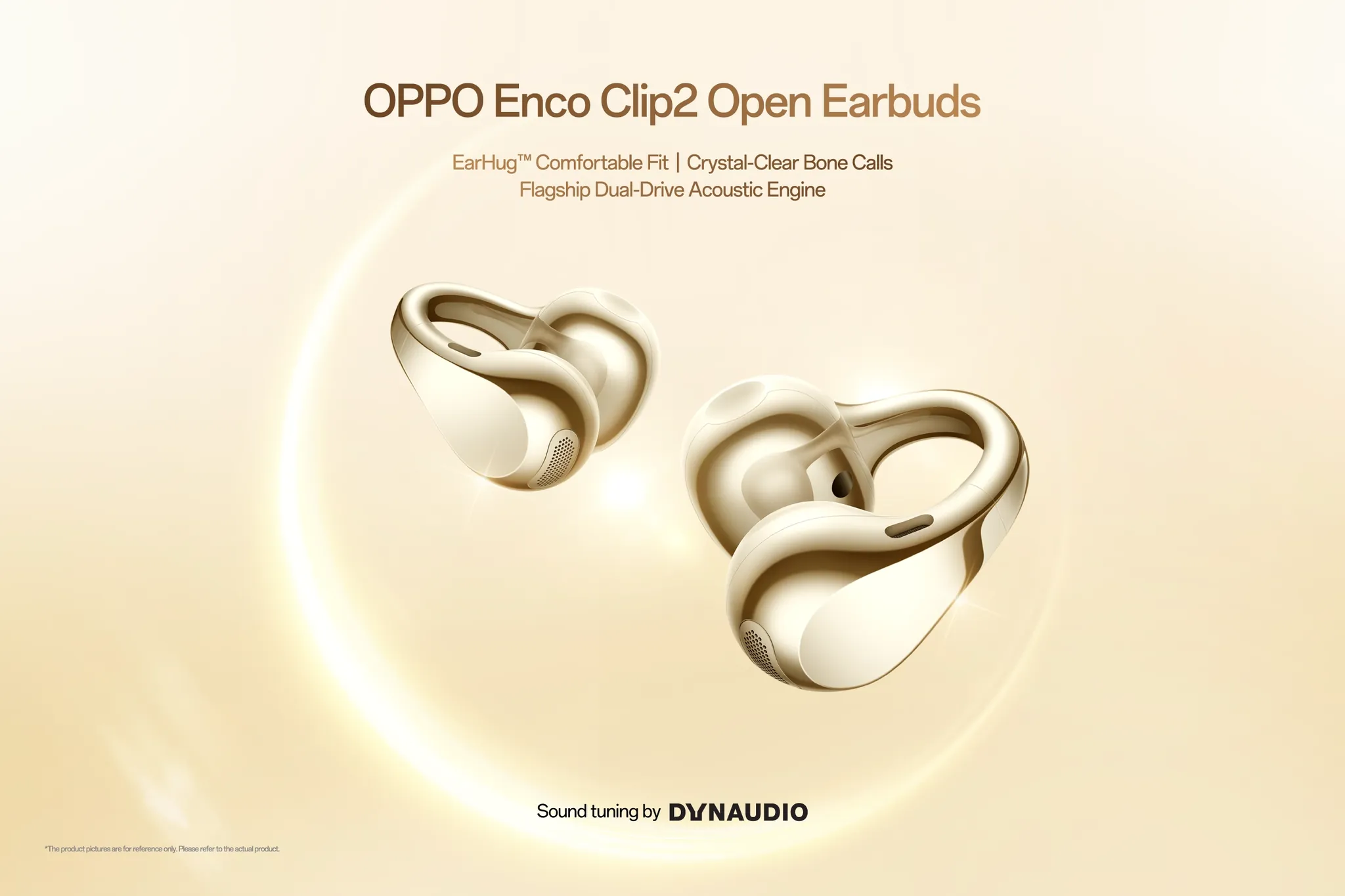
Verified on August 25, 2026: the OPPO Enco Clip2 specs that matter for the “oppo enco clip2 specs lhdc 5.0 dual driver” search are mostly real, and the codec fine print is the part to read twice. OPPO’s official ETEN1 sheet confirms the coaxial Φ11mm + Φ9mm dual dynamic driver layout, dual DACs, Bluetooth 6.1, LHDC 5.0, AAC, SBC, IP55 earbuds, 5.2g-per-bud weight, and the 58mAh/530mAh battery split. It also says LHDC is not automatic: it requires ColorOS 12.0+ through OPPO’s Earbuds Function or HeyMelody on Android 8.0+, and it is not supported on iOS.[1]
| Item | Verification status | Purchase meaning |
|---|---|---|
| Dual-driver hardware | Confirmed: Φ11mm + Φ9mm coaxial dynamic drivers, dual DACs | The hardware claim is not just launch language. |
| Bluetooth 6.1 | Confirmed on OPPO’s sheet; independently noted by reviewers | Real spec, but range defaults to OPPO’s 10m figure, not unsupported long-range marketing claims. |
| LHDC 5.0 | Confirmed, conditional | Needs a compatible Android path; iPhone buyers should not expect it. |
| Battery with LHDC | Shorter than AAC in OPPO’s own lab figures | Rated playback drops from 9.5h/40h with AAC to 8h/36h with LHDC. |
| Wireless charging | Not verified | Treat the Clip2 as USB-C charging only. |
| US price | Not verified in the sources checked here | Regional prices exist, but they do not establish a US retail price. |
The verified ETEN1 hardware block
The model number is ETEN1. OPPO lists a coaxial dual-driver system using a Φ11mm dynamic driver plus a Φ9mm dynamic driver, with dual DACs, a 20Hz–40kHz frequency response, 115±2dB sensitivity at 1kHz, and a -38dB microphone figure. The supported codecs are LHDC 5.0, AAC, and SBC. Bluetooth is listed as version 6.1, with a default transmission distance of 10m in an obstacle-free environment.[1]
The battery and physical specs are equally specific: each earbud has a 58mAh battery, the case has a 530mAh battery, each bud weighs about 5.2g, and the charging case weighs about 46.3g. The IP55 rating applies to the earbuds, not the case. That distinction matters because open-ear clip designs invite gym and commute use, but the case should not inherit the buds’ water- and dust-resistance rating by assumption.[1]
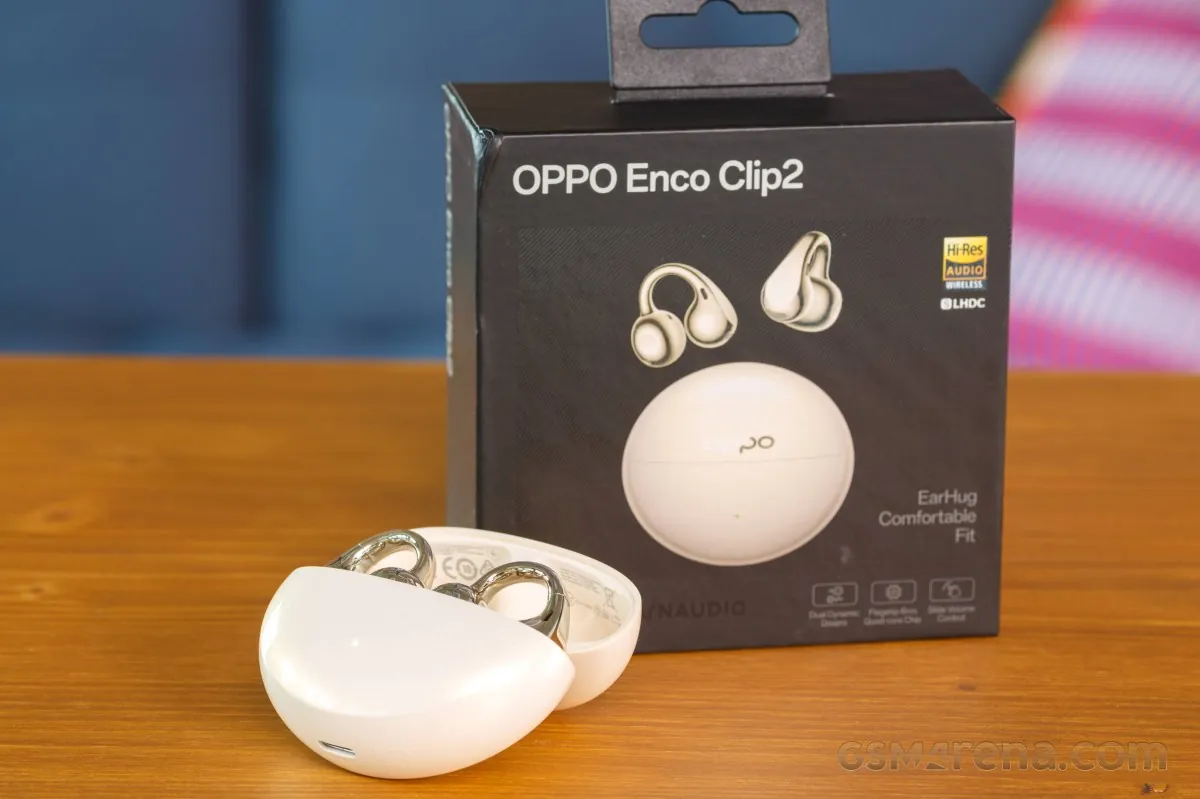
Independent coverage broadly lines up with the official sheet. GSMArena and Trusted Reviews both treated the Clip2 as the first Bluetooth 6.1 earbuds they had tested, which is useful corroboration because Bluetooth 6.1 is the sort of spec that would be easy to misread from a launch slide if it appeared only once.[2][3]
Dynaudio tuning is part of OPPO’s launch materials, and it is fair to note it as a tuning partnership. It should not be used as a substitute for the harder compatibility facts, though. Whether the Clip2 plays LHDC, AAC, or SBC depends first on the phone and software path, not on the tuning badge.[4]
LHDC 5.0 is confirmed, but it is not a universal switch
The cleanest way to read the Clip2 codec claim is this: the earbuds support LHDC 5.0, but the source device has to negotiate it. OPPO’s footnote says LHDC can be used on ColorOS 12.0+ devices through OPPO’s Earbuds Function, or through the HeyMelody app on Android 8.0+. OPPO also states that LHDC is not supported on iOS.[1]
| Phone you own | LHDC 5.0 outlook | What to verify before buying |
|---|---|---|
| OPPO phone on ColorOS 12.0+ | Best-supported path | Pair the Clip2 and enable LHDC through OPPO’s Earbuds Function. |
| OnePlus or other Android phone on Android 8.0+ | Possible through HeyMelody, but still phone-stack dependent | Install HeyMelody, pair the earbuds, and confirm the active Bluetooth codec after connection. |
| Pixel on Android 17 | Native LHDC context exists, but current reporting points to LHDC v5 at 96kHz rather than 192kHz | Do not buy for guaranteed 192kHz playback. |
| iPhone | No LHDC support | Expect AAC/SBC behavior, not LHDC hi-res. |
| Older Android phone or unsupported build | Unverified | Treat LHDC as a maybe until the codec appears after pairing. |
This is where a codec logo becomes less helpful than a settings screen. If the phone cannot expose LHDC, the Clip2 falls back to the codecs both sides can actually use. For an iPhone shopper, that makes the answer simple: the Clip2 may still be appealing as an open-ear clip bud, but the LHDC 5.0 line on the box is not a feature the iPhone will unlock.[1]
Pixels are the interesting edge case in 2026. Android 17 changes the LHDC landscape by adding native support context, and Android Authority has reported on Android 17 LHDC audio support. SoundGuys’ Pixel testing, however, points to LHDC v5 negotiation at 96kHz, not the full 192kHz ceiling often attached to LHDC 5.0 marketing.[6][7][8]
That distinction is not academic if you are shopping specifically for hi-res Bluetooth. A codec’s maximum advertised capability is not the same thing as the negotiated stream your phone and earbuds settle on. The safer pre-purchase habit is the same one used in phone-side compatibility checks such as this Galaxy compatibility verification example: identify the exact phone, OS build, app path, and feature switch before treating a headline protocol as available.
The LHDC battery cost is official, not guessed
OPPO’s own lab figures rate the Clip2 at up to 9.5 hours of music playback from the earbuds and 40 hours total with the case when using AAC. Switch to LHDC and the rated figures fall to 8 hours from the earbuds and 36 hours total with the case. Those are lab figures, not independent endurance measurements, but the direction is still useful: LHDC costs battery on OPPO’s own sheet.[1]
Trusted Reviews’ usage notes suggested roughly 10 hours in AAC, which sits close enough to OPPO’s AAC-side rating to make the official AAC figure look plausible in ordinary use. It does not independently prove the LHDC runtime, and it should not be treated as doing so.[3]
Spec conflicts to settle before checkout
Charging: USB-C, not verified wireless charging
Trusted Reviews lists “Wireless charging: Yes,” but OPPO’s official specifications identify USB-C charging, and HardwareZone’s review also supports USB-C-only charging. The sensible read is that the Trusted Reviews field is likely erroneous unless OPPO later publishes a revised spec.[3][1][5]
Battery capacity: use OPPO’s 58mAh bud figure
For the earbud battery cell, use OPPO’s 58mAh figure. Lower third-party figures in the material checked here are not the better authority when the official ETEN1 sheet gives a specific value and the rest of the battery table is internally consistent.[1]
Bluetooth range: keep the verified 10m default
OPPO’s global spec page lists a 10m Bluetooth transmission distance. A much larger Chinese-marketing range claim is not supported by the reviewed material here, so it should not replace the 10m default in a buyer-facing spec readout.[1]
Price: regional numbers are not a US price
Regional launch references include prices such as CNY 899, EUR 179, £149, S$259/S$229, AED 649, and A$299 across OPPO and regional reporting. None of the sources checked here verifies a US retail price, so a US buyer should treat pricing as not yet confirmed rather than converting another market’s launch number and calling it official.[4][9][10]
Phone-by-phone buying judgment
Buy the Enco Clip2 for the verified hardware package if you already wanted an open-ear clip design: the dual-driver layout, dual DACs, Bluetooth 6.1, IP55 bud rating, and 5.2g bud weight are all anchored in OPPO’s official sheet. The more fragile purchase claim is LHDC 5.0, because the phone has to participate.[1]
- OPPO on ColorOS 12.0+: the strongest match. The official path exists, and the main trade-off is the LHDC battery drop.
- OnePlus or other Android on Android 8.0+: plausible through HeyMelody, but verify the active codec after pairing. Do not assume every Android phone behaves like an OPPO phone.
- Pixel on Android 17: interesting, but not a 192kHz guarantee. Current reporting points to 96kHz LHDC v5 negotiation. If you are tracking Android 17 behavior more broadly, the same status-labeled approach appears in the Pixel 11 Pro XL compatibility notes and Android 17 troubleshooting pieces for Google Home and casting.
- iPhone: buy only if AAC playback and the open-ear form are enough. LHDC is excluded by OPPO’s own iOS footnote.
The Clip2 is easiest to recommend when the buyer’s phone is already in the verified path. It is much harder to recommend as a blind “hi-res LHDC” purchase for an iPhone, an older Android phone, or a Pixel buyer expecting universal 192kHz playback. The specs are real; the codec benefit is conditional.
References
- OPPO Enco Clip2 Open Earbuds - Specifications, OPPO Global
- OPPO Enco Clip2 unboxing and hands-on, GSMArena
- Oppo Enco Clip 2 Review, Trusted Reviews
- OPPO Launches Enco Clip2, OPPO
- OPPO Enco2 Earbuds Review Singapore Specs Buy, HardwareZone Singapore
- Savitech/LHDC Announcement, LHDC
- Android 17 LHDC audio support, Android Authority
- Android 17 Pixel LHDC Bluetooth codec support, SoundGuys
- OPPO Enco Clip 2 price features, FoneArena
- Oppo Enco Clip 2 launched with open-ear design, dual-driver setup, GizmoChina, April 22, 2026
Known issues with this device / protocol
Spec-version history
For active regressions on this protocol, see Update Watch.
No linked Update Watch entries yet.