Do the OnePlus N6x and N6 Differ for Smart Home?
For smart-home duty, the OnePlus N6x and OnePlus N6 are functionally identical: same Dimensity 6360 Apex chipset, Android 16, and Matter/Google Home controller stack, with no Thread radio on either. The buy decision comes down to RAM, battery, and the headphone jack — and neither phone replaces a Matter hub.
Last updated
Smart-home verdict: buy for RAM and battery, not Matter
For Google Home, Matter setup, and day-to-day smart-home control, the OnePlus N6x and OnePlus N6 are functionally the same by spec. Both sit on the Dimensity 6360 Apex platform, ship with Android 16/OxygenOS 16, and clear the phone-side baseline needed for Google Home Matter commissioning. Neither has a Thread radio, so neither becomes a Thread border router. That makes this a spec-level verdict, not a hands-on one: the N6x only went on sale on August 4, 2026, so retail-unit testing still matters before calling either phone verified in the stronger sense. [1]
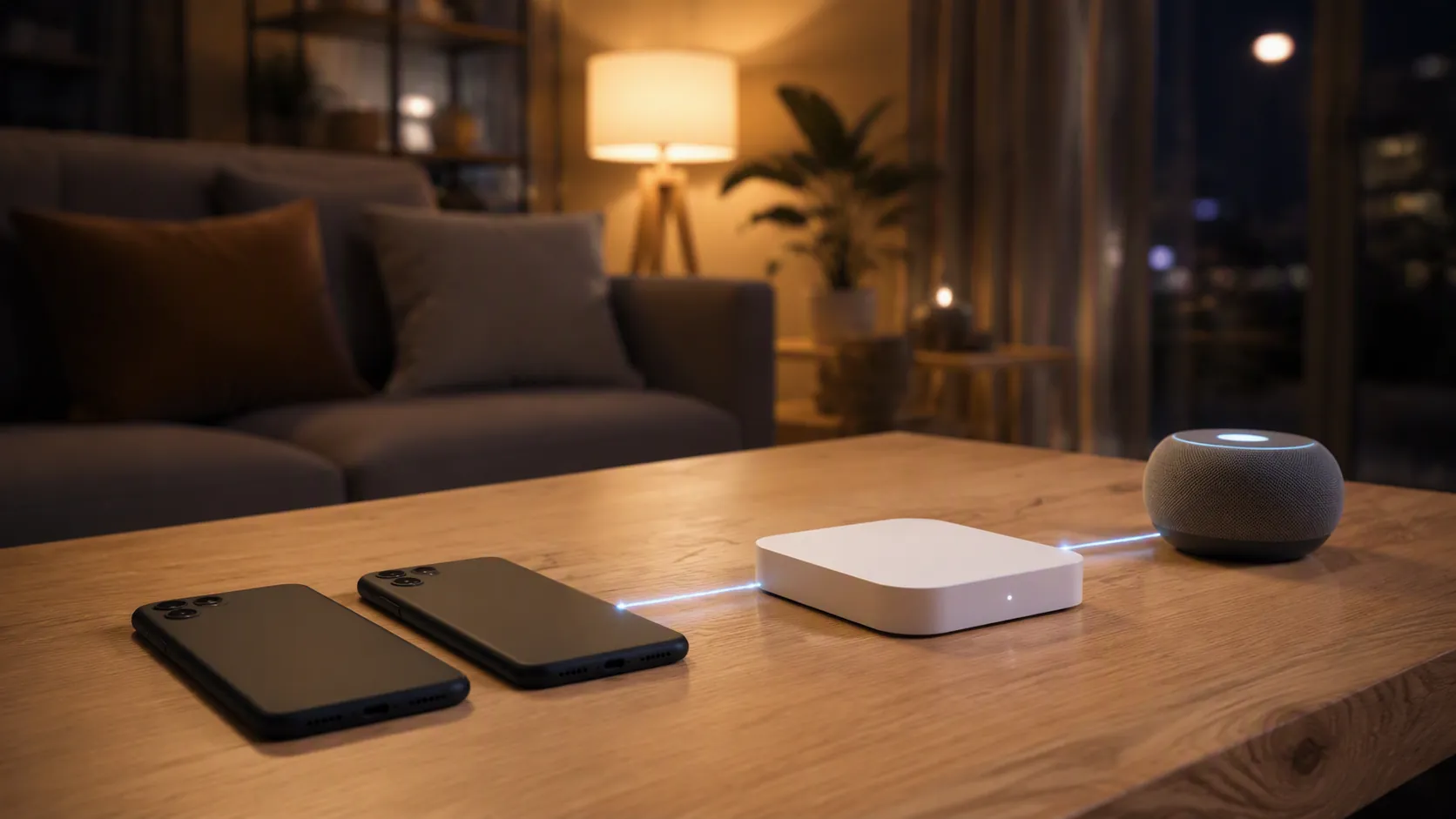
The price gap is real enough to care about. The N6x is listed at Rs 18,999 for 4GB/64GB and Rs 20,999 for 4GB/128GB, while the N6 is listed at Rs 22,999. The extra money buys more phone in ordinary use — mainly up to 6GB RAM, a larger 8,000mAh battery, and much faster 45W wired charging — but it does not buy a different Matter role. [2]
| Question | OnePlus N6x | OnePlus N6 | Smart-home meaning |
|---|---|---|---|
| Can it run Google Home and act as a control surface? | Yes by spec: Android 16/OxygenOS 16 class device | Yes by spec: Android 16/OxygenOS 16 class device | No practical difference until retail testing proves otherwise |
| Can it commission Matter devices through Google Home? | Plausible by spec, with Bluetooth 5.4 listed by GSMArena/Beebom | Plausible by spec, with Bluetooth 5.4 listed by GSMArena/Beebom | Both clear Google’s phone-side BLE/Android baseline by spec |
| Does it replace a Matter hub? | No | No | A Matter-enabled hub remains a separate requirement in Google Home |
| Can it act as a Thread border router? | No Thread radio listed | No Thread radio listed | Thread devices still need a separate Thread border router |
| What actually separates the two? | Lower price, 4GB RAM maximum, 7,000mAh battery, 15W wired charging, 3.5mm jack | Higher price, up to 6GB RAM, 8,000mAh battery, 45W wired charging, no headphone jack | These affect comfort and endurance, not Matter compatibility |
If you only need a phone to open Google Home, add Matter accessories, rename rooms, trigger routines, and troubleshoot a bulb that refuses to appear, the cheaper N6x has the same smart-home argument as the N6. If you want a smoother budget Android phone that is less likely to feel tight when Google Home, WhatsApp, a browser tab, and a device app are all open together, the N6’s RAM and charging case is stronger. That is the honest split.
What “compatible” means here
Smart-home compatibility on a phone is not one switch. A phone can be compatible in the weak sense — it installs Google Home — and still fail the job you bought it for if Bluetooth pairing is unreliable, Google Play services are missing, or the home lacks the right hub. For these two OnePlus phones, the useful way to separate the work is: the phone runs the app, the phone participates in setup, and the home provides the always-on Matter or Thread infrastructure.
Google’s Matter setup requirements for Android phones include Android 8.1 or later, Google Play services, Bluetooth Low Energy 4.2 or later for pairing, a Matter-enabled hub, and IPv6 support on the router. The N6x and N6 are far beyond the Android version floor, and GSMArena lists both with Android 16 and Bluetooth 5.4. [3][4][5]
That combination is why the phone-side answer is comfortable at the spec level. Android 16 gives the operating-system baseline. Google Mobile Services/Google Play services give the Google Home and Matter controller layer. Bluetooth handles the nearby-device setup stage. Wi-Fi and IP networking carry normal app control once devices are on the network. None of those roles is better on the N6 than the N6x in the published smart-home-relevant specifications.
For single-device detail on the cheaper model, the existing OnePlus N6x full specifications profile is the better place to park one-phone facts. The comparison here is narrower: whether paying for the N6 changes the Google Home, Matter, or Thread answer. On current specs, it does not.
The phone is not the Matter hub
The easiest mistake is to see Android, Google Home, and Matter in the same sentence and assume the phone has become the hub. It has not. In Google’s setup model, the Android phone helps with setup and control, but a Matter-enabled hub is still part of the requirement list. That hub is the always-available device in the home when your phone leaves the house, loses battery, switches networks, or is simply in someone else’s pocket. [5]
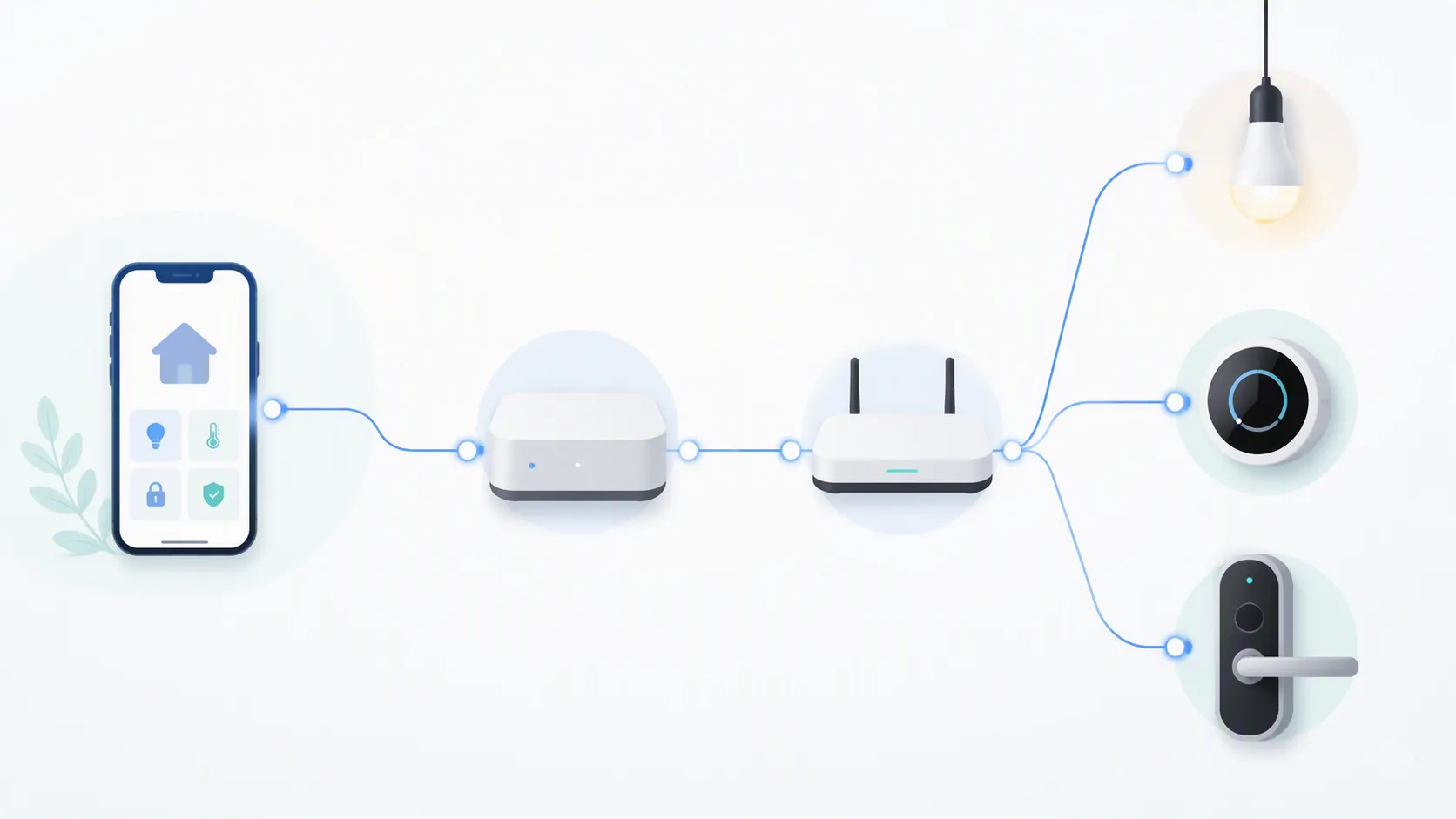
That matters when budgeting. A buyer choosing between Rs 18,999 and Rs 22,999 should not spend the difference expecting the N6 to remove another box from the setup. If the home needs a Matter hub for Google Home, both phones need that hub. If an accessory’s setup fails because the home lacks the right controller or the router is not providing the required network conditions, a faster-charging phone is not the fix.
This is the same reason phone-versus-phone smart-home comparisons can look boring after the first compatibility pass. The boring answer is often the useful one: once both phones clear Android, Play services, Bluetooth, and Wi-Fi/IP basics, the smart-home bottleneck moves out of the phone. The prior Galaxy A27 5G vs Oppo A6 Pro comparison uses the same framing for a different pair of budget phones.
Thread is a separate hardware question
Thread is where wording gets especially slippery. Android can support Thread-related setup and ecosystem work, but a phone needs dedicated Thread-capable radio hardware to function as a Thread border router. Android Authority’s Thread analysis makes the important point: software support on Android does not magically turn ordinary phone radios into the 802.15.4 hardware used by Thread networks. [6]
Neither the N6x nor the N6 is specified with a Thread radio. That leaves both in the same place: fine as Google Home control phones by spec, not replacements for a Nest Hub, smart speaker, router, or other device that actually provides Matter hub and/or Thread border-router duties. If the home has Wi-Fi Matter devices, the hub requirement still applies in Google Home. If the home has Thread Matter devices, budget for a Thread border router as well.
This distinction also helps when pairing gets messy. If a Matter accessory is not showing in Google Home, the suspect list should include the hub, border router, router IPv6 support, account state, device reset state, and proximity during Bluetooth setup — not just the phone model. For that kind of failure path, the Matter device not showing in Google Home troubleshooting page is more useful than another camera or charging comparison.
The real N6x vs N6 buying differences
Once Matter and Google Home compatibility are treated as equal, the decision becomes ordinary phone buying again — but ordinary in the parts that affect smart-home use. RAM matters if the phone will be used as the family control device, with Google Home, device-maker apps, messaging, and a browser open while someone is standing near a switch waiting for setup to finish. The N6x tops out at 4GB RAM, while the N6 goes up to 6GB. [2]
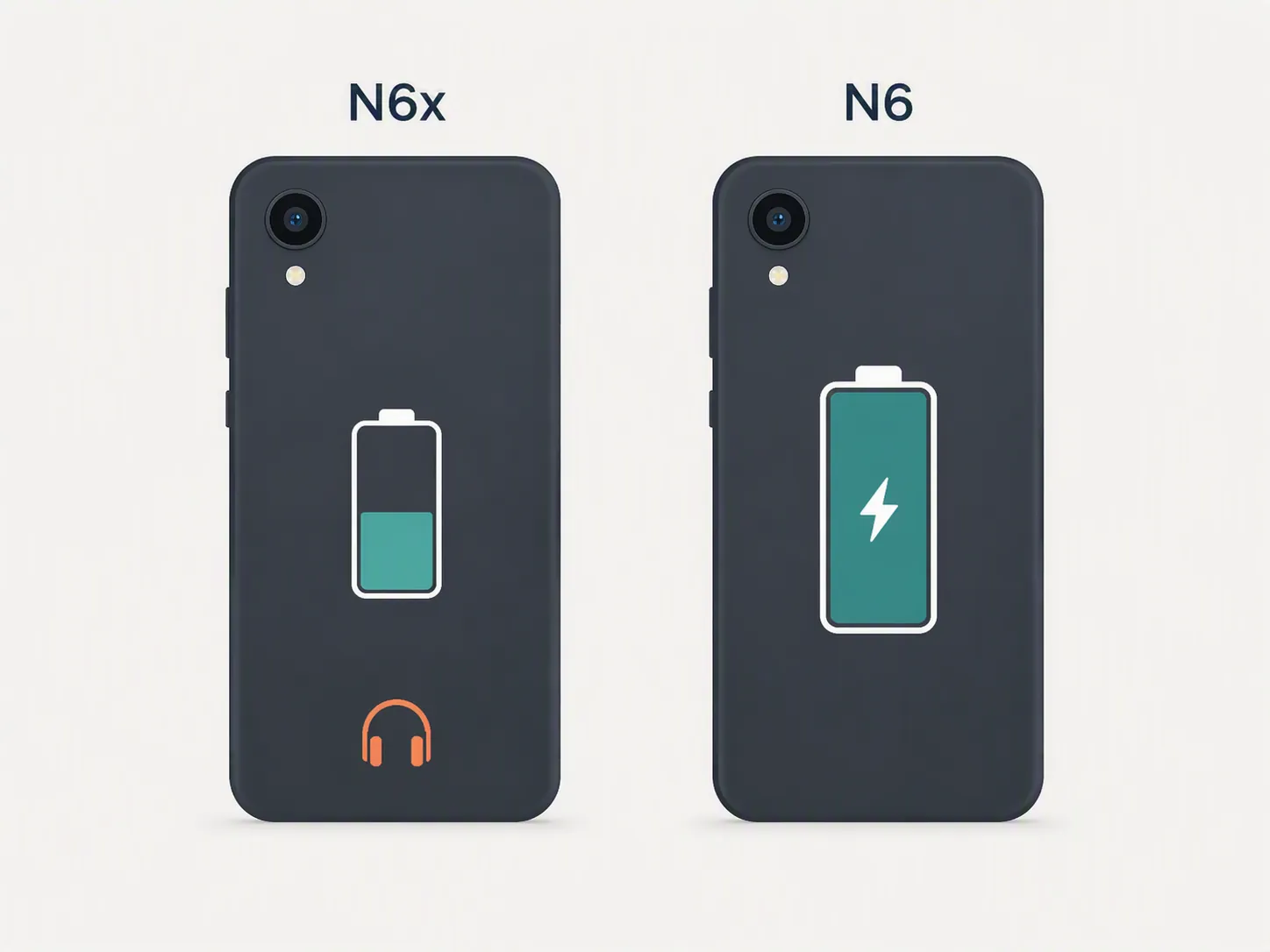
Battery and charging matter differently. The N6x’s 7,000mAh battery is already large for a budget phone, but its 15W wired charging is slow beside the N6’s 8,000mAh battery and 45W wired charging. If the phone often lives on a table as a household controller, reverse wired charging and bypass charging may be nice extras where supported, but the practical gap is still the N6’s bigger battery and faster top-up. [2]
The headphone jack is the one small feature where the cheaper model has the friendlier spec. The N6x keeps the 3.5mm jack; the N6 drops it. That does not affect Matter, but it may matter for a buyer using the same phone for wired earphones, an older AUX speaker, or simple voice-assistant testing without Bluetooth pairing another accessory. [2]
Cameras, peak display brightness, and gaming language can stay in the background for this particular purchase. They may decide the better all-round phone, but they do not change whether a Matter plug pairs in Google Home or whether a Thread lock needs a border router. For a smart-home-first buyer, those sections should not be allowed to hide the simple compatibility result.
Spec conflicts to verify before treating either listing as final
There are enough inconsistent radio and feature listings around these phones that the safest label is still “confirmed by spec sheet,” not “verified in hand.” The good news is that the conflicts found so far do not overturn the main smart-home conclusion. They do, however, affect edge cases and should be checked on retail hardware.
- IR blaster: OnePlus India and GSMArena do not list an IR blaster for the N6x, while some aggregator-style listings claim one. Treat IR remote-control use as unverified, not as a reason to buy. [3][7]
- NFC: GSMArena lists NFC as absent on both phones, while Smartprix lists NFC as present on the N6. NFC is not part of Google’s Matter phone requirement list, but it matters if you want tap-to-pay or NFC accessory workflows. [3][4][5][8]
- 5G: Beebom describes the N6x as 4G-only, while OnePlus India’s N6x specification page says it supports 5G. This affects mobile data expectations, not local Google Home/Matter compatibility on Wi-Fi. [2][7]
- Wi-Fi generation: OnePlus India lists Wi-Fi 5 for the N6x, while GSMArena and Beebom list Wi-Fi 6. For Matter control, the more important point is stable IP networking; the generation mismatch still deserves a retail-unit check. [2][3][7]
- Bluetooth version: GSMArena and Beebom list Bluetooth 5.4, while other listings have shown Bluetooth 5.2. Either version clears Google’s BLE 4.2 Matter setup floor, so this conflict does not change the compatibility verdict unless a real pairing bug appears. [2][3][5]
The discipline here is not to average the listings into a new imaginary spec. Official pages, major spec databases, and retail hardware sometimes disagree, especially around radios and regional variants. Until a retail N6x and N6 are tested side by side with dated software builds, the comparison should not pretend more certainty than the sources allow.
Which one should a smart-home buyer choose?
Choose the OnePlus N6x if the goal is the lowest-cost phone that should, by spec, run Google Home, commission Matter devices through the Android stack, and act as a reliable control surface once the home has the required hub. Its 4GB RAM ceiling is the compromise to accept, and its slow 15W charging is the annoyance to plan around. The 3.5mm jack is a small but real convenience if wired audio still matters.
Choose the OnePlus N6 if the phone will also be someone’s main daily device and the extra RAM, bigger battery, and 45W charging are worth the higher price. Those upgrades can make the phone nicer to live with while setting up devices, moving between apps, and recovering from a low battery. They do not give it a better Matter controller role than the N6x.
Do not pay extra for the N6 expecting better Google Home, Matter, or Thread compatibility. Budget separately for a Matter-enabled hub, and add a Thread border router if the devices in the home use Thread. The comparison can move beyond spec-level only after retail N6x and N6 units are tested with dated phone software, the current Google Home app, Bluetooth commissioning, Wi-Fi Matter devices, and Thread devices routed through a real border router.
References
- OnePlus N6x debuts with a Dimensity 6360 Apex chipset, a 7,000mAh battery — GSMArena
- OnePlus N6x vs OnePlus N6 Comparison: Which Phone to Buy — Beebom Gadgets
- OnePlus N6x - Full phone specifications — GSMArena
- OnePlus N6 - Full phone specifications — GSMArena
- Set up and control Matter-enabled devices — Google Nest Help
- Android 15 could make your phone a Thread network router, but that won’t happen — Android Authority
- OnePlus N6x Specs — OnePlus India
- OnePlus N6 — Smartprix
Known issues with this device / protocol
Spec-version history
For active regressions on this protocol, see Update Watch.
No linked Update Watch entries yet.