
OnePlus N6x full specifications and features – smart home edition
Get the complete specifications of the OnePlus N6x and an unbiased assessment of its smart home capabilities. This profile confirms whether the phone can act as a Matter controller, Thread border router, or IR remote – and why you still need a separate hub for Thread and Zigbee devices.
Last updated
Launch-day status: a useful budget control phone, not a hub replacement
As of July 31, 2026, the OnePlus N6x is a new India-first budget phone with a tempting smart-home angle: a large 120Hz display, 7,000mAh battery, microSD support, Android 16, and an infrared sensor, with sales scheduled for August 4 through Amazon India and OnePlus India at ₹18,999 for 4GB/64GB and ₹20,999 for 4GB/128GB.[1]
The short smart-home answer is narrower than the product-page answer. The N6x looks like a good low-cost screen for Google Home, Alexa, Home Assistant dashboards, security-camera apps, and IR remote control. It should not be bought as a replacement for a Nest Hub, Thread border router, Zigbee bridge, or Z-Wave controller.
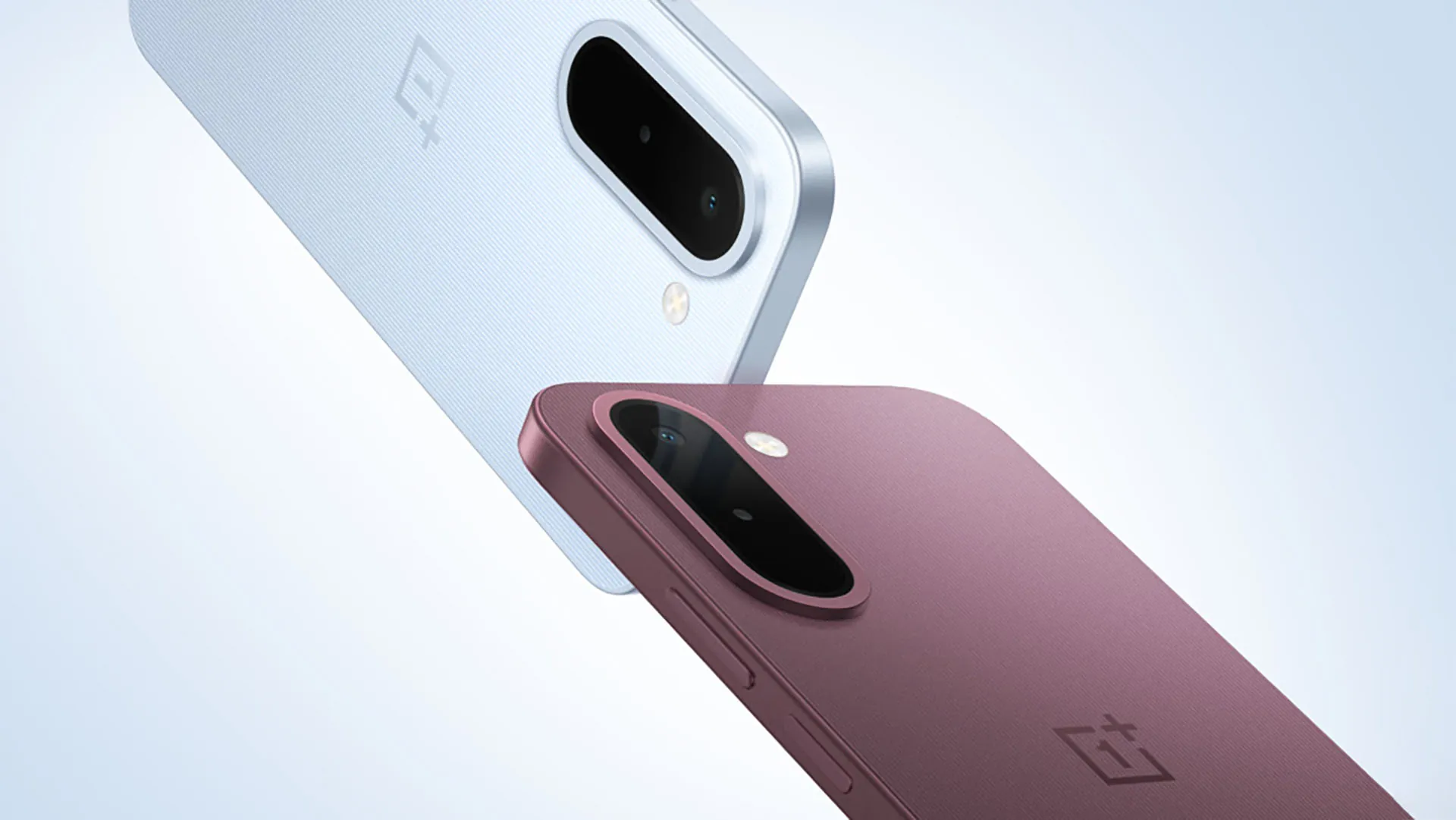
The reason is physical, not philosophical. OnePlus and MediaTek document the phone as a cellular/Wi-Fi/Bluetooth/GNSS device, while the MediaTek Dimensity 6360 connectivity materials do not list Thread or IEEE 802.15.4 radio support.[2] Google’s Matter setup requirements still expect a Matter-enabled hub in the home, and Google’s Thread guidance says Thread devices require a border router such as Nest Hub 2nd gen, Nest Wifi Pro, or Google TV Streamer.[3][4] Until NestGrid has a retail unit in hand, the compatibility status stays Investigating, but the launch-day evidence does not support treating this phone as hidden Thread hardware.
OnePlus N6x full specifications and features
| Category | OnePlus N6x launch-day specification |
|---|---|
| Launch date | July 31, 2026.[1] |
| Launch market | India-first availability; global and US pricing are not confirmed in the supplied launch materials. |
| Sale date and channels | August 4, 2026, through Amazon India and OnePlus India.[1] |
| Launch pricing | ₹18,999 for 4GB RAM + 64GB storage; ₹20,999 for 4GB RAM + 128GB storage.[1] |
| Display | 6.8-inch HD+ IPS LCD with 120Hz refresh rate.[1] |
| Chipset | MediaTek Dimensity 6360 Apex.[1] |
| CPU | Octa-core layout: 2x Cortex-A76 at 2.4GHz + 6x Cortex-A55 at 2.0GHz.[1] |
| GPU | Mali-G57 MC2.[1] |
| RAM | 4GB.[1] |
| Storage options | 64GB and 128GB launch variants. Storage type is inconsistent across launch materials, with eMMC 5.1, UFS 2.1, and UFS 2.2 claims all requiring confirmation. |
| Expandable storage | microSD support up to 2TB.[1] |
| Battery | 7,000mAh.[1] |
| Charging | Working launch-day tiebreaker: 15W wired charging and 5W reverse wired charging. A 45W claim appears in some conflicting materials and should not be treated as settled until the retail box or final OnePlus spec sheet confirms it.[5] |
| Software | Android 16 with OxygenOS 16.[5] |
| Software support | Beebom reports 2 years of OS updates and 3 years of security updates; OnePlus India also advertises a 48-month smooth-experience claim for the 128GB model and 36 months for the 64GB model.[5][6] |
| Infrared | IR sensor included, enabling IR remote-control use with compatible apps and supported appliances.[5] |
| Cellular status | Unsettled on launch day. GSMArena’s full spec listing shows GSM/HSPA/LTE, while launch coverage and the Dimensity 6360 platform point to 5G-capable silicon; the Indian SKU band list needs confirmation before calling the retail unit 5G-ready in every buying context.[2][7] |
| Wi-Fi and Bluetooth | Unsettled on launch day. MediaTek lists Wi-Fi 5 and Bluetooth 5.2 for the Dimensity 6360, while launch coverage includes Wi-Fi 6 and Bluetooth 5.4 claims, and Beebom lists Bluetooth 5.3.[2][5] |
| GNSS | GNSS is part of the Dimensity 6360 connectivity set.[2] |
| Thread / IEEE 802.15.4 | No Thread or 802.15.4 radio is documented in the MediaTek Dimensity 6360 connectivity materials; NestGrid status: Investigating, not confirmed supported.[2] |
| Zigbee / Z-Wave | No native Zigbee or Z-Wave radio is documented for the phone; use a separate hub, bridge, or controller for those networks. |
| Camera note | Not steering this smart-home profile. A conflicting 50MP retail-style claim was excluded because it does not align with the launch-source chain used here. |
| Sibling comparison | The related OnePlus N6 sits above it with a larger 8,000mAh battery, 50MP camera reference, and ₹21,999+ launch positioning, so the N6x should be read as the cheaper control-surface option rather than the top battery/camera model.[8] |
The N6x spec sheet is unusually practical for a low-cost smart-home controller. A 7,000mAh battery matters when the phone spends a weekend on a kitchen counter showing cameras and thermostat tiles. microSD support matters if the same device is used for local media, offline maps, or appliance manuals. The IR sensor matters because it handles a class of old televisions, air conditioners, and set-top boxes that will never receive Matter firmware.
Those are good features. They are also separate from hub duties. The spec line that matters most for Thread is not the screen, battery, or Android version; it is the missing 802.15.4 radio in the documented chipset connectivity stack.[2]
Smart-home compatibility by role
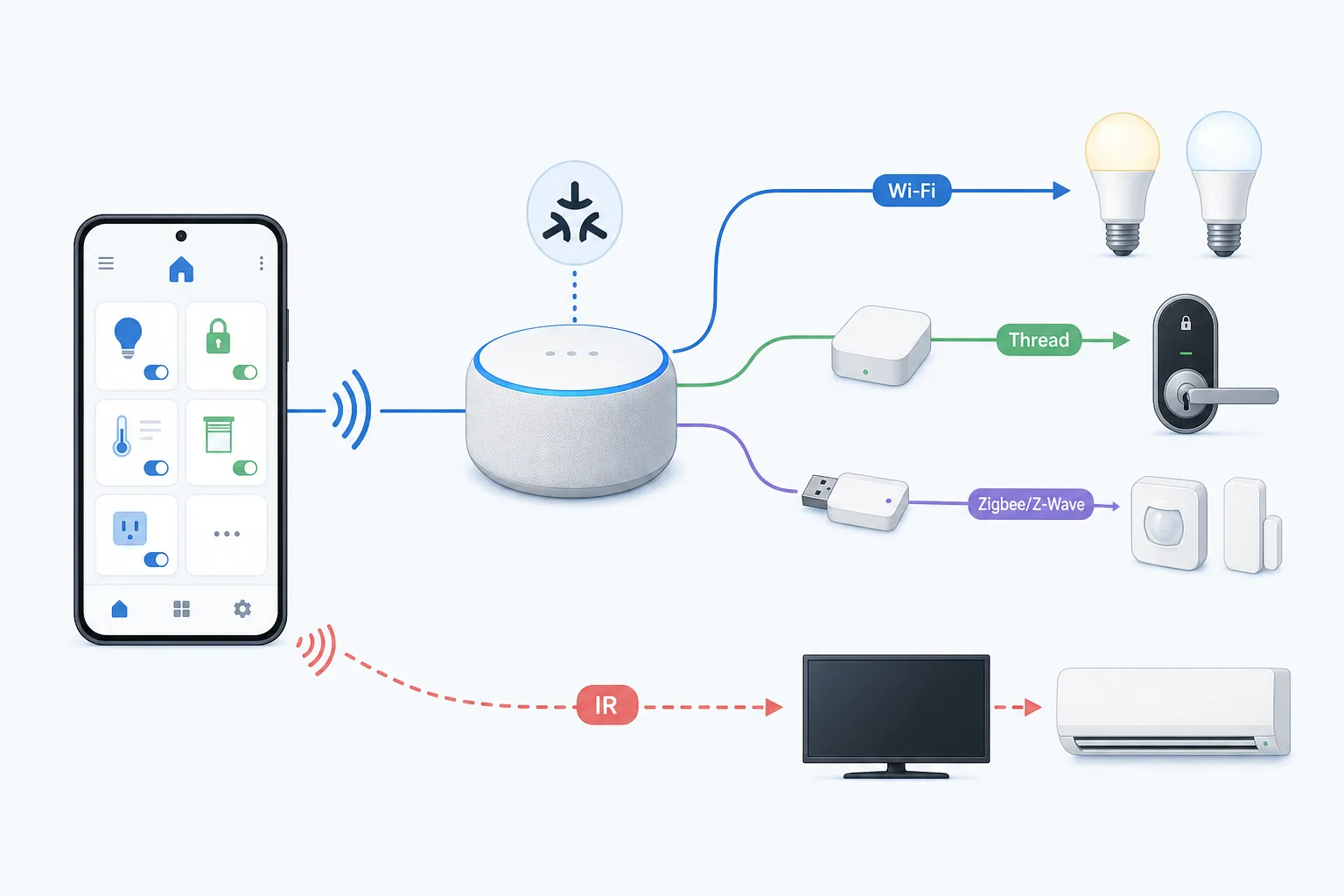
| Smart-home role | Launch-day status | What the N6x can do |
|---|---|---|
| General smart-home control screen | Likely compatible | Run Android smart-home apps such as Google Home, Alexa, Home Assistant dashboards, camera apps, and device-maker apps, subject to each app’s region and account support. |
| Google Home phone-side setup and control | Likely compatible on paper | The phone ships with Android 16, which is above Google’s Android 8.1+ Matter setup requirement; Google also requires current Google Play services and BLE 4.2+.[3] |
| Matter-over-Wi-Fi control | Likely compatible through a Matter-enabled home | Use the N6x as the app/control surface for Matter-over-Wi-Fi devices when the home has the required Google Matter infrastructure.[3] |
| Matter-over-Thread commissioning by itself | Investigating; not supported by disclosed hardware | Google says Thread devices require a Thread border router, and the Dimensity 6360 materials do not disclose Thread/802.15.4.[2][4] |
| Thread border router | Investigating; no launch-day evidence | The N6x is not documented as mains-powered border-router hardware and does not disclose the radio needed to route between Thread and IP networks. |
| Zigbee or Z-Wave controller | No native support disclosed | Use a separate Zigbee/Z-Wave hub, USB coordinator, or bridge. The phone can open the dashboard, but it is not the radio endpoint. |
| IR universal remote | Supported by disclosed hardware | Use compatible IR remote apps for line-of-sight appliance control; this is useful, but unrelated to Matter, Thread, Zigbee, or Z-Wave routing.[5] |
The N6x as a control surface
For ordinary app control, the N6x is on safe ground. Google Home, Alexa, Home Assistant companion apps, brand camera apps, robot-vacuum apps, and thermostat apps mostly need Android, Wi-Fi or cellular data, Bluetooth for onboarding, and account access. The N6x has the platform basics for that job.
This is the use case where a budget phone can be better than an expensive daily driver. Leave it docked in the living room, let family members use it for scenes and cameras, and the 7,000mAh battery gives it more tolerance for lazy charging than a slim flagship. None of that requires the phone to be a Thread border router.
Matter controller does not mean “all Matter hardware is handled by the phone”
Google’s Matter setup page draws a useful boundary. For setup, Google lists an Android phone or tablet running Android 8.1 or later, Google Play services 22.48.14 or later, and BLE 4.2 or later; it also says a Matter-enabled hub is required for Matter device setup and control in Google Home.[3] The N6x’s Android 16 software clears the operating-system side of that requirement, but the phone is still only one part of the chain.
For a Matter-over-Wi-Fi bulb or plug, the phone’s job is usually app setup, account authentication, local network participation, and day-to-day control. Once the device is in Google Home, the N6x can be the screen you tap. The hub/controller role remains with the Google Home environment, not with the N6x simply because it runs Android.
Thread is where the chipset sheet matters
Thread is not Wi-Fi with different branding. A phone that wants to speak Thread directly needs the right low-power mesh radio, normally discussed as IEEE 802.15.4 support. MediaTek’s Dimensity 6360 page lists the expected smartphone connectivity categories — cellular, Wi-Fi, Bluetooth, and GNSS — but does not list Thread or 802.15.4.[2]
That absence is the strongest launch-day evidence in the whole profile. It does not prove there is no hidden implementation inside every retail unit, which is why the status stays Investigating until hands-on testing. It does mean there is no responsible basis for telling a buyer that the N6x can replace a Nest Hub 2nd gen, Nest Wifi Pro, Google TV Streamer, or another Thread border router.
Android’s recent Thread work does not erase the hardware requirement. Android Central’s coverage of Android 15-era Thread network support framed the feature as dependent on devices that actually include suitable Thread-capable hardware, which is the right way to read platform support here.[9] Android can expose better Thread plumbing; it cannot manufacture an absent radio after purchase.
Zigbee and Z-Wave remain bridge territory
Zigbee and Z-Wave are even less ambiguous for the N6x. The phone can open an app that talks to a Zigbee hub, a Z-Wave hub, or a Home Assistant instance with a USB coordinator. It is not documented as having native Zigbee or Z-Wave radios. If your home includes Aqara Zigbee sensors, Hue bulbs on a Hue Bridge, Z-Wave locks, or a mixed Home Assistant radio stack, the N6x is the screen and account endpoint, not the mesh controller.
This is the same boundary covered in NestGrid’s Galaxy Z Fold8 hub-replacement profile and Z Fold8 smart-home hub test: a phone can be a very good dashboard without becoming the radio bridge for every protocol in the house.
The IR sensor is genuinely useful, just not a Matter feature
The infrared sensor is one of the N6x’s best practical features. In smart-home terms, it gives the phone a way to control legacy IR appliances that may never join Wi-Fi, Matter, or any hub ecosystem. A spare N6x with an IR app can be more useful in a guest room than a premium phone without IR.
It should not be confused with local smart-home networking. IR is line-of-sight command blasting. It does not make the phone a Matter controller, does not bridge Thread to Wi-Fi, and does not talk to Zigbee or Z-Wave sensors. It solves a different, older problem.
Launch-day inconsistencies to watch before buying
A launch-day spec profile has to leave some seams visible. The N6x has several.
- Charging: GSMArena’s full spec page, Beebom, and several launch databases align around 15W wired plus 5W reverse wired charging, while some other materials claim 45W. Treat 15W as the safer working figure until the final retail unit confirms otherwise.[5]
- 5G: the Dimensity 6360 is presented by MediaTek as a 5G smartphone platform, and launch coverage describes the phone as 5G, but GSMArena’s full spec entry lists GSM/HSPA/LTE. The final Indian SKU band list matters more than the chipset headline.[2][7]
- Wi-Fi and Bluetooth: MediaTek lists Wi-Fi 5 and Bluetooth 5.2 for the platform, while launch coverage varies between Wi-Fi 6, Bluetooth 5.3, and Bluetooth 5.4. For Matter setup, all listed Bluetooth versions clear Google’s BLE 4.2 floor, but buyers who care about router performance should wait for confirmation.[2][3][5]
- Storage type: eMMC 5.1, UFS 2.1, and UFS 2.2 all appear in conflicting materials. The difference affects app loading and long-term responsiveness more than hub compatibility, but it is still worth verifying.
- Outlier listings: a duplicate-style “OnePlus N6x 4G” listing is not being treated as evidence of a separate 4G variant, and a retailer page with conflicting 50MP camera information is not steering this profile.
None of those inconsistencies creates a hidden Thread border router. They mostly affect buyer expectations around charging, cellular bands, wireless versions, and storage performance. The smart-home role boundary still comes back to the disclosed radios.
What you still need beside the OnePlus N6x
If your home is mostly Wi-Fi devices and cloud-connected apps, the N6x can be enough as the handset or shared wall-tablet substitute. If your setup includes Matter-over-Thread locks, plugs, sensors, or switches, you still need a Thread border router. Google’s own examples include Nest Hub 2nd gen, Nest Wifi Pro, and Google TV Streamer.[4]
For the Google-side hardware this phone does not replace, see NestGrid’s Google Nest Hub 2nd Gen device profile. That is the cleaner comparison than putting the N6x against another phone: the Nest Hub class is mains-powered, home-stationed infrastructure, while the N6x is a mobile Android client with a big battery and useful IR.
For Zigbee and Z-Wave, the answer is also external hardware. Use the existing Hue Bridge, Aqara hub, SmartThings hub, Home Assistant radio coordinator, Z-Wave controller, or another bridge that actually contains the protocol radio. The N6x can run the app that talks to that bridge.
Purchase judgment
At ₹18,999, the OnePlus N6x makes sense if the job is “budget Android phone that can also sit around the house running smart-home apps.” The 6.8-inch 120Hz display, 7,000mAh battery, microSD slot, Android 16 software, and IR sensor are all useful in that role.[1][5]
It does not make sense if the hidden assumption is “Android phone plus Google Home equals hub replacement.” For Matter-over-Thread, Thread border routing, Zigbee, and Z-Wave, keep the dedicated hub or border router in the budget. The N6x can be the remote; it is not documented as the network infrastructure.
NestGrid status remains Investigating until hands-on testing confirms the Indian retail unit’s radios, wireless versions, charging behavior, storage type, and band list. If a final OnePlus SKU page or bench test documents hidden Thread/802.15.4 support, this profile should be updated; until then, do not buy the N6x to eliminate a Nest Hub 2nd Gen–type border router or a dedicated Zigbee/Z-Wave bridge.
References
- OnePlus N6x debuts with a Dimensity 6360 Apex chipset, a 7,000mAh battery — GSMArena
- MediaTek Dimensity 6360 — MediaTek
- Set up and control Matter-enabled devices — Google Help
- Learn about Thread border routers — Google Help
- OnePlus N6x Launched in India: Key Specifications, Price, Sale Date — Beebom
- OnePlus N6x — OnePlus India
- OnePlus N6x — GSMArena
- OnePlus N6 — GSMArena
- Android 15 Matter Thread network support previewed — Android Central
Known issues with this device / protocol
Spec-version history
For active regressions on this protocol, see Update Watch.
No linked Update Watch entries yet.