A smart leak detector that only sends a push notification is a half-finished safety system. It may tell you the laundry closet is wet, but the washer is still energized, the valve is still open, and the message is still waiting for someone to notice it between meetings, sleep, or a dead phone battery.
That gap matters because water damage is not a tidy smart-home inconvenience. Abode cites Insurance Information Institute data putting the average water damage claim at $12,514, compared with $2,661 for the average burglary claim; Abode also frames a $35 sensor preventing a $15,000 loss as a 428x return, though that multiplier depends on a worst-case damage assumption rather than a guaranteed outcome for every home [1]. The useful lesson is narrower and stronger: the detector is cheap, but the automation attached to it decides whether it becomes damage prevention.
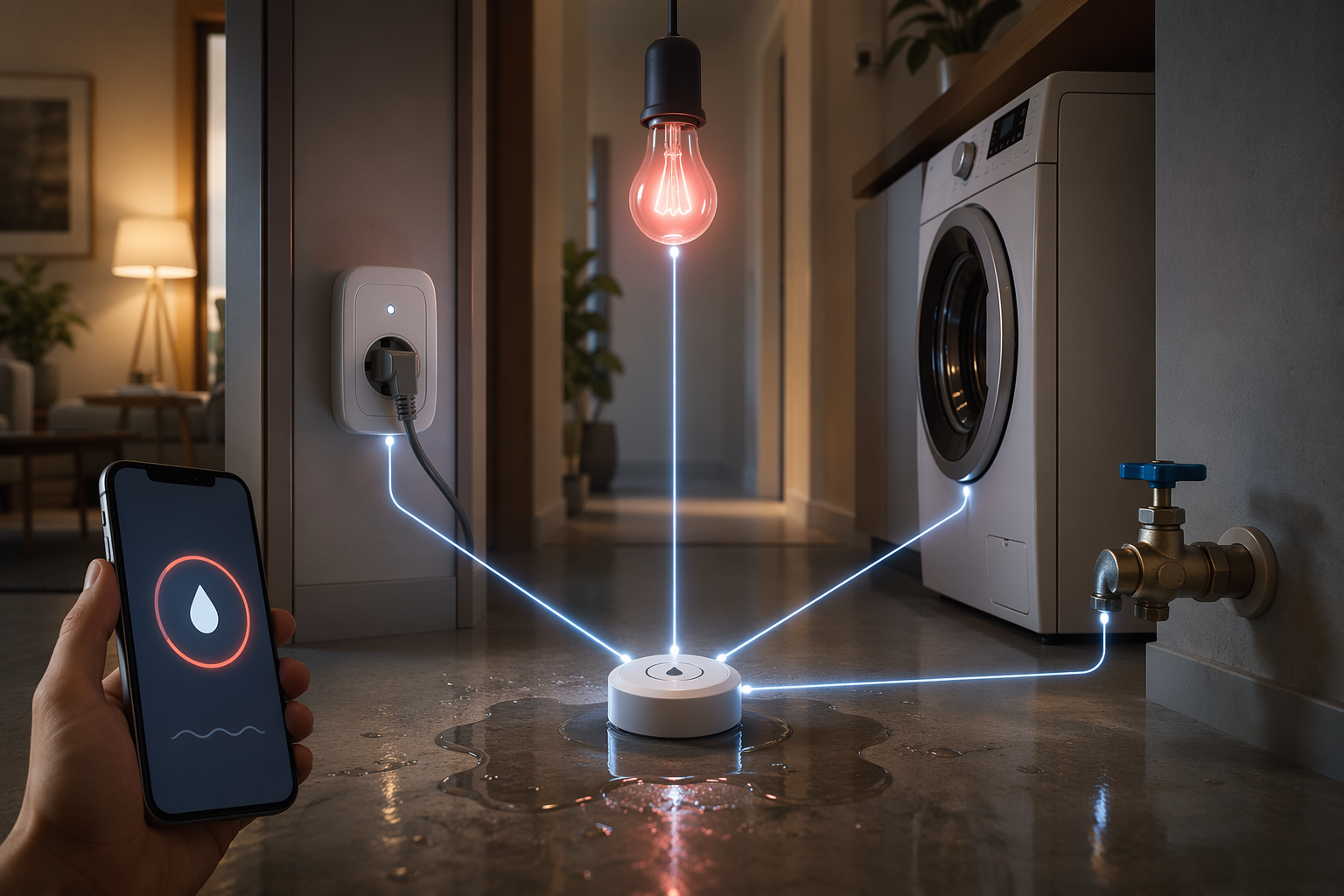
The best smart leak detector automation ideas start with a blunt question: what should the house do before a person arrives? Sometimes the answer is to kill power. Sometimes it is to close a valve. Sometimes it is to wake the whole house, call a neighbor, and keep escalating until someone confirms the floor is dry.
The 10 Automations Worth Building
These are not ten equal decorations for an app dashboard. They move from direct intervention to escalation to situational prevention, because a wet sensor under a washing machine deserves a different response than a slow drip under a guest-bath sink.
| Automation | Best use | Primary action |
|---|---|---|
| 1. Washing-machine kill switch | Laundry closet or utility room | Cut washer power and alert people |
| 2. Main shutoff valve response | Whole-home protection | Close water supply when a critical sensor goes wet |
| 3. Water-heater containment | Tank water heaters and nearby drains | Shut off compatible equipment, alert, and avoid dry-fire risk |
| 4. Dishwasher or under-sink cutoff | Kitchen leaks | Stop the appliance or close a local valve where compatible |
| 5. Lights, sirens, and speaker alerts | Occupied homes | Make the leak impossible to miss |
| 6. Push-to-call-to-SMS escalation | Missed-alert protection | Notify more aggressively if the first alert is ignored |
| 7. Vacation mode with neighbor notification | Travel or second homes | Close water, sound alarm, and contact a trusted person |
| 8. All-clear message when dry | Cleanup and handoff | Notify when the sensor returns from wet to dry |
| 9. Running-toilet warning | Bathrooms and high water bills | Detect abnormal water presence or patterns and escalate |
| 10. Freeze pre-emption | Basements, crawl spaces, garages | Combine low temperature and leak sensing before a pipe burst gets worse |
1. Build a Washing-Machine Kill Switch
The washing machine is the cleanest place to start because the failure mode is easy to picture: a hose, pump, or fitting lets go, water reaches the floor sensor, and the machine keeps trying to run. A phone alert helps only if the right person sees it quickly. A kill-switch automation removes one waiting step.
PocNetwork tested this with a Zooz Zen15 heavy-duty smart plug, listed at $30, and a Zooz ZSE42 XS leak sensor, listed at $35, creating a roughly $65 washing-machine flood prevention setup. In the test, the leak sensor triggered the smart plug to shut off power to the washer, verifying the basic kill-switch response [2]. That is the kind of modest automation that earns its keep: not a whole-house retrofit, not a theory, just a sensor on the floor and a plug that can interrupt the machine.
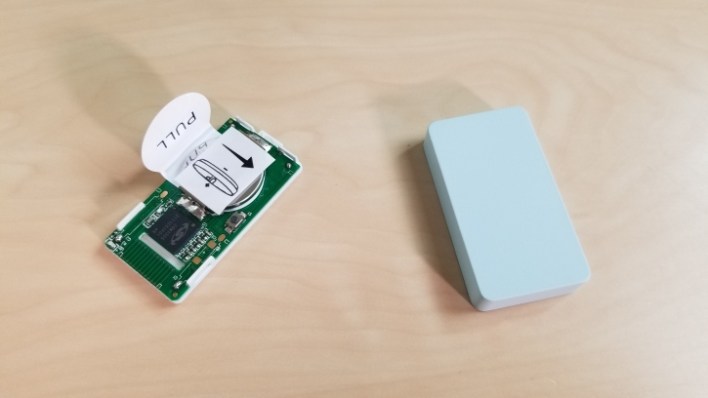
The automation logic is simple:
- Trigger: leak sensor behind or beside the washer changes to wet.
- Action: turn off the smart plug powering the washer.
- Action: send a high-priority alert to the homeowner or renter.
- Action: flash a nearby light or sound a siren if anyone is home.
- Recovery rule: do not automatically restore power when the sensor dries; require a manual reset after inspection.
That last rule is boring and important. A sensor can dry after water spreads away from it, after someone nudges it, or after the first towel pass. The plug should stay off until someone checks the hose, pan, valve, and outlet.
Do not generalize this blindly to every appliance. The smart plug must be rated for the load, the appliance must tolerate power interruption, and the automation must interrupt something meaningful. For a washer that draws power while filling or running, the logic is strong. For equipment with unusual startup behavior, electronic controls, or warranty restrictions, use the same idea only after checking the device rating and manual.
Platform Translation
| Platform | How to express the same recipe |
|---|---|
| Home Assistant | Use the leak sensor wet state as the trigger, turn off the washer plug, send a mobile notification, and optionally require a helper toggle or manual button before power can be restored. |
| SmartThings | Create a routine where water detected by the laundry sensor turns off the washer outlet or plug and sends member notifications. |
| Alexa | If the leak sensor and plug are exposed to Alexa routines, use water detected as the trigger and set the plug to off; add an announcement on Echo speakers. |
| HomeKit | If both devices appear in Apple Home, create an automation from sensor detects leak to turn off the plug; use a separate notification path if Home alerts are too easy to miss. |
Battery life is another place to avoid false confidence. PocNetwork reported good retention in its setup but did not publish a formal battery-life estimate for the ZSE42 in that article [2]. Treat leak sensors like smoke alarms: test them, schedule battery checks, and do not bury them behind a machine so completely that replacing a cell becomes a yearly wrestling match.
2. Close the Main Water Valve on a Critical Leak
A smart shutoff valve is the bigger version of the washer kill switch. Instead of interrupting one appliance, it closes the water supply when a high-risk sensor goes wet: behind the washer, under the water heater, below a kitchen sink, near the main line, or in a basement mechanical area.
The judgment call is not whether automatic shutoff is powerful. It is which sensors get authority to close the house. A sensor under a water heater or laundry machine may deserve immediate shutoff. A sensor in a humid bathroom corner that sometimes gets splashed may deserve siren-and-confirm first. The automation should reflect the cost of a false positive as well as the cost of delay.
- For critical zones: wet sensor closes the valve immediately, then alerts everyone.
- For nuisance-prone zones: wet sensor alerts first, then closes the valve only if no one cancels within a short confirmation window.
- For rental units: avoid plumbing modifications unless allowed; use appliance-level power shutoff and loud local alerts instead. Renters can pair this with deposit-safe ideas from renter-friendly smart home automation.
A main shutoff automation also needs a reopening rule. Do not reopen automatically just because a sensor reports dry. Close fast; reopen deliberately.
3. Treat the Water Heater as a Different Problem
A water heater leak is not the same as a washing-machine leak. HomeAutomationCookbook notes that tank failures can dump 40 to 80 gallons, and it frames power cutoff through a smart relay as a way to reduce dry-fire damage when used appropriately [3]. That caveat matters. The automation is not simply “put the water heater on a smart plug.” Many water heaters are hardwired, high-load, gas-fired, or controlled in ways that make a casual plug-in solution wrong.
A safer recipe is to separate the jobs:
- Leak sensor in the pan or at the lowest point near the tank.
- Main or local water shutoff if the plumbing supports it.
- Professionally appropriate relay or control method only where the appliance and code allow it.
- Immediate alert that names the zone: “Water heater leak detected,” not a generic “sensor wet.”
If this is a gas water heater with electronic ignition, a high-amperage electric tank, or a system tied into hydronic heating, the leak sensor should still trigger alerts and water shutoff where possible. Power control belongs in the “verify before building” bucket, not the “copy from the washer” bucket.
4. Stop a Dishwasher or Under-Sink Leak Locally
Kitchen leaks tend to be discovered late because cabinets hide the first inch of trouble. Put the sensor where water will actually collect: under the dishwasher toe-kick if reachable, at the back of the sink cabinet, or near the supply and drain connections.
For dishwashers, power cutoff can help in some situations, but it is not a universal shutoff. Some machines may already have water in the tub, some may not appreciate mid-cycle power loss, and some leaks come from supply plumbing rather than the appliance logic. Where available, a local water shutoff valve or main valve action is often more meaningful than only cutting power.
The useful automation is layered: turn off the dishwasher if the device and plug are compatible, close a valve if installed, flash the kitchen lights, and send a notification that tells someone to open the cabinet. A vague phone alert is how small under-sink leaks become warped cabinet floors.
5. Make Occupied-House Alerts Impossible to Miss
A phone is a bad siren. It can be silenced, charging in another room, or buried under a blanket at 2 a.m. If someone is home, the leak automation should use the house itself: lights, speakers, sirens, and room-specific messages.
- Turn laundry, hallway, or kitchen lights red when a nearby sensor goes wet.
- Flash lights in occupied common areas rather than only near the leak.
- Play a speaker announcement that names the location.
- Sound a siren for critical zones, but skip it for splash-prone areas unless confirmed.
This is also where dashboards can mislead. A beautiful tile that changes from blue to red is useful only if someone is looking at the dashboard. The same state change should move into the rooms where people are living.
6. Escalate From Push Alert to Call to SMS
Escalation is the difference between “I was notified” and “someone was reached.” HomeAutomationCookbook describes water-leak response patterns that can include alerts and alarm actions, and community examples show the common push, call, SMS, and siren pattern for events that should not wait quietly [3][5].
A practical escalation pipeline can look like this:
- Immediately: push notification to the primary resident with the sensor name and action taken.
- After a short delay if not acknowledged: phone call or louder notification path.
- After continued silence: SMS to a second resident, landlord, or property contact.
- For critical zones: keep the valve closed or plug off until a manual reset.
If your platform supports actionable notifications, add two buttons: “I’m checking” and “False alarm.” The first stops escalation while preserving the shutoff. The second should be harder to tap accidentally and should not reopen water automatically unless you have a separate confirmation step.
7. Add a Vacation Mode That Contacts Someone Nearby
Away mode is where leak automation stops being a convenience and becomes a handoff plan. If the house is empty, flashing the laundry light is theater unless it is paired with shutoff and an outside human.
A stronger vacation mode does four things at once: closes the water supply when a critical sensor goes wet, sends the owner a location-specific alert, sounds a local alarm if that will help a neighbor or property manager identify the unit, and notifies a trusted nearby person. Piston Home describes premium-style leak response services that include neighbor notification, which is the right general pattern even if you build the contact chain yourself [4].
| Home state | Leak response |
|---|---|
| Home | Cut the source, flash lights, announce location, notify residents. |
| Away for the day | Cut the source, notify residents, escalate if unacknowledged. |
| Vacation | Cut the source, notify residents, contact a neighbor or property contact, keep the system locked down until inspected. |
This is a good place to be plain with your neighbor. The message should say what happened and what you need, not dump automation jargon on them: “Leak detected under washing machine. Water valve closed. Can you check the laundry closet floor?”
8. Send an All-Clear Only When the Sensor Dries
The wet alert starts the incident. The dry alert helps close it. Community discussions around leak sensors treat the wet-to-dry transition as useful for cleanup status and damage assessment, especially when more than one person is responding [5].
Use the all-clear message carefully. “Laundry sensor is dry” is not the same as “the problem is fixed.” It means the sensor no longer sees water. The automation should say exactly that, then tell people what stayed shut off: washer plug off, valve closed, escalation stopped, or siren silenced.
This small closure step prevents a common household mess: one person mops, another keeps getting alarmed, a third turns the appliance back on too early. The all-clear should coordinate people, not pretend to inspect plumbing.
9. Catch a Running Toilet Before the Bill Does
Not every water problem is a dramatic flood. A Hubitat community user reported that a toilet left running undetected for a year could cost more than $300 in water bills [5]. That is a user report, not a universal utility estimate, but it points to a useful automation category: water waste that is quiet enough to ignore.
A leak sensor alone may not diagnose a running toilet unless water reaches the floor or the toilet sweats enough to create a false signal. The better setup depends on what devices you already have: a leak sensor near the toilet base for overflow, a water monitor if your home has one, or a routine that flags repeated fill behavior if your platform exposes that data.
The alert should be lower drama than a washer flood but more persistent than a casual notification. A running toilet does not need a siren at midnight. It does need a message that keeps returning until someone jiggles the handle, replaces the flapper, or checks the fill valve.
10. Pair Leak Sensing With Freeze Pre-Emption
The worst freeze damage often begins before the sensor is wet. If you have a temperature-capable leak sensor or a separate temperature sensor near vulnerable plumbing, use low temperature as the early warning and water detection as the emergency state.
| Condition | Automation response |
|---|---|
| Temperature near vulnerable pipe drops toward freezing | Send warning, turn on safe heat source if already installed, remind owner to open cabinet doors or check the space. |
| Temperature remains low while home is away | Escalate to resident or property contact before water appears. |
| Leak sensor goes wet in the same zone | Close shutoff valve if available, send emergency alert, and keep escalation active until acknowledged. |
Do not use automation as permission to run unsafe heaters or improvise electrical fixes in a crawl space. The smart-home part is detection, shutoff, and escalation. The freeze-proofing part still needs ordinary building sense.
A Compact Build Plan
If you already build automations, the recipes above are enough to translate. If you are still choosing an ecosystem, start with whether your platform can see the sensor state, control the device that matters, and notify the people who need to act. A broader platform comparison can help if you are deciding where these routines should live: Smart Home Platforms Compared.
For one automation, build the one that interrupts the most likely leak source in your home. In many homes, that is the washing machine. In others, it is the water heater, a basement utility area, or a kitchen sink that has already shown its age.
For three automations, add escalation and all-clear handling. The first stops damage, the second reaches someone, and the third prevents confusion after the first towel hits the floor. Cost-conscious builders can also pair this with other low-cost routines from budget home automation ideas.
For frequent travel, make shutoff and neighbor notification part of vacation mode. A leak sensor that wakes you up three states away is better than silence, but a leak sensor that closes the valve and tells someone nearby what to inspect is the system doing useful work.
Insurance discounts are worth asking about, but they should not be the reason you build the system. Carriers, regions, device requirements, and monitoring rules vary. The reliable payoff is more direct: fewer minutes of uncontrolled water, fewer missed alerts, and fewer people discovering the problem after the floor has already made the announcement.
Leak sensors are not the protection by themselves. They are the trigger. The protection comes from what the home does next.
References
- Water Leak Detection Smart Home Guide 2026 — Abode
- Using smart home to prevent a leaking washing machine from flooding your home — Poc Network
- Water Leak Detection and Response — Smart Home Safety — HomeAutomationCookbook
- Smart Water Leak Detection — Piston Home Automation
- Creative uses for leak sensors? — Hubitat Community Thread
Implementation Notes
Share platform-specific tips, report that a recipe no longer works after a platform update, or contribute variations for different device combinations.
Comments
Join the discussion with an anonymous comment.