
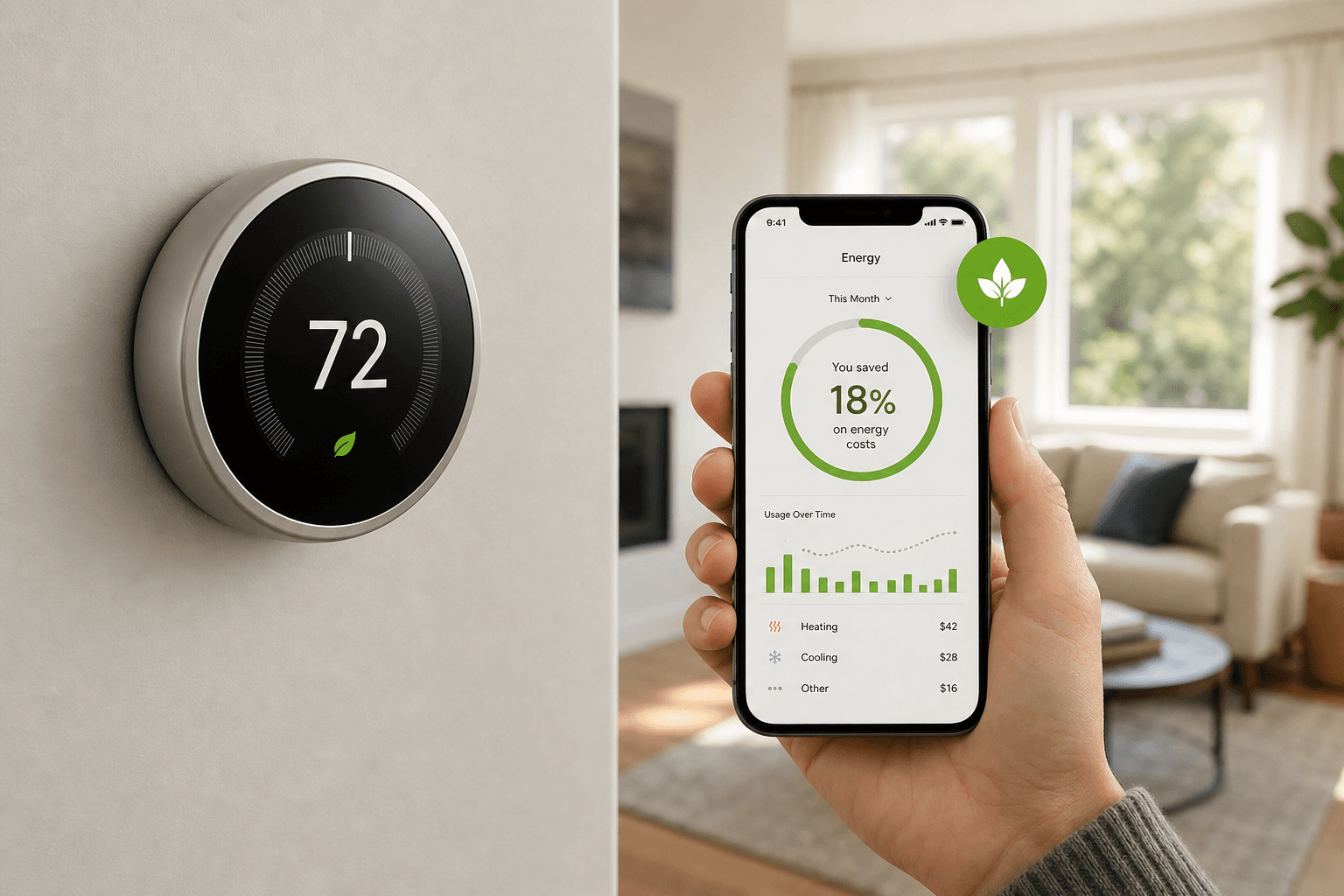
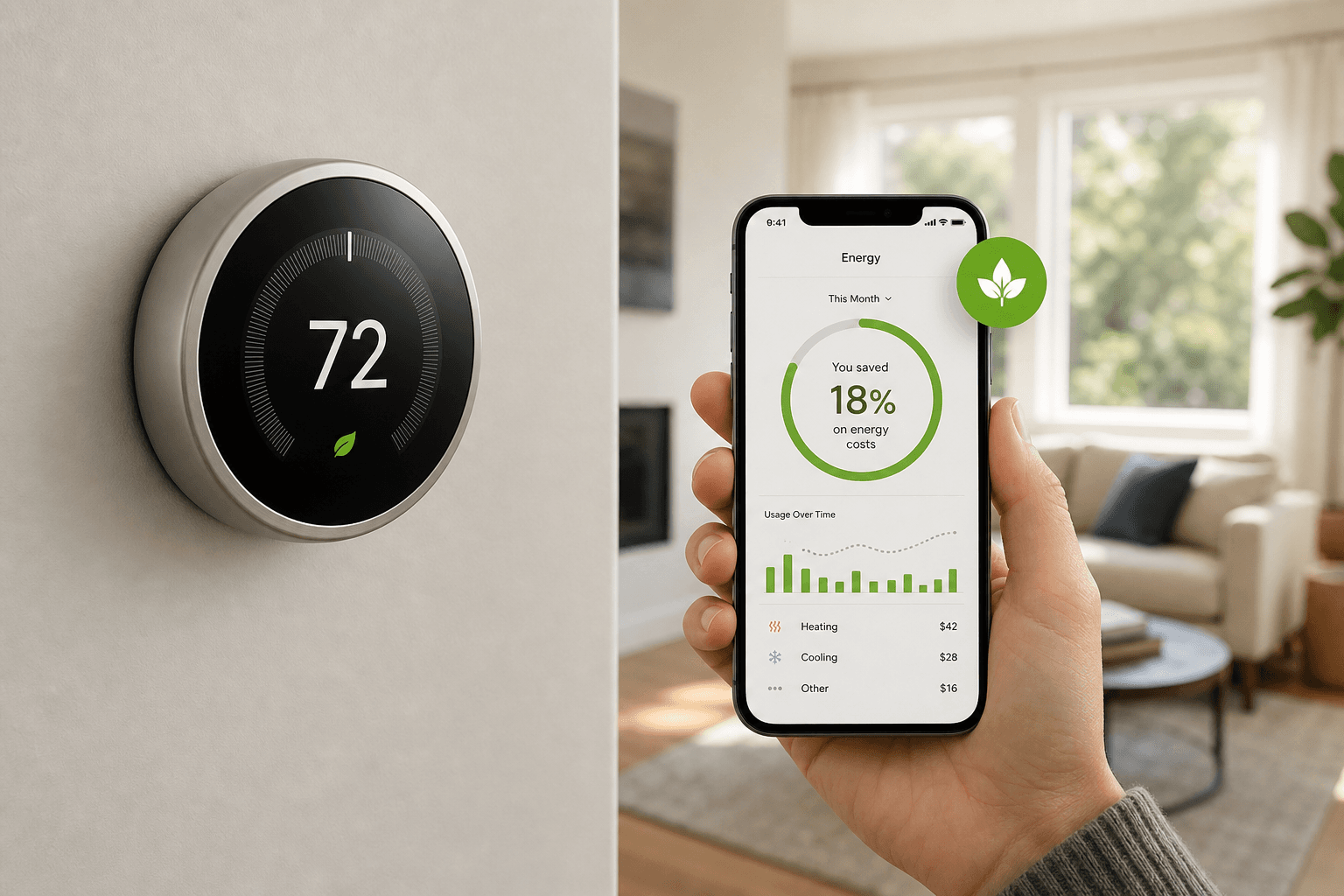
The 2026 Incentive Reality Check: Federal Credit Is Gone, Utility Rebates Are Not
If you've been researching smart thermostats in 2026 and seen references to a federal tax credit, you've encountered one of the most persistent pieces of misinformation in this space. The IRS confirms that the Energy Efficient Home Improvement Credit applied only to qualifying improvements "placed in service" through December 31, 2025. The page was last reviewed April 28, 2026, with no extension announced.
Some competing content conflates this with the Residential Clean Energy Credit (Section 25D), claiming it offers 30% back on smart thermostats through 2032. That credit covers solar panels, wind energy, geothermal heat pumps, fuel cells, and battery storage — not thermostats. And as Keiter CPA confirmed in January 2026, Section 25D also expired after December 31, 2025. Systems installed in 2026 or later are not eligible.
What that means practically: the federal incentive layer is gone. But the utility incentive layer — which many buyers overlook entirely — is alive, widely available, and in some cases more valuable than the federal credit ever was for thermostats. Utility purchase rebates of $50–$130 and recurring demand response bill credits of $30–$200 per year are still on the table in 2026, and they stack.
What ENERGY STAR Certification Actually Guarantees
The ENERGY STAR label on a smart thermostat is not a marketing claim. It is a performance threshold verified through real-world field data collected from US homes — not laboratory simulations. The EPA's certification criteria require that a certified thermostat demonstrate, at the lower 95% confidence limit of a weighted national average across real installations:
- At least 8% annual reduction in heating runtime
- At least 10% annual reduction in cooling runtime
- Compatibility with utility demand response programs
- Certification by an EPA-recognized independent body — not self-reported by the manufacturer
As of mid-2026, 112 certified models from more than 20 brands appear on the EPA's certified product list, including models from Ecobee, Google Nest, Honeywell Home, and Amazon. The certification requirement to support utility demand response is particularly important — it's the reason ENERGY STAR certified models qualify for the demand response bill credits discussed later in this guide.
The practical implication: when a utility rebate program specifies "ENERGY STAR certified," any model on the EPA list qualifies. Brand is not the eligibility criterion — certification is.
Realistic Savings Range: What to Expect in Your Home
The EPA's national average savings figure — approximately $50 per year, representing about 8% of heating and cooling bills — is a floor, not a ceiling. It reflects the average across a nationally representative sample that includes homes in mild climates, homes that are occupied all day, and homes that were already using programmable thermostats. Your actual savings depend on four variables.
| Variable | Saves More | Saves Less |
|---|---|---|
| Climate zone | Hot summers or cold winters (high HVAC demand) | Mild year-round climate |
| Occupancy pattern | Predictable away periods (commuters, school-age households) | Home all day, every day |
| Prior thermostat behavior | Manual thermostat, inconsistent setbacks | Already using a programmable thermostat |
| HVAC equipment | Older, less efficient system (more room to optimize runtime) | Already high-efficiency system with variable-speed compressor |
At the model level, savings claims vary significantly. Ecobee reports approximately 9% heating and 12% cooling runtime reductions, with geofencing adding up to 23% additional savings on top of basic scheduling — pushing total HVAC cost reductions to 23–26% for households that use the full feature set. The Google Nest Learning Thermostat targets 12–15% savings. The Amazon Smart Thermostat, at the budget end, meets ENERGY STAR certification thresholds without the advanced sensor ecosystem.
The Utility Rebate Landscape: Two Distinct Savings Layers
Utility incentives for smart thermostats come in two structurally different forms that are frequently conflated — and that conflation costs homeowners money because they don't realize both are available at the same time.
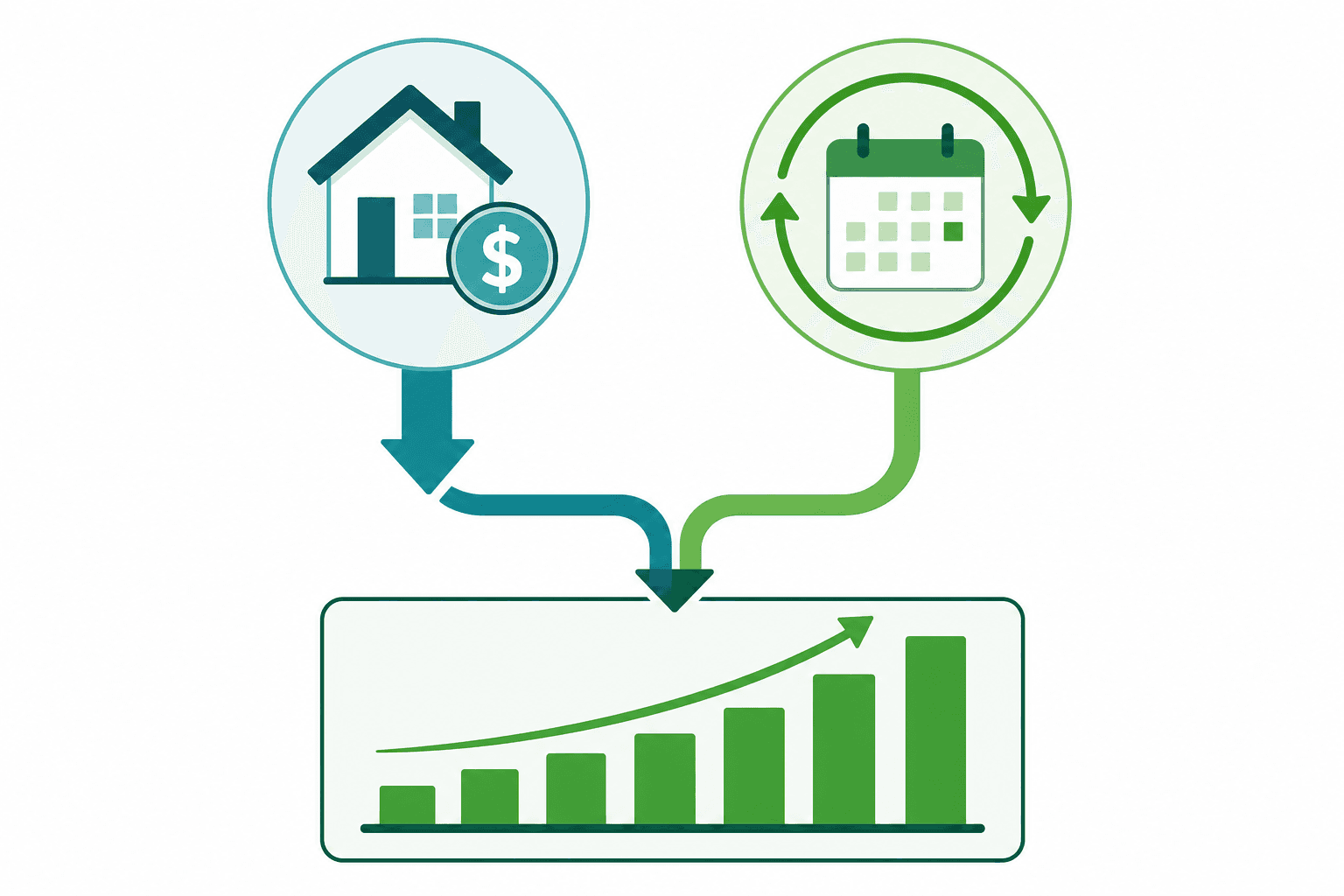
Layer 1: One-Time Purchase Rebates ($50–$130)
These are direct payments — typically a check or bill credit — made once when you purchase and install a qualifying ENERGY STAR certified thermostat. You do not need to enroll in any ongoing program, allow utility control of your thermostat, or meet any usage requirements after installation.
| Program | Rebate Amount | Status |
|---|---|---|
| Focus on Energy (Wisconsin statewide) | $50 | Confirmed live, effective January 1, 2026 |
| Atlantic City Electric (NJ) | $100 | Confirmed live, 2026 |
| Mass Save (Massachusetts) | $100 | Confirmed live |
| SRP (Arizona) | $100 | Illustrative — verify at ENERGY STAR Rebate Finder |
| Southern California Edison (SCE) | $75 | Illustrative — verify at ENERGY STAR Rebate Finder |
Layer 2: Recurring Annual Demand Response Bill Credits ($30–$200/year)
Demand response programs are structurally different from purchase rebates. You enroll your ENERGY STAR certified thermostat in a utility program that allows the utility to make minor, temporary thermostat adjustments — typically 2–4°F for 15–60 minutes — during peak grid events, usually a handful of times per summer. In exchange, the utility pays you an annual bill credit.
The Mass Save ConnectedSolutions program pays up to $200 per year in bill credits. National Grid ConnectedSolutions and Duke Energy run similar programs. These credits recur annually as long as you remain enrolled — meaning a homeowner who collects a $100 purchase rebate and enrolls in a $150/year demand response program receives $100 once and $150 every year thereafter.
How to Find Rebates Available in Your Area
Two authoritative, free tools surface zip-code-level rebate programs for smart thermostats. Neither requires an account or personal information to use.
- ENERGY STAR Rebate Finder (energystar.gov/rebate-finder): Enter your ZIP code and select the Smart Thermostats product category. The tool surfaces rebates and special offers from ENERGY STAR partner utilities and retailers in your area. Results include both purchase rebates and links to demand response enrollment pages where applicable.
- DSIRE (dsireusa.org): Managed by NC State University, DSIRE is the most comprehensive database of state and utility incentive programs in the US. It covers programs that the ENERGY STAR Rebate Finder may not list, including state-level efficiency programs and smaller utility programs. Also ZIP-code searchable.
Both tools are interactive databases, not static lists. Rebate amounts, eligibility windows, and program availability change frequently — sometimes seasonally. Check these tools immediately before purchase, not weeks in advance, to confirm a program is still active and funded.
ENERGY STAR Certified Models and Rebate Eligibility
Most utility rebate programs accept any model on the EPA's certified product list. The table below illustrates three price tiers and their associated savings ranges — not as editorial rankings, but to show how the savings-to-cost relationship shifts across the market.
| Model | Price Range | ENERGY STAR Certified | Savings Range (Annual) | Notable Feature |
|---|---|---|---|---|
| Amazon Smart Thermostat | $59–$80 | Yes | $50–$80 (EPA baseline) | Budget entry point; basic scheduling and Alexa integration |
| Google Nest Learning Thermostat | $249 | Yes | $100–$150 (12–15% HVAC reduction) | Auto-schedule learning; Farsight display |
| Ecobee Premium | $249 | Yes | $100–$190+ (up to 23–26% with geofencing and room sensors) | SmartSensor ecosystem; demand response compatible; multi-room occupancy |
The key eligibility criterion for utility rebates is ENERGY STAR certification — not brand, not price tier. A $59 Amazon Smart Thermostat qualifies for the same $100 rebate as a $249 Ecobee Premium at most utilities. That asymmetry is why the budget tier has the shortest payback period by a significant margin.
How to Claim a Utility Rebate: Step-by-Step
Rebate programs are straightforward, but they have documentation requirements and submission windows that are easy to miss. Follow this sequence to avoid losing a rebate you've already earned.
- Verify ENERGY STAR certification before purchase. Confirm the exact model number appears on the EPA's certified product list — not just that the packaging says "ENERGY STAR." Some older or clearance units may carry the label for a product generation that is no longer certified.
- Retain your itemized purchase receipt. The receipt must show the retailer name, purchase date, model number, and price paid. A credit card statement alone is typically not sufficient.
- Complete installation and activate the thermostat. Most programs require the device to be installed and operational before the rebate is issued. Some programs require activation through the manufacturer's app to confirm the device is live.
- Enroll in demand response if you want the higher rebate tier. Some utilities offer a larger purchase rebate specifically to customers who also enroll in their demand response program. This step is separate from the basic purchase rebate submission.
- Submit your documentation within the program's submission window. Most programs allow 30–90 days from purchase or installation date. Missing this window typically means forfeiting the rebate — extensions are rarely granted.
- Allow 4–8 weeks for processing. Rebates are typically issued as a check or bill credit. Keep a copy of your submission confirmation.
Payback Period Examples by Price Tier
Payback period is calculated using a simple formula: Net Cost ÷ Annual Energy Savings = Payback Years. Net cost is the purchase price after subtracting any rebate. The table below runs three scenarios based on confirmed program data and verified savings ranges.
| Scenario | Purchase Price | Rebate Applied | Net Cost | Annual Savings Estimate | Payback Period |
|---|---|---|---|---|---|
| Budget — with rebate | $59–$80 | $50 | $10–$30 | $50–$80/year | ~0.5–1 year |
| Premium — with $100 rebate | $249 | $100 | $149 | $100–$190/year | ~0.8–1.5 years |
| Premium — no rebate available | $249 | $0 | $249 | $100–$190/year | ~1.5–2.5 years |
A real-world case from Texas illustrates how this plays out in practice: a homeowner installs a $250 smart thermostat with a DIY installation, achieves a 12% reduction in summer cooling bills amounting to approximately $180 per year in savings, and reaches payback in roughly 1.4 years. After that, the thermostat generates net savings for the life of the device.
For households that stack a purchase rebate with annual demand response credits, the economics improve further. A homeowner who receives a $100 purchase rebate and enrolls in a $150/year demand response program effectively has a net cost of negative $50 in year one — before accounting for energy savings at all. The demand response credit alone covers the net device cost within the first year in many scenarios.
Data Updates
Know about updated rebate programs, changed subscription prices, or new ENERGY STAR certifications? Submit a note below to help keep this content current. For formal data corrections, use the contact page.
Comments
Join the discussion with an anonymous comment.