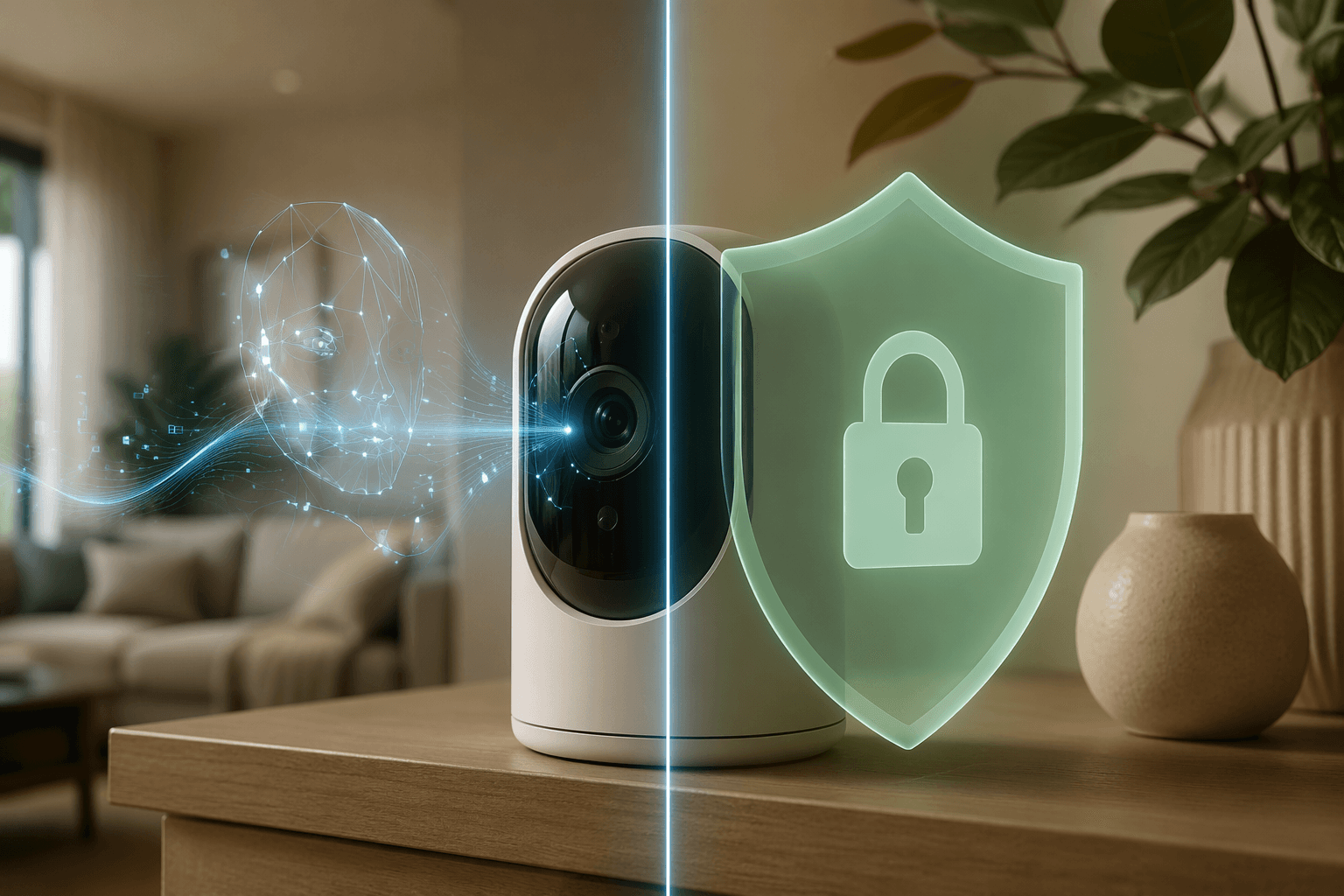
The same survey that tells you 87% of home security owners feel more peace of mind also finds that 37% worry about who might access their footage. That gap — between feeling safe and being safe — is where the 2026 smart home security market lives. I have watched this industry over-promise on privacy for a decade, and this year the tension is sharper than ever.
What Happens When the Subscription Stops
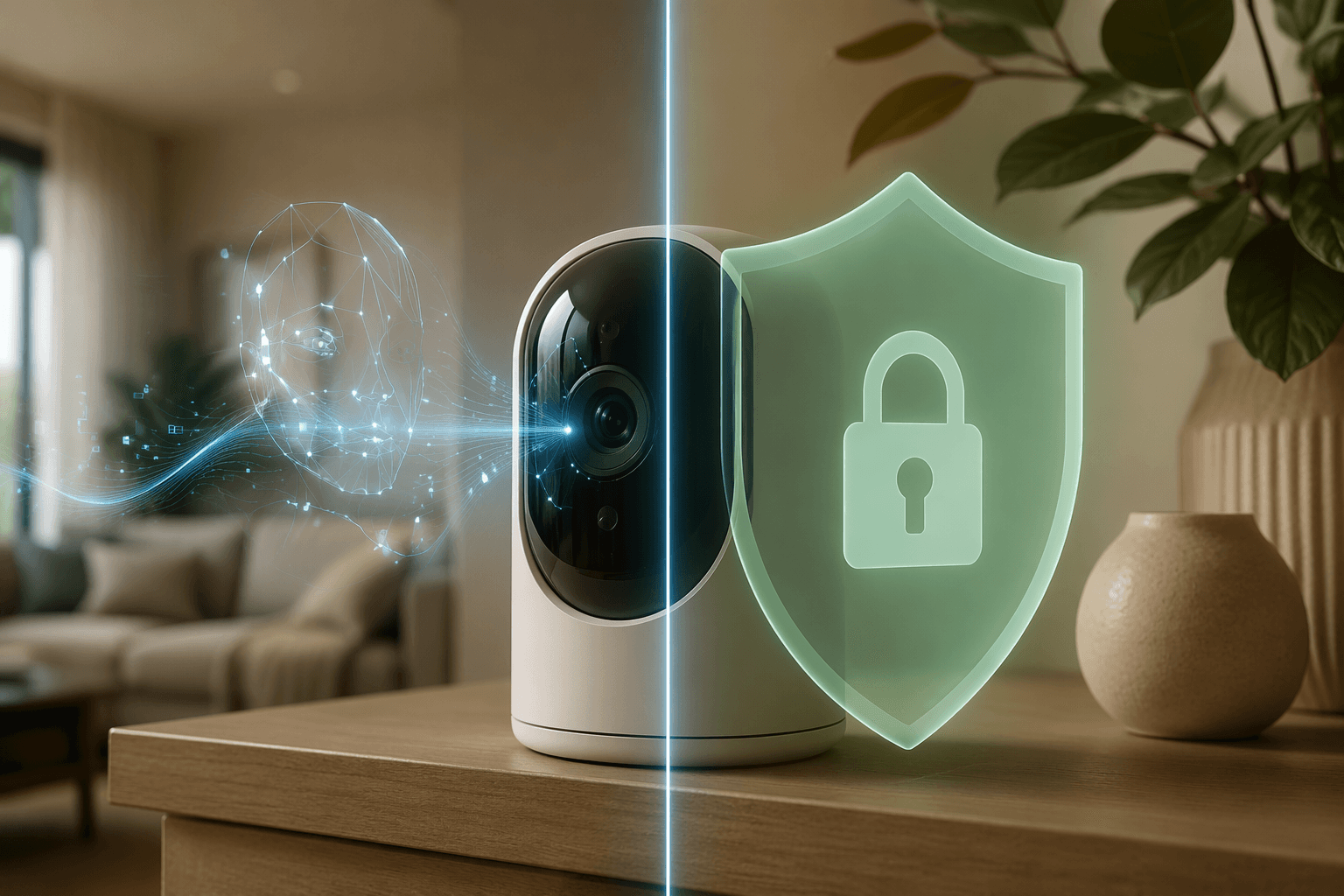
This is the part I want to slow down on, because it is the most actionable and the most overlooked. 32% of users rely on cloud-only storage for security camera footage. That means no subscription, no recordings. No AI detection. Often no live view. The hardware becomes near-useless.
And 6% of users already canceled or downgraded subscriptions in the past year due to cost. That number will rise as budgets tighten. When you cancel Ring’s $20/month plan, you lose 180 days of video storage and cellular backup. When you drop SimpliSafe’s $23/month Standard plan, the AI features disappear. The system degrades from smart alarm to a box that beeps.
| System | Subscription cost | What is lost on cancellation |
|---|---|---|
| Ring Alarm Pro | $20/mo | Video storage, cellular backup, 24/7 internet backup |
| SimpliSafe (Standard) | $23/mo | AI detection, video storage, professional monitoring |
| Eufy ExpertSecure E10 | No subscription (local storage up to 16TB) | Nothing — all features work locally |
The global smart home security market was valued at $33.2 billion in 2025 and is projected to reach $117.4 billion by 2034, a CAGR of 15.1% — numbers from Fortune Business Insights (with a methodology behind a paywall). That growth is driven by recurring subscription revenue. The model depends on keeping users billed. Features are designed to be cloud-native; local storage is treated as a downgraded option. The market’s financial incentives point toward lock-in, not user ownership.
If you are shopping for a system in 2026, ask what happens to your footage when you cancel. Ask whether local storage preserves AI detection. Ask whether encryption is the default or an opt-in checkbox. The industry’s push toward cloud-only creates a new vulnerability: cost-driven downgrades that reduce actual security. If you cannot afford the plan, your smart home becomes a dumb piece of plastic.
AI Features Turn Cameras Into Surveillance Nodes
AI person and package detection is no longer a premium add-on. 28% of users already have it, and 39% want facial recognition. When SimpliSafe’s monitoring agents can view live video and speak to an intruder, that is a real deterrent. When ADT+ uses Google Nest facial recognition to auto-unlock doors for trusted visitors, that is convenience. When Arlo’s AI detects a scream or a gunshot and immediately uploads footage to the cloud, that is a faster emergency response.
I am not arguing against these features. I am pointing out that every one of them turns a passive camera into an active surveillance node. Detection triggers a cloud upload, often to a third-party server. Agents can watch. Algorithms can tag. The moment AI is involved, the data leaves your home network. The same SafeHome survey that gives us those adoption figures also shows that 61% of U.S. households now have at least one security camera — up from 52% in 2024. More cameras mean more footage. And 37% of those camera owners worry that someone besides them might be watching. That is not a fringe concern; it is more than one in three users.
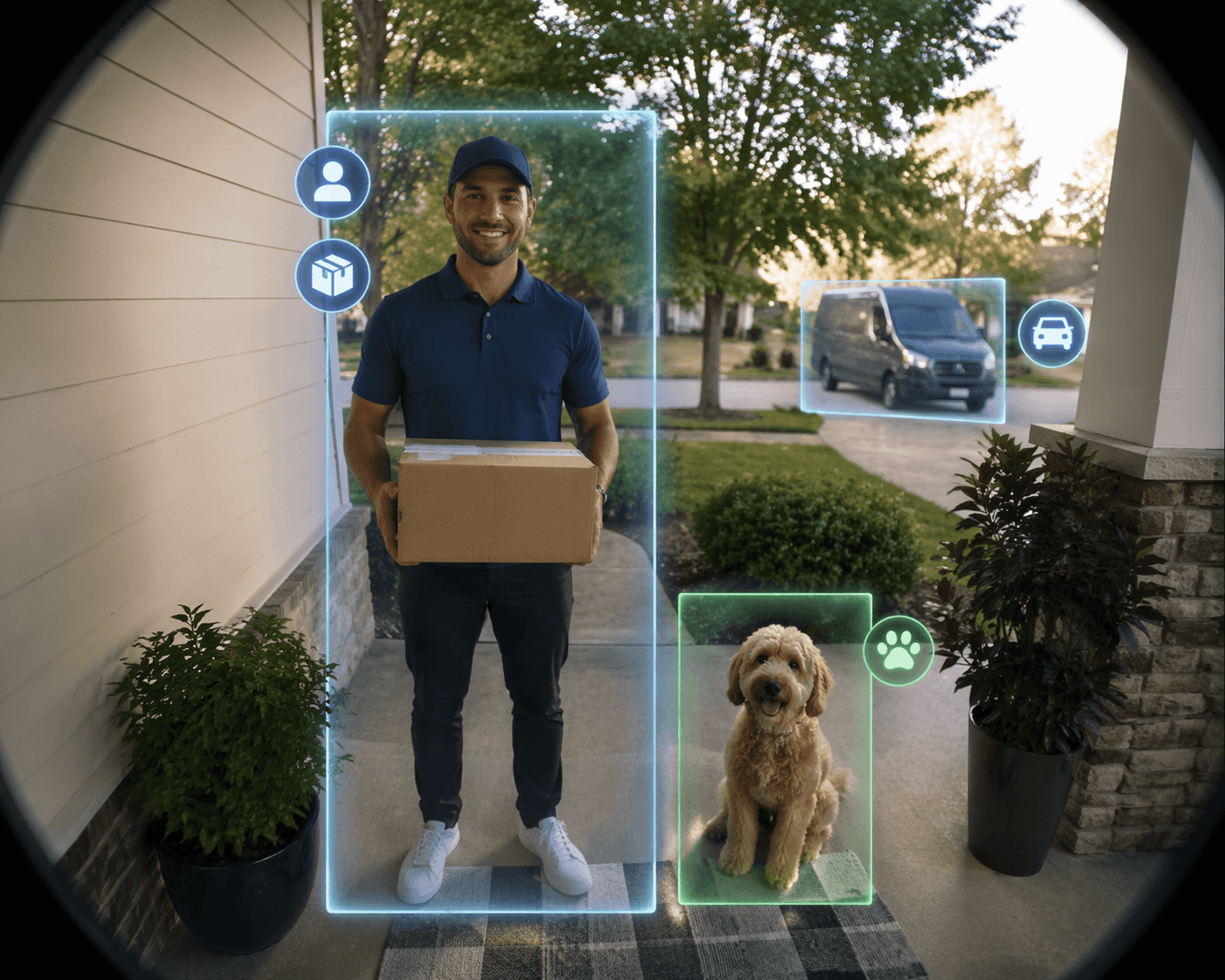
SimpliSafe’s Active Guard Outdoor Protection, ADT’s familiar face unlock, Vivint’s Smart Deter, Arlo’s fire and gunshot detection — the mechanism is the same. Detection requires connectivity. Connectivity requires cloud storage or continuous streaming. The feature you pay for is the feature that makes your video accessible outside your home.
Ring Owns 43%. That Is Not a Niche Problem
Ring owns 43% of the home security market. That means nearly half of all users rely on a brand that has been at the center of privacy controversies: FTC actions over employees spying on customers, hacking incidents, and the backlash against the Search Party feature launched in late 2025. Ring does offer end-to-end encryption as an opt-in feature, but it is opt-in — not the default. The 37% of users who worry about footage access are not outliers. They are reflecting a structural reality: the dominant market player has a track record that makes that worry legitimate. And as adoption grows, the pool of worried users will grow with it.
The same systems that promise faster response times (ADT averaged 28 seconds, SimpliSafe 31 seconds in Security.org’s controlled tests) are the ones that hold your footage in the cloud. Those response times matter only if you stay subscribed. The 2026 smart home security market is safer in algorithm but riskier in practice. AI detection is genuine. Facial recognition is coming. But the infrastructure that makes those features work — cloud uploads, third-party access, subscription gating — creates new vulnerabilities that the peace-of-mind statistics conveniently ignore. Feeling safe is not the same as being safe. The data, when you look at it openly, does not let you escape that distinction.
Policy Updates & Reader Notes
Privacy policies, monitoring plan prices, and security disclosures change frequently. Report new data retention terms, updated plan pricing, or new vulnerability disclosures below. For formal editorial corrections, use the contact page.
Comments
Join the discussion with an anonymous comment.