Protocols
How the 2026 Memory Chip Shortage Affects Smart Home Devices
The 2026 memory chip shortage does not hit all smart home devices alike. This article breaks down which categories (hubs, speakers, displays) face steep price hikes and which (sensors, switches, bulbs) remain unaffected, so you can decide what to buy now and what to defer.
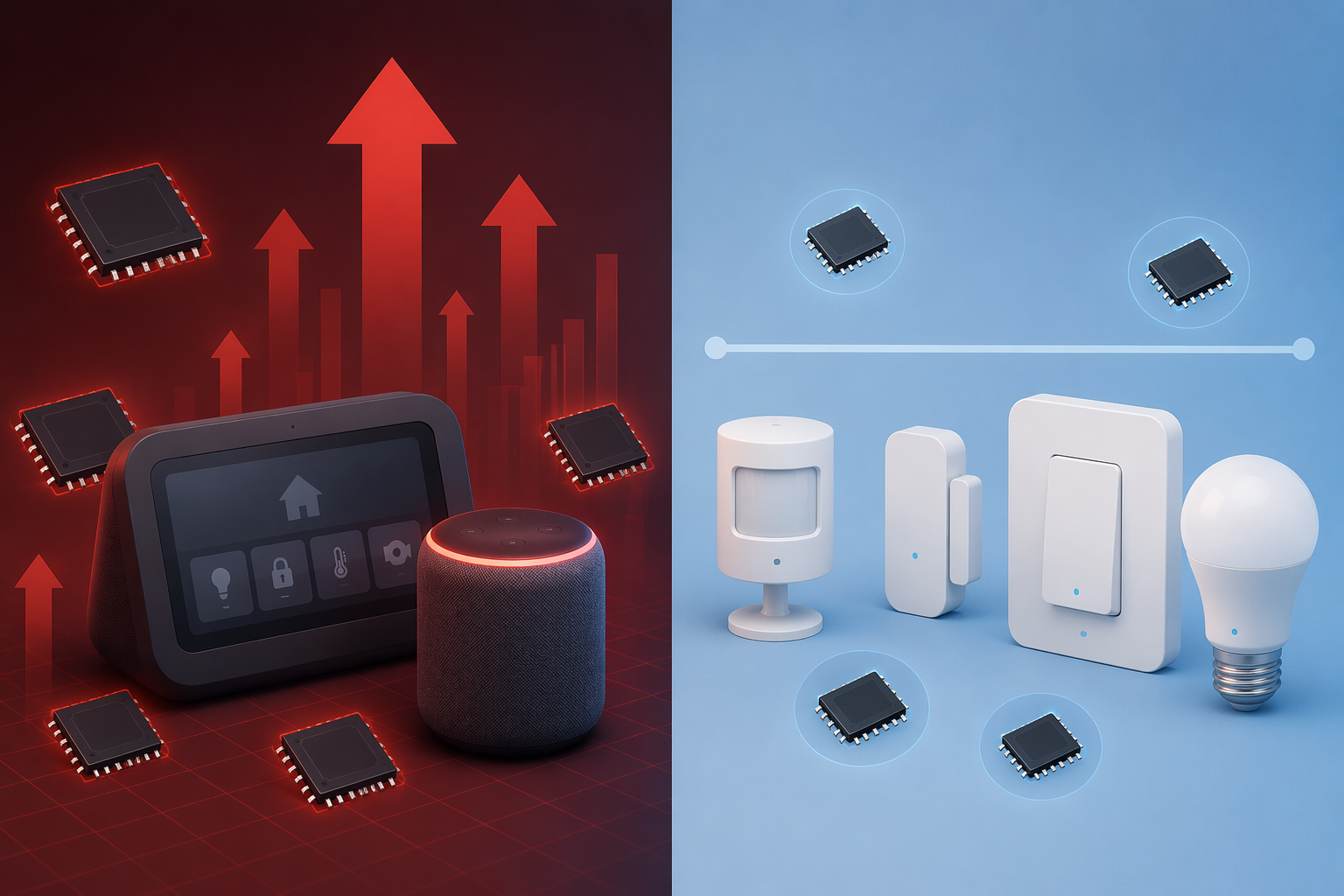
The 2026 memory chip shortage affects smart home devices unevenly. If the device coordinates the house, runs an app platform, acts as a Thread border router, or doubles as a smart speaker or display, it is exposed to the DRAM price spike. If it only reports motion, open or closed, on or off, temperature, or power state, there is much less evidence that the shortage is changing the buy decision.
That split matters more than the broad headline. A contact sensor does not become a risky purchase just because memory prices are ugly. A hub replacement does. Home Assistant Green moved from $99 to $199 after Nabu Casa cited higher component costs driven especially by RAM prices, while Apple’s Wi‑Fi + Ethernet Apple TV—the model that matters for Thread border-router use—rose from $149 to $249 in June 2026.[1][2]
The shortage hits the coordinator before the sensor
A smart home has two very different kinds of hardware. One kind is infrastructure: hubs, bridges, smart speakers, smart displays, Home Assistant boxes, Apple TV units, and other devices that maintain the network or run higher-level logic. The other kind is endpoints: bulbs, plugs, relays, switches, motion sensors, contact sensors, leak sensors, and temperature sensors.
The infrastructure side is where the memory chip shortage has shown up in confirmed pricing. Home Assistant Green doubled, Apple TV Wi‑Fi + Ethernet rose 67%, HomePod mini moved from $99 to $129, and the second-generation HomePod moved from $299 to $349 in June 2026.[1][2] Matter Alpha also reported Apple describing the memory shortage as an “unprecedented challenge” and saying it had “never seen a component price increase this much, this quickly.”[3]
The endpoint side is a narrower conclusion. Motion sensors, contact sensors, plugs, switches, and bulbs generally use small microcontrollers with embedded flash rather than separate DRAM. As of mid-2026, there was no comparable, well-sourced pattern of shortage-driven price jumps for those categories. That does not mean every bulb or plug is cheap, or that every brand is discounting normally. It means the current memory shortage evidence points much more clearly at DRAM-heavy coordinators than at simple endpoint devices.
| Device role | Shortage exposure in 2026 | Practical buying meaning |
|---|---|---|
| Home Assistant hub, Apple TV, smart speaker, smart display | High, because these devices use more system memory and platform hardware | Check current pricing before planning the rest of the setup |
| Thread border router or Matter controller | High when the required controller is bundled into a more expensive hub-class device | The accessory may be affordable while the required coordinator is not |
| Raspberry Pi or DIY Home Assistant controller | Moderate to high, especially on higher-RAM boards | A DIY path may no longer be the cheap fallback it used to be |
| Sensors, switches, plugs, bulbs | Low based on available evidence and typical hardware design | Buy mainly by protocol, range, battery, and ecosystem fit |
Home Assistant Green is the cleanest smart home example
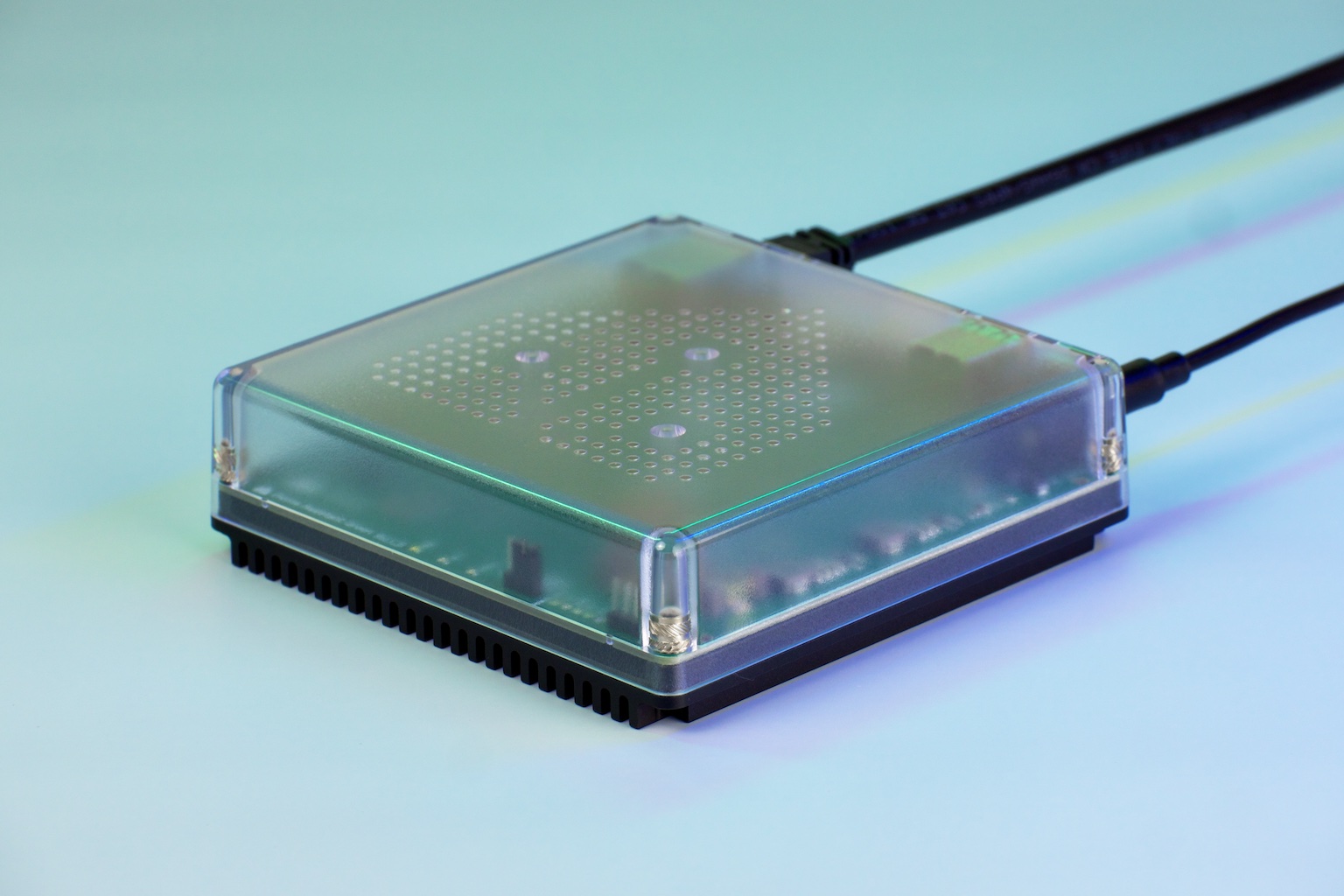
Home Assistant Green is useful here because the pricing change is not rumor-mill pattern matching. Nabu Casa announced a pricing change and explicitly pointed to component cost increases, with RAM called out as the main driver. The device launched at $99 in September 2023 and was listed at $199 after the 2026 pricing change.[1]
For an existing Home Assistant user, that changes the repair calculation. If a Green dies, gets lost in a move, or becomes the recommended box for a family member’s first setup, the replacement is no longer a casual under-$100 purchase. It is still small, quiet, and purpose-built, but the price now sits in the same mental space as a more serious household infrastructure purchase.
It also changes the “just use Home Assistant” advice that gets thrown around in Matter discussions. Home Assistant remains one of the better ways to keep mixed-protocol homes coherent, and NestGrid’s guide to Home Assistant Matter support is still the right place to check what the platform can do. But in 2026, the controller cost belongs in the budget before the first Matter bulb, lock, or sensor goes into the cart.
Matter and Thread make the hub price harder to ignore
Matter did not remove the need for infrastructure. It changed which infrastructure you need. A Wi‑Fi Matter bulb may pair without a Thread border router, but a Thread lock, sensor, or bulb still needs a Thread border router somewhere in the home. In Apple’s lineup, the Wi‑Fi + Ethernet Apple TV is the relevant Apple TV model for that job, and its price rose from $149 to $249 in June 2026.[2]
That is the part buyers often miss. The smart lock, bulb, or sensor may not be the shortage-exposed item. The coordinator that makes it usable may be. A person comparing two Matter smart locks can easily spend all their time on battery life, door fit, and app support, then discover that the “works with Thread” path assumes hardware they do not already own. NestGrid’s Matter smart lock explanation is exactly the kind of pre-check worth doing before treating the accessory price as the full project price.
HomePod pricing points the same way. HomePod mini moved from $99 to $129, and the second-generation HomePod moved from $299 to $349 in the same June 2026 reporting window.[2][3] Those are not just speakers in many Apple homes. They can be part of the control layer people rely on for automations, remote access, voice control, and Matter.
This is why a Matter shopping list should start with the controller path, not the accessory count. If you already have the right border router and controller, endpoint purchases can be judged normally. If you do not, the shortage may have moved the real entry price upward before the first accessory joins the network.
Why DRAM pressure shows up here
The smart home is not causing the 2026 memory shortage. AI infrastructure is pulling the memory market toward high-bandwidth memory and data-center demand. NPR reported DRAM prices rising 80% to 90% from Q4 2025 to Q1 2026, citing Counterpoint Research, and reported TrendForce expectations for another 40% increase in the following quarter.[4]
The important translation for smart home buyers is simple: a hub competes for more of the memory stack than a contact sensor does. A speaker or display with an operating system, app layer, networking stack, voice functions, and local processing needs memory in a way a battery sensor does not. That does not make every hub equally affected, but it explains why the confirmed price moves cluster around platform devices.
There is also no good reason to plan around a fast correction. CNBC reported Intel CEO Lip-Bu Tan saying there was “no relief until 2028” for DRAM supply, and Synopsys CEO Sassine Ghazi saying the crunch would continue through 2026 and 2027.[5] IEEE Spectrum’s mid-2026 review of fab timelines points in the same direction: major new capacity from Micron, Samsung, and SK Hynix does not arrive all at once, with several projects landing in 2027, 2028, or later.[6]
DIY Home Assistant builds are not immune
The old fallback was to skip the appliance hub and build Home Assistant on a Raspberry Pi. That can still be the right choice, especially for people who want flexibility, backups, and control over storage. It is no longer automatically the cheap escape hatch from hub pricing.
The Raspberry Pi 5 16 GB rose to $145, up $25 from early 2025, according to reporting from Tom’s Hardware and Phoronix.[7][8] That does not mean every Home Assistant install needs a 16 GB Pi. Many do not. But it shows the second-order effect clearly: once a DIY controller depends on higher-RAM boards, it starts to feel the same component market as the packaged hubs.
If you are setting up Matter through Home Assistant, use the hardware recommendation for the actual workload rather than buying the largest board out of habit. For setup details, NestGrid’s Home Assistant Matter setup guide is the better check than a generic “more RAM is better” parts list.
What not to overread
There are weaker claims floating around the smart home market, and they should stay weak unless better sourcing appears. Notebookcheck reported that smart home sector price increases could exceed 100% in some cases and discussed IKEA Dirigera alongside Home Assistant Green, but the exact IKEA pre- and post-increase figures were not independently confirmed from an IKEA primary source.[9]
The same caution applies to Google Nest Hub and Amazon Echo pricing. Smart displays and speakers are plausible shortage-exposed categories because they use more system memory than simple endpoint devices, but unverified Nest Hub or Echo price movement should not be treated as a confirmed 2026 pattern. Plausible is not the same as documented.
That distinction keeps the buying advice useful. Confirmed price movement in Home Assistant and Apple hardware is enough to warn buyers about hub-class devices. It is not enough to claim every smart speaker, every display, or every retail price change in every ecosystem has the same cause.
Buy now, defer, or ignore the shortage
For 2026 purchases, sort the device by role before sorting by brand. The shortage question is not “Is this smart home gear?” It is “Does this device need meaningful DRAM, and does my setup depend on it being present?”
- Buy or replace sooner if a hub, controller, bridge, Thread border router, smart speaker, smart display, or Home Assistant box is required for the rest of the home to keep working.
- Do not assume a quick price drop on DRAM-heavy devices; mid-2026 executive comments and fab timelines point to pressure lasting through 2027 and into 2028.
- Defer optional upgrades if the current hub is stable and the new purchase is mainly cosmetic, faster, or nicer to look at.
- Buy sensors, switches, plugs, and bulbs on normal criteria: protocol support, range, battery type, physical fit, local-control behavior, and return policy.
- Treat bundle discounts carefully; a cheap endpoint bundle is not useful if it quietly requires a now-expensive controller you do not own.
A beginner adding a few Matter bulbs should not panic-buy hubs without checking whether the bulbs use Wi‑Fi, Thread, or another path. NestGrid’s Matter smart bulb guide is a better starting point than assuming every Matter device brings the same infrastructure requirement.
Someone replacing a failed hub has less room to wait. If automations, locks, sensors, or remote access depend on that box, the question is not whether the 2026 price feels fair. It is whether the home has a working coordinator. In that case, buy the smallest reliable device that supports the protocols you actually use, then postpone the nice-to-have display, speaker, or overbuilt DIY board.
The compatibility check before checkout
Before blaming the memory chip shortage or paying the new price, check the dependency chain. A smart home purchase usually fails at the coordinator layer before it fails at the sensor layer.
- Does the device need Matter, Thread, Zigbee, Z-Wave, Wi‑Fi, Bluetooth, or a brand bridge?
- If it uses Thread, do you already own a Thread border router that works with your chosen ecosystem?
- If it uses Matter, which controller will commission and manage it?
- If you use Home Assistant, is the current hardware adequate for the integrations and Matter workload you plan to run?
- Is the device that got expensive the endpoint itself, or the hub that makes the endpoint useful?
If the answer points to a hub, Thread border router, smart speaker, smart display, or RAM-heavy DIY controller, expect elevated prices and do not build the plan around a quick return to 2024 or early-2025 pricing. If the answer points to a sensor, switch, plug, or bulb, the memory chip shortage should not be the main factor. Buy for compatibility first, then price.
For a broader first setup, start with NestGrid’s beginner home automation guide and verify the hub requirement before buying accessories. The shortage changes the cost of the control layer more than it changes the value of a boring, reliable sensor.
References
- Green Pricing Change, Nabu Casa, January 8, 2026.
- Apple TV and HomePod Price Increases, MacRumors, June 25, 2026.
- Apple smart home price hikes June 2026, Matter Alpha, June 2026.
- AI chips memory prices RAM, NPR, December 28, 2025.
- Memory chip shortage: Synopsys, Lenovo, AI data centers, CNBC, January 26, 2026.
- DRAM shortage, IEEE Spectrum.
- Raspberry Pi 5 16GB now $145, Tom’s Hardware.
- Raspberry Pi 5 16GB price increase, Phoronix.
- Rising costs in the Smart Home: The impact of the chip and RAM shortage, Notebookcheck.
Report an issue with this explainer
If this mechanic explanation seems outdated or incorrect, tell us — we check it against current spec and certification records before changing it.