
Is Lutron Caséta Still Worth It in 2026?
Lutron Caséta remains the gold standard for reliability and works without neutral wires, but Matter-compatible dimmers now cost significantly less. This article compares the trade-offs to help you decide whether the premium is still worth paying in 2026.
Last updated
Wirecutter’s 2026 smart dimmer pick is no longer Lutron Caséta. It moved the top recommendation to TP-Link’s Kasa KS225 Matter Smart Wi-Fi Dimmer, a $19–$21 switch, and pushed Lutron down to a narrower “if you don’t have great Wi-Fi” role.[1] That is not a small editorial shuffle. For a homeowner pricing out ten switches, Caséta lands around $630–$730 once the Lutron smart hub is included. Ten Kasa KS225 dimmers cost about $190–$210 with no hub at all.
That gap changes the question. The useful 2026 question is not whether Lutron Caséta is still good. It is. The question is who still needs what Lutron does better than cheaper Matter-compatible dimmers, and who is paying several hundred dollars extra for reliability they may not actually notice.
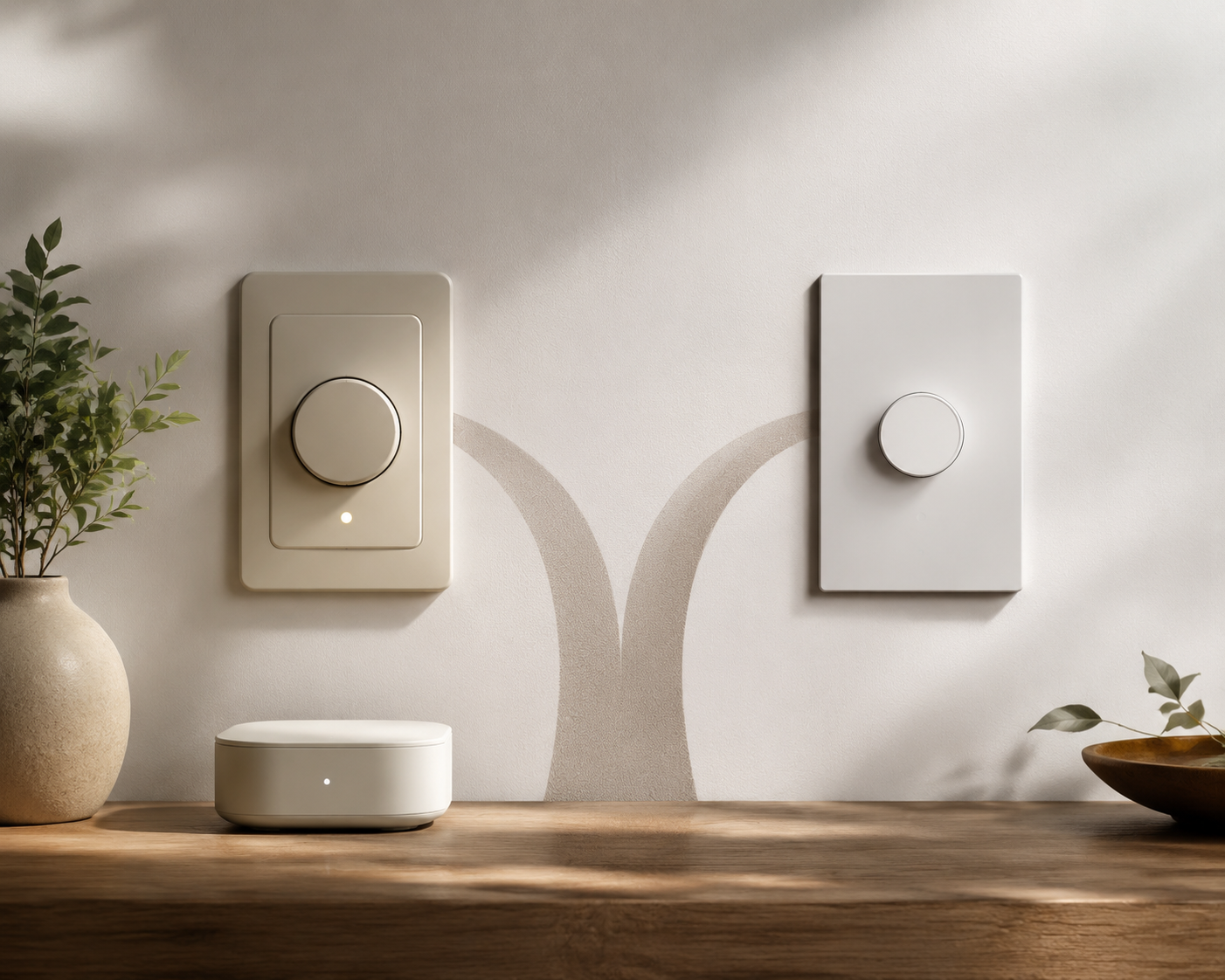
The 10-Switch Math Is Where Lutron Starts to Hurt
One or two dimmers can hide a premium. A whole-floor retrofit cannot. Smart lighting is one of those purchases that quietly multiplies: kitchen cans, dining room, entry, hallway, porch, bedrooms, basement stairs. By the time the cart has ten dimmers in it, the brand decision is no longer about a nicer app or a prettier wall control. It is an installed-system cost decision.
| 10-switch setup | Hub or bridge | Approximate June 2026 hardware cost | What the price is really buying |
|---|---|---|---|
| Lutron Caséta | Lutron Smart Hub, about $80 | $630–$730 | Dedicated Clear Connect radio, no-neutral compatibility on key models, long reliability record |
| TP-Link Kasa KS225 Matter | No hub | $190–$210 | Matter support, low switch cost, Wi-Fi-based control, neutral wire required |
| Leviton Decora Matter | No hub | $400–$550 | Matter support from a traditional electrical brand, neutral wire required |
| Leviton Decora No-Neutral DN6HD | About $14 bridge required | $364–$514 | A no-neutral alternative that still undercuts Caséta in many installs |
The Kasa comparison is the sharpest because it is the one Wirecutter now points most buyers toward: ten dimmers for roughly the cost of three Lutron dimmers and a hub.[1] Even Leviton’s Matter dimmers, which sit in a more traditional middle lane, leave meaningful money on the table compared with Caséta. The gap is not “I bought the nicer one” money. It is another project, another room, or a decent chunk of an electrician visit.
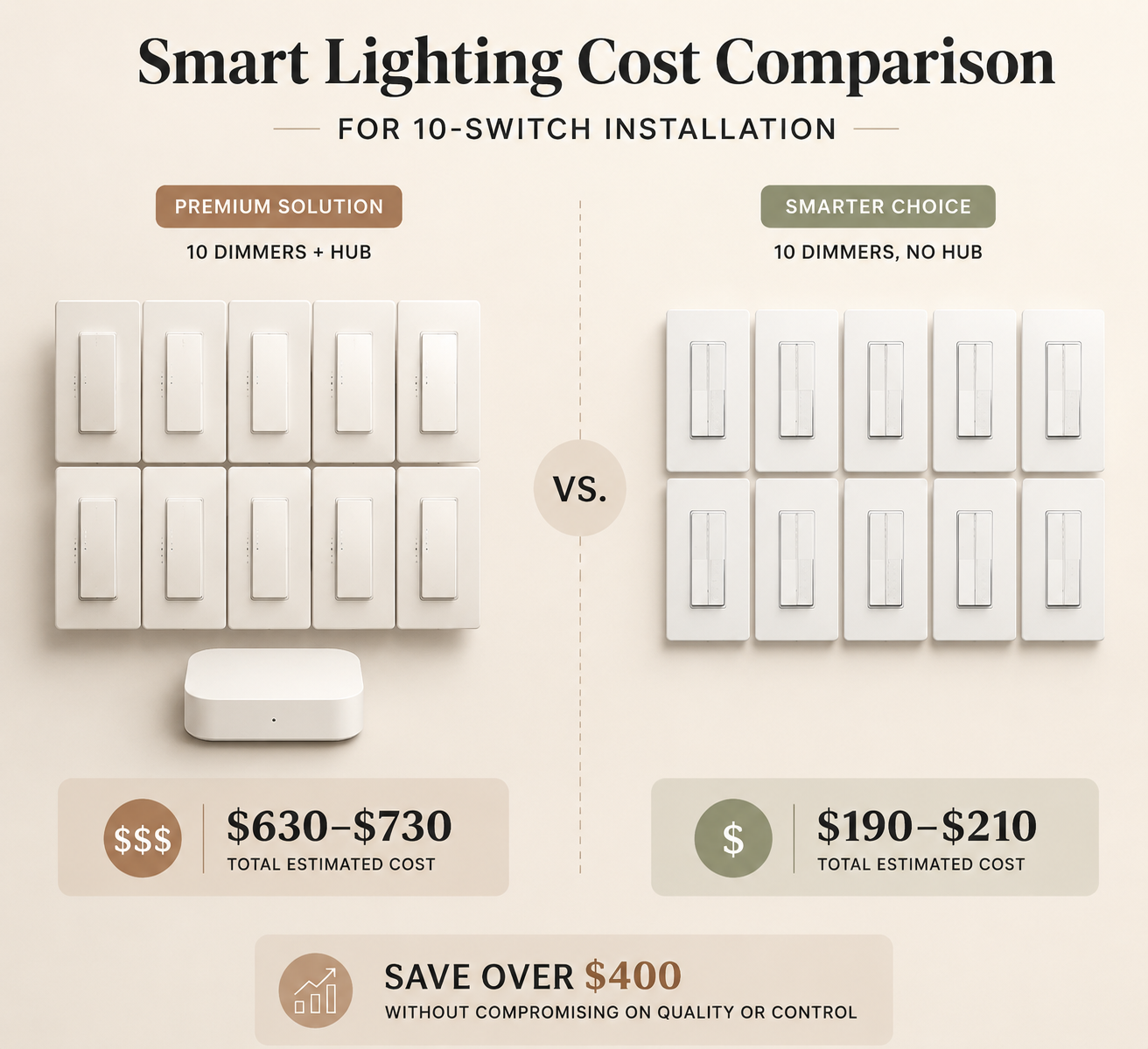
This is also where the easy loyalty argument breaks down. Caséta earned its reputation the hard way: it works, and it keeps working. But a newer home with neutral wires in every box, a decent router, and ordinary automation needs is exactly the scenario where the cheaper Matter dimmer has become hard to dismiss. If the switch turns on the lights from the wall, responds from the phone, joins Apple Home, Alexa, or Google Home cleanly, and costs one-third as much, the premium needs to prove itself somewhere other than the spec sheet.
The Wiring Fork Comes Before the Brand Debate
Before comparing ecosystems, open the switch box or have an electrician check it. The neutral wire question decides more than any Matter logo.
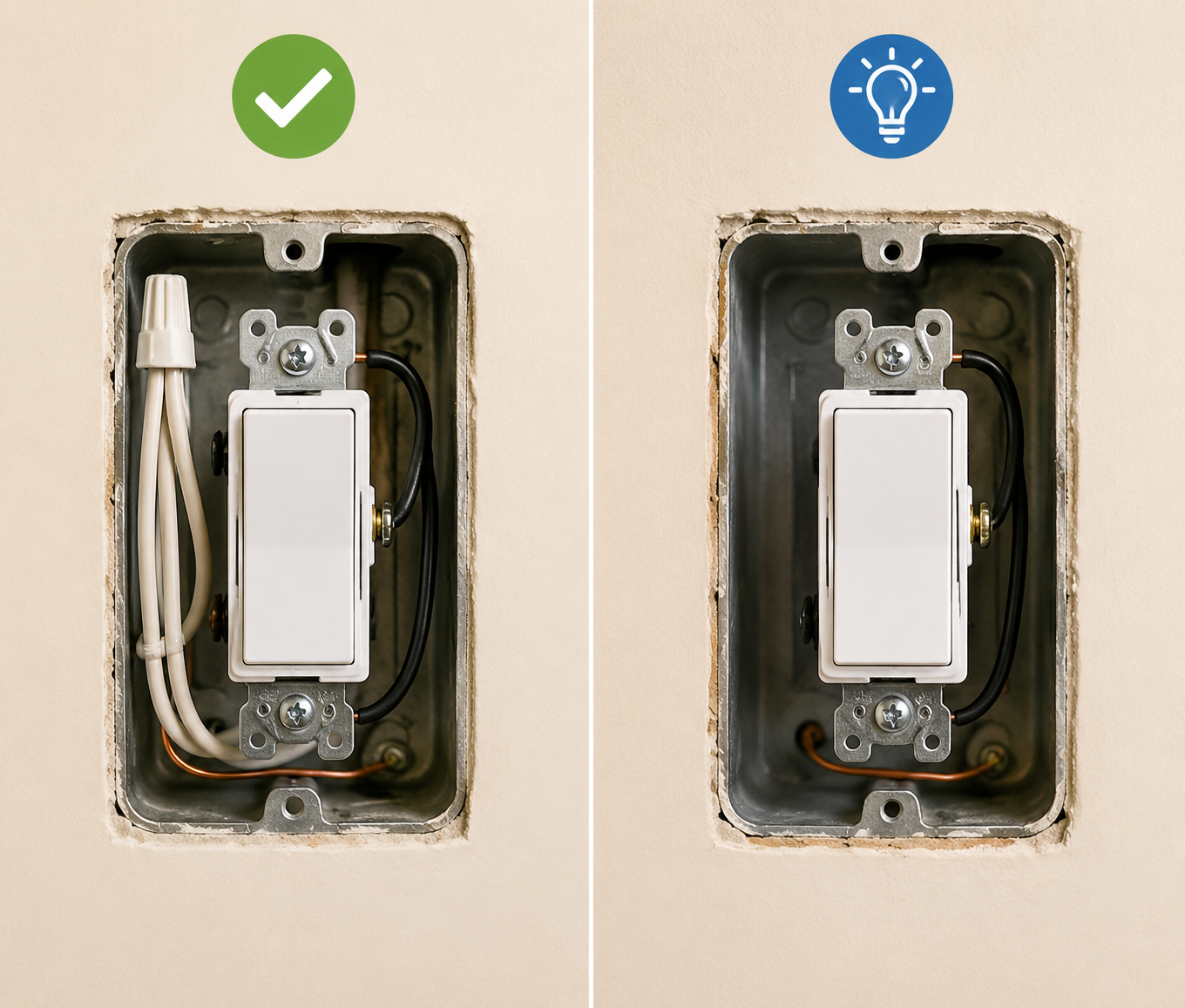
TP-Link’s Kasa KS225 requires a neutral wire. That is normal for many modern smart dimmers, but it is not a small footnote in older houses. Roughly 30%–40% of U.S. homes built before the mid-1980s lack neutrals in switch boxes, which makes “just buy the cheaper Matter dimmer” bad advice for a large slice of real homes.
This is where Lutron still deserves respect. Caséta has long been one of the cleanest answers for no-neutral installations. You still need to check the exact model, load type, and bulb compatibility, but the broad practical point remains: Lutron can solve a wiring problem that many inexpensive Wi-Fi dimmers simply do not solve.
That changes the value calculation completely. In a newer neutral-wire house, Caséta is competing against cheaper modern dimmers. In an older no-neutral house, it may be competing against an electrician, rewiring, narrower product choices, or living with dumb switches. The same $630–$730 system price feels very different when it avoids opening walls or compromising on every main lighting circuit.
The Lutron Smart Hub Is Annoying Until It Saves You From Wi-Fi
The Lutron smart hub is easy to resent during shopping. It adds about $80, it has to be hardwired to the router by Ethernet, and it supports up to 75 devices. If you are used to hub-free Matter gear, that can feel like old smart-home baggage.
In use, the hub is also the reason Caséta behaves differently. Lutron’s Clear Connect system runs on a dedicated 434 MHz RF band instead of piling every dimmer onto crowded 2.4 GHz Wi-Fi. That separation is not glamorous, but it is exactly the kind of design choice that matters when the microwave is running, the router is overloaded, someone is on a video call, and the hallway light still needs to turn on.
Consumer Reports described Caséta as “the most reliable device in my smart home” after more than four years of use, pointing to the kind of long-term stability that is hard to capture in a quick product test.[2] That kind of evidence matters because lighting failures do not feel like tech glitches after the third or fourth time. They become the thing everyone in the house complains about while one person gets blamed for installing the smart switches.
A Wi-Fi dimmer can be perfectly acceptable. Many homes have good networks, light device counts, and no serious interference problems. But “acceptable” and “nearly invisible for years” are different promises. Caséta’s premium is easiest to justify for people who want the lighting system to become boring household infrastructure, not another set of devices that occasionally needs rebooting, re-pairing, or explaining.
Matter Has Made the Middle of the Market Much Better
The reason Lutron looks expensive in 2026 is not that Caséta got worse. It is that the rest of the market stopped being quite so flimsy. TP-Link, Leviton, GE Cync, Tapo, and Aqara all offer Matter-certified switches, while Lutron has shipped no Matter-certified products as of mid-2026.[3]
That absence is more irritating because Lutron is not some small company watching the standard from the sidelines. It sits on the Connectivity Standards Alliance board at the Promoter tier, the same tier as Apple, Amazon, Google, and Samsung.[3] There is no public Lutron statement in the research material explaining a future Matter plan, so the cleanest reading is narrower: Lutron has chosen not to ship Matter-certified Caséta products while its competitors have moved ahead.
That does not make Caséta obsolete. Matter certification is not a magic reliability badge, and it does not erase wiring requirements. It does, however, reduce the old fear of being trapped in one app or one assistant ecosystem. For a buyer starting fresh in a neutral-wire home, that matters. A $20-ish Matter dimmer that works across major platforms asks a very reasonable question: what exactly are you paying Lutron hundreds more to do?
The answer can still be good. You may be paying for Clear Connect, for no-neutral support, for Pico remotes, for a system with a deep installed base, or for the simple luxury of not thinking about light switches after installation. But in a straightforward modern home, those reasons need to be real reasons, not brand memory.
Wirecutter Is Persuasive, Not Final
Wirecutter’s move makes sense for a broad buying guide. If a product delivers most of the experience for far less money, no hub, and Matter support, it deserves to become the default recommendation for many readers.[1] That is especially true when the old default can cost $400–$500 more across a ten-switch installation.
But a buying guide has to flatten houses into a general reader. Actual houses do not flatten so neatly. A 2018 townhouse with neutrals, strong Wi-Fi, and a handful of dimmers is not the same problem as a 1940s house with crowded metal boxes and no neutral bundles. A household that enjoys tinkering is not the same as a household where every missed automation becomes a domestic support ticket.
There is also a fair counterargument from Lutron loyalists: being Matter agnostic is less troubling if the system already integrates well enough and performs its core job better than the alternatives. PCWorld made that case in a 2026 piece arguing that Lutron’s lack of Matter support did not undercut its everyday value for users who prize stability over standards alignment.[4] That view can be too forgiving of Lutron’s slow movement, but it is not irrational.
The mistake is turning either side into a universal verdict. Wirecutter is right that cheaper Matter dimmers now deserve the default slot for many buyers. Lutron defenders are right that Caséta still does some things the cheaper switches do not. The purchase only becomes clear when the house, wiring, network, and tolerance for maintenance are part of the comparison.
Who Should Still Buy Caséta in 2026
Buy Lutron Caséta if your switch boxes do not have neutrals, especially if you are replacing multiple dimmers in an older house. The cheaper Matter choices are not cheaper if they do not fit the wiring. Caséta also makes sense if lighting reliability is worth real money to you: shared family spaces, rental-adjacent setups, vacation homes, or any house where you do not want to become the unpaid support desk for your own switches.
Caséta is also still a good fit when the network is messy. Apartments with crowded 2.4 GHz airspace, large houses with uneven coverage, and homes already packed with Wi-Fi devices all give Lutron’s separate radio system more room to justify itself. The hub is less elegant at checkout, but it can be a practical advantage once the system is installed.
Who Should Probably Skip It
Skip Caséta, or at least make it prove itself, if your home has neutral wires, your Wi-Fi is solid, and your automation needs are ordinary. In that setup, TP-Link’s Kasa KS225 gives you Matter compatibility at a price Lutron simply does not meet. Leviton’s Matter dimmers cost more than Kasa, but still sit below Caséta in a ten-switch comparison while avoiding a required Lutron hub.
The more switches you install, the stronger this argument gets. Paying an extra $40 on one important dimmer is easy. Paying an extra $400–$500 across a floor of the house should buy something you can name: no-neutral support, better reliability odds, cleaner remote placement, or less dependence on Wi-Fi. If none of those matter in your home, the premium is mostly habit.
The 2026 Verdict
Lutron Caséta is still worth it for two buyers: the homeowner without neutral wires and the buyer who values near-perfect lighting reliability enough to pay for it. Those are not edge cases. They are exactly the homes where a smart lighting system either becomes invisible or becomes annoying.
For most neutral-wire homes, though, the default recommendation has changed. In 2026, Matter-compatible dimmers are good enough, compatible enough, and cheap enough that Lutron should no longer be the automatic first stop. Buy Caséta when its specific strengths solve your specific house. Otherwise, start with the modern Matter options and spend the savings somewhere you will actually notice.
References
- The Best In-Wall Smart Light Switch and Dimmer, Wirecutter
- Lutron Caséta Smart Switch Review, Consumer Reports
- Matter’s Missing Pieces: Tech Brands Resisting Smart Home Standard, Matter Alpha
- This smart lighting brand is Matter agnostic, and that’s fine by me, PCWorld
Known issues with this device / protocol
Spec-version history
For active regressions on this protocol, see Update Watch.
No linked Update Watch entries yet.