Pine64 stopped production. Which Home Assistant hub now?
Pine64's August 2026 production halt on Linux devices takes the SBCs most commonly used as Home Assistant hubs off the table. This guide separates what actually stopped from what continues, matches dated, in-stock replacement hubs to Zigbee, Thread, and Z-Wave needs, and explains why waiting on a Pine64 restock has no firm date.
Last updated
If you came here looking for “pine64 stopped production smart home hub alternatives,” the useful answer starts with a status check: Pine64 halted production of its Linux devices in August 2026, including the single-board computers people commonly repurposed as Home Assistant hosts. Boards already running Home Assistant do not need an emergency replacement. New buyers, though, should not build a plan around a Pine64 restock, because the next production decision is tied to a review after mid-2027, not to a promised restart date. The halt was reported during the Aug. 17–20 announcement window and attributed to DRAM and eMMC price pressure.[1][2]
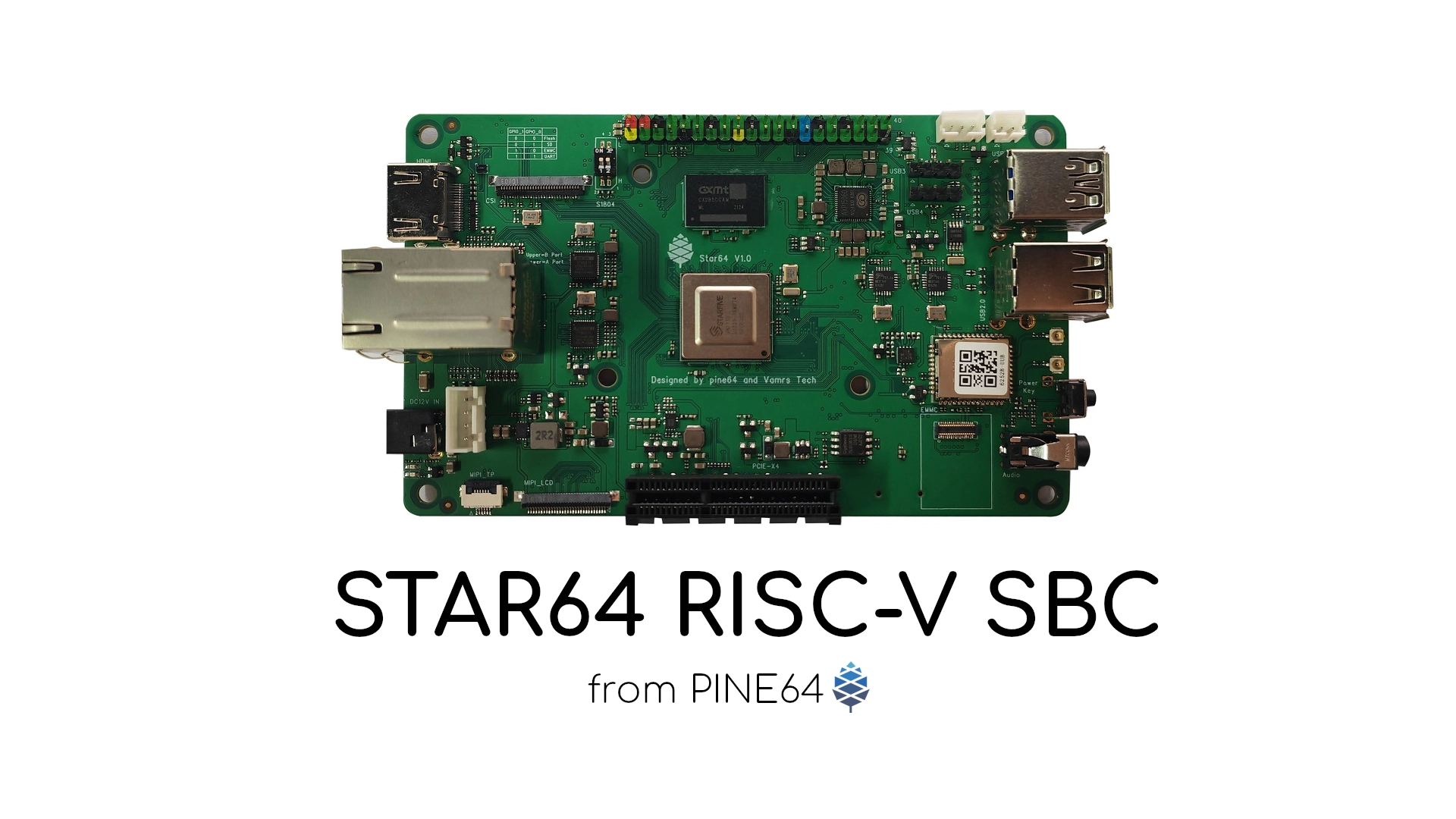
That distinction matters. Pine64 did not discontinue a product literally called a “smart home hub,” and it did not announce that existing Linux boards would stop working. What stopped is the Linux hardware production line—the pool that included Rock64, ROCKPro64, Quartz64, Star64, and other devices that had been attractive because they were cheap, flexible Linux boxes.
What stopped, and what did not
The clean split is between Pine64’s Linux devices and its MCU line. The Linux side is the Home Assistant-relevant side if you were shopping for a controller. The continuing MCU products may be useful accessories or development boards, but they are not replacements for a machine that boots Home Assistant OS or runs Home Assistant Container.
| Product line | August 2026 status | Home Assistant meaning |
|---|---|---|
| Rock64, ROCKPro64, Quartz64, Star64 and other Arm/RISC-V Linux SBCs | Production halted with the Linux device line | Do not plan a new Home Assistant build around fresh Pine64 stock |
| PinePhone, PineTab2, PineNote and other Linux devices | Also included in the Linux production halt; PineNote and PineTab2 stock was estimated at about three months in reports | Relevant to Pine64 buyers generally, but not the practical hub replacement path |
| PineTime, PineVoice, Pinecil, PineBuds, PinePower and other MCU-line products | Production continues | Not Home Assistant host replacements |
| Existing Pine64 Linux boards already in service | Not made unavailable by the production halt | Keep using them if they are stable, backed up, and meeting your needs |
PineVoice is the easiest product to misunderstand here because it is Home Assistant-adjacent. It was described as a $50 RISC-V smart speaker for Home Assistant based on a Bouffalo Lab BL606P MCU, which puts it in the satellite or voice-device category rather than the hub-host category.[4] You might eventually pair something like that with Home Assistant. You would not replace a Rock64 controller with it.
Home Assistant Yellow belongs in a separate box, too. Its end of production was a Nabu Casa decision announced in October 2025, before Pine64’s August 2026 Linux hardware pause, and it should not be treated as part of the Pine64 supply shock.[5] It does, however, reinforce the same practical point for buyers: the old assumption that a familiar, low-cost board will simply be there when you need it is not holding up well.
Why “wait for Pine64” is not a plan right now
The reason to move on is not that Pine64 boards suddenly became bad Home Assistant hosts. It is that a new buyer cannot buy a promise. The production pause was tied to memory and eMMC economics, and the next checkpoint is after mid-2027.[1][2][3] That checkpoint is not a scheduled shipping date; it is the earliest point at which Pine64 can reassess whether manufacturing makes sense again.
This is especially painful for Home Assistant because the controller is the dull piece that has to keep showing up. A light switch can be quirky for a weekend. A hub that hosts automations, device registries, backups, add-ons, and radio coordinators needs to be buyable, replaceable, and boring. If you were choosing Pine64 because it was the sensible cheap Linux board, the August 2026 pause breaks the “cheap and available” half of that bargain.
The broader price context is not kinder. Home Assistant Green moved from its original $99 era in 2023 to $199/€179 after two increases by April 2026, while Raspberry Pi 5 list prices had risen three times since December 2025, with board-only European pricing reported around €137 and up.[6][7] Those numbers are not timeless buying advice. They are a dated August 2026 warning that the low-cost hub tier is tightening.
Replacement hosts that make sense in August 2026
Start with the job, not the board shape. A Home Assistant host needs reliable storage, enough memory for your integrations and add-ons, a path for backups, and USB or network access for the radios your home actually uses. The right replacement for a planned Quartz64 build is not necessarily another single-board computer.
| Best fit | Replacement path | Why it changes the decision | Dated price/status notes |
|---|---|---|---|
| Buyer who wants the least assembly | Home Assistant Green | It is the closest thing to buying the appliance and moving on: enclosure, storage, and Home Assistant-focused setup are already part of the package. | RK3566, 4GB RAM, 32GB eMMC; reported at $199/€179 by April 2026 after earlier increases.[6][7] |
| Buyer already comfortable with Pi accessories | Raspberry Pi 5 | Still familiar, well-documented, and widely supported, but the true cost includes power, storage, case, cooling, and availability checks. | Raspberry Pi 5 list prices had risen three times since December 2025; board-only pricing around €137+ was reported in 2026 comparisons.[7] |
| Buyer who wants headroom | x86 mini PC, especially N100/N150-class systems | More comfortable for add-ons, databases, voice experiments, cameras, and future migration. Also easier to replace with another generic PC if needed. | Pricing varies heavily by seller and configuration; 2026 Home Assistant hardware guidance treats mini PCs as a serious step-up option.[6] |
| Buyer who likes SBC-style builds but does not want to wait on Pine64 | ODROID N2+ or ODROID M1 | Keeps the compact Linux-board style while moving to hardware families that are still discussed as current Home Assistant options. | Availability and kit contents should be checked at purchase time; 2026 guidance lists ODROID-class boards among viable Home Assistant hardware paths.[6] |
| Buyer optimizing value over size or prettiness | Used thin client | Often gives better storage and memory flexibility than bargain SBC builds, with the usual used-hardware tradeoffs: power supply, SSD health, noise, and seller quality. | No stable price can be stated from the available materials; treat the used market as local and date-sensitive. |

Home Assistant Green: the least interesting answer, in a good way
Green is the answer for the buyer who was not actually excited about choosing storage media, finding a case, and wondering whether the power supply is marginal. It uses an RK3566 with 4GB of RAM and 32GB of eMMC storage, and it is sold as a Home Assistant-focused box rather than a general hobby board.[6]
The catch is that Green no longer sits in the impulse-buy tier it launched in. At $199/€179 in the April 2026 snapshot, it is still simple, but it is not the old $99 mental math.[7] If you need Zigbee, Thread, Matter-over-Thread, or Z-Wave, add the radio cost before comparing it with a Pi or mini PC.
Raspberry Pi 5: good when you already know the Pi tax
A Pi 5 is a reasonable replacement if you already understand the accessory stack. The board is only the start. You still need dependable storage, a suitable power supply, a case, cooling, and any protocol radios. That does not make the Pi a bad Home Assistant host; it makes it a poor choice for anyone comparing only board price against an appliance price.
The 2026 price reports also remove some of the old comfort. With multiple list-price increases since December 2025 and board-only pricing reported around €137 and up, the Pi path now needs a real cart total, not a remembered bargain from a previous year.[7]
x86 mini PC or used thin client: when the hub is becoming a server
If your Home Assistant install is already collecting add-ons, history data, dashboards, voice experiments, or camera-related workloads, stop pretending the controller is just a tiny board with a network cable. An N100/N150-class mini PC or a used thin client gives you more breathing room and a more ordinary storage story.[6]
The tradeoff is not technical glamour; it is housekeeping. You need to check the SSD, power draw, fan noise, BIOS behavior after power loss, and whether the seller included the correct power adapter. For many homes, that is still a better risk than building around a board family with no near-term production decision.
If you are sizing this like a small server rather than a classic SBC hub, the same logic applies to laptop-class spare hardware. A deeper look at that path belongs in an 8GB laptop or mini-PC sizing guide, such as using an 8GB laptop as a smart-home hub.
ODROID N2+ or M1: the SBC route without waiting on Pine64
Some buyers simply like SBC builds. They want a small board, predictable power use, a tidy enclosure, and a Linux appliance feel. ODROID N2+ and M1 sit in that lane better than a forced Raspberry Pi build if you were originally looking at Pine64 because you liked the board-builder rhythm.
Do the same discipline you would have done with Pine64 before the halt: check current stock, storage options, Home Assistant installation path, case availability, and community reports from the current year. “SBC” is not a compatibility guarantee; it is just the shape of the project.
Budget the radios before choosing the host
The common mistake is to pick the hub first and discover the radio stack later. None of the current official hub choices in this set should be treated as a magic box that includes every smart-home radio. Home Assistant Green, for example, is a host; Zigbee, Thread/Matter, and Z-Wave need to be added deliberately.[7]
| Devices in your home | What the Home Assistant host needs | Typical add-on hardware in this guide |
|---|---|---|
| Zigbee bulbs, plugs, sensors, buttons | A Zigbee coordinator | Home Assistant Connect ZBT-2, listed at $49 in 2026 comparisons.[7] |
| Thread devices or Matter-over-Thread devices | A Thread-capable radio and border-router strategy | Home Assistant Connect ZBT-2, described for Zigbee/Thread/Matter use.[7] |
| Z-Wave switches, locks, sensors, thermostats | A Z-Wave controller | Home Assistant Connect ZWA-2, listed at $69 and based on Z-Wave 800.[7] |
| Wi-Fi-only devices | No USB smart-home radio just for those devices | Spend the money on the host, network reliability, and backups instead |
| Mixed Zigbee plus Z-Wave home | Both radio families | Plan for ZBT-2 plus ZWA-2, with USB placement that keeps radios away from noisy ports |


Zigbee and Thread sharing a dongle does not mean your whole protocol plan is solved automatically. Matter, Thread, Zigbee, and Z-Wave play different roles, and your existing devices decide what you need more than the hub brand does. If the household already has Z-Wave locks, budget for Z-Wave. If it has Zigbee sensors, budget for Zigbee. If it is moving into Thread, make the Thread border-router plan explicit rather than assuming a future firmware note will save the cart.
For a protocol-first check before buying, compare the devices already in the home against a home hub protocol compatibility guide, and use a dedicated Zigbee coordinator comparison if your network is already large or fussy.
What I would buy today
If a Pine64 board is already running your Home Assistant instance cleanly, keep it. Make a current backup, know where that backup lives, and do not replace stable hardware just because production paused.
If you were about to buy a Rock64, ROCKPro64, Quartz64, or Star64 for a new hub, choose something in stock instead. Pick Home Assistant Green when simplicity matters more than tinkering. Pick Raspberry Pi 5 or ODROID when SBC familiarity matters and you have checked the complete kit price. Pick an x86 mini PC or used thin client when headroom matters more than board minimalism.
Then add radios based on the devices already installed: ZBT-2 for Zigbee or Thread/Matter needs, ZWA-2 for Z-Wave, both if the house already uses both families. Waiting on Pine64 is speculation until the post–mid-2027 review produces a firm production decision.
References
- Pine64 halts all Linux hardware manufacturing through at least mid-2027 due to shortages — Tom's Hardware
- Pine64 hits pause on Linux devices due to RAM and eMMC shortage/high prices — CNX Software, August 19, 2026
- PINE64 Extends Production Pause for Linux Hardware — igorslab
- Pine64 PineVoice – A $50 RISC-V Smart Speaker for Home Assistant — CNX Software, June 20, 2026
- Ending production of Home Assistant Yellow — Home Assistant official blog, October 15, 2025
- Home Assistant Hardware in 2026: Requirements and Recommendations — InfluxData
- Home Assistant Green vs Yellow vs Pi 5: Which to Buy in 2026? — raspberry.tips
Known issues with this device / protocol
Spec-version history
For active regressions on this protocol, see Update Watch.
No linked Update Watch entries yet.